
Manchester
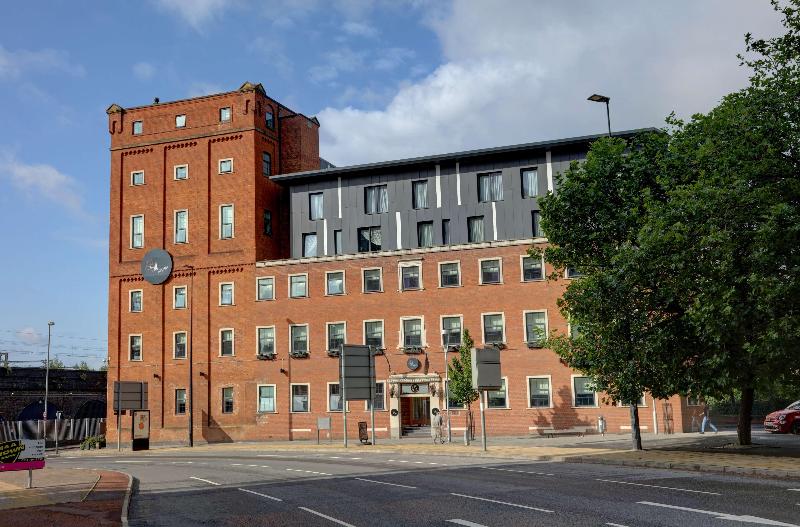
Stock Exchange Hotel, Manchester, Autograph Collection
R$2,061 / night

Destination
Visit Manchester, the UK's post-industrial jewel. Discover its cultural and commercial charm, a major hub in Northern England. Plan your trip!
Manchester · Brasil
Photos
Discover the landscapes and culture of Manchester


Editorial guide with history, culture, and practical tips to plan your trip.
Manchester is more than just a city; it is a vibrant cultural and commercial epicenter, nestled in the heart of North West England. Located within the Greater Manchester county, it represents the strength and resilience of British industrialism in its most modern form. With an estimated population of over 589,000 in 2024, Manchester boasts a dynamism that has established it as an attractive hub for talent and business. Its importance goes far beyond its urban boundaries: by joining nearby cities and diverse surrounding settlements, it forms the Greater Manchester Built-up Area, one of the most populous metropolitan areas not only in the UK but throughout England. With nearly 2.87 million residents in this expanding area, Manchester solidifies its role as a demographic and economic giant on the British stage.
The modern perception of Manchester is that of a post-industrial jewel that successfully reinvented itself. Far from being just a museum of industrial past, the city has undergone successive urban regeneration projects, transforming its image to embrace contemporary culture and commerce sectors. It is this balance between robust historical legacy and artistic and business vanguard that gives Manchester its unique shine on the British map. Many consider it not only a nerve center but even one of the largest cultural and commercial powers on the island.
The narrative of Manchester is intrinsically linked to the Industrial Revolution. Historically, the city gained international fame for its central role in textile production, earning the memorable and iconic nickname "Cottonopolis." This title not only attests to its economic importance in the past but also profoundly marks its historical identity, serving as a living testament to the power of manufacturing that shaped the United Kingdom. Manchester's history is an epic saga of meteoric rise and constant adaptation.
However, like many industrial cities, its economic peak gave way to the challenges of global change. Yet, instead of stagnating, the city demonstrated remarkable resilience. Successive regeneration projects not only healed the scars of the industrial past but also planted the seeds for a new future. This transition allowed Manchester to "shed its shoes"—a symbolic gesture of leaving the slow, heavy pace of old industry to embrace the lightness and dynamism of modern commerce and culture. It is this story of metamorphosis that makes the city so fascinating.
If there is anything that defines Manchester today, it is its pulsating cultural life. The city has established itself firmly as a major center for modern arts and trade. The artistic dynamism is not just a characteristic; it is the engine driving the region's energy. Cultural neighborhoods and institutions reflect this dedication to the avant-garde, attracting artists, musicians, and enthusiasts from all parts of the country.
The culture in Manchester is eclectic and comprehensive, manifesting from world-class museums to underground galleries. It is an atmosphere where industrial history meets modern pop. The city takes pride in this prominent cultural role, often viewed as one of Northern England's main cultural centers. This artistic richness ensures that there is always something new to explore, keeping Manchester at the heart of British artistic and social attention.
Geometrically, Manchester is situated in North West England, within the Greater Manchester county. Its location is privileged, serving as a crucial point of convergence between several important landscapes and geographical areas. The city not only occupies its own dense urban territory but also borders diverse regional biomes.
To the south, the geography transitions through the Cheshire Plain, an area that defines the natural limit of the city. To the north and east, the landscape is demarcated by the majestic Pennines, a significant mountain range that shapes the physical profile of North West England. To the west, its urban expansion touches the neighboring city of Salford. It is important to note that these boundaries are not just lines on a map; they represent constant connections and interactions between urban and rural ecosystems. The grouping of Manchester with these surrounding areas forms the vast Greater Manchester Built-up Area, a colossal urban stain covering and defining much of the Northern population landscape.
Although sources do not provide detailed information on seasonal climate patterns, it can be inferred that Manchester is subject to the typical climate of North West England. This climate is characterized by Atlantic maritime influence and internal topographies, such as the presence of the Pennines, which may affect local rainfall regimes.
From a traveler's perspective, the climatic aspect of the city intertwines with its urban character. Life in Manchester is lived under a sky that can range from sunny and vibrant days to cloudier periods, typical of British weather. However, high population density (with over 589,000 inhabitants in the central area) and modern infrastructure ensure that cultural and commercial activities remain fully operational, regardless of external weather conditions.
Tourism in Manchester is a direct testament to its reinvention. The city attracts visitors not only for its architectural beauty or its historical rivers but primarily for its status as an engine of commerce and culture. The commercial aspect of the region is robust and vibrant; business centers are highly developed, attracting both leisure and business travelers simultaneously.
For the cultural tourist, Manchester offers a complete immersion into the post-industrial experience. It is a destination that perfectly balances visiting historical sites—where one can still feel the echo of the 'Cottonopolis' era—with exploring contemporary art galleries and cutting-edge theaters. The title of being viewed by many as the "second city of England" underlines its tourist appeal, positioning it not only on par but at a comparative level of importance within the British scene.
Manchester carries with it a series of nicknames that tell parts of its rich history. The most notable is the epithet "Cottonopolis," which links it directly to its glorious past as the world capital of the textile sector. This name is not merely historical ornamentation; it defines the starting point for the city's saga of urban regeneration.
Furthermore, its regional importance has led it to be frequently referred to as the "capital of Northern England" and even in some contexts, the "second city of England." These nicknames reflect not only its population power (with the Greater Manchester Built-up Area housing 2.87 million people) but also its cultural and commercial influence that spans across the region. It is a place where industrial memory coexists harmoniously with the brilliance of modern commerce, creating a unique experience for every traveler.
Everything you need to know to plan your trip
Reference figures to help plan your trip
Hotels in the area
221
Attractions
9
221 properties in the area
64 travelers searched Manchester this week
7 stays booked in Manchester in the last 7 days
Manchester
R$2,061 / night

Manchester
R$1,444 / night

Manchester
R$1,494 / night

Manchester
R$1,855 / night
Manchester
R$665 / night

Manchester
R$1,042 / night

Manchester
R$1,485 / night

Manchester
R$1,786 / night

Manchester
R$824 / night

Manchester
R$700 / night

Manchester
R$715 / night

Manchester
R$1,253 / night
Must-sees, local secrets, experiences, and hotels — filter layers and tap the pins.
Everything you need to know to plan your trip
Get notified when hotel prices in Manchester drop. No spam.
We use your email only to send this price alert. Unsubscribe anytime.
Extend your trip to incredible destinations nearby
We personalize every moment of your journey — from iconic landmarks to hidden cultural gems.
Available 24/7 · Personalized consultations · Local expertise
Updated on June 30, 2026 · Methodology · Authors
Sources
Testimonials
Stories from travelers who have already visited. Share your experience — your comment appears in the cards below.
Visiting Manchester exceeded all expectations. The energy of the place is contagious!
Daniel Figueiredo
Backpacker
We traveled as a family and Manchester delighted kids and adults alike. Great hotel and attraction picks.
Graziela Pacheco
Repeat visitor
I arrived without a fixed itinerary and Manchester surprised me at every corner. So welcoming.
João Victor
Traveler from Recife
Stayed near downtown and walked everywhere. Manchester is even better on foot.
Monique Barbosa
Food enthusiast