Banff
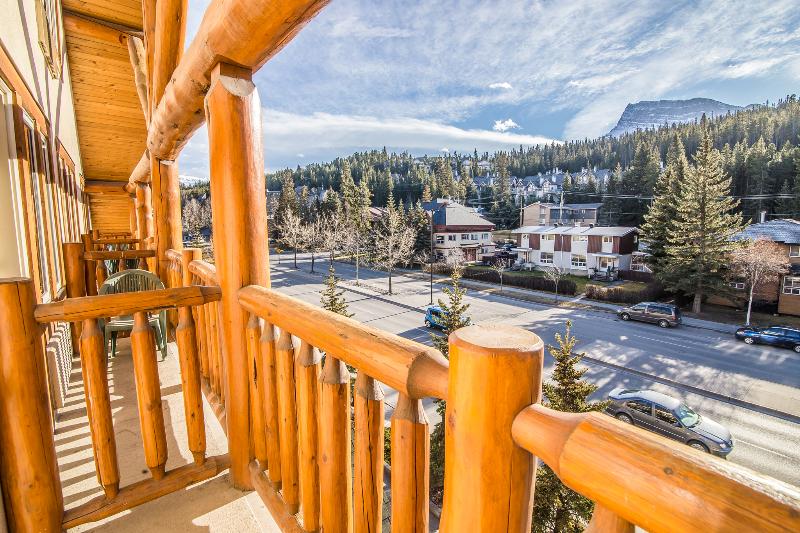
Canalta Lodge Banff
R$1,459 / night
Destination
Discover the charm of Banff National Park in the Canadian Rockies. Perfect for nature lovers and adventurers seeking unforgettable landscapes in Canada.
Banff · Brasil
Photos
Discover the landscapes and culture of Banff


Editorial guide with history, culture, and practical tips to plan your trip.
Banff is an iconic destination that draws travelers from around the world seeking the majesty of the mountains and the charm of Canadian alpine life. It is not just a city, but an integral part of the renowned Banff National Park, located in the impressive Canadian Rockies. This area is internationally recognized for its incomparable natural beauty and for being part of a UNESCO World Heritage Site – the Canadian Rocky Mountain Parks Complex.
The municipality of Banff itself represents the most significant inhabited area within the National Park, serving as a focal point for exploring all that the region has to offer.
Strategically located, the city is easily accessible. From Calgary, an important metropolis in Alberta province, it can be reached in about one and a half hours by car, while from the equally spectacular destination of Jasper, further north, the journey takes about four hours. This privileged geographical position ensures that Banff is a natural stopover point for anyone wishing to explore the vastness of the Canadian Rockies.
Although the provided facts do not detail the historical roots of the town's foundation, it is crucial to understand that Banff’s very existence is intrinsically linked to its extraordinary geography and its status as a national park. The area gained worldwide fame due to its dramatic landscapes, which attracted everyone from pioneers to European tourists in past centuries.
The city's development reflected the need to accommodate a growing flow of visitors within a preserved natural setting. Banff’s growth was not organic; it is shaped by the management and protection of the National Park, ensuring that the mountain charm is maintained while urban amenities flourish along paved streets. The modern history of Banff is therefore a narrative of coexistence between a growing population and a natural environment strictly protected by UNESCO recognition.
The culture in Banff is notably seasonal, reflecting the dramatic cycle of four seasons in the mountains. The city possesses a character that transforms radically between summer periods and the chilly months of winter. Rather than having one static culture, it offers two complementary experiences: the vibrant energy of the summer season and the cozy atmosphere of winter activities.
The urban center is designed to facilitate cultural mingling while walking. The wide sidewalks were a planning benefit especially for European travelers, encouraging them to explore the location on foot. Along these walkways, there is a decent selection of restaurants and bars, where international cuisine mixes with the adventurous spirit of Canada. While there is a visible concentration of souvenir shops and boutiques (often in excess, as is common in tourist destinations), these areas also form part of the cultural tapestry that attracts visitors.
Banff is situated in the geographical heart of the Canadian Rockies. Its positioning makes it a strategic point within the vast Banff National Park. Geography is the defining element of this destination, marked by spectacular mountain peaks, deep valleys, and rich biodiversity. The national park in which the city resides is classified as a UNESCO World Heritage Site, granting it global preservation status.
Geographically, access to Banff is facilitated by its road connections with important populated centers. Being only an hour and a half from Calgary and four hours south of Jasper means that the city is located within a natural axis of tourist circulation, allowing travelers to explore both the most remote alpine landscapes and the comfort of well-developed urban infrastructure.
One of the most striking cultural and practical aspects of Banff is its climatic drama, which varies drastically throughout the year. The climate is not uniform; it has a “very different character in winter and summer,” which must be considered when preparing for a trip.
In summer, days are ideal for outdoor activities, allowing long hikes and bike rides through alpine scenery. In winter, the city is dominated by snow-covered beauty, transforming the mountains into a scene of skiing and cold adventure. This seasonal transition not only changes the traveler's wardrobe but also completely alters the rhythm of life in the city, requiring visitors to prepare for this climatic duality.
Tourism in Banff is deeply based on immersive experience. The main focus is not merely visiting a point, but experiencing the transition of atmospheres: from a lively town with shops and bars to the majestic silence of the surrounding mountains.
The tourist infrastructure has been designed considering the pleasure of exploration on foot. The sidewalks adorning the center are a constant invitation to walk, facilitating both first-time tourists and experienced explorers. Although there is an abundance of stores and restaurants, visitors generally find themselves drawn beyond the commercial buzz, toward the natural trails that promise incomparable panoramic views, all within the protected limits of the National Park.
A fascinating curiosity about Banff is how the city manages to balance the charm of a vibrant community with the rigor of being a guardian of a UNESCO World Heritage Site. It is a delicate balance that deserves emphasis in any travel itinerary.
Another interesting point is to note the contrast between urban amenities—such as the decent selection of bars and restaurants—and the surrounding wild nature. This duality makes visitors feel as if they are in a city “within” the mountain, without ever losing the feeling of being in a natural sanctuary. The well-thought-out walkways for walkers bear witness to this architectural effort to integrate the urban with the wild.
In summary, Banff is more than a destination; it is a cyclical and multifaceted experience, where every season and every paved street contributes to the narrative of one of the planet's most magnificent natural settings.
Everything you need to know to plan your trip
Reference figures to help plan your trip
Hotels in the area
41
Attractions
9
41 properties · high demand in Banff this season
134 travelers searched Banff this week
Stays for these dates are among the most sought-after in Banff
Banff
R$1,459 / night

Banff
R$1,084 / night

Banff
R$1,428 / night

Banff
R$1,070 / night

Banff
R$1,040 / night

Banff
R$2,196 / night

Banff
R$1,100 / night

Banff
R$972 / night

Banff
R$1,025 / night

Banff
R$1,122 / night

Banff
R$1,397 / night

Banff
R$966 / night
Must-sees, local secrets, experiences, and hotels — filter layers and tap the pins.
Everything you need to know to plan your trip
Get notified when hotel prices in Banff drop. No spam.
We use your email only to send this price alert. Unsubscribe anytime.
Extend your trip to incredible destinations nearby
Still unsure? See side-by-side comparisons to decide.
We personalize every moment of your journey — from iconic landmarks to hidden cultural gems.
Available 24/7 · Personalized consultations · Local expertise
Updated on June 30, 2026 · Methodology · Authors
Sources
Testimonials
Stories from travelers who have already visited. Share your experience — your comment appears in the cards below.
Visiting Banff exceeded all expectations. The energy of the place is contagious!
Tiago Bueno
Traveler from Campinas
We traveled as a family and Banff delighted kids and adults alike. Great hotel and attraction picks.
Yara Bastos
Eco traveler
I arrived without a fixed itinerary and Banff surprised me at every corner. So welcoming.
Aline Moura
Traveler from Fortaleza
Stayed near downtown and walked everywhere. Banff is even better on foot.
Daniel Figueiredo
Backpacker


