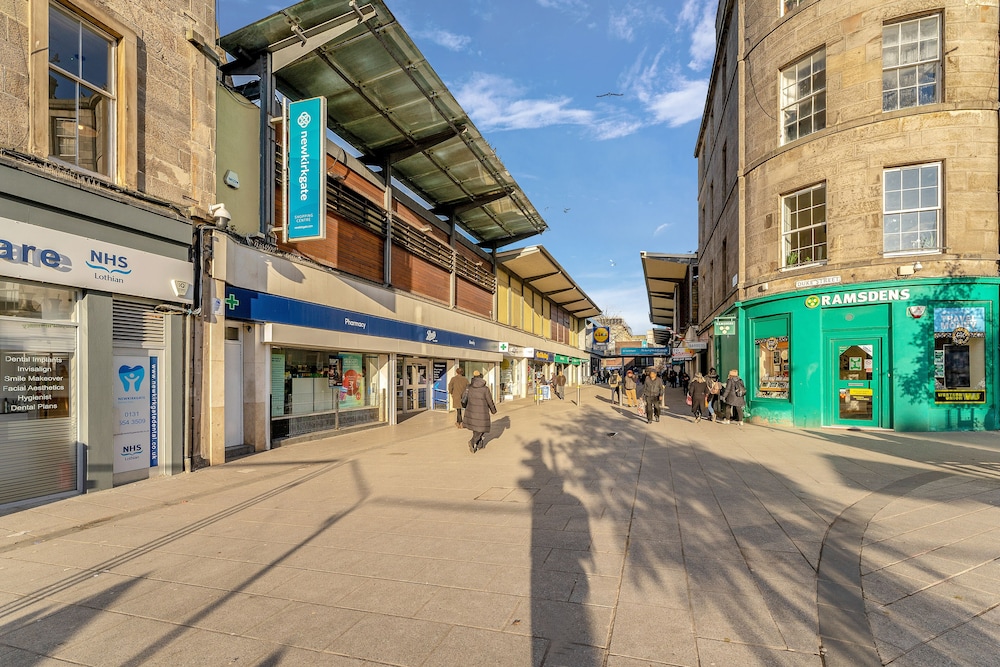
Edimburgo
Jasmine Apartment
R$1,088 / night

Destination
Discover Edinburgh, the magical capital of Scotland. Explore medieval castles, historic streets, and unique UK charm on an unforgettable journey.
Edimburgo · Brasil
Photos
Discover the landscapes and culture of Edinburgh


Editorial guide with history, culture, and practical tips to plan your trip.
Edinburgh is more than just a city; it is the vibrant, historical heart of Scotland. Recognized as the Scottish capital, this metropolis holds not only a central role in national administration but also stands out for its rich tapestry of traditions and unique urban landscapes.
Strategically located in southeast Scotland, Edinburgh possesses profound cultural identity, being counted among the 32 council areas that constitute the Scottish territory. The city is an urban center of great demographic and historical importance to the United Kingdom.
In terms of population, the city recorded a total of 506,520 inhabitants in 2020. This figure established it as Scotland's second most populous city, further solidifying its regional significance by ranking among the seven largest cities in the UK.
It is crucial to note that the urban context is larger: the surrounding metropolitan area had a population of 912,490 people in the same year, reflecting the vast extent and high population density of the region around the central city limits.
Although the provided data does not detail specific historical timelines, Edinburgh's recognition as the Scottish capital implies centuries of strategic and political importance. Its location in southeast Scotland has always made it a focal point for the development and governance of the country.
The history of Edinburgh is intrinsically linked to its geographical boundaries. Being contained between such defined natural landmarks—the Firth of Forth to the north and the Pentland Hills to the south—suggests a location that has always been crucial for trade, defense, and the establishment of centers of power.
The growing population recorded in 2020 (506,520 inhabitants in the core city) attests to a historical trajectory of continuous growth and development. Maintaining this urban vitality over the centuries is a testament to the cultural and economic resilience that Edinburgh possesses.
Its very definition as part of the 32 council areas of Scotland underlines its deep integration into the Scottish political and social structure, sustained by millennia of human activity.
Edinburgh's culture is a vibrant mosaic that reflects both its capital status and its strong geographical roots. The city's cultural life manifests in the interaction between its history and its population density, which exceeded half a million people in 2020.
Its geographic position, bordered by the Firth of Forth to the north and the Pentland Hills to the south, not only defines the physical landscape but also shapes the community spirit. Local culture celebrates this union between majestic natural elements and highly sophisticated urban development.
As one of Scotland’s main council areas, Edinburgh maintains living traditions that blend seamlessly with modern metropolitan rhythms. This balance is what makes the cultural experience so rich for any visitor.
The large metropolitan area, exceeding 912,000 inhabitants, ensures a constant flow of talent and ideas, keeping Edinburgh at the forefront of arts, knowledge, and social life. It is a city whose identity is continually rewritten by its cosmopolitan population.
Edinburgh is situated in a privileged geographical point in southeast Scotland, granting it striking natural characteristics that are fundamental to understanding local urban life. The city is not merely an agglomeration of buildings but an entity shaped by its natural boundaries.
Geographically, the municipality is delimited by the imposing Firth of Forth to the north—a large estuary historically crucial for maritime and trade routes. Conversely, the wilder nature of the Pentland Hills borders it to the south, offering a dramatic contrast between urban density and mountainous green spaces.
This unique geography results in a city that has expanded significantly: while the core center has about 506,520 inhabitants (2020 data), the metropolitan area is considerably larger, housing nearly one million people.
This delimitation by major bodies of water and mountain systems not only protects the city but also guides population flow and infrastructural development, ensuring that Edinburgh maintains its distinct Scottish character within the United Kingdom.
Although source data focuses on demographics and geographical boundaries, its location in southeast Scotland suggests a maritime climate influence. The Firth of Forth, for example, ensures the climate is affected by North Sea breezes, resulting in seasonal variations typical of British coastal regions.
The relative altitude of the city’s inner neighborhoods, surrounded by natural elevations and the valley formed by its boundaries, contributes to a characteristic temperate climate. However, the constant presence of large bodies of water (like the Firth of Forth) implies higher air humidity.
It is important to consider that the resident population, exceeding 500,000 inhabitants in the reported year, generates complex urban microclimates. The climate is influenced by both the vast green areas of surrounding hills and the verticality and density of the historic center.
This interaction between natural climatic elements and urban development makes the experience in Edinburgh something that requires preparation for diverse meteorological variations, typical of a coastal capital in the UK.
As the Scottish capital and an attraction within the country's 32 council areas, Edinburgh is a globally recognized tourist destination. Its appeal lies in the unique blend of deep history and contemporary urban life.
The tourist interest is fueled by its dramatic geographical location. The panoramic views provided by natural boundaries—the Firth of Forth to the north and the Pentland Hills to the south—are a central attraction, combining magnificent landscapes with historical architecture.
Having such a large metropolitan area (912,490 inhabitants) means there are countless activities beyond the historic core. Visitors can explore not only the dense population center but also the more rural and natural surroundings offered by the surrounding hills.
Edinburgh attracts tourists interested in culture, history, and the feeling of being in a place where Scottish tradition is palpable. High population density does not diminish the historical charm; on the contrary, it integrates into the city's modern life.
Edinburgh holds the official title of Scotland's capital, conferring upon it an unquestionable administrative and cultural status in the British scene. This central role is reflected in its organization as one of the 32 council areas of the country.
A notable curiosity is the demographic density that coexists with such well-defined geographical limits. The fact of having an urban population around half a million people, and a metropolitan area nearly at one million, demonstrates the success of urban development contained between the Firth of Forth and the Pentland Hills.
The population comparison is interesting: being the second most populous city in Scotland itself (in 2020) and the seventh on the UK scale, positions Edinburgh as an attraction hub that balances tradition with modernity. It is a constantly moving metropolis.
Its location is its greatest asset: being bathed by the vastness of the Firth of Forth and nestled among the natural Pentland Hills provides its inhabitants with a continuous sense of connection between majestic nature and historical civilization, making it both a geographic and cultural jewel.
Everything you need to know to plan your trip
Reference figures to help plan your trip
Hotels in the area
346
Attractions
9
346 properties · high demand in Edinburgh this season
195 travelers searched Edimburgo this week
Stays for these dates are among the most sought-after in Edimburgo
Edimburgo
R$1,088 / night
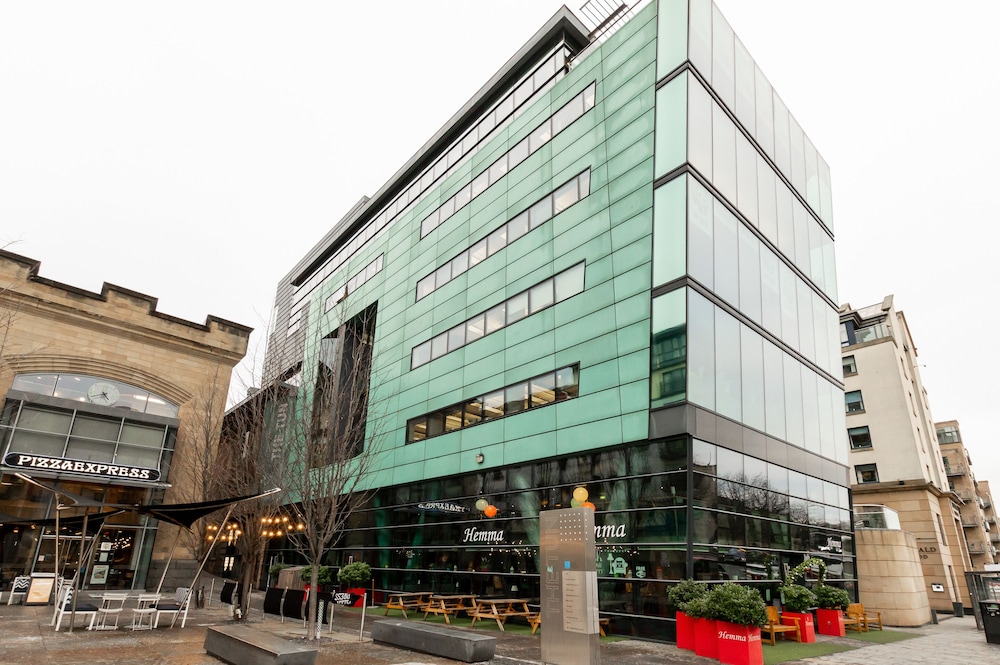
Edimburgo
R$1,604 / night

Edimburgo
R$1,145 / night

Edimburgo
R$1,004 / night

Edimburgo
R$1,697 / night

Edimburgo
R$955 / night

Edimburgo
R$1,351 / night

Edimburgo
R$1,428 / night

Edimburgo
R$1,277 / night
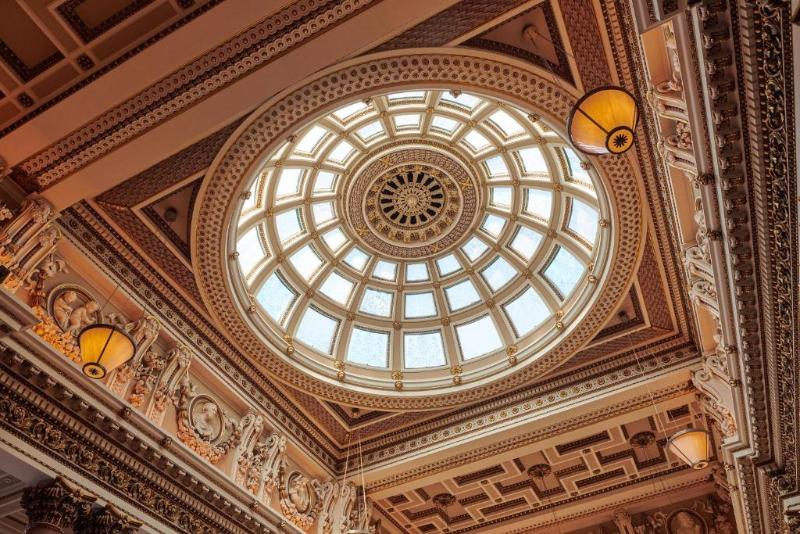
Edimburgo
R$984 / night

Edimburgo
R$981 / night

Edimburgo
R$1,135 / night
Must-sees, local secrets, experiences, and hotels — filter layers and tap the pins.
Everything you need to know to plan your trip
Get notified when hotel prices in Edinburgh drop. No spam.
We use your email only to send this price alert. Unsubscribe anytime.
Extend your trip to incredible destinations nearby
Still unsure? See side-by-side comparisons to decide.
We personalize every moment of your journey — from iconic landmarks to hidden cultural gems.
Available 24/7 · Personalized consultations · Local expertise
Updated on June 30, 2026 · Methodology · Authors
Sources
Testimonials
Stories from travelers who have already visited. Share your experience — your comment appears in the cards below.
Visiting Edinburgh exceeded all expectations. The energy of the place is contagious!
João Victor
Traveler from Recife
We traveled as a family and Edinburgh delighted kids and adults alike. Great hotel and attraction picks.
Monique Barbosa
Food enthusiast
I arrived without a fixed itinerary and Edinburgh surprised me at every corner. So welcoming.
Priscila Gomes
Friend group
Stayed near downtown and walked everywhere. Edinburgh is even better on foot.
Tiago Bueno
Traveler from Campinas


