
Belfast
The Fitzwilliam Hotel Belfast
R$1,557 / night

Destination
Discover Belfast, the capital of Northern Ireland. Dive into fascinating history and explore unique attractions in the UK. Plan your trip!
Belfast · Brasil
Photos
Discover the landscapes and culture of Belfast


Editorial guide with history, culture, and practical tips to plan your trip.
Belfast is not just a city; it is the vibrant heart and capital of a singular destination: Northern Ireland. Recognized as its primary metropolis, it stands out for its historical importance and crucial role in both the British and Irish geopolitical landscape. The city holds the title of being both the official capital and the busiest port in the region, having been established since ancient times in a strategically located position that has guaranteed its commercial relevance throughout the centuries.
In terms of urban scale, Belfast occupies a prominent place. It is undeniably the most populous city and the nerve center of Northern Ireland. Its size is comparable to the second-largest city on the entire island of Ireland, lending it an appeal that draws international attention and reinforces its reputation as a development hub. The demographic numbers speak for themselves: while the latest population registry for 2021 indicated a population in the main urban area of about 345,000 inhabitants, the scope of the expanded Metropolitan Area raises this figure to an impressive 704,000 people. This growth and population concentration solidify Belfast as a robust economic engine and a destination of massive attraction.
Belfast's identity is complex and multifaceted, reflecting its position at a confluence of cultures and maritime histories. Located on the banks of the River Lagan and connected to the vast ocean through Belfast Lough and the North Channel, this connection not only defines its physical map but has also shaped the soul of its inhabitants, making it a constant crossing between ancient traditions and a modern, cosmopolitan rhythm of life. The city is synonymous with fascination and resilience, promising a layered urban experience.
The history of Belfast is marked by a notable trajectory of metropolitan growth, with roots that span various accounts and geographical landscapes. It is important to note that the city's historic center was not concentrated in a single spot; it was historically divided between two main areas. A considerable portion of its original development was situated in County Antrim, further west of the River Lagan, while approximately an additional third of its urban structure was located on the eastern bank of the river, belonging to County Down.
Despite this initial geographical dispersion and the division between the counties that formed its urban fabric, the unifying factor has always been its governance as a separate metropolis. This administrative autonomy allowed Belfast to develop uniquely relative to its rural or smaller neighboring areas. It is this self-governance that enabled it not only to flourish but to consolidate itself as an independent and powerful urban center.
It is impossible to trace the history of Belfast without mentioning its turbulent past, a period recognized in all records. However, this rich historical tapestry, though marked by challenging moments, was fundamental in forging the resilient character that defines the city today. Time has transformed these challenges, and today, Belfast presents itself as a perfectly safe and welcoming destination for visitors from around the world. The community's capacity for overcoming difficulties is palpable on every corner and in the energy of its main port, making it a living example of historical renewal.
Belfast's culture is a direct reflection of its port geography and deep historical roots. As the capital and primary port of Northern Ireland, it has absorbed and integrated diverse cultural influences over the centuries. Its metropolitan character ensures a vibrant mix of local traditions with global dynamism. This cultural fusion is evident in the architecture, social rhythms, and gastronomy developing in its streets.
Belfast's cultural life is not confined to museums or monuments; it pulses within its communities and the maritime environment that defines it. Being a major port means that trade, sailors’ gatherings, and stories of the sea have always been central elements of local identity, fueling a rich and engaging narrative culture. This port heritage contributes to keeping alive a tradition of meeting cultures and people from different parts of the world.
Despite its origins divided between County Antrim and County Down, modern Belfast has managed to create a vibrant sense of unity. It deeply values its past, yet invests aggressively in its modernity. This harmonious coexistence between preserving historical memory and the embracing willingness to receive new ideas and tourists makes Belfast a fascinating cultural hub. Visitors can immerse themselves in this unique atmosphere that balances the weight of time with the energy of the present.
From a geographical point of view, Belfast possesses a privileged location on the island of Ireland, occupying a position that lends it immediate distinction. It is defined by its intimate relationship with large bodies of water and significant rivers. The central element in its urban landscape is the majestic River Lagan, whose banks form much of the daily and historical scene of the city.
This river does not merely cross the metropolis; it connects vitally to vast bodies of water. Specifically, Belfast is linked to the open sea through two crucial waterways: the beautiful Belfast Lough and the North Channel. This triple connection—the River Lagan, Belfast Lough, and the North Channel—is what ensures its vital function as a major port, facilitating international trade and naval connections.
Geographically speaking, its size on Ireland is monumental. In addition to being the largest city in Northern Ireland, it also stands as the second-largest metropolis on the entire island of Ireland. This dimension not only affects its population (with records reaching over 704,000 inhabitants in its metropolitan area) but also dictates a diverse and expansive urban ecosystem. Its location, bathed by waters that communicate with the open ocean, guarantees a coastal climate influencing the entire city landscape.
Although the sources provided do not give detailed weather data, Belfast's geographical location—situated on the Atlantic coast in a region bathed by large estuaries like Belfast Lough and connected to the North Channel—strongly suggests a temperate maritime climate. This type of climate is characterized by the constant influence of the Atlantic water mass.
In general terms, coastal climates tend to soften thermal extremes; this means that summers, while potentially mild and pleasant for outdoor activities, are not excessively hot. Similarly, winters tend to be milder than expected in other continental regions at the same latitude.
This maritime influence is a vital component of visiting Belfast and its surrounding landscapes. The salty sea breeze, the view of the deep waters of the North Channel, and the occasional mist over the River Lagan are elements that shape both natural beauty and the local rhythm of life. It is a climate that invites contemplation of the ports and continuous exploration of the coast.
Belfast has solidified its place in the international tourism scene not only for its metropolitan grandeur but also for the quality of its infrastructure designed to receive visitors. It is frequently highlighted for possessing one of the most developed and sophisticated tourist facility systems in all of Northern Ireland, ensuring a comfortable and enriching visit.
For the tourist arriving in Belfast, there is a fascinating combination of experiences: from immersing oneself in its complex and multifaceted history to relaxing amidst the natural beauty of the Lagan River and coastal loughs like Belfast Lough. Being a major port ensures that activities related to the sea, navigation, and maritime exhibitions are central to the tourist experience.
The city promotes itself as a truly fascinating destination, capable of satisfying different interests—whether it is the history enthusiast who wishes to unravel the mysteries of County Antrim and County Down, or the nature lover who appreciates the view where waters meet. Safety is a fundamental pillar of its modern tourist appeal, allowing visitors to feel comfortable exploring every corner of this vibrant metropolis.
One of the most interesting and notable aspects about Belfast is its administrative geographical composition. Its urban formation is a mosaic of origins; historically, it was not a cohesive unit geographically, being distributed between County Antrim (to the west of the River Lagan) and County Down (occupying about one third of the eastern bank). This initial division merely added layers of complexity and richness to its history.
Another notable curiosity is the population dimension across different years. Records indicate significant growth, evidenced by the comparison between 2021 data and the most recent demographic projections for 2024. While the residential number in the urban area was recorded at about 345,000 people in 2021, the estimate for 2024 points to a capital population of nearly 671,000 inhabitants. This increase highlights the city's dynamism and continued capacity to attract and sustain large populations.
Finally, it is crucial to note that despite its tumultuous past, Belfast managed to reinvent itself perfectly. Today, its fame as one of the most fascinating cities comes not only from its historical landmarks or vital commercial port, but also from the modern safety and tourist resources implemented throughout the metropolis, ensuring that every visit is a safe, deep, and memorable experience.
Everything you need to know to plan your trip
Reference figures to help plan your trip
Hotels in the area
74
Attractions
9
74 properties in the area
57 travelers searched Belfast this week
9 stays booked in Belfast in the last 7 days
Belfast
R$1,557 / night

Belfast
R$1,193 / night

Belfast
R$1,420 / night
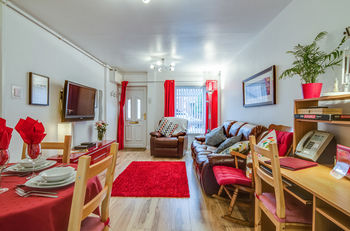
Belfast
R$1,891 / night
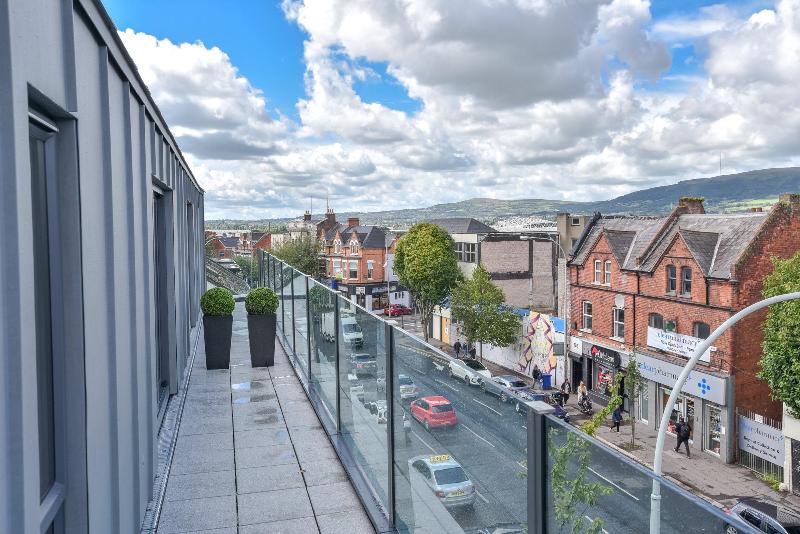
Belfast
R$1,501 / night

Belfast
R$1,127 / night

Belfast
R$1,034 / night

Belfast
R$1,359 / night

Belfast
R$970 / night

Belfast
R$927 / night

Belfast
R$1,407 / night

Belfast
R$1,167 / night
Must-sees, local secrets, experiences, and hotels — filter layers and tap the pins.
Everything you need to know to plan your trip
Get notified when hotel prices in Belfast drop. No spam.
We use your email only to send this price alert. Unsubscribe anytime.
Extend your trip to incredible destinations nearby
Still unsure? See side-by-side comparisons to decide.
We personalize every moment of your journey — from iconic landmarks to hidden cultural gems.
Available 24/7 · Personalized consultations · Local expertise
Updated on June 30, 2026 · Methodology · Authors
Sources
Testimonials
Stories from travelers who have already visited. Share your experience — your comment appears in the cards below.
Visiting Belfast exceeded all expectations. The energy of the place is contagious!
Tiago Bueno
Traveler from Campinas
We traveled as a family and Belfast delighted kids and adults alike. Great hotel and attraction picks.
Yara Bastos
Eco traveler
I arrived without a fixed itinerary and Belfast surprised me at every corner. So welcoming.
Aline Moura
Traveler from Fortaleza
Stayed near downtown and walked everywhere. Belfast is even better on foot.
Daniel Figueiredo
Backpacker


