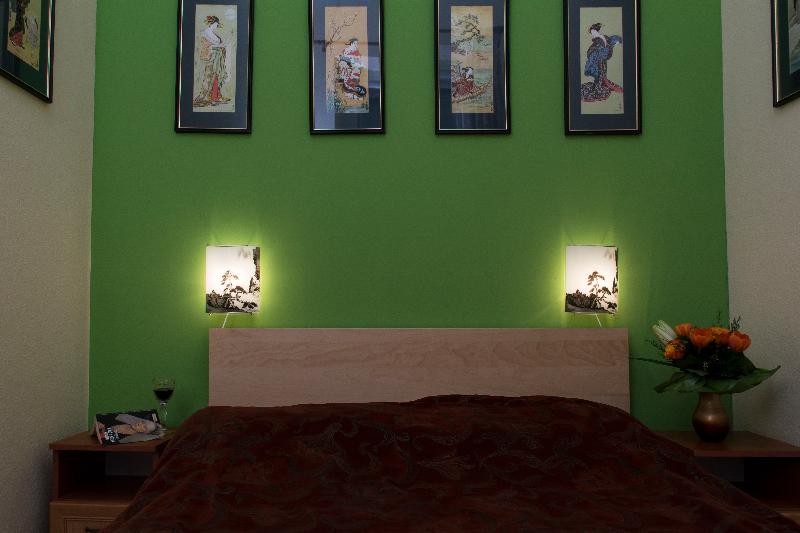
Budapeste
Palace Apartments
R$1,217 / night

Destination
Discover Budapest, the vibrant capital on the Danube River. Explore imperial architecture, thermal baths, and the cultural heart of Hungary on an unforgettable journey.
Budapeste · Brasil
Photos
Discover the landscapes and culture of Budapest


Editorial guide with history, culture, and practical tips to plan your trip.
Budapest is more than just a capital; it is a colossal nerve center that pulses with the dynamism of history and the energy of a global metropolis. Located in Hungary, it stands out not only as the country's principal city but also by its undeniable role as a financial, corporate, commercial, and cultural hub. Its magnitude is evident in its international classification: Budapest was recognized as a "global alpha city" by the prestigious Globalization and World Cities Study Group & Network (GaWC), a title that attests to its status among the most influential urban centers on the planet.
The city holds the title of being the most populous area in Hungary and is recognized as one of Europe's largest and most important confluence points of power. It was estimated that, in 2012, the city housed approximately 1.74 million inhabitants. However, its influence extends throughout the entire metropolitan region — also known as Greater Budapest—a colossal area encompassing about 3.27 million people. This number reflects the vast scope and population density of the urban area linked to the capital.
Geographically, the existence of Budapest is intrinsically linked to the majestic Danube River, whose banks provide both a dazzling natural setting and a historical division that shaped urban development. This strategic location not only defines its scenic identity but also solidifies its role as a focal point for economic and cultural activities in Central Europe.
The city's trajectory is marked by a monumental foundational event: the unification that gave rise to modern Budapest. Its urban history, as we know it, was formalized on November 17, 1873. This milestone represented not merely territorial expansion, but the strategic and definitive merger of three distinct, yet neighboring, urban centers.
The founding parts were Buda and Óbuda. These two cities were situated on the right bank of the Danube River. They were unified with Pest, which was located on the opposite bank, to the left of the river. This act of merging not only consolidated the physical geography of the area but also created a new cultural and economic pole that surpassed the size and influence of the individual cities. The result was the birth of Budapest: a cohesive and powerful entity.
The importance of this historical milestone is profound. The formation in 1873 transformed three distinct centers into a single global power hub, allowing Budapest to rapidly flourish into not only the capital of Hungary but also the country's primary financial and corporate engine. The historical roots of this confluence are the pillar upon which its entire modern identity was built.
Budapest's status as a "principal cultural center" of Hungary is palpable on every corner, in every museum, and theater that makes up its urban fabric. Cultural richness is not limited merely to tourist attractions; it permeates the daily life of its residents, the so-called "Budapestians".
Being recognized as a cultural hub means that the city is a melting pot of arts, traditions, and artistic influences. The historical merger of the cities—Buda, Óbuda, and Pest—resulted in a rich and diverse cultural tapestry. Every neighborhood holds echoes of its origins, contributing to the vibrant artistic mosaic that defines the Budapest experience.
This cultural vitality is driven by its multifaceted role: alongside commercial and market dynamism, Budapest preserves a deep sense of artistic identity. Cultural manifestations reflect its position as a global alpha city, attracting talent and ideas from diverse parts of the world, but always keeping the vibrant heart of Hungarian culture in focus.
Budapest's geography is dominated by an essential natural element: the vast Danube River. More than just a scenic feature, the river is the backbone that defined the urban layout and shaped the city's history. The metropolis is majestically situated on the banks of this important waterway.
From a geo-historical perspective, the city has a clear natural division: the former cities of Buda and Óbuda were located on the right bank of the Danube. The original core of Pest was established on the left bank. The physical geography was superseded by the political and historical act of unification in 1873, which brought these three areas together into a single cohesive urban domain.
In terms of dimensions, the metropolitan area is extraordinarily extensive. While the registered population center (with 2012 data) pointed to over 1.74 million inhabitants, its surrounding and interconnected region—Greater Budapest—totals an impressive number of approximately 3.27 million people, attesting to the geographic size and demographic reach of the urban area.
Although specific climate data are not detailed in the source material, it is impossible to ignore the influence of its fluvial positioning. Budapest, by being nestled on the banks of the Danube, enjoys a geographical environment that moderates its temperature variations, making it a climatic setting of great beauty and characteristic European continental flair.
The location near such a grand river means that the climate tends to be influenced by water masses. This lends a certain softness to the air compared to more inland cities. The Danube, in turn, not only serves as a physical boundary but also shapes the rhythms of life and activities that permeate the city's experience.
Budapest establishes itself on the world tourism map through its unique profile: a vibrant capital, profoundly historical, and simultaneously a modern global hub. The combination of the charm of the old merged cities with the dynamism of a first-rate financial center attracts visitors from all walks of life.
Tourists are drawn both to the architectural majesty resulting from the unification of Buda, Óbuda, and Pest, and to the rich cultural atmosphere. The city offers not merely monuments; it provides an immersion into a lifestyle that balances the rhythm of global commerce with the historical serenity of its river banks.
Its classification as a "global alpha city" attests to its tourist and economic appeal. For the visitor, this translates into flawless infrastructure and multiple experiences: from relaxing walks along the Danube to experiencing the pulsing life of a multinational corporate center. The tourist experience is thus a journey through time and modern space simultaneously.
One of the most remarkable facts about Budapest is its prestigious title as "global alpha city." This distinction, granted by the Globalization and World Cities Study Group & Network (GaWC), is not mere vanity; it reflects the magnitude of its importance at economic, financial, and cultural levels on the world stage.
Culturally, the city has developed a sense of identity that transcends its name. Its inhabitants are affectionately called "Budapestians," an epithet that encapsulates both the pride of the population and the rich cultural fusion that occurred over the centuries.
The physical structure itself is a curiosity: Budapest was born from the intentional confluence and merger of Buda, Óbuda, and Pest. This union of three cities—two located on the right bank of the Danube (Buda and Óbuda) and the third on the left bank (Pest)—is an unparalleled urban and historical feat, defining it as a metropolis built upon the meeting of civilizations.
The metropolitan population scale also deserves attention. With over three million inhabitants, Greater Budapest represents a colossal demographic pole within European borders.
Everything you need to know to plan your trip
Reference figures to help plan your trip
Hotels in the area
455
Attractions
9
455 properties · high demand in Budapest this season
148 travelers searched Budapeste this week
Stays for these dates are among the most sought-after in Budapeste
Budapeste
R$1,217 / night

Budapeste
R$1,136 / night
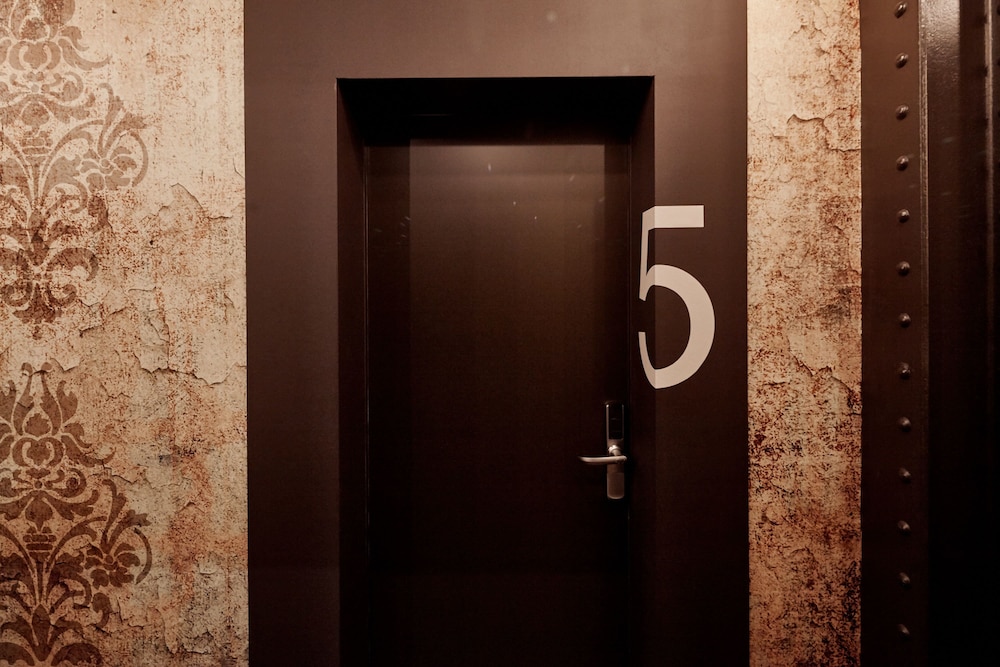
Budapeste
R$1,169 / night

Budapeste
R$1,125 / night

Budapeste
R$1,230 / night

Budapeste
R$1,584 / night

Budapeste
R$944 / night

Budapeste
R$1,229 / night

Budapeste
R$1,253 / night

Budapeste
R$963 / night

Budapeste
R$1,221 / night

Budapeste
R$996 / night
Must-sees, local secrets, experiences, and hotels — filter layers and tap the pins.
Everything you need to know to plan your trip
Get notified when hotel prices in Budapest drop. No spam.
We use your email only to send this price alert. Unsubscribe anytime.
Extend your trip to incredible destinations nearby
Still unsure? See side-by-side comparisons to decide.
We personalize every moment of your journey — from iconic landmarks to hidden cultural gems.
Available 24/7 · Personalized consultations · Local expertise
Updated on June 30, 2026 · Methodology · Authors
Sources
Testimonials
Stories from travelers who have already visited. Share your experience — your comment appears in the cards below.
Visiting Budapest exceeded all expectations. The energy of the place is contagious!
Zélia Carmo
Traveler from Goiânia
We traveled as a family and Budapest delighted kids and adults alike. Great hotel and attraction picks.
Bruno Carvalho
Couple from Curitiba
I arrived without a fixed itinerary and Budapest surprised me at every corner. So welcoming.
Elaine Coutinho
Solo traveler
Stayed near downtown and walked everywhere. Budapest is even better on foot.
Hugo Santana
Local from Belo Horizonte


