Java Ocidental
West Point Hotel
R$248 / night
Destination
Discover West Point! Explore the US Army's historic campus in NY. A destination rich in history, neo-Gothic architecture, and unforgettable monuments.
West Point · Brasil
Photos
Discover the landscapes and culture of West Point


Editorial guide with history, culture, and practical tips to plan your trip.
West Point, officially known as the United States Military Academy (USMA), is far more than just an educational facility; it represents one of the most ancient and prestigious federal institutions for military education in the nation. This federal academy has a robust tradition dedicated to training future leaders for the U.S. Army, operating under a rigorous four-year academic cycle. USMA is recognized nationally not only for its excellence in cutting-edge military education but also for its vast historical campus sprawling across the rolling hills. Visiting West Point means entering an environment where military discipline and rich architectural history merge to create a unique cultural experience. From its early years until today, it has been a national point of reference, attracting scholars, historians, and, of course, curious tourists drawn by its magnitude and impressiveness.
The central campus of West Point is a true open-air museum, a monumental collection of buildings that tell stories of centuries of service and military development. The neo-Gothic architecture, prevalent in many of its structures, lends the location a grand and imposing air. This architectural aesthetic not only contributes to the destination's historical charm but also testifies to the solidity and permanence of the military traditions preserved there. It is a place where every stone, every monument, and every corridor seems to whisper about the generations of soldiers and leaders who walked before, making this location a fascinating study of history, architecture, and military dedication.
The history of West Point is intrinsically linked to the formation of the United States Armed Forces. The Military Academy was conceived to be the epicenter for preparing officers who would defend the nation in critical moments. Over the decades, the campus has not only adapted to the tactical and technological changes of the American army but has also solidified its identity as a bastion of strategic and military knowledge. Its journey is marked by unwavering academic rigor, maintaining its original purpose of training elite military educators for four years.
The physical development of the campus over time has resulted in the preservation of an unmatched historical tapestry. The existing buildings are active witnesses to this long journey. They narrate not only the curricula and doctrines taught but also the evolution of American military architecture. Located on the hills adjacent to the powerful Hudson River, the site has established itself as a convergence point between urban development (near the bustling region of New York) and an atmosphere of historical academic retreat. This duality—being modern in its educational purpose, yet profoundly anchored in history—is what gives West Point its unmatched historical weight.
The neo-Gothic structures are not mere ornamentation; they represent a deliberate architectural choice intended to evoke a sense of permanence and dignity associated with great European institutions. This historical heritage is palpable on every visit, transforming the tourist experience into a living class on military history and cultural edifice.
The culture of West Point is deeply rooted in the concepts of duty, excellence, and tradition. Far from being just a university campus, it operates under the strict cultural code of the United States Military Academy, an institution that demands more from its student than mere academic knowledge; it requires character formation and moral leadership. This culture is visible in every aspect of daily life at the location.
The cultural pillar of the campus lies in its capacity to be a national landmark that transcends military boundaries. It has become a guardian of historical monuments, places that celebrate the spirit of veterans and generations of graduates. This reverence for the past is a driving force of the local culture, keeping alive traditions passed down over centuries. For the visitor, absorbing this culture means understanding the importance of civil and military service to the very identity of America.
The interaction between students, faculty, and visitors is shaped by a sense of respect for history and the environment surrounding them. It is a culture that values historical formality but also welcomes curious visitors to its large visitor center, ensuring that even those not in the midst of military training can connect with the historical soul of the place through museums and guided tours.
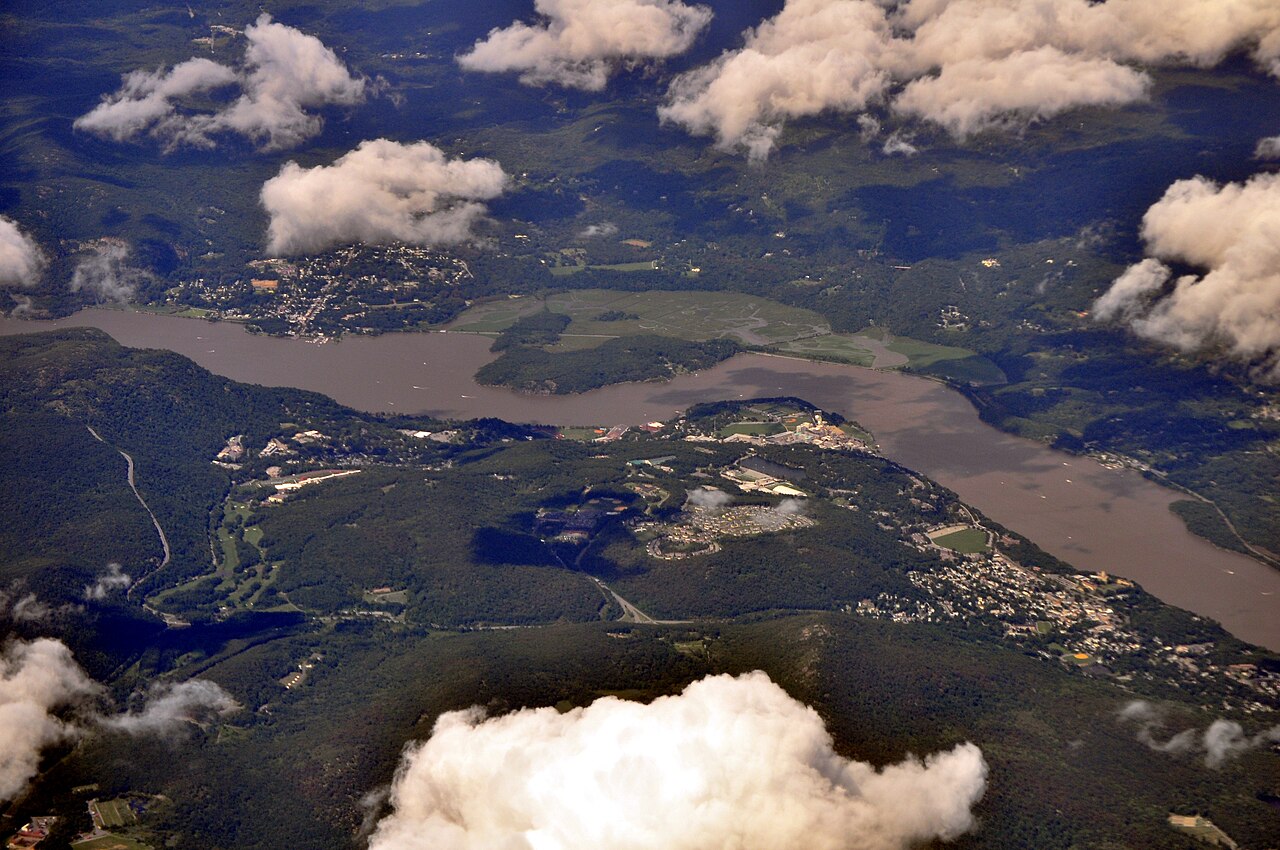
West Point is situated in a prime geographical location: the hills on the imposing banks of the Hudson River. This position, placing it approximately 80 kilometers north of the bustling metropolis of New York, lends the area a dramatic and historically significant setting. The grandeur of the landscape, combined with the symbolic power of the large river passing nearby, deeply influences both academy life and its tourist appeal.
Geographically, West Point is a meeting point between academic history and majestic natural environment. The topography of the hills not only contributes to the necessary isolation for maintaining the academy's educational focus but also serves as a visually impressive backdrop for its grey and black neo-Gothic structures. This combination of monumental architecture against a vast riverine setting is something few locations can replicate.
The strategic location allows the area to maintain a connection with major communication routes and urban centers (like New York), facilitating a constant flow of visitors, while at the same time preserving an air of historical exclusivity. The Hudson River is not just a geographical element; it is part of West Point's visual and narrative identity, shaping the atmosphere in which the academy thrives.
While the provided facts focus more on the military and tourist structure, it is impossible to discuss West Point without considering its climate context. Due to its location in the New York hills, on the banks of the Hudson River, the region experiences a distinct temperate climate from the great plains but is heavily influenced by proximity to the large river.
This fluvial influence means that seasonal variations can be pronounced. Visitors should prepare for climatic diversity throughout the year: hot and humid summers typical of the northeastern US, vibrant autumns (when the weather becomes ideal for exploring gardens and stone buildings), cold winters with morning fog over the Hudson River, and mild springs that bring life back to the campus. The climate itself adds a layer of natural beauty to West Point's historical architecture.
West Point is a thoroughly popular tourist destination, attracting visitors interested in military history, neo-Gothic architecture, and the grandeur of academic life. Its tourist structure has been designed to be accessible, combining the rigor of an operational academy with the open historical access for the general public.
The core of the tourism experience is formed by elements that ensure the visit is rich and informative. The campus features a large visitor center, which serves as the entry point for those who wish to immerse themselves in history without being students at the academy. Furthermore, the presence of the oldest U.S. Army museum offers a deep dive into the evolution of weapons, uniforms, tactics, and military equipment over time. These two points are the pillars of tourist visitation.
Visitors can explore not only the exhibition center but also walk through vast grounds that function as a living museum, where historical monuments tell narratives of courage and sacrifice. A visit to West Point allows for reflection on American military history in a setting of imposing architectural beauty, making it a culturally enriching trip.
Among the most fascinating details surrounding West Point is its multifaceted identity: it is simultaneously an active military academy and a national historical monument. This dual nature makes it a place of great curiosity for first-time visitors.
A striking architectural feature that catches visitors' eyes are the neo-Gothic structures on campus. The predominant material, grey and black granite, is not merely aesthetic; it lends an timeless sense of solidity to the walls and monuments. This choice of robust materials contributes to the monumental and unchanging aura surrounding the entire complex.
The fact that the entire campus is considered a national landmark deserves emphasis, as it means it carries symbolic importance beyond state borders. It is not just a place; it is a symbol of military tradition and elite education in the United States. Learning this history gives the visitor the perspective that they are treading ground with monumental cultural weight, where every architectural element—from the neo-Gothic buildings to the oldest U.S. Army museum—tells a fundamental part of the American saga.
Everything you need to know to plan your trip
Reference figures to help plan your trip
Attractions
9
Selected stays available to book
163 travelers searched West Point this week
Stays for these dates are among the most sought-after in West Point
Java Ocidental
R$248 / night

Bai Dinh
R$1,087 / night

Verona
R$554 / night

Dakhla
R$1,381 / night

Key West FL
R$1,712 / night

Edmonton
R$886 / night

Houston TX
R$706 / night

Nova Iorque
R$2,905 / night

Yokohama
R$908 / night

Atlanta GA
R$981 / night

Tóquio
R$1,261 / night

Calgary
R$1,203 / night
Must-sees, local secrets, experiences, and hotels — filter layers and tap the pins.
Everything you need to know to plan your trip
Get notified when hotel prices in West Point drop. No spam.
We use your email only to send this price alert. Unsubscribe anytime.
Extend your trip to incredible destinations nearby
Still unsure? See side-by-side comparisons to decide.
We personalize every moment of your journey — from iconic landmarks to hidden cultural gems.
Available 24/7 · Personalized consultations · Local expertise
Updated on July 28, 2026 · Methodology · Authors
Sources
Testimonials
Stories from travelers who have already visited. Share your experience — your comment appears in the cards below.
Visiting West Point exceeded all expectations. The energy of the place is contagious!
Yara Bastos
Eco traveler
We traveled as a family and West Point delighted kids and adults alike. Great hotel and attraction picks.
Aline Moura
Traveler from Fortaleza
I arrived without a fixed itinerary and West Point surprised me at every corner. So welcoming.
Daniel Figueiredo
Backpacker
Stayed near downtown and walked everywhere. West Point is even better on foot.
Graziela Pacheco
Repeat visitor


