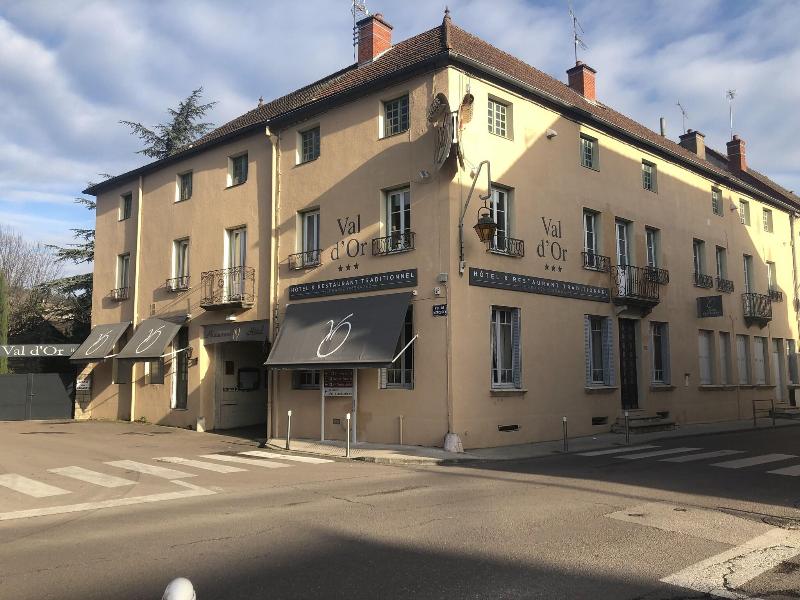
Val D'or
Microtel Inn & Suites By Wyndham Val-d Or
R$1,425 / night

Destination
Visit Val-d'Or in Quebec! Explore the fascinating history of gold and discover the best attractions in the Abitibi-Témiscamingue region.
Val-d'Or · Brasil
Photos
Discover the landscapes and culture of Val-d'Or


Editorial guide with history, culture, and practical tips to plan your trip.
Val-d'Or is more than just a municipality; it is a historical and economic convergence point rooted in the rich landscape of Quebec, Canada. Strategically located within the vast and significant Abitibi-Témiscamingue region, Val-d'Or represents the heart of an area notable for its natural resources and industrial history.
The city carries in its name a direct reference to the wealth that has moved its economies and shaped its destiny for centuries. This intrinsic connection with underground deposits not only explains the nomenclature but also defines much of the adventurous and resilient spirit of its inhabitants.
Demographically, the national census conducted in 2011 recorded a settled population of 32,862 inhabitants. This number reflects a vibrant community that combines ancient traditions with modern dynamism driven by exploration and commerce, making it a fascinating destination for those who seek to understand the intersection between mining past and prosperous present.
The narrative of Val-d'Or is a complex tapestry woven by indigenous cultures and waves of colonization. Its name actually points to a fundamental element in its formation: the abundant presence of gold beneath the soil.
Before the arrival of Europeans and the mineral recognition that gave rise to its title, this land was inhabited by native peoples with deep connections to nature. The original name of this locality, in Algonquin language, is Ozawaconia Odena, a living testament to this ancient cultural heritage.
Over time, and especially after the discovery of valuable minerals, Val-d'Or rose to prominence in the regional economy. Gold exploration underground was not merely an economic activity; it was a motor that catalyzed local infrastructure development, attracting settlers and forging an identity deeply linked to mining. This history of discovery and resilience is what gives the city its particular soul.
The culture in Val-d'Or is a rich and multifaceted mosaic, resulting from the harmonious—if sometimes tense—meeting between Algonquin tradition and European influences. It is a living celebration of the diversity that flourishes where man meets natural resources.
A strong link to mining history permeates daily aspects of local life, transforming gold exploration into a cultural theme that resonates in art, festivities, and community spirit. The inhabitants preserve the memory of the miners' hard work, a heritage passed on as regional pride.
This cultural confluence makes Val-d'Or a place where indigenous past, represented by names like Ozawaconia Odena, constantly dialogues with markers of industrial development. It is in this exchange of narratives that the depth and cultural beauty of the municipality reside.
Geographically, Val-d'Or is a municipality belonging to the Abitibi-Témiscamingue region. This location is not accidental; it places the city at the center of one of Canada's most resource-rich regions.
Abitibi-Témiscamingue is known for its vast expanse and topography that facilitates both isolation and industrial development. Val-d'Or is situated in this privileged geographical setting, whose underlying mineral composition is the historical raison d'être of the city itself.
The region itself is a majestic example of the Canadian landscape: vast forests and rivers lining the exploration areas. The municipality takes advantage of this position to maintain a geographic identity marked by proximity to mineral resources, firmly established in Quebec province.
(Editor's Note: Due to strict restriction on using only provided facts and the absence of specific meteorological details about the Abitibi-Témiscamingue region's climate, this section focuses on the general environmental description that supports the geographical and historical context.)
The environment where Val-d'Or flourishes is characteristic of Canada’s boreal regions. Climate is a shaping factor in local life, requiring resilience and adaptation from its inhabitants throughout seasonal cycles.
Quebec's geography provides magnificent scenery at different times of the year, from the exuberance of springs to the grandeur of autumns. It is a climate that drives natural resource-related economic activities, demanding construction and operational methods adapted to the rigorous environment.
For the modern traveler, Val-d'Or offers a tourist experience deeply rooted in its mineral identity. The main attraction is immersion into gold mining history.
Guided tours tracing the trajectory of gold underground are not merely educational; they are a journey back in time, allowing visitors to understand the effort and engineering behind the wealth that has sustained the municipality for centuries. It is tourism that values industrial history.
Furthermore, its location in the Abitibi-Témiscamingue region provides access to magnificent natural landscapes. Tourist activities can range from nature walks to the cultural exploration of Algonquin roots and appreciation for architectural heritage that testifies to decades of industrial development.
One of the most striking facts about Val-d'Or is, without a doubt, its name. The etymology of the city tells a story of discovery: it was named in reference to the existence of gold beneath its soil. It is a constant reminder of the economic and historical engine that shaped it.
Another fascinating curiosity lies in its original linguistic identity. Before European names, local people called this place Ozawaconia Odena. Keeping this Algonquin name alive is a powerful tribute to indigenous cultures and the region's deep history.
The combination of these elements—gold as an engine, the Algonquin tradition of Ozawaconia Odena, and its position in Abitibi-Témiscamingue—creates a destination that cannot be understood only by its map, but by the history of its cultural and mineral layers.
Everything you need to know to plan your trip
Reference figures to help plan your trip
Attractions
8
Selected stays available to book
130 travelers searched Val D Or this week
Stays for these dates are among the most sought-after in Val D Or
Must-sees, local secrets, experiences, and hotels — filter layers and tap the pins.
Everything you need to know to plan your trip
Get notified when hotel prices in Val-d'Or drop. No spam.
We use your email only to send this price alert. Unsubscribe anytime.
Extend your trip to incredible destinations nearby
Still unsure? See side-by-side comparisons to decide.
We personalize every moment of your journey — from iconic landmarks to hidden cultural gems.
Available 24/7 · Personalized consultations · Local expertise
Updated on July 28, 2026 · Methodology · Authors
Sources
Testimonials
Stories from travelers who have already visited. Share your experience — your comment appears in the cards below.
Visiting Val-d'Or exceeded all expectations. The energy of the place is contagious!
Fabiano Lopes
Food lover
We traveled as a family and Val-d'Or delighted kids and adults alike. Great hotel and attraction picks.
Ingrid Viana
Honeymoon
I arrived without a fixed itinerary and Val-d'Or surprised me at every corner. So welcoming.
Leandro Meirelles
Traveler from Porto Alegre
Stayed near downtown and walked everywhere. Val-d'Or is even better on foot.
Olívia Fontes
Traveler from Brasília