Úbeda
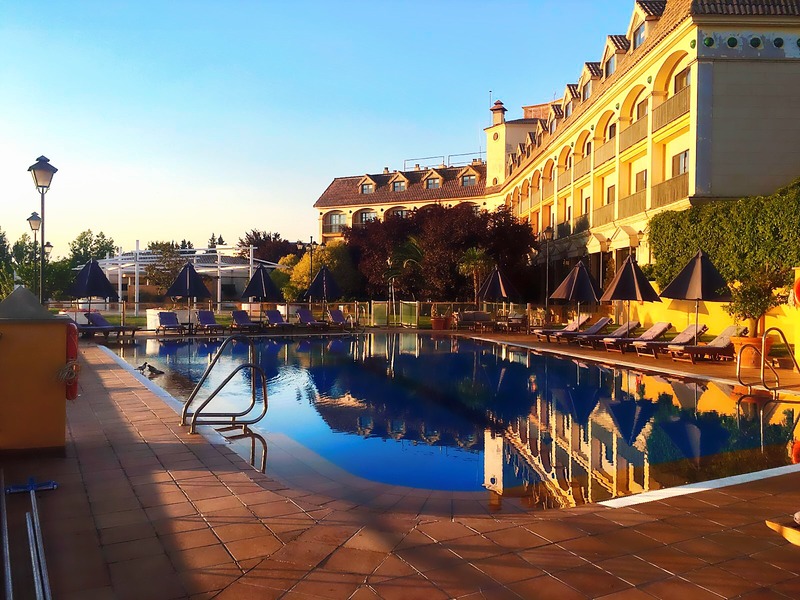
Hotel Palacio de Úbeda 5 G.L.
R$853 / night

Destination
Úbeda is a historic treasure in Andalusia. Explore the UNESCO World Heritage center and admire its rich Renaissance architecture reflecting Spanish and Arab cultures.
Ubeda · Brasil
Photos
Discover the landscapes and culture of Úbeda


Editorial guide with history, culture, and practical tips to plan your trip.
Úbeda is a historical gem nestled in the heart of the Jaén province, within the vibrant autonomous community of Andalusia, Spain. More than just a geographical point, this municipality represents the pinnacle of a rich cultural and artistic tapestry. Úbeda's historic center has not only preserved but celebrated the grandeur of European art styles, reaching its peak during the Renaissance period.
Its fame transcends regional borders, establishing it as an unmissable destination for lovers of architecture and monumental history.
It is notable that Úbeda's importance is not limited to its isolated beauty; it was globally recognized by UNESCO. Together with its neighbor Baeza, the historic center of Úbeda received the prestigious title of World Cultural Heritage on July 3, 2003. This international recognition attests not only to the area's architectural richness but also to the profound historical depth of the cultural processes that shaped its streets and squares.
With a territorial area spanning 397.1 km², Úbeda manages to maintain a perfect balance between modern development and meticulous preservation of its past. Walking through its arches and squares, the visitor is transported back centuries, experiencing an atmosphere where every stone tells a story of master builders, artists, and cultures that met on this Andalusian soil.
The trajectory of Úbeda is an open book written with lime and marble. Its rich historical tapestry is marked by periods of intense cultural transformation. However, the most fascinating period for those who study its monumental architecture was undoubtedly the Renaissance.
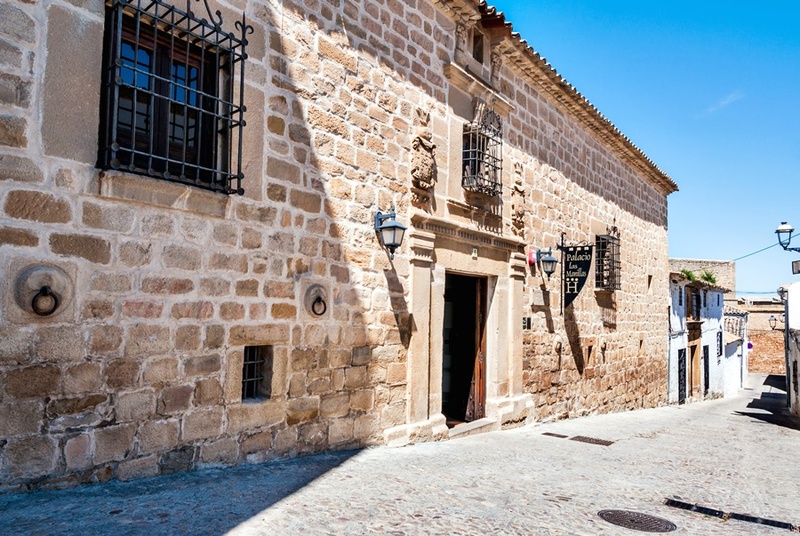
Since the Middle Ages, Úbeda was already a melting pot of civilizations. Its formation was not linear; it is a living testament to complex cultural exchanges between Spanish and Arab populations. This millennia-old interaction resulted in a unique artistic fusion in the local architecture, giving it a character that is simultaneously Hispanic and exotic, reflecting the peaceful coexistence of civilizations.
The height of the Renaissance transformed Úbeda into an artistic pole. It was during this period that urban structures were embellished with high-level monuments, many attributed to the master builders of the time. The city prospered through this art and trade, elevating its buildings to standards of artistic sophistication in the Iberian Peninsula.
The UNESCO recognition is not just a stamp; it validates the universal value of these monuments. The fact that Úbeda shares this title with Baeza under criteria (ii) and (iv)—which highlight exceptional witnesses of human historical interaction and outstanding examples of architectural development—reinforces its position as one of the most important urban ensembles in the world.
Culture in Úbeda is intrinsically linked to its art and monumentality. It's not merely about museums or galleries; it’s about living history on the streets. The city's architecture itself is a cultural manifestation that invites contemplation and dialogue with time.
The concept of cultural syncretism is palpable on every corner. Arab influences from the Middle Ages coexisted, yielded results, or were absorbed by the later Renaissance movement. This creates a distinctive cultural thread that sets it apart from other Spanish cities.
The preservation of the historic center is an act of vibrant cultural maintenance. The local community safeguards this heritage not just as patrimony, but as an integral part of its identity. The ornamental details of the buildings, the inner patios, and the public squares are stages for festivities that keep alive the memory of past master artisans.
The local culture invites the visitor not merely to observe monuments, but to experience a more contemplative pace of life. Andalusian gastronomy, rich in Mediterranean flavors, complements this cultural experience, providing tourists with a complete immersion into the soul of Andalusia.
Located in the strategic heart of the Jaén province, Úbeda falls within the geographical context of Andalusia. This region is known for its diverse landscape and distinct Mediterranean climate—a natural setting that contributes to the scenic beauty around the municipality.
In dimensional terms, the territory of Úbeda covers an area of 397.1 km². This extension allows the city to develop its infrastructure while maintaining its historic areas without losing connection with the surrounding rural and natural parts of the province. Its geographical location facilitates both road and air connections, making it accessible, yet preserving a sense of historical remoteness.
The surrounding Andalusian geography is fundamental to understanding the local way of life. The interaction between agricultural landscapes and historic urban centers has shaped the population's life over the centuries. It is this interface—between the strength of Mediterranean nature and the grandeur of human constructions—that gives Úbeda its singular, yet majestic charm.
As part of the Andalusia region, Úbeda has a typically Mediterranean climate. This classification defines much of the pace and travel experience in the city. Days tend to be sunny and warm, with a deep blue sky that enhances the colors of the historic facades.
During the warmest months, such as summer, temperatures can rise considerably. However, this climatic characteristic is also responsible for the region's vibrant vegetation and natural splendor during the hot season.
Winters are generally mild, significantly easing the rigor of Mediterranean latitudes. It is during this seasonal transition that the city reveals itself in its fullness, allowing tranquil strolls through open squares. Climate variation is a constant element in Andalusian daily life, crucial for planning visits that take advantage of both the warm charm of summer and the serenity of cooler times.
Tourism in Úbeda is fundamentally historical and architectural. It is a journey of immersion into Renaissance art, a walk through centuries of cultural history.
An ideal itinerary must be designed to maximize the appreciation of the masterpieces that compose the UNESCO historic center. Visitors are invited to get lost in narrow, paved streets, where every corner reveals a mural, a square, or a monumentally important building.
The main tourist attraction lies in contemplating the Renaissance architecture and studying the cultural influences. It is highly recommended to dedicate time to visiting the main monuments that led Úbeda to global recognition, understanding the significance of criteria (ii) and (iv) of heritage status.
Beyond the great structures, the tourist experience also encompasses local gastronomy. Trying typical Andalusian dishes in historic taverns is an essential complement for experiencing the culture authentically. Úbeda attracts the traveler seeking historical depth and aesthetic beauty, offering more than just sightseeing: it offers a journey back in time.
A fascinating aspect of Úbeda is its dual heritage. Sharing the title of World Cultural Heritage with the neighboring city of Baeza highlights not only the magnitude of its collection but also how two communities guard and celebrate a common, though distinct, past.
The Renaissance in Úbeda was not an isolated event, but rather an artistic flourishing fueled by millennia-old knowledge exchange. It is this synthesis—the fusion of Arab techniques and aesthetics with the vigor of European renaissance—that makes the local architecture so unique and studied by academics worldwide.
Although Úbeda has a resident population that keeps Andalusian traditions alive, it remains a cultural pilgrimage destination. Tourists are drawn by the promise of walking on vestiges of past civilizations, observing how stone and marble have withstood the passage of time and still tell epic stories.
The 2003 UNESCO recognition consolidated Úbeda on the world map of culturally invaluable destinations. It is a powerful reminder that history, when properly preserved and celebrated, has the power to transcend borders and centuries.
Everything you need to know to plan your trip
Reference figures to help plan your trip
Attractions
9
Selected stays available to book
93 travelers searched Ubeda this week
14 stays booked in Ubeda in the last 7 days
Must-sees, local secrets, experiences, and hotels — filter layers and tap the pins.
Everything you need to know to plan your trip
Get notified when hotel prices in Úbeda drop. No spam.
We use your email only to send this price alert. Unsubscribe anytime.
Extend your trip to incredible destinations nearby
Still unsure? See side-by-side comparisons to decide.
We personalize every moment of your journey — from iconic landmarks to hidden cultural gems.
Available 24/7 · Personalized consultations · Local expertise
Updated on July 28, 2026 · Methodology · Authors
Sources
Testimonials
Stories from travelers who have already visited. Share your experience — your comment appears in the cards below.
Visiting Úbeda exceeded all expectations. The energy of the place is contagious!
Cíntia Rodrigues
Family with kids
We traveled as a family and Úbeda delighted kids and adults alike. Great hotel and attraction picks.
Fabiano Lopes
Food lover
I arrived without a fixed itinerary and Úbeda surprised me at every corner. So welcoming.
Ingrid Viana
Honeymoon
Stayed near downtown and walked everywhere. Úbeda is even better on foot.
Leandro Meirelles
Traveler from Porto Alegre