
Toronto
Bisha, a Luxury Collection Hotel Toronto
R$3,376 / night
Destination
Discover Toronto, the cosmopolitan heart of Canada. Explore world-class dining, shopping, culture, and rich multiculturalism.
Toronto · ON · Brasil
Photos
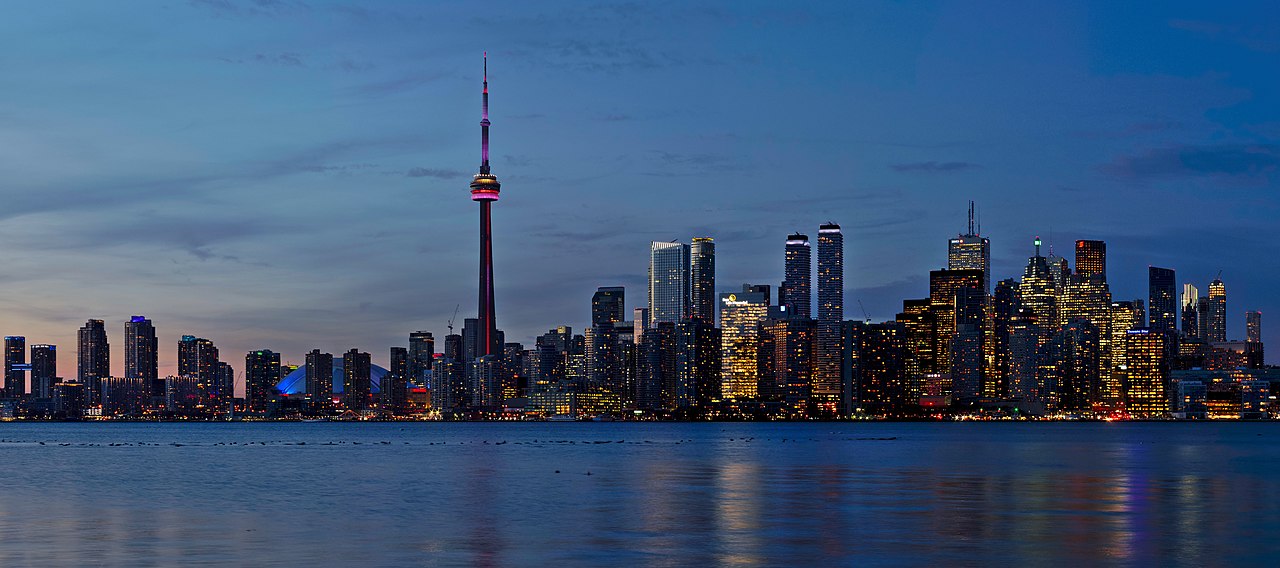
Discover the landscapes and culture of Toronto


Editorial guide with history, culture, and practical tips to plan your trip.
Toronto is not merely a city; it is a true global hub pulsating with energy, history, and diversity. Recognized as the most populous metropolis in Canada, it represents the vibrant heart of Ontario province. Since its strategic location on a port on the northwest coast of Lake Ontario, Toronto has built an enviable reputation, consolidating itself not only as a provincial capital but also as an international hub for vital global economic and cultural activities.
When discussing population scale, the numbers are impressive. The city itself boasts a robust census population, reaching 2,794,356 inhabitants in 2021. However, it is within the context of its metropolitan areas that Toronto's impact becomes even more evident. The Greater Toronto Area (GTA), which encompasses not only the central city but also surrounding regions like Peel, York, Durham, and Halton, has an estimated population of 6,712,341 people. For an even broader urban consensus concept, the Census Metropolitan Area (CMA) reaches an impressive 7,106,379 inhabitants, demonstrating the vast urban capillarity that sustains this gigantic community.
This demographic magnitude places Toronto on a global level of prominence. It ranks as the fourth most populous city in North America, surpassed only by megacities like Mexico City, New York, and Los Angeles. This statistic reflects much more than just numbers; it signals an incomparable social, economic, and cultural complexity. Toronto is synonymous with cosmopolitanism and multiculturalism, globally recognized for its ability to host and celebrate the richness of cultures from different parts of the world.
In essence, exploring Toronto means diving into an epicenter where international trade meets performing arts, where financial business mingles with a vibrant life of endless culinary delights and cultural possibilities. It is a dynamic, energetic, and incredibly livable destination that attracts both the experience-seeking traveler and the opportunity-seeking investor.
While the historical details are too vast to be summarized by concise sources alone, it is undeniable that Toronto's trajectory is intrinsically linked to its role as a fundamental economic and administrative engine. The city was born in a privileged location, positioning itself directly on a natural port on the northwest coast of Lake Ontario. This geography was not accidental; it dictated from the start the flow of commerce and the strategic importance of the area.
Throughout its development, Toronto solidified its position as the provincial capital of Ontario, a title that reinforced its institutional role within Canada. Being a capital does not just mean having a government center; it implies being a focal point for political decision-making and the development of necessary infrastructure to sustain constant and massive growth.
The exponential population growth, resulting in figures such as 2,794,356 inhabitants in the city and over seven million in its CMA, is living proof of this historical evolution. The region's ability to attract global immigrants and investments over the decades transformed the urban landscape. Toronto grew not just with buildings; it grew through cultural integration and commerce. Its history is a fascinating account of how ideal geographical location, combined with an open vision to the world, can create an urban center of unprecedented magnitude in North America.
Therefore, visiting Toronto means walking over layers of history, from its commercial establishment to its modern recognition as one of the most cosmopolitan and vibrant centers on the planet. The city's narrative is a tapestry woven with threads of maritime trade, global financial ambition, and rich cultural diversity.
Toronto's cultural pillar can be defined by the word "diversity." It is a destination that embraces multiculturalism in its most vibrant form. The city does not merely tolerate different cultures; it actively integrates them, creating a unique synergy that is the hallmark of its global cosmopolitan nature.
This cultural wealth manifests in every sector of urban life. Toronto is globally recognized as an arts and culture center. Whether through world-class museums, vibrant theaters, or art galleries adorning every neighborhood, the artistic rhythm never diminishes. The ease of finding unlimited gastronomic options reflects this cultural diversity; the flavors of the world converge in its restaurants, offering a culinary experience that travels across continents.
More than just festivals or museums, daily Toronto life is itself a multicultural spectacle. The blend of ethnic origins and traditions fuels the city's social life. Neighborhoods are living mosaics, where different community groups maintain their roots while actively participating in global metropolitan life. This peaceful and rich coexistence is what makes Toronto a world model for cultural integration.
Beyond visual and culinary arts, sports culture also plays a central role in its urban identity. Major sporting events attract millions, temporarily uniting a vast population under the banner of passionate fandom. This community spirit, which transcends cultural borders, is a fundamental characteristic of life and tourism experience in the city.
Toronto's geographical location is a determining factor in its monumental success. Situated on a natural port on the northwest coast of Lake Ontario, the city has always been positioned at a vital intersection for maritime and land trade routes. This water access not only facilitated commerce from its early days but continues to be an essential economic artery.
The physical size of the urban area is equally impressive. The city of Toronto itself already has a considerable population (around 2,794,356 inhabitants in the 2021 census). However, to understand the true scope of its growth and influence, it is crucial to consider its surrounding megalopolis.
The Greater Toronto Area (GTA) is a geographical concept that covers not just the boundaries of the main city but also four adjacent areas of great development: Peel, York, Durham, and Halton. The confluence of these areas forms a massive urban area with over 6.7 million inhabitants. If we consider the Census Metropolitan Area (CMA), which uses an even more inclusive criterion, the population exceeds 7.1 million people.
This vast and dense concentration of population in such a compact region makes Toronto a remarkable example of urban planning and metropolitan growth. Geographically, it is not just "in" Ontario; it *is* the economic and demographic focal point of the province. Being on the northwest coast of Lake Ontario grants the city an urban landscape that constantly dialogues with water, an element that defines both its scenic beauty and its economic power.
Although direct sources do not provide detailed information on temperature variations or annual precipitation, it is essential to understand Toronto's climate as part of its tourist and residential appeal. Located at a temperate latitude and close to a large body of water—Lake Ontario—the city enjoys a climate that features four distinct seasons.
The climate cycle is characterized by significant variations: summers tend to be warm and pleasant, ideal for exploring riverside parks and enjoying outdoor activities near the port. However, autumn brings vibrant tones that beautify both the urban and natural scenery. Winters, on the other hand, bring intense cold, but also transform the city into a stage for community celebrations and events designed to be enjoyed even in low temperatures.
The constant presence of Lake Ontario acts as a natural climate regulator. The body of water moderates both the coldest and warmest extremes, providing a continental temperate climate that, despite marked seasonal variations, is extremely favorable for urban life and diversified tourism year-round. It is this ability to maintain cultural and economic vibrancy regardless of the season that reinforces its status as an international destination.
Toronto establishes itself in the tourist scene as a destination of rich and varied experiences, aimed at travelers who seek more than just sightseeing; they seek cultural immersion, sports adrenaline, and gourmet satisfaction. Being an international center across multiple areas—business, finance, arts, sports, and culture—the tourist offering is vast and diversified.
For the gastronomy enthusiast, Toronto is a must-visit stop. The ease of finding culinary experiences representing virtually every global culture makes dining establishments a tourist attraction in themselves. Dining possibilities vary infinitely, catering to all tastes and budgets.
In terms of culture, tourism is enhanced by its highly cosmopolitan nature. Visitors are invited to explore neighborhoods that reflect the population's diverse ethnicities. Tourist infrastructure ranges from large commercial spaces (with countless shopping options) to quieter parks and waterfront areas along Lake Ontario, perfect for moments of relaxation.
For event-interested tourists, the city offers a calendar full of attractions. The combination of art, sporting spectacles, and nightlife ensures that any time of year or personal interest is catered for. Toronto is not just a place to visit; it is a destination where you experience a globalizing journey, marked by the pulsating energy of a constantly moving financial and artistic center.
What makes Toronto so special and worthy of being considered a world hub? The answer lies in the perfect combination of geographical, demographic, and economic factors. It is remarkable how the city maintains its status as a provincial capital while attracting global flows that rival the largest metropolises in the world.
A striking statistic is its ranking as the fourth most populous municipality in North America, an achievement that demonstrates continuous success in attracting and integrating diverse communities. The size of its Census Metropolitan Area (CMA), with over 7.1 million inhabitants, underscores the gigantic scale of this metropolis.
Its vocation as an international center is a fact worth highlighting. It's not merely about having financial offices; the concept encompasses a complex synergy between business, finance, arts, and sports sectors, forming a complete and vibrant urban ecosystem. This polyfunctionality is what distinguishes it.
Furthermore, it is fascinating to note how its geography relative to Lake Ontario not only defines its boundaries but also its pace of life, linking the dynamism of large finance with the pleasures of lakeside leisure. Toronto is thus a case study in urban success: a city that managed to preserve its unique and vibrant cultural identity, even as it becomes one of North America's most populous and cosmopolitan centers.
Everything you need to know to plan your trip
Reference figures to help plan your trip
Attractions
9
Selected stays available to book
184 travelers searched Toronto this week
Stays for these dates are among the most sought-after in Toronto
Toronto
R$3,376 / night

Toronto
R$4,005 / night

Toronto
R$5,025 / night

Toronto
R$4,787 / night

Toronto
R$4,833 / night

Toronto
R$4,597 / night

Toronto
R$6,698 / night

Toronto
R$3,196 / night

Toronto
R$2,972 / night

Toronto
R$3,533 / night

Toronto
R$1,945 / night

Toronto
R$1,805 / night
Must-sees, local secrets, experiences, and hotels — filter layers and tap the pins.
Everything you need to know to plan your trip
Get notified when hotel prices in Toronto drop. No spam.
We use your email only to send this price alert. Unsubscribe anytime.
Extend your trip to incredible destinations nearby
We personalize every moment of your journey — from iconic landmarks to hidden cultural gems.
Available 24/7 · Personalized consultations · Local expertise
Updated on July 19, 2026 · Methodology · Authors
Sources
Testimonials
Stories from travelers who have already visited. Share your experience — your comment appears in the cards below.
Visiting Toronto exceeded all expectations. The energy of the place is contagious!
Zélia Carmo
Traveler from Goiânia
We traveled as a family and Toronto delighted kids and adults alike. Great hotel and attraction picks.
Bruno Carvalho
Couple from Curitiba
I arrived without a fixed itinerary and Toronto surprised me at every corner. So welcoming.
Elaine Coutinho
Solo traveler
Stayed near downtown and walked everywhere. Toronto is even better on foot.
Hugo Santana
Local from Belo Horizonte
