
All destinations
Destination
Tiwanaku
Discover Tiwanaku, one of South America's largest pre-Columbian sites. Explore monumental structures near Lake Titicaca and delve into a history of up to 20,000 inhabitants.
Tiwanaku · Brasil
Photos
Visual journey
Discover the landscapes and culture of Tiwanaku


The spirit of Tiwanaku
Editorial guide with history, culture, and practical tips to plan your trip.
About
Tiwanaku, also known by its name Tiauanaco, is not just a place; it is a portal to the grand past of South America. This archaeological site represents one of the most important and vast pre-Columbian manifestations, situated in the cultural heart of western Bolivia. For the traveler fascinated by ancient civilizations, Tiwanaku offers the unique opportunity to walk through the vestiges of an empire that flourished centuries ago, before the arrival of Europeans.
Located near the majestic Lake Titicaca, Tiwanaku stands out as a cultural and architectural colossus. The scale of this location is impressive: it is recognized as one of the largest archaeological sites ever unearthed on the South American continent. Stepping into its area, the visitor feels the magnitude of an advanced society that managed to thrive in this challenging environment.
The preserved surface remains today are not merely scattered vestiges; they tell a complex story of monumental engineering, social organization, and profound cultural connections. The exposed area covers approximately four square kilometers, holding everything from massive megalithic blocks to intricate structures built by the skilled hands of its former inhabitants.
The experience in Tiwanaku is an immersion into human history. It is the place where millennia of life and civilizational development were suspended in time, waiting only for curious explorers like you to arrive and unravel its secrets.
History
The narrative of Tiwanaku is marked by the rise and impact of a highly organized society. While the vestiges attest to a long and complex past, the peak of this civilization's development occurred during a specific historical period: around 800 AD. It was at this moment that the community reached its demographic and cultural height, consolidating its influence in the region.
Imagine a pre-Columbian metropolis flourishing on the edge of one of the highest lakes in the world. Life in Tiwanaku was not merely about subsistence; it was the result of sophisticated mastery over engineering and society. The inhabitants developed complex monumental structures that bear witness not only to their construction skills but also to their capacity to generate large populations.
The site acts as a time capsule, allowing us to profile a highly structured people. The mere existence of megalithic blocks and planned structures suggests a society with well-defined hierarchies, capable of mobilizing large amounts of labor and resources for durable architectural projects. Understanding the history of Tiwanaku is understanding the complex interactions between man, Andean nature, and the quest for civilization.
Culture
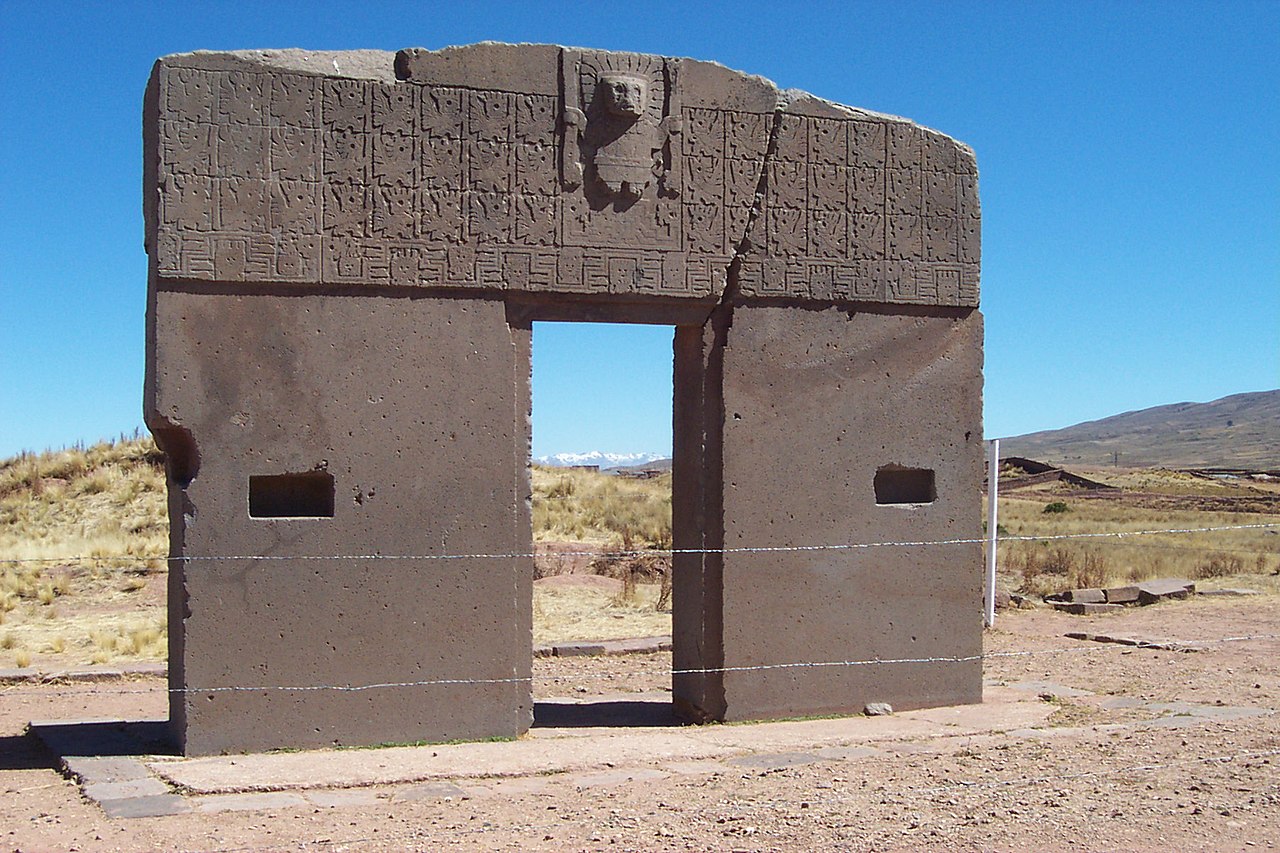
The culture in Tiwanaku manifests itself through the materiality of artifacts found across its vast territory. The archaeological remains are an open museum that allows us to touch history. Among the most notable finds are decorated ceramics and carefully placed megalithic blocks.
Ceramics were not merely utilitarian; they were complex narrative vehicles. The painted decorations on these vessels bring the traveler glimpses of the symbols, mythologies, and perhaps even the daily activities of these forgotten civilizations. Each geometric pattern or depicted figure tells a fragment of the rich pre-Columbian Bolivian worldview.
Furthermore, the monumental structures themselves are expressions of power and belief. The urban planning of the megalithic blocks suggests architecture deeply linked to cosmological or religious principles. The way these gigantic stones were moved, fitted, and erected represents advanced technical knowledge that deserves deep study and admiration.
Visiting Tiwanaku is therefore participating in a cultural dialogue with the past. It is feeling the reverberation of art, ritual, and accumulated knowledge from thousands of years of Bolivian civilizations that left their indelible mark on every corner of this ancient site.
Geography
Located in western Bolivia, Tiwanaku possesses a singular and strategic geographical location. Its proximity to Lake Titicaca is not accidental; this lake, one of the highest in the world and a crucial element for local life, was certainly a determining factor in the flourishing of the Tiwanacu civilization.
The surrounding geography defines the environment in which the structures were erected. We are talking about a high altitude, typical of the Andes mountain range—a dramatic and beautiful setting for any explorer. This location not only conferred visual monumentality upon Tiwanaku but also shaped the habits and resilience of its inhabitants.
The archaeological site covers a vast area, spanning approximately four square kilometers, giving it an imposing geographical extent. This area allows researchers to map not only the main structures but also the residential and ceremonial patterns of the peak population period. The landscape itself is an integral part of the experience: a dramatic contrast between the natural beauty of the Andes and the stone testimony of a lost civilization.
Climate
Due to its high altitude in western Bolivia, near the vast Lake Titicaca, Tiwanaku has climatic characteristics typical of Andean altitudes. The climate is characterized by large temperature variations between day and night, being generally cold.
As a traveler, you must be prepared for an high-altitude environment. Mornings and evenings tend to be cold, requiring layered clothing (the famous "onion effect"). During the day, especially with the sun reflecting off Lake Titicaca, the temperature can rise considerably.
It is crucial to consider the altitude factor. We recommend that visitors allocate time to acclimatize to the elevation before embarking on extensive walks through the archaeological site, minimizing any risk of altitude sickness. The climate, therefore, is an element to be respected and planned into your travel logistics.
Tourism
A visit to Tiwanaku is a profound cultural experience that transcends traditional tourism. It is not just about viewing ruins; it is participating in an educational journey through time and human engineering.
The main tourist attractions are the monumental structures themselves, the megalithic blocks that have withstood the passage of centuries, and the exhibition area where decorated ceramics can be admired. The circuit through the site is carefully planned so that the visitor has a comprehensive view of the location's complexity.
Archaeological tourism in Tiwanaku requires an attentive gaze. We recommend specialized guides to contextualize the findings, transforming the mere observation of ancient stones into a living narrative about a forgotten Bolivian empire. It is ideal to combine the site tour with a day of contemplation in the Lake Titicaca region, absorbing the mystical atmosphere of the Andes.
Curiosities
The demographic and physical impact of Tiwanaku is something that impresses even researchers. It is fascinating to consider that, at its peak period, the location supported an estimated population between ten thousand and twenty thousand people. Maintaining a settlement of this magnitude in such challenging geography testifies to the ingenuity and organizational power of this civilization.
Another remarkable data point is the coverage of surface remains: about four square kilometers. This vast area not only ensures that the site is one of the largest in South America but also offers an unparalleled wealth of sources for archaeological study. It is a gigantic physical testament to a rich history.
Finally, the presence of megalithic blocks and decorated ceramics on such a grand scale reminds us that Tiwanaku was more than just a mere population center; it was a pole of power, a ritualistic center, and perhaps even a cultural engine for vast surrounding areas. It is material proof of Bolivian pre-Columbian greatness.
Quick facts
Everything you need to know to plan your trip
Destination at a glance
Reference figures to help plan your trip
Attractions
9
Best hotels
We are still connecting hotels for this destination. Search stays in the area in the meantime.
126 travelers searched Tiwanaku this week
Stays for these dates are among the most sought-after in Tiwanaku
Coming soon
We are still connecting hotels for this destination. Search stays in the area in the meantime.
Search hotelsDestination map
Must-sees, local secrets, experiences, and hotels — filter layers and tap the pins.
Frequently asked questions
Everything you need to know to plan your trip
Price alert for Tiwanaku
Get notified when hotel prices in Tiwanaku drop. No spam.
We use your email only to send this price alert. Unsubscribe anytime.
Nearby destinations
Extend your trip to incredible destinations nearby


Compare with other destinations
Still unsure? See side-by-side comparisons to decide.
Ready to experience Tiwanaku?
We personalize every moment of your journey — from iconic landmarks to hidden cultural gems.
Available 24/7 · Personalized consultations · Local expertise
Updated on July 28, 2026 · Methodology · Authors
Sources
Testimonials
What people say about Tiwanaku
Stories from travelers who have already visited. Share your experience — your comment appears in the cards below.
Visiting Tiwanaku exceeded all expectations. The energy of the place is contagious!
Arthur Klein
Tourist from Germany
We traveled as a family and Tiwanaku delighted kids and adults alike. Great hotel and attraction picks.
Cíntia Rodrigues
Family with kids
I arrived without a fixed itinerary and Tiwanaku surprised me at every corner. So welcoming.
Fabiano Lopes
Food lover
Stayed near downtown and walked everywhere. Tiwanaku is even better on foot.
Ingrid Viana
Honeymoon