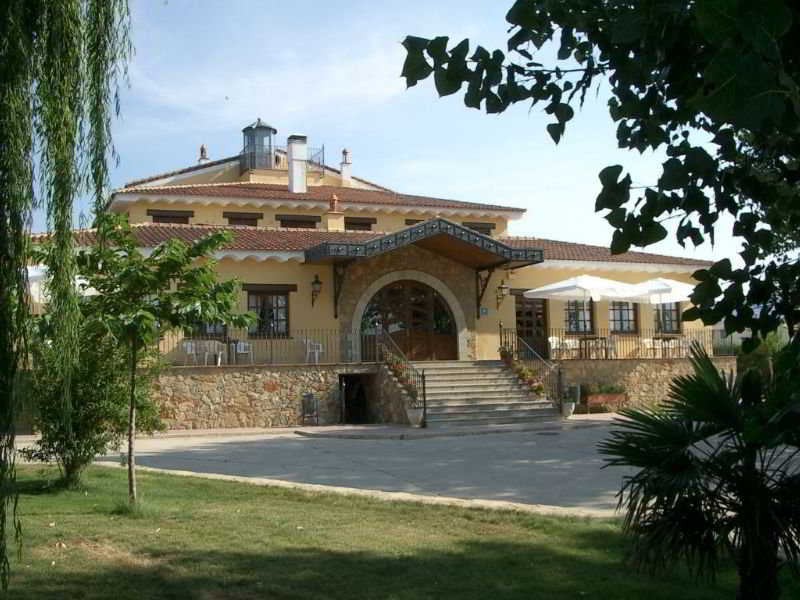
Rubielos de mora
Hotel de Rubielos
R$928 / night

Destination
Explore Texcoco de Mora, a vital historical site in Mexico. Discover the past of the Acolhua and the Aztec culture of the Valley of Mexico.
Texcoco De Mora · Brasil
Photos
Discover the landscapes and culture of Texcoco de Mora


Editorial guide with history, culture, and practical tips to plan your trip.
Welcome to Texcoco de Mora, a destination that transcends mere geography to dive deep into the rich tapestry of Mesoamerican civilization. This place is a point of convergence where the glorious past of pre-Columbian empires meets the vibrant modern urban life of Mexico. Originally known as Tetzcoco, this location was much more than a simple settlement; it was an altepetl, a powerful and influential city-state. Its political and cultural importance reverberated for centuries in the region of the Central Mexican Plateau.
The trajectory of Texcoco is marked by its strategic location and fundamental role in the Valley of Mexico, one of the most historically dense and populated areas in Latin America. Although today it is an integral part of the vast metropolitan area of Mexico City, the spirit and heritage of Tetzcoco persist on every street, square, and archaeological ruin. The modern core, Texcoco de Mora, is a living testament to this historical continuity, connecting visitors to the deep roots of a civilization that flourished between 1200 and 1521.
The charm of this destination lies precisely in this temporal dialogue. On one hand, we find the archaeological vestiges of pre-Columbian Tetzcoco, transporting us directly to the late post-classic period of Mesoamerica; on the other, we encounter contemporary effervescence in its current municipality. This duality offers travelers a unique experience: we are invited to walk through paths trod by great civilizations, discovering how ancestral knowledge merged with the fast pace of the 21st century.
Its privileged geographical position, on the eastern shore of the historical Lake Texcoco and northeast of the colossal Aztec capital, Tenochtitlan, was never accidental. This positioning conferred upon Tetzcoco a status as a regional power, allowing it to play crucial roles in the commerce, political alliances, and social developments of pre-Columbian Mesoamerica.
The historical narrative of Texcoco is an epic saga spanning the height of great Mesoamerican civilizations. Its most brilliant period, that of Tetzcoco as an altepetl, occurred during the late post-classic period of pre-Columbian Mesoamerican chronology. It is estimated that the development and rise of this urban center solidified around 1200 AD, establishing a center of power and knowledge in the Central Mexican Plateau region.
Tetzcoco's strategic importance was undeniable. Located on the eastern shore of Lake Texcoco, access to the vast water network not only facilitated daily life but also shaped the trade and military routes of the time. This location placed Tetzcoco in a privileged observation point regarding the political dynamics between the major urban centers of the region, with its northeastern relationship to the heart of the Aztec empire, Tenochtitlan, being particularly notable.
The peak of this history was interrupted by an event that would irrevocably alter the course of time and culture: the arrival of Europeans. This historical milestone marks the dramatic and decisive end of Tetzcoco's pre-Columbian cycle in 1521. Despite the political and administrative collapse resulting from this meeting of worlds, the cultural and architectural legacy remained, preserved and adapted for modern development.
Today, historical memory is a vital component of the travel experience. The archaeological site that bears witness to this long journey—from great ceremonial centers to the daily structures of a vibrant city-state—is integrated into the modern life of the municipality of Texcoco. This integration ensures that the visitor does not just reread chapters in books, but walks on the ground where history was written by centuries of flourishing and constantly evolving civilizations.
The culture of Texcoco is a rich tapestry woven with threads of indigenous Mexican life and colonial and modern influences. It is a place where ancestral traditions, manifested in cuisine, arts, and rituals, coexist peacefully with contemporary metropolitan dynamism.
As an ancient political and cultural center (an altepetl), Tetzcoco always maintained a deep connection to its original rituals and beliefs. Although cultural manifestations were deeply influenced by colonization, the core of the Texcocan identity remains rooted in Mesoamerican worldview. This cultural resilience is one of the highlights for any traveler interested in ethnography and living traditions.
Local gastronomy reflects this historical fusion. Using native ingredients from the Valley of Mexico, the Texcocano palate evokes memories of past eras, recalling the eating habits of large populations who lived in the region before the arrival of Europeans. Every dish tells a piece of the story of the Central Mexican Plateau.
Furthermore, local art and craftsmanship are powerful vehicles for cultural preservation. Contemporary artisans in Texcoco continue to use techniques passed down through generations, keeping alive the decorative forms, materials, and symbolic meanings that were central to the daily life of pre-Columbian Tetzcoco. Visiting this municipality is participating actively in a continuous cultural process, where the past is not a museum relic, but something tangible in people's daily lives.
Geographically, Texcoco de Mora is situated in the Central Mexican Plateau, a region known for its complex topography and historical fertility that allowed for the development of massive civilizations. Its location is crucial to understanding its historical role as an important altepetl.
The most defining geographical element is its proximity to the Valley of Mexico, one of the most important river basins and population areas in America. Historically, Tetzcoco was strategically positioned on the eastern shore of the vast Lake Texcoco. This lake was not just a body of water; it functioned as a vital artery for the economy, transport, and even political territorial boundaries.
The Valley of Mexico itself is geologically rich and historically vibrant, serving as a stage for great urban centers. Its northeastern position relative to monumental Tenochtitlan (the old Aztec capital) placed Texcoco in a crucial geopolitical balance point, allowing it to maintain autonomy and develop its own cultural and political identity.
Currently, the city is integrated into the modern Mexican municipality of Texcoco, forming part of the giant Mexico City Metropolitan Area. Although this integration means proximity to massive urban centers, the original Tetzcoco core managed to maintain a geographical uniqueness that allows it to preserve its distinct historical and cultural character within this vast metropolitan context. It is a remarkable example of how an ancient center can coexist with modern expansion, maintaining its territorial identity tied to Lake Texcoco.
The climate of the Central Mexican Plateau region, where Tetzcoco is located, is characterized as semi-arid and temperate, following a pattern that varies significantly between seasons. This climate has been a determining factor in how the civilization of Tetzcoco prospered over the centuries.
Generally, the climate can be divided into two major periods: the natural cycle of the Valley of Mexico and the modern climatic regime influenced by its large metropolitan area. In pre-Columbian times, life on the eastern shore of Lake Texcoco required adaptation to a lacustrine ecosystem that varied with wet and dry seasons.
Today, travelers should be prepared for typical Mexican altitude climate. Temperatures tend to be mild throughout most of the year but can show large variations between day and night. Spring and autumn are generally considered ideal times for visiting, as they offer a pleasant balance of moderate daytime warmth and cool nights.
It is important to note that due to its location in the Central Mexican Plain and the influence of nearby large urban centers, there is marked seasonality. The rainy seasons bring necessary vitality to the lacustrine ecosystem (even if the lake has undergone enormous changes today), while the drier periods accentuate temperature contrasts but also guarantee an impressive visual and stable backdrop for cultural and archaeological tours.
Tourism in Texcoco de Mora is deeply rooted in its cultural and historical axis. Far from being merely a stopping point on the Mexico City route, the city offers authentic immersion into Mesoamerican civilization. It is ideal for the traveler interested in archaeology, pre-Hispanic history, and profound cultural experiences.
The main tourist attraction is, undoubtedly, the archaeological site of Tetzcoco. Exploring these ruins is traveling back in time, allowing visitors to understand the social organization, religious rituals, and construction techniques of an important altepetl that flourished between 1200 and 1521. Guided tours are essential to unravel the meaning of every structure and mural.
Beyond the ruins, the city preserves cultural centers and museums dedicated to the history of the Valley of Mexico. These sites not only exhibit pre-Columbian artifacts—ceramics, jewelry, and tools—but also contextualize Tetzcoco's political power relative to Tenochtitlan and other neighboring groups.
For gastronomy enthusiasts, Texcoco offers a culinary immersion that dates back to pre-Hispanic traditions. The local markets are living platforms where age-old ingredients are still used in typical dishes, providing a complete sensory experience for the tourist.
In summary, visiting Texcoco de Mora is not just an outing; it is an academic and emotional dive into Mesoamerican history. It is a destination that demands curiosity, respect for the past, and a willingness to walk on trails where centuries of stories have accumulated.
One of the most fascinating characteristics of Texcoco is its historical role as an altepetl. Understanding this term means understanding the political heart of the region. An *altepetl* was much more than a simple city; it was an independent state, with its own governmental structures, army, and culture, capable of negotiating alliances and competing for power on equal footing with giant neighbors like Tenochtitlan.
The relationship between Texcoco and Lake Texcoco is fundamental to understanding its economy. Life on the eastern shore depended not only on water resources but also on the commercial flow that crossed this vast body of water. The lake was the principal geographical engine of the civilization, shaping settlement patterns and trade routes for millennia.
It is notable that despite being part of the massive Mexico City Metropolitan Area today, Texcoco has managed to maintain a significant degree of its original identity. This capacity to coexist with the rapid pace of modern metropolis while remaining a sanctuary of pre-Columbian history is a true cultural achievement that deserves emphasis.
Finally, the continued presence of the name Tetzcoco versus the modern Texcoco de Mora serves as a constant reminder of the passage of time and cultural resilience. The destination invites the traveler to see not just the physical ruins, but the persistence of the peoples who shaped this place from its pre-Columbian peak to the present day.
Everything you need to know to plan your trip
Reference figures to help plan your trip
Attractions
9
Selected stays available to book
167 travelers searched Texcoco De Mora this week
Stays for these dates are among the most sought-after in Texcoco De Mora
Must-sees, local secrets, experiences, and hotels — filter layers and tap the pins.
Everything you need to know to plan your trip
Get notified when hotel prices in Texcoco de Mora drop. No spam.
We use your email only to send this price alert. Unsubscribe anytime.
Extend your trip to incredible destinations nearby
Still unsure? See side-by-side comparisons to decide.
We personalize every moment of your journey — from iconic landmarks to hidden cultural gems.
Available 24/7 · Personalized consultations · Local expertise
Updated on July 28, 2026 · Methodology · Authors
Sources
Testimonials
Stories from travelers who have already visited. Share your experience — your comment appears in the cards below.
Visiting Texcoco de Mora exceeded all expectations. The energy of the place is contagious!
Wagner Lisboa
Traveler from Manaus
We traveled as a family and Texcoco de Mora delighted kids and adults alike. Great hotel and attraction picks.
Arthur Klein
Tourist from Germany
I arrived without a fixed itinerary and Texcoco de Mora surprised me at every corner. So welcoming.
Cíntia Rodrigues
Family with kids
Stayed near downtown and walked everywhere. Texcoco de Mora is even better on foot.
Fabiano Lopes
Food lover


