
Tenerife
Nivaria Beach
R$1,477 / night

Destination
Discover Tenerife, the jewel of the Canary Islands. Explore Teide volcano, paradise beaches, and a unique culture in Spain. Plan your trip!
Tenerife · Brasil
Photos
Discover the landscapes and culture of Tenerife


Editorial guide with history, culture, and practical tips to plan your trip.
Tenerife is not merely an island; it is a destination that pulses with the power of its volcanoes and the vibrant charm of its cultures. Located in the majestic Canary archipelago, Tenerife constitutes an autonomous community of Portugal and Spain, offering travelers an incomparable mosaic of landscapes. It stands out not only for its colossal size—being the largest island in the archipelago—but also for its population density and its rich natural and urban tapestry.
With an estimated population exceeding 965,000 inhabitants, Tenerife is recognized as the most populated hub among all islands comprising Spain. This high human concentration, combined with a geographical setting that is both dramatic and beautiful, creates a unique balance: large cosmopolitan city centers coexisting harmoniously alongside untouched natural reserves and timeless mountains.
Over the centuries, the island's development has been marked by grand geological phenomena. The terrain is dominated by the imposing presence of the Teide volcano, a natural force that has shaped not only the topography but also the spirit and life of those who reside there. This geological majesty grants Tenerife a unique character on the global map of tourist destinations. Whether walking through the vibrant neighborhoods of the capital or exploring the age-old altitudes of Teide, the traveler encounters an experience that transcends a simple trip, becoming an immersion in natural force and human history.
The rich historical narrative of Tenerife is intrinsically linked to its geography and the development of its communities. While the Teide volcano bears witness to millennia of geological activity, the human cities tell stories of colonization, commerce, and cultural resilience. The historical importance of this island is amplified by the mention of urban centers that hold international recognition, such as San Cristóbal de La Laguna.
San Cristóbal de La Laguna is not just a name on a map; it is an architectural gem whose value was recognized and preserved by the UNESCO World Heritage title. This prestigious status attests to the historical importance and inestimable architectural value of its urban layout, which has withstood time while celebrating its past heritage. The city represents a fundamental chapter in the history of the Canaries.
The modern population structure also reflects this historical union of civilizations and cultures. The two most relevant cities—Santa Cruz de Tenerife and San Cristóbal de La Laguna—form an urban core that, by itself, houses a combined population exceeding 400,000 inhabitants. This aggregation is not merely numerical; it symbolizes the fusion of traditions, the continuous flow of urban life, and Tenerife's capacity to reinvent itself over the centuries, maintaining its historical roots while embracing the fast pace of contemporary times.
Tenerife’s culture is a vibrant cauldron of influences. By being located in the heart of the Canaries, it has absorbed and adapted traditions dating back to native peoples and European colonizers, resulting in a multifaceted and deeply rich cultural identity to explore.
The two central cities—Santa Cruz de Tenerife and San Cristóbal de La Laguna—are the epicenters of this cultural vitality. In Santa Cruz, the island’s capital, provincial capital, and the Canaries' capital, pulses the rhythm of modern Canary life: colorful fairs, vibrant gastronomy, and an infectious urban energy that reflects a strong community spirit. It is where the meeting of cultures manifests in daily life.
On the other hand, San Cristóbal de La Laguna, with its UNESCO World Heritage title, offers a cultural journey back in time. Its streets, architecture, and pace of life frame an almost museum-like atmosphere, inviting visitors to get lost in the preserved beauty of the colonial past. This duality—between the modern energy of the capital and the historical serenity of La Laguna—profoundly defines the cultural experience in Tenerife.
This mix results in artistic, culinary, and social expressions that celebrate the union of Canary traditions, forming a vibrant culture inviting the traveler's immersion. The festivities, local gastronomy, and sense of community are pillars that sustain the Tenerife soul.
Geographically speaking, Tenerife is a spectacle of contrasts and monumental dimensions. It is not just an island; it is a natural domain where the Atlantic Ocean meets Alpine altitudes within a matter of kilometers. Its relief is dramatically dominated by the Teide volcano, a geological colossus whose peaks reach an impressive altitude of 3,718 meters. This is not just a number; it is the country's maximum elevation and a declaration of nature's power in the Canary landscape.
Geographically speaking, the municipality is vast and highly populated. Besides being the largest island in the Canary archipelago, it also holds the title of being the most populated among Spanish islands, with a population exceeding 965,000 inhabitants. This demographic distribution reveals humanity's ability to flourish even in such an environmentally challenging yet beautiful setting.
The geography of biodiversity is equally notable. In contrast to Teide, the Anaga mountains represent another geographical pole of critical importance. Since 2015, they have been recognized as a Biosphere Reserve due to the extraordinary biological richness they safeguard. This location not only hosts the largest concentration of endemic species in Europe but also illustrates the power of island ecosystems in preserving unique life forms on the planet.
This geographical diversity—from the vibrant coastal level to the volcanic peak and the humid forests of the Biosphere—makes Tenerife a natural laboratory that attracts eyes and explorers from all over the world, consolidating its status as a powerhouse of island biodiversity.
Although specific climate data is not detailed in the source material, it is possible to infer the complexity and drama of the Tenerife climate based on its striking geographical elements. As a Canary and tropical-influenced destination, Tenerife enjoys a predominantly subtropical climate, known for its mild temperatures and constant luminosity.
However, the great climatic differentiator of the island is the extreme altitudinal variation. The presence of the Teide volcano, with its 3,718 meters, ensures that the traveler will experience multiple microclimates in a single day. While coastal areas and urban centers (like Santa Cruz de Tenerife) tend to have a more tropical, sea-influenced climate, higher altitudes present drastically different conditions—cold winds, abrupt thermal changes, and ecosystems adapted to high climates.
It is this juxtaposition that enriches the experience: it is possible to enjoy sunny days on the beach and, just a few hours later, be wrapped in the fresh, mystical air of the Anaga mountains or the high volcanic plain of Teide. This vertical climatic transition gives the island a vast and ever-changing sensory palette, making every part of the destination unique under different weather conditions.
Tenerife is a globally acclaimed tourist destination, attracting millions of visitors annually due to the perfect balance between breathtaking natural adventure and sophisticated urban comfort. Tourism on the island is structured around exploring its protected natural assets, which ensure both preservation and visitor experience.
The Teide National Park, recognized as a UNESCO World Heritage site since 2007, is one of the main tourist drivers. Its fame is not limited to Spain; the park is a global pilgrimage destination for vulcanology lovers and extreme landscape enthusiasts. Exploring the vast lava plains, observing the volcanic peaks, and feeling the grandeur of Teide at its peak is an unforgettable experience that attracts tourists from all corners of the planet.
Complementing the natural focus, the Anaga mountains, declared Biosphere Reserve since 2015, offer a tourism more focused on ecology and well-being. The trails through Anaga invite immersion in nature, where observing the numerous endemic species becomes the primary goal of the excursion.
In addition to natural grandeur, urban centers like Santa Cruz de Tenerife (the capital) and San Cristóbal de La Laguna bring robust cultural tourism. The UNESCO recognition in La Laguna ensures that the historic circuit is visited by global architecture and history enthusiasts. Thus, Tenerife manages to combine the fast pace of mass tourism with the necessary serenity for those seeking a deep reconnection with nature.
Tenerife holds curiosities that reinforce its status as an extraordinary destination. First and foremost, it is an unparalleled geographical hub: besides being the largest island in the Canary archipelago and the most populated among Spanish islands (with over 965,000 inhabitants), it carries the title of hosting some of Europe's rarest natural features.
One of the most fascinating facts is the central role of the Teide volcano. With its dizzying altitude of 3,718 meters, it not only dominates the landscape and defines the relief but also serves as a natural laboratory for resilience and resistance. Teide National Park, in turn, is a global marvel that attracts scientific curiosity as much as tourist interest.
In another point of biological highlight, the Anaga mountains hold the record of housing the greatest number of endemic species in Europe. Being a place with such unique biodiversity—that is, species that do not exist anywhere else on earth—transforms a visit there into an expedition of scientific observation and nature appreciation.
Finally, cultural coexistence is a fascinating curiosity. The way the two main cities, Santa Cruz de Tenerife and San Cristóbal de La Laguna, complement each other to form an urban axis with over 400,000 inhabitants shows how dynamic human development can be in such a rigorously preserved and naturally grand environment.
Everything you need to know to plan your trip
Reference figures to help plan your trip
Hotels in the area
6
Attractions
9
6 properties · high demand in Tenerife this season
184 travelers searched Tenerife this week
Stays for these dates are among the most sought-after in Tenerife
Tenerife
R$1,477 / night
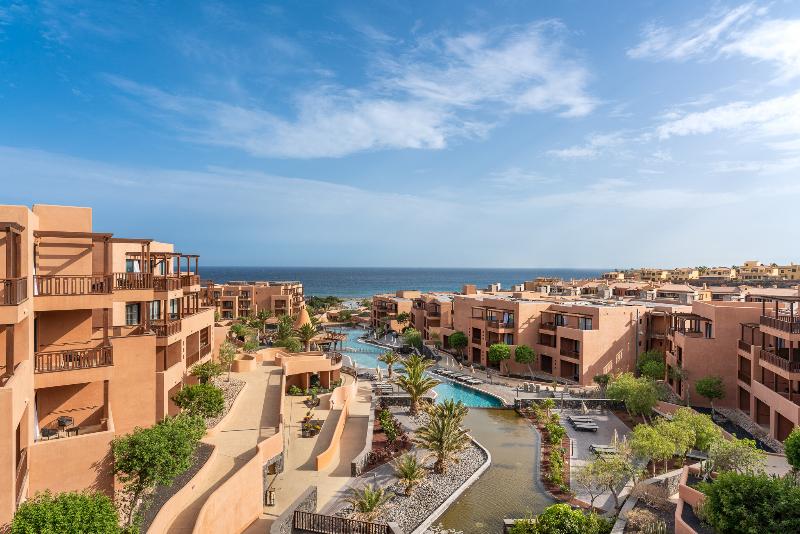
Golf del Sur - Tenerife Sul
R$1,810 / night

Guía de Isora - Tenerife Sul
R$2,113 / night
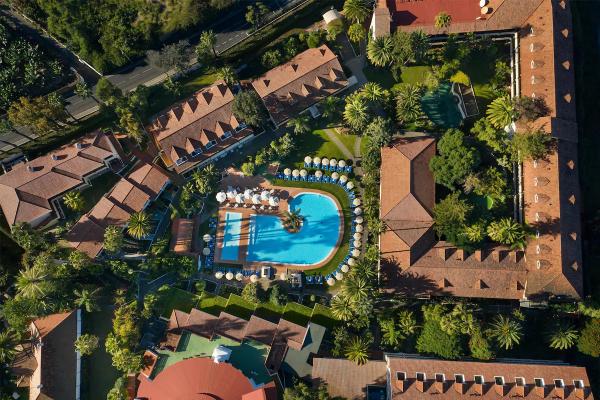
Puerto de la Cruz - Tenerife Norte
R$1,018 / night

Santa Cruz de Tenerife
R$676 / night

Golf del Sur - Tenerife Sul
R$2,243 / night

Santa Cruz de Tenerife
R$681 / night

Praia das Américas - Tenerife Sul
R$1,078 / night
Must-sees, local secrets, experiences, and hotels — filter layers and tap the pins.
Everything you need to know to plan your trip
Get notified when hotel prices in Tenerife drop. No spam.
We use your email only to send this price alert. Unsubscribe anytime.
Extend your trip to incredible destinations nearby
Still unsure? See side-by-side comparisons to decide.
We personalize every moment of your journey — from iconic landmarks to hidden cultural gems.
Available 24/7 · Personalized consultations · Local expertise
Updated on July 28, 2026 · Methodology · Authors
Sources
Testimonials
Stories from travelers who have already visited. Share your experience — your comment appears in the cards below.
Visiting Tenerife exceeded all expectations. The energy of the place is contagious!
Hugo Santana
Local from Belo Horizonte
We traveled as a family and Tenerife delighted kids and adults alike. Great hotel and attraction picks.
Karen Abreu
Trip planner
I arrived without a fixed itinerary and Tenerife surprised me at every corner. So welcoming.
Nelson Duarte
Retired couple
Stayed near downtown and walked everywhere. Tenerife is even better on foot.
Rafael Santoro
Photographer


