
Stockton-on-Tees
Hampton by Hilton Stockton on Tees
R$806 / night
Destination
Discover Stockton-on-Tees, a historic port on the River Tees. Explore the industrial vibe and attractions of North East England. Your journey starts here!
Stockton-on-Tees · Brasil
Photos
Discover the landscapes and culture of Stockton-on-Tees


Editorial guide with history, culture, and practical tips to plan your trip.
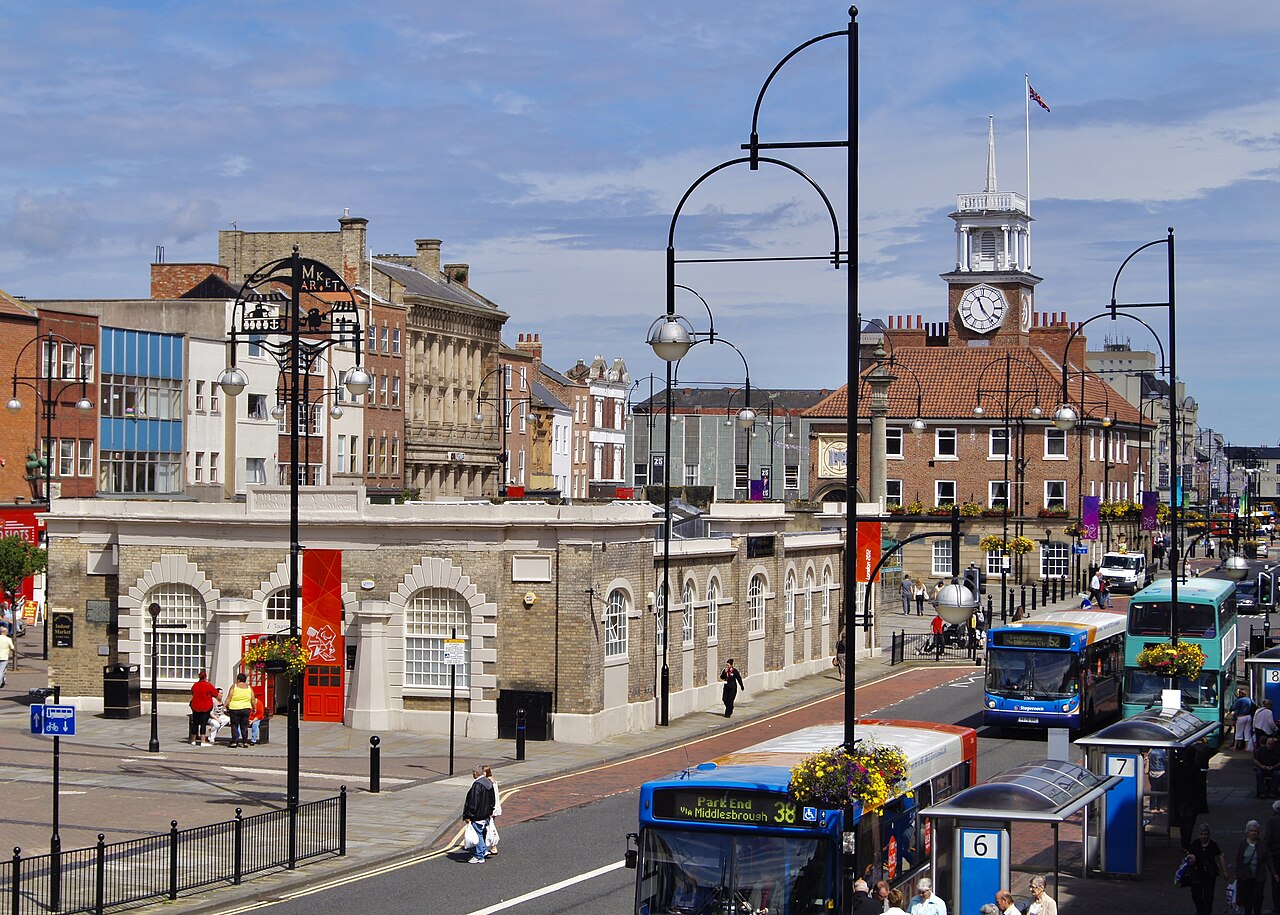
Stockton-on-Tees is a robust and historically significant city, nestled in North East England. Its identity is intrinsically linked to the concept of synergy between port activity and heavy industry. It is not merely a geographical point on the map; it is an operational center where the River Tees plays a fundamental role in local economic and social life. The city was shaped by its strategic position, becoming early on a consolidated industrial hub that met the demands of maritime trade. With an estimated population of over 82,000 inhabitants, Stockton maintains the vibrant energy of its history as a crossroads of commercial routes and manufacturing centers. This unique combination—port and factory—defines the city's urban profile, ensuring that its development is always oriented toward commerce and the logistical needs of the continent.
The historical narrative of Stockton-on-Tees is deeply intertwined with the economic and navigational strength of the River Tees. Over the centuries, this area saw its growth driven by its ability to process and export goods. The designation as an “industrial city” is not a superficial adjective; it refers to a rich past in machinery, factories, and methods of production that transformed the urban landscape and social fabric of the region. The port on the River Tees was historically the engine of this transformation. It was in this commercial cradle that Stockton consolidated its role as a vital point within Britain’s transport networks. The local history is a testament to human resilience, adapting to changes in global trade patterns, but always anchored by its privileged geography and the constant flow provided by the river.
The culture of Stockton-on-Tees directly reflects its industrial and maritime past. Cultural life is permeated by the spirit of port and industrial workers—a legacy of strong community and practical sense. Local traditions are closely linked to the rhythm of the River Tees and the loading and unloading activities that have always characterized daily life in the city. Although cultural landmarks may vary over time, there is a visible preservation of working-class and port memory in the architecture and everyday narratives. The local identity values manual labor, entrepreneurship related to international trade, and the camaraderie that accompanies such a dynamic hub as Stockton-on-Tees.
Geographically, Stockton-on-Tees occupies a singular and privileged position in North East England. Its existence is directly linked to the majestic presence of the River Tees. This river is not just a scenic feature; it is the vital artery that granted the city port status. The course of the Tees allows Stockton-on-Tees to maintain constant contact with navigable waterways, facilitating the flow of goods and people. Its location in North East England gives the city proximity both to domestic markets and wider trade routes, consolidating its role as a crucial logistical center. It is the fusion between this fluvial geography and its regional position that guarantees its continued importance for the British economic scene.
While specific climate data are not detailed in the source, it can be inferred that Stockton-on-Tees has a typical North East English climate. The region's climatic characteristics directly influence port and industrial operations. The British climate is known to be temperate maritime, meaning temperature variations tend to be milder compared to other latitudes. The proximity to the River Tees and the Atlantic Ocean moderates these changes. For a port hub like Stockton-on-Tees, this climate is crucial, as it guarantees relatively constant operation throughout the year, allowing industry and commerce not to be drastically interrupted by extreme weather conditions.
Tourism in Stockton-on-Tees has very strong roots in its industrial and port vocation. Although often recognized for its economic role, visitors can explore the living history of the River Tees and the old industrial sheds that now serve as museums or revitalized cultural spaces. The port itself is a point of historical and logistical interest, showing the mechanism that drove the city's growth. Tourist visits generally focus on understanding the interaction between man, river water, and heavy manufacturing. It is possible to trace a route that follows the marks left by industrial activity, celebrating not only the goods exported but also the human talent that sustained this vibrant port center in North East England.
One of the most notable facts about Stockton-on-Tees is its estimated population of over 82,000 inhabitants, a number that attests to the vitality and continuous growth of its urban core. The fact that it is simultaneously classified as an industrial city and a port on the River Tees is not merely a description, but a testament to its multifaceted role in the regional economy. This duality—port by nature and industrial by function—ensures that the daily life of the city is marked by synergy between maritime transport and advanced factory processes. The River Tees, therefore, is not just a natural waterway; it is defining element, giving the city of Stockton-on-Tees its unique reputation and indispensable status on the UK economic map.
Everything you need to know to plan your trip
Reference figures to help plan your trip
Hotels in the area
9
Attractions
9
9 properties · high demand in Stockton-on-Tees this season
146 travelers searched Stockton On Tees this week
Stays for these dates are among the most sought-after in Stockton On Tees
Must-sees, local secrets, experiences, and hotels — filter layers and tap the pins.
Everything you need to know to plan your trip
Get notified when hotel prices in Stockton-on-Tees drop. No spam.
We use your email only to send this price alert. Unsubscribe anytime.
Extend your trip to incredible destinations nearby
Still unsure? See side-by-side comparisons to decide.
We personalize every moment of your journey — from iconic landmarks to hidden cultural gems.
Available 24/7 · Personalized consultations · Local expertise
Updated on July 27, 2026 · Methodology · Authors
Sources
Testimonials
Stories from travelers who have already visited. Share your experience — your comment appears in the cards below.
Visiting Stockton-on-Tees exceeded all expectations. The energy of the place is contagious!
Monique Barbosa
Food enthusiast
We traveled as a family and Stockton-on-Tees delighted kids and adults alike. Great hotel and attraction picks.
Priscila Gomes
Friend group
I arrived without a fixed itinerary and Stockton-on-Tees surprised me at every corner. So welcoming.
Tiago Bueno
Traveler from Campinas
Stayed near downtown and walked everywhere. Stockton-on-Tees is even better on foot.
Yara Bastos
Eco traveler


