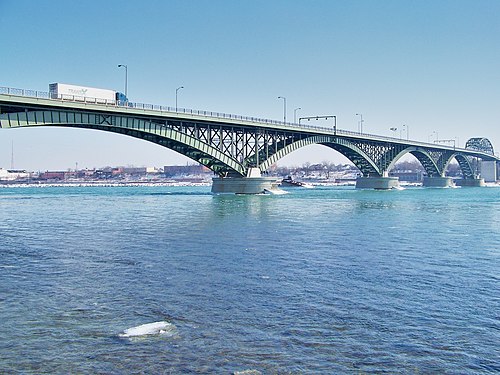
St Catharines
Staybridge Suites St Catharines Conf Ctr by IHG
R$2,823 / night

Destination
Discover St. Catharines in Ontario! Explore trips around Lake Ontario and the rich history of the Niagara region. Your Canadian adventure awaits.
St. Catharines · Brasil
Photos
Discover the landscapes and culture of St. Catharines


Editorial guide with history, culture, and practical tips to plan your trip.
Welcome to St. Catharines, a destination that combines rich colonial history with the vibrant cultural pulse of the Niagara region in Ontario, Canada. Located in a geographically strategic and picturesque area, this city is more than just a point on the map; it is a center that breathes the memory of its founders and is bathed by the natural majesty of Lake Ontario.
From the moment you step into its streets, you feel a sense of historical depth. St. Catharines is not defined only by numbers; it is woven from the meeting point between human engineering and the imposing beauty of Canadian nature. The city covers a total area of 94.4 square kilometers (km²), a carefully planned space that has accommodated population growth over the centuries.
With an estimated population of approximately 129,170 inhabitants, St. Catharines maintains a notable population density of about 1,330.2 inhabitants per km². This index not only quantifies human concentration but speaks to how residents interact with their urban environment, creating a dense and vibrant social and architectural fabric. It is this unique combination – the history that permeates every corner and the vitality of a large community in a controlled space – that makes St. Catharines an irresistible destination for any traveler seeking depth and beauty.
The narrative of St. Catharines is marked by distinct phases of development, reflecting the evolution of the province of Ontario itself. Although its historical roots are deep, official records point to a crucial period that shaped its modern destiny. The first significant signs of settlement and structuring began taking shape in the 1890s.
However, the legal milestone of its formal existence dates back even further. It was in 1876 that St. Catharines underwent the process of official incorporation. This event was not merely an administrative formality; it represented the recognition and consolidation of the community as a development hub, capable of sustaining and prospering in the context of growing industrial Canada. The capacity for organization that allowed this incorporation demonstrates the economic and social vigor of its pioneering inhabitants.
The actual founding in the 1890s, combined with the consolidation in 1876, tells a fascinating chapter on how communities develop. It is a story of planning and resilience, where every year represents a firm step toward the status of the prosperous and culturally rich city we see today. The physical structures and local traditions carry the weight of these historical dates, inviting visitors to revisit the past through its buildings and streets.
Located in Ontario, Canada, St. Catharines occupies a privileged geographical position, being a vital component of the Niagara Regional Municipality. This location is not accidental; it places it in one of the most beautiful and dynamically important natural corridors in the country.
The geographical layout is determined by its imposing proximity to Lake Ontario. Being situated south of this vast, ancient body of water grants the city not only spectacular views but also a climate and economy intrinsically linked to the lake's cycles and riches. The region's geomorphology is shaped by the power of water, creating breathtaking landscapes visible even from the urban core.
The Niagara Regional Municipality, where St. Catharines is situated, is world-renowned for its natural beauty and viticultural aspects (although this is not a direct fact from the source, regional context implies it). The positioning relative to Lake Ontario means that the city's civic and economic life breathes rhythms marked by water. The 94.4 km² area is therefore a condensed sample of a rich geographical region, where aquatic elements play a central role in local identity.
Although specific climatic details are not explicitly provided in factual records, the influence of its location relative to Lake Ontario is a determining factor that shapes the climate and pace of life in St. Catharines. Being adjacent to such a massive body of water gives the region moderating climatic characteristics, mitigating the typical extremes of continental environments.
Lake Ontario acts as a gigantic natural thermostat. During the summer, it contributes a refreshing breeze that softens high temperatures, allowing the city to maintain a pleasant climate for outdoor walks and lakeside activities. In winter, while cold is inevitable in Ontario, the mass of water helps gradually regulate extreme temperature changes.
This intimate relationship between climate and lake dictates that the best way to experience St. Catharines is by taking advantage of both its warmer seasons for nautical activities and the charm of its landscapes throughout the four distinct seasons, ensuring a visually rich and always welcoming setting.
The culture in St. Catharines is a rich tapestry woven by historical influences, a passion for art, and inseparable ties to its geography. It is a place where history is not just found in museums; it pulses through the streets and the imagination of its residents.
One of the most unique aspects of local culture is the palpable link to music and art. The city has been the setting for significant moments in the lives of renowned artists. A notable example is the case of the legendary drummer and lyricist, Neil Peart, an iconic member of the band Rush. Peart lived his childhood in St. Catharines, and this personal memory not only influenced his life profoundly but was also poetically recorded in the lyrics of one of his most famous songs, "Lakeside Park".
This cultural connection elevates St. Catharines beyond a mere urban settlement. The city becomes an indirect pilgrimage site for music lovers and those interested in personal histories that touch the soul. Furthermore, the coastal environment and population density contribute to a vibrant culture where local traditions coexist harmoniously with modern artistic expressions, making everyday life a constant cultural celebration.
For travelers planning a visit to St. Catharines, the destination offers a diverse range of attractions spanning from contemplative walks to deep cultural experiences. The main tourist draw is undoubtedly its privileged location south of Lake Ontario.
Tourist activities are strongly anchored in the lakeside experience. Walking along the waterfront, admiring the horizon where it meets the vast waters of the lake, is a must-do activity. Tourists can explore historic neighborhoods, imagining life during its period of incorporation and founding.
Furthermore, the cultural appeal attracts a diverse clientele. The mention of Neil Peart and the reference to "Lakeside Park" invites music enthusiasts to dive into local history through an artistic lens. Tourism in St. Catharines is an invitation to slow down, absorb the historic environment (recalling its founding in the 1890s), and appreciate the natural majesty that ennobles it. It is a journey where nature and human memory meet at the perfect point of tourism.
St. Catharines holds fascinating details in its records, proving itself to be a destination full of interesting stories and memorable curiosities. One of the most noticeable aspects is its population index and density. With a population approaching 130,000 inhabitants, spread over 94.4 km², the calculation results in a density of approximately 1,330.2 people/km². This number is not merely statistical; it reflects efficient urban organization and a high level of community life.
Culturally, the city carries the mark of music giants. It is notable that drummer Neil Peart, an icon of progressive rock and seminal member of the band Rush, spent his childhood in St. Catharines. This personal connection is immortalized in the lyrics of the song "Lakeside Park," transforming a simple geographical reference into an artistic tribute to local memory.
Another point of interest lies in its civic calendar: although the city was founded in the 1890s, it was formally incorporated in 1876. This time gap between the start of development and official legal recognition tells a complex story of gradual growth and administrative consolidation, a detail that genealogy and local history lovers cannot ignore.
Everything you need to know to plan your trip
Reference figures to help plan your trip
Attractions
8
Selected stays available to book
86 travelers searched St Catharines this week
7 stays booked in St Catharines in the last 7 days
St Catharines
R$2,823 / night

St Catharines
R$1,741 / night

St Catharines
R$1,832 / night

St Catharines
R$1,378 / night

St Catharines
R$1,344 / night

Niagara Falls
R$1,545 / night
Must-sees, local secrets, experiences, and hotels — filter layers and tap the pins.
Everything you need to know to plan your trip
Get notified when hotel prices in St. Catharines drop. No spam.
We use your email only to send this price alert. Unsubscribe anytime.
Extend your trip to incredible destinations nearby
Still unsure? See side-by-side comparisons to decide.
We personalize every moment of your journey — from iconic landmarks to hidden cultural gems.
Available 24/7 · Personalized consultations · Local expertise
Updated on July 27, 2026 · Methodology · Authors
Sources
Testimonials
Stories from travelers who have already visited. Share your experience — your comment appears in the cards below.
Visiting St. Catharines exceeded all expectations. The energy of the place is contagious!
Bruno Carvalho
Couple from Curitiba
We traveled as a family and St. Catharines delighted kids and adults alike. Great hotel and attraction picks.
Elaine Coutinho
Solo traveler
I arrived without a fixed itinerary and St. Catharines surprised me at every corner. So welcoming.
Hugo Santana
Local from Belo Horizonte
Stayed near downtown and walked everywhere. St. Catharines is even better on foot.
Karen Abreu
Trip planner