
Serra Negra
Serra Negra Palace Hotel
R$1,040 / night

Destination
Discover the wild beauty of the mountain ranges! Epic trails, waterfalls, and panoramic views await. Experience nature's magic at unique altitudes.
Serra · Brasil
Photos
Discover the landscapes and culture of The Serra Mountains


Editorial guide with history, culture, and practical tips to plan your trip.
Mountains, or the concept of a peak, represent one of the most striking and powerful forms of relief on Earth. This type of landscape is characterized by its natural monumentality, imposing itself both visually and scientifically. When we talk about a mountain, we do not refer to an isolated element; often, the term extends to describe a majestic and interconnected sequence of peaks and valleys that form a range.
The study of this relief is vast, and although it is common to use the adjective "mountainous" (montano) to denote everything related to mountain environments, it is important to understand that this nomenclature covers a complex set of geological characteristics. The very definition of mountainous grandeur requires careful consideration from authorities in the field, as the concept transcends simple vertical measurements.
In essence, the fundamental characteristic of the Serra is its dramatic aspect and complex structure. It typically presents itself steeply, meaning it has steep slopes and a great incline relative to the surrounding plain. Furthermore, the mountain relief is marked by the superposition of different types of geological formations, creating a visual and physical tapestry of unparalleled complexity.
The history of mountain ranges, in the context of deep time, is intrinsically linked to the geological processes that shaped the planet. From a historical-geological point of view, the formation of these giant landscapes was not a single event, but rather a continuous narrative of uplift and erosion.
Mountain ranges are visible testaments to the titanic force of tectonic movements. They emerge when large continental masses collide or when earth plates interact vigorously, generating the gradual uplift of enormous rock blocks. This geological history explains why the mountain is such a robust structure, resistant to time.
Over the ages, this raised material has undergone the ceaseless touch of erosion—the action of water, wind, and climatic cycles. It is this combination of initial massive elevation followed by millions of years of wear that results in the steep structure we see today. The mountain tells the story of its own formation in its exposed rock layers, serving as an open book of past geological events.
The culture developed in mountainous environments is deeply influenced by the physical characteristics of its home: the sharp incline and complex terrain. Living in a mountain area generates unique ways of life, adapting human practices to the demands of steep ground.
The adjective "mountainous" permeates not only geography but also cultural aspects, manifesting itself in architecture (with adaptations for steep terrains), traditions, and folklore. Mountain communities develop a sense of resilience directly proportional to the majesty of the surrounding mountains.
Climatic variations and the need to exploit resources in areas with overlapping reliefs have forged a rich cultural tapestry, where knowledge of the land—from the narrowest paths to the best time for harvests at varying altitudes—is transmitted orally through generations. Local culture celebrates this intimate and challenging coexistence with the imposing power of the mountains.
From a purely geographical point of view, Serra defines itself as a complex system of relief. The concept is hierarchical: while the peak or mountain is a specific form of elevation, the range is the term that describes this sequence on a large scale.
One of the most important geographic distinctions lies in height and grandeur. Although there is no single universal value accepted to define when a hill becomes a mountain, common sense and technical descriptions point out that a mountain always carries a degree of magnitude superior to mere gentle elevation.
Structurally, Serra is marked by three crucial geographical elements: the scarp (the steep face), the overall great incline, and the superposition of different types of rock materials. It is this overlaying that gives the area its visual richness and topographical complexity. Studying the geography of the Serra means studying a mosaic of elevations, deep valleys, and peaks that follow in monumental succession.
The climate in mountain areas is not monolithic; it is vertically dynamic. Due to large variations in altitude, the Serra are known for experiencing the phenomenon called the climatic gradient, where different climatic zones can coexist over short distances.
The steep nature and high incline of the relief directly impact wind and precipitation patterns. Mountains act as natural barriers, forcing air masses to rise, cool, and condense—a process that significantly increases rainfall volume on certain slopes and can create rain shadow areas on others.
This climatic dynamism ensures unique biodiversity. In very few horizontal kilometers, it is possible to transition through biomes and climates that vary drastically. The adjective "mountainous" in climatology refers precisely to this capacity of the environment to present multiple microclimates within the same territory, making the Serra climatically rich destinations.
For tourism, the Serra offers a multifaceted experience that goes beyond mere scenic contemplation. Its attraction lies precisely in the grandeur of the relief and the sense of adventure provided by its sharp curves.
Tourist activities benefit from both the winding trails that traverse steep slopes and the breathtaking panoramic views that only altitude can provide. Ecotourism and adventure tourism flourish in these landscapes, exploring the superposition of rock formations.
Even if no specific destination is defined, the concept of the mountain range attracts travelers seeking the cool climate guaranteed by high altitude. The tourist infrastructure tends to adapt to the verticality, creating routes that allow visitors to experience all the complexity of a steep and majestic relief. It is an experience for those who value both physical challenge and artistic contemplation of nature.
A fascinating aspect of mountains is the way humans tend to try and differentiate complex geological concepts. Academic literature and sources assume that, while there is a distinction between hills and mountains in terms of grandeur and altitude, this differentiation has never been rigidly established by a single universal criterion.
It must be kept in mind that the term "mountainous" (montane) is extremely broad. It does not restrict itself only to exposed rocks or incline; it encompasses the entire set of characteristics and influences of the mountain environment. This conceptual breadth allows researchers and the public to appreciate the Serra in all its nuances.
Another geographic curiosity is the meaning of a range: it is not just many mountains side by side, but rather a cohesive structural unit, a gigantic system that shares formative processes. The strength and grandeur of this formation make it one of the most studied elements in the geology of our planet.
The beauty of the Serra, therefore, resides not only in the peak reached, but in the complete narrative: the steep slope, the superposition of rocks, and all life adapted to its complex natural geometry.
Everything you need to know to plan your trip
Reference figures to help plan your trip
Attractions
9
Selected stays available to book
173 travelers searched Serra this week
Stays for these dates are among the most sought-after in Serra
Serra Negra
R$1,040 / night

Santo Antonio da Serra
R$2,008 / night

Serra Negra
R$515 / night

Santo Antonio da Serra
R$1,597 / night

Serra de Tramuntana
R$8,382 / night
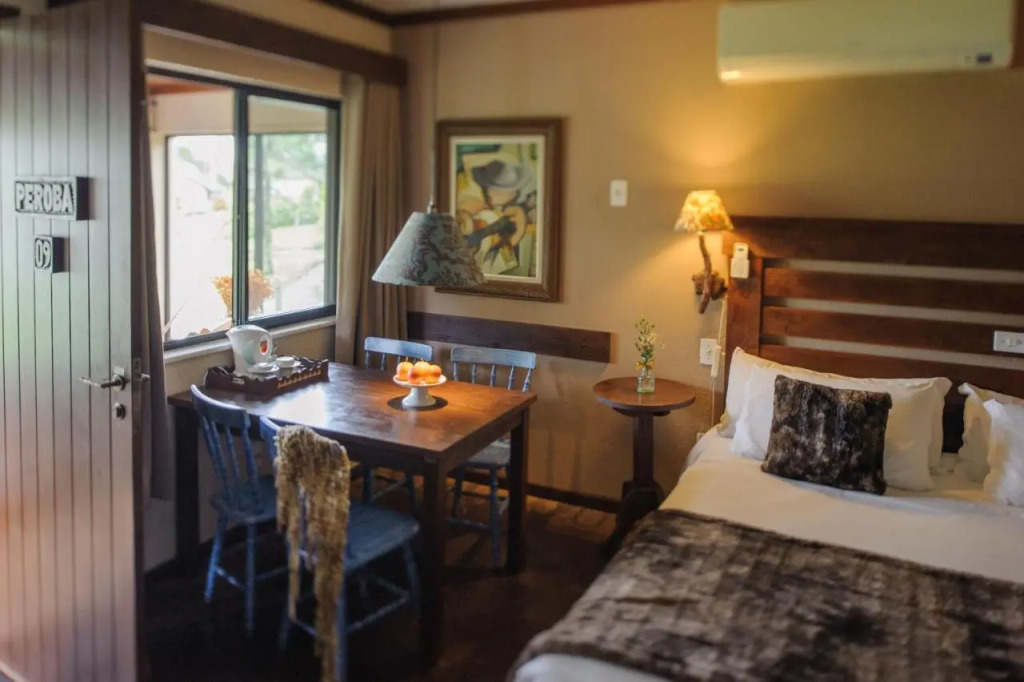
Bom Jardim da Serra
R$2,771 / night

Serra de Tramuntana
R$4,354 / night

Unhais da Serra
R$1,765 / night
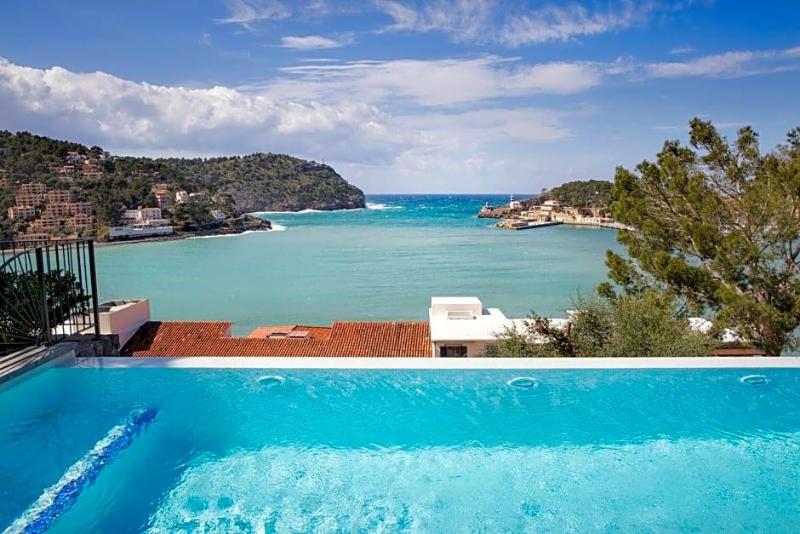
Serra de Tramuntana
R$4,157 / night

Serra de Tramuntana
R$3,282 / night

Serra de Tramuntana
R$2,607 / night
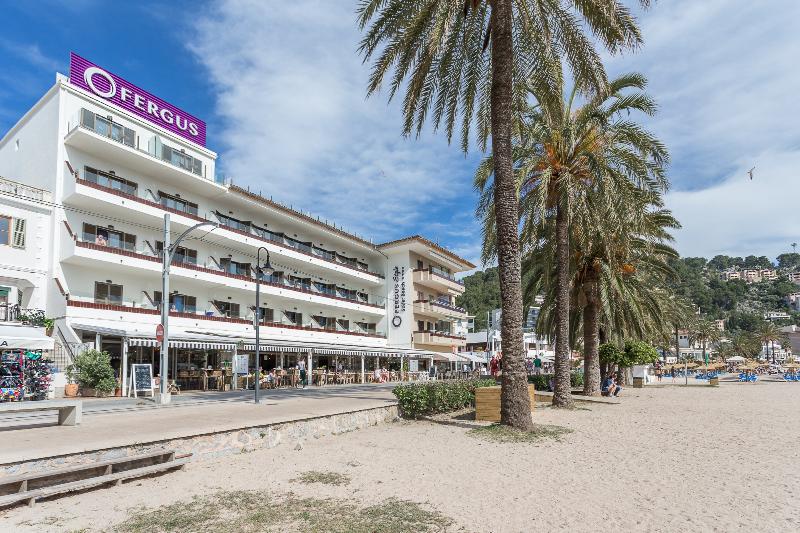
Serra de Tramuntana
R$2,750 / night
Must-sees, local secrets, experiences, and hotels — filter layers and tap the pins.
Everything you need to know to plan your trip
Get notified when hotel prices in The Serra Mountains drop. No spam.
We use your email only to send this price alert. Unsubscribe anytime.
Extend your trip to incredible destinations nearby
We personalize every moment of your journey — from iconic landmarks to hidden cultural gems.
Available 24/7 · Personalized consultations · Local expertise
Updated on July 27, 2026 · Methodology · Authors
Sources
Testimonials
Stories from travelers who have already visited. Share your experience — your comment appears in the cards below.
Visiting The Serra Mountains exceeded all expectations. The energy of the place is contagious!
Elaine Coutinho
Solo traveler
We traveled as a family and The Serra Mountains delighted kids and adults alike. Great hotel and attraction picks.
Hugo Santana
Local from Belo Horizonte
I arrived without a fixed itinerary and The Serra Mountains surprised me at every corner. So welcoming.
Karen Abreu
Trip planner
Stayed near downtown and walked everywhere. The Serra Mountains is even better on foot.
Nelson Duarte
Retired couple
