Sarnia
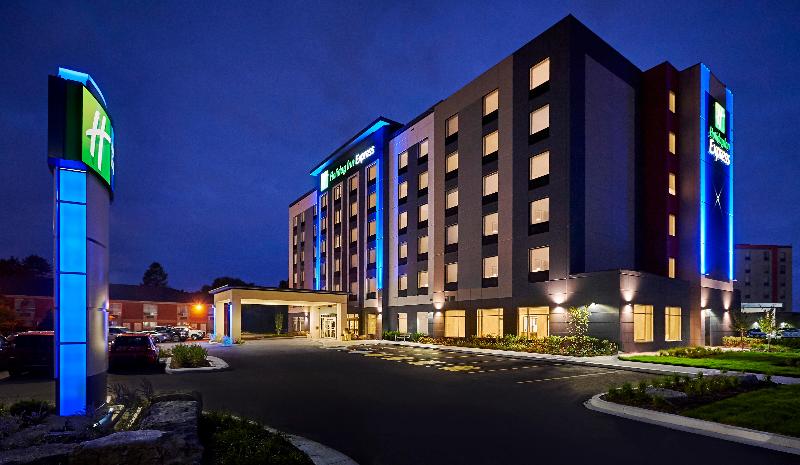
Holiday Inn Express Sarnia - Point Edward by IHG
R$1,020 / night

Destination
Discover Sarnia, a charming city in Ontario. Learn about must-see attractions, rich history, and tips for exploring this Canadian region. Plan your trip!
Sarnia · Brasil
Photos
Discover the landscapes and culture of Sarnia


Editorial guide with history, culture, and practical tips to plan your trip.
Sarnia is a vibrant and established city, located in a strategic region of Ontario province. Known for its rich history and growing role in the Canadian landscape, this community has developed a consolidated urban profile over time. In terms of urban scale, Sarnia has a total geographical area of 163.7 km², defining the physical limit where life and development are concentrated.
The city attracts attention not only because of its location in Ontario but also due to its population profile. Currently, Sarnia is home to an estimated population of 70,876 residents. This number gives the city notable demographic dynamism, supported by its inhabitants' density.
Considering its area and total population, the average population density of the region is calculated at 430.5 inhabitants per square kilometer. This indicator not only provides a mathematical metric on how the population is distributed over the territory but also suggests a significant level of development and urban infrastructure within these defined limits.
Its existence is deeply linked to Ontario's growth since the beginning of the 19th century. Its founding and incorporation milestones are not merely historical data; they represent stages of social transformation, transitioning from a simple settlement into an structured city, ready to receive visitors and consolidate its regional development.
Sarnia's trajectory is marked by temporal milestones that define its evolution. The history of the locality dates back to 1807, the date when the first formal settlement was established. This initial milestone represents the awakening of human and economic interest in the region, initiating a cycle of growth that would shape the city as we know it today.
The period between the original establishment and its official recognition as a city was crucial for forming urban and social foundations. The formal consolidation of this community occurred in 1857, when Sarnia was officially incorporated. This process of incorporation suggests a phase of administrative maturity and sustained population growth, allowing the population to surpass a certain threshold of stability worthy of the city title.
Since these early years, the city has undergone significant transformations, accompanying the economic changes in Ontario province. The history of Sarnia is a narrative of resilience and adaptation, reflecting the pioneering spirit that allowed the place to settle within 163.7 km² of territory.
Historical records point to continuous and gradual development. Being located in Ontario means being situated within a vast geographical and economic context, allowing the city to absorb influences across centuries, from its first inhabitants to the dynamism of the 21st century.
The culture in Sarnia is intrinsically linked to its history of growth and its context within Ontario province. A community that survived and prospered since 1807, passing through formalization in 1857, tends to cultivate strong traditions and a deep sense of local identity.
Life in the city reflects a fusion between historical legacy and modern necessities. The people living in the 70,876 households form a rich cultural mosaic, resulting from natural migration over the years. This blend of origins is often celebrated through festivals, community events, and celebrations that honor both the past and present diversity.
Although specific details are vast, it can be inferred that the sense of community is an important cultural pillar. Living in an area of 163.7 km² allows human interactions to develop in more manageable and cohesive spaces, keeping alive the memory of its beginning in the early 19th century.
Sarnian culture is a testament to perseverance. It is a culture built over time, where every street and every building narrates chapters of its history since 1807. This historical layer adds depth to any cultural experience in the city.
Geometrically speaking, Sarnia occupies a defined and manageable space within the vast Canadian province of Ontario. Its total area is exactly 163.7 km², a size that allows for a balance between dense urban development and the maintenance of regional characteristics.
The geographical location in Ontario gives the city strategic access and connections with other important regions of Canada. This positioning is crucial for its economic role, connecting it to trade and cultural routes crossing the North American continent.
The population density of 430.5 people/km² not only measures human life concentration but also suggests a planned distribution of public services, road infrastructure, and residential zones. This data shows that, despite a long history and organic growth, there is active urban planning to accommodate the more than 70,000 inhabitants.
Sarnia's physical area is a geographical microcosm within Ontario. Studying these territorial limits reveals how development has adapted to the natural surroundings of the province, creating a unique environment that mixes Canadian continental characteristics with the practicality of a consolidated and well-defined city in its coordinates.
While specific meteorological details are not available in our source material, it is essential to situate Sarnia within the climatic context of Ontario province. Generally, this Canadian continental region presents distinctly marked seasonal climate variations.
Residents and visitors should be prepared for a diversity of climate throughout the year. The seasons tend to be well-defined: cold, snowy winters, gentle spring awakenings, hot summers, and colorful, temperate autumns. This climate variation is one of the great characteristics of living in or visiting the location.
Sarnia's climatology must be considered when planning any visit, as it influences both architecture and local lifestyle. Buildings constructed since 1807 and especially after the incorporation in 1857 were designed to withstand the typical climate variations of the region.
Adaptation to natural cycles is an element that shapes cultural routine, dictating the rhythm of outdoor activities. Sarnia residents are accustomed to this seasonal dynamism, which enriches both their festivities and their daily life on the streets covering 163.7 km² of the city.
Sarnia offers a rich tourist experience, based on its deep history and the dynamism of its population. The main attraction is not just an isolated point of interest, but rather the historical fabric itself that unfolds over its 163.7 km².
Tourism here tends to be a combination of historical, cultural, and community interests. Visitors are invited to dive into the city's narrative, from its start as a settlement in 1807 to its full structure in 1857. Historical trails and walks through the urban center tell stories of local development.
With an active population of over 70,876 people, the city possesses vibrant local commerce and services that are excellent stopping points for the traveler. Whether exploring the downtown shops or participating in community events, the rhythm of urban life is contagious.
For the tourist seeking a macro view, Sarnia's location in Ontario means access to various regional and natural attractions, using it as a strategic starting point. The population density contributes to the maintenance of modern and accessible tourist services.
Sarnia is a city full of interesting details that attest to its deep roots in Canada. Its numbers speak for themselves: a past marked by foundation in 1807, a date marking the awakening of the place to significant human occupation.
A fascinating piece of data is the administrative process of the city's consolidation. Although established in 1807, it was only in 1857 that Sarnia obtained its official status and formal incorporation. This time gap tells the story of slow, but steady development.
The efficiency of space use is notable: with an expressive population of over 70,876 inhabitants distributed across a total area of 163.7 km², the population density indicator of 430.5 people/km² shows how resources and lives are accommodated within urban limits.
In summary, Sarnia is not just a point on the map of Ontario province; it is a living time capsule. The combination of data—from its size in square kilometers to the inhabitants who call it home—tells a robust tale of continuous growth and community stability over the centuries.
Everything you need to know to plan your trip
Reference figures to help plan your trip
Hotels in the area
22
Attractions
9
22 properties · high demand in Sarnia this season
165 travelers searched Sarnia this week
Stays for these dates are among the most sought-after in Sarnia
Sarnia
R$1,020 / night

Sarnia
R$676 / night

Sarnia
R$637 / night

Sarnia
R$560 / night

Sarnia
R$1,331 / night
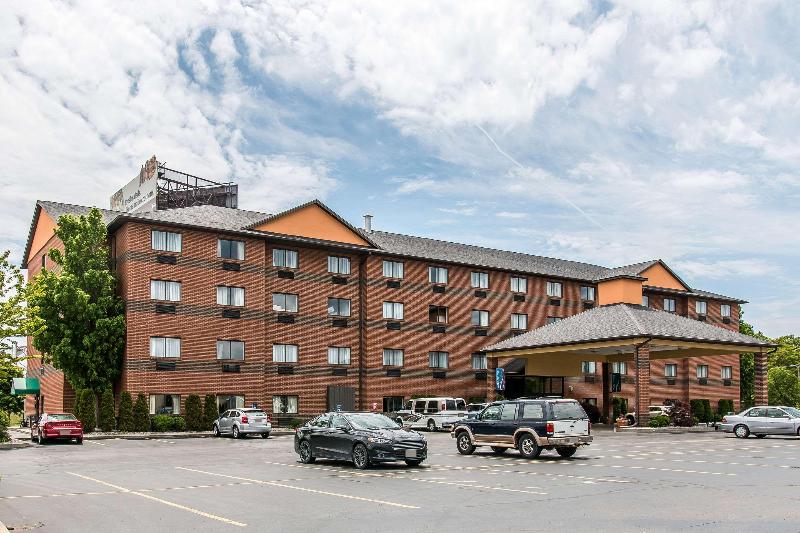
Sarnia
R$630 / night

Sarnia
R$1,047 / night

Sarnia
R$575 / night
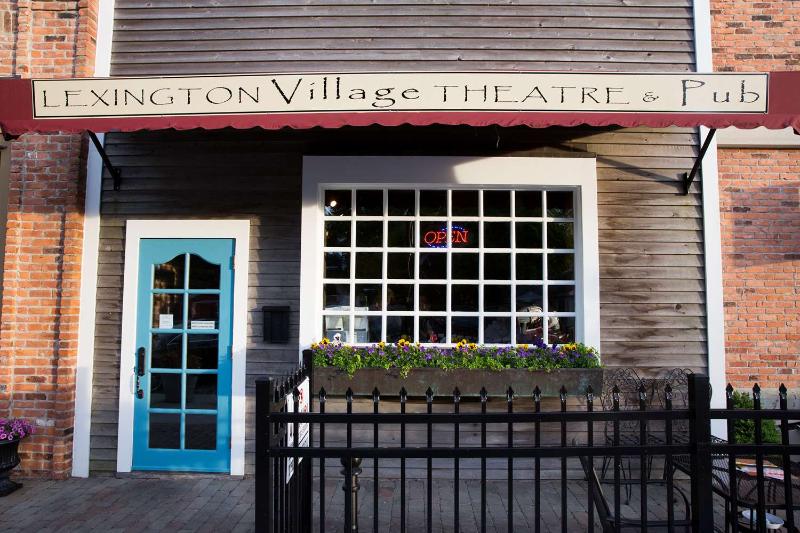
Sarnia
R$1,061 / night

Sarnia
R$538 / night

Sarnia
R$884 / night

Sarnia
R$691 / night
Must-sees, local secrets, experiences, and hotels — filter layers and tap the pins.
Everything you need to know to plan your trip
Get notified when hotel prices in Sarnia drop. No spam.
We use your email only to send this price alert. Unsubscribe anytime.
Extend your trip to incredible destinations nearby
Still unsure? See side-by-side comparisons to decide.
We personalize every moment of your journey — from iconic landmarks to hidden cultural gems.
Available 24/7 · Personalized consultations · Local expertise
Updated on July 27, 2026 · Methodology · Authors
Sources
Testimonials
Stories from travelers who have already visited. Share your experience — your comment appears in the cards below.
Visiting Sarnia exceeded all expectations. The energy of the place is contagious!
Arthur Klein
Tourist from Germany
We traveled as a family and Sarnia delighted kids and adults alike. Great hotel and attraction picks.
Cíntia Rodrigues
Family with kids
I arrived without a fixed itinerary and Sarnia surprised me at every corner. So welcoming.
Fabiano Lopes
Food lover
Stayed near downtown and walked everywhere. Sarnia is even better on foot.
Ingrid Viana
Honeymoon


