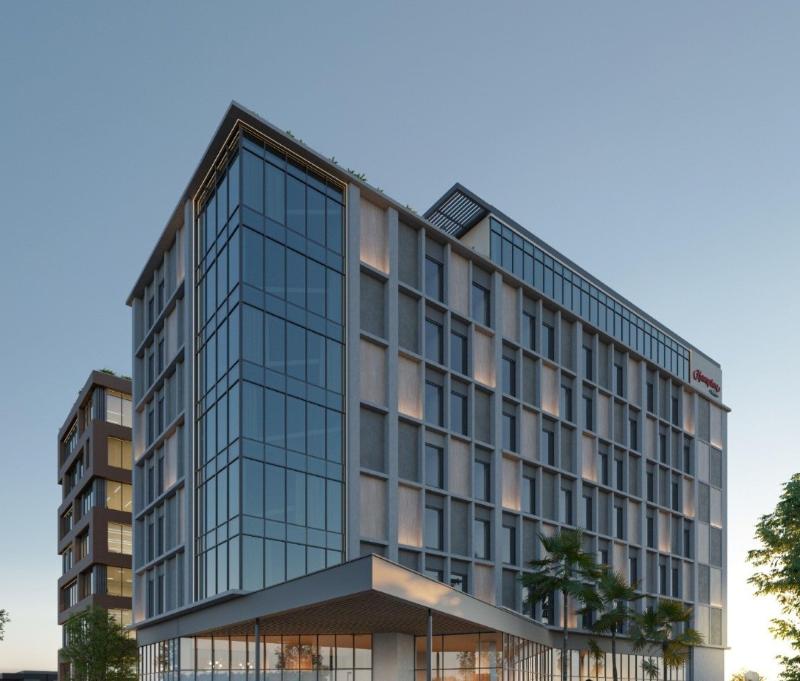
Santiago dos Cavaleiros, Dominicana
Residence Inn by Marriott Santiago de los Caballeros
R$1,028 / night

Destination
Explore the heart of Cibao in Santiago de Los Caballeros! Discover this vibrant metropolis, far beyond the famous beaches. Culture and history await.
Santiago De Los Caballeros · Brasil
Photos
Discover the landscapes and culture of Santiago De Los Caballeros


Editorial guide with history, culture, and practical tips to plan your trip.
Santiago de Los Caballeros, frequently and correctly abbreviated as Santiago, is one of the most vibrant and significant gems of the Dominican Republic. This city is not merely a point on the map; it represents the pulsating heart of the north-central Dominican region. In terms of demographics and urban planning, its relevance is undeniable, positioning it as the second largest metropolis in the entire nation. Its growth and urban structure make it a regional reference point, surpassing the limits of a mere population center to become a pole of influence that attracts people and opportunities. It is within this context of vitality and magnitude that the visitor must understand Santiago.
The number of inhabitants is impressive, counting an estimated total population of 1,173,015 individuals. This statistical data reflects the population density and economic importance of the surrounding urban area. The city is not limited only to its historical center; it encompasses a vast metropolitan area that includes the capital of the Santiago province, consolidating itself as a fundamental axis for Dominican development.
More than its impressive population, the title conferred upon Santiago—being the most important and prominent metropolis in the region known as Cibao—defines its geographical and socio-economic role. The Cibao is not just a region; it is a concept of agricultural and industrial prosperity, and Santiago is its main engine. The combination of these factors makes the city an unmissable destination for those who wish to understand the pulse of modern Caribbean life.
Although deep historical details are not covered in this summary, it is impossible to underestimate the historical weight of a metropolis that has consolidated itself as a nerve center. Santiago's very existence and exponential growth reflect centuries of strategic importance in the Caribbean region. Its trajectory tells chapters of trade, provincial administration, and cultural development that have profoundly shaped the Dominican Republic.
The consolidation of the urban core in Santiago is intrinsically linked to its regional administrative and commercial function. Being the capital of the Santiago province implies that, over the years, the city has accumulated a crucial role in resource management and the social organization of surrounding communities. This history of centrality guaranteed continuous development, making it a living witness to Dominican transformations.
Santiago's development is marked by this resilience and its ability to remain a pole of population and economic attraction. The fact that it is recognized as the largest non-coastal metropolis on the Caribbean islands only reinforces its historical importance: it represented, from an early date, the focal point of a vast continental area, far from the most obvious maritime ports, yet never less vital.
The culture of Santiago de Los Caballeros is a vibrant kaleidoscope that reflects its position as a large population pole and center of the Cibao region. Cultural life here pulsates with a unique energy, blending deeply rooted Dominican traditions with the dynamism of a modern metropolis. The fast pace of daily life is tempered by rich cultural manifestations, which are constantly celebrated in its squares and neighborhoods.
As the most important metropolis of the Cibao region, Santiago absorbs and promotes diverse artistic expressions. Local culture values human connection, the intense flavors of Dominican cuisine, and the community spirit that manifests itself in religious and popular festivities throughout the year. This cultural richness is a direct testament to its vocation as a point of human convergence.
The Santiaguan identity is linked to this collective strength. The inhabitants demonstrate a noticeable pride in their city, which has grown not only in population size—reaching over 1.17 million people—but also in cultural significance. It is a culture that celebrates movement and resilience, characteristics intrinsic to the great cities of the Caribbean.
From a geographical point of view, Santiago occupies a privileged position in the north-central Dominican Republic. This location is not random; it allows for relatively balanced access both to the northern areas and those heading toward the center of the country, establishing it as a natural point of passage and convergence.
The distance from the capital, Santo Domingo, is particularly notable for visitors planning a trip. Santiago is located approximately 155 kilometers northwest of the main city. This geographical separation allows the metropolis to maintain its distinct identity, functioning as an autonomous and equally vital pole relative to the national political center.
Being one of the largest non-coastal cities on the Caribbean islands gives it unique geographic characteristics. It dominates the urban landscape in the interior (or 'mainland') of the islands, making the region surrounding Santiago an important logistical and population axis for the entire north-central area.
As a metropolis located on the Caribbean islands, Santiago's climate is typically tropical. The climatic conditions are influenced by its proximity to the ocean, but its location in the interior (which justifies its title as largest non-coastal metropolis) gives it specific nuances regarding weather.
Generally, the city enjoys a hot and humid climate for most of the year. Seasonal variations are noticeable, but the tropical heat is constant, requiring visitors to prepare for vibrant days under the Caribbean sun. The average altitude of the region helps slightly moderate the thermal extremes compared to lower coastal areas.
Rainfall is an important seasonal component. It is crucial to monitor the local forecast, as the tropical climate is characterized by rapid variations, passing from sunny and intense periods to sudden downpours that bring refreshing relief to the vast population of the metropolis.
Santiago establishes itself as a multifaceted tourist destination. Its appeal lies not just in the beaches, but in the immersive experience of Caribbean urban life at its peak. The tourist visiting Santiago seeks a combination of metropolitan grandeur, rich culture, and the feeling of being in the pulsating heart of Dominican development.
The touristic importance is amplified by its function as a regional center. It is an ideal starting point for exploring other areas of Cibao, but it also offers unique urban attractions that honor its status as the second largest city and main non-coastal metropolis. The visit allows the guest to experience the daily dynamic of a population exceeding one million inhabitants.
Tourism in Santiago ranges from walking through historic neighborhoods, where one can feel the depth of its history, to intense gastronomic experiences. It is a destination that appeals both to the cultural traveler and to those seeking the vibrant energy and fast pace of one of the Caribbean's largest population centers.
The mere title of 'city' for Santiago de Los Caballeros underestimates its magnitude. It holds several honorary titles that define its unique status in the Caribbean. It is essential to recognize these facts to understand the weight of its regional importance.
Firstly, it is the second largest city in the Dominican Republic and stands out for housing a significant total population of 1,173,015 inhabitants. This data places it among the country's largest urban concentrations and one of the demographic pillars of the Caribbean.
Secondly, its designation as the capital of the Santiago province solidifies its administrative and commercial role in the north-central region. Furthermore, the term 'metropolis' here is not merely nominal; it describes a reality of size and influence previously unmatched in the context of the Caribbean islands.
The most distinctive fact, however, is the recognition of Santiago as the largest non-coastal metropolis. This geographical detail underlines its strategic and economic importance to the Dominican interior, proving that power and civilization flourished in this vibrant north-center, regardless of proximity to the sea.
Everything you need to know to plan your trip
Reference figures to help plan your trip
Attractions
9
Selected stays available to book
195 travelers searched Santiago De Los Caballeros this week
Stays for these dates are among the most sought-after in Santiago De Los Caballeros
Must-sees, local secrets, experiences, and hotels — filter layers and tap the pins.
Everything you need to know to plan your trip
Get notified when hotel prices in Santiago De Los Caballeros drop. No spam.
We use your email only to send this price alert. Unsubscribe anytime.
Extend your trip to incredible destinations nearby
Still unsure? See side-by-side comparisons to decide.
We personalize every moment of your journey — from iconic landmarks to hidden cultural gems.
Available 24/7 · Personalized consultations · Local expertise
Updated on July 27, 2026 · Methodology · Authors
Sources
Testimonials
Stories from travelers who have already visited. Share your experience — your comment appears in the cards below.
Visiting Santiago De Los Caballeros exceeded all expectations. The energy of the place is contagious!
Fabiano Lopes
Food lover
We traveled as a family and Santiago De Los Caballeros delighted kids and adults alike. Great hotel and attraction picks.
Ingrid Viana
Honeymoon
I arrived without a fixed itinerary and Santiago De Los Caballeros surprised me at every corner. So welcoming.
Leandro Meirelles
Traveler from Porto Alegre
Stayed near downtown and walked everywhere. Santiago De Los Caballeros is even better on foot.
Olívia Fontes
Traveler from Brasília