
Santa Cruz de Tenerife
Barceló Santa Cruz Contemporáneo
R$795 / night

Destination
Discover Santa Cruz de Tenerife, in Spain. Explore historical attractions, stunning beaches, and the vibrant Canary Island culture. Plan your trip!
Santa Cruz De Tenerife · Brasil
Photos
Discover the landscapes and culture of Santa Cruz De Tenerife


Editorial guide with history, culture, and practical tips to plan your trip.
Santa Cruz de Tenerife is a vibrant and multifaceted destination, located in the heart of Spain. More than just a city, it represents a historic municipality and a crucial urban hub for the Canary Islands archipelago. Its privileged location establishes it as an integral part of the namesake province, making it a point of cultural and demographic convergence.
It is essential to understand that Santa Cruz de Tenerife is not just any city; it holds the important status of being recognized as one of the capital cities of the autonomous community of the Canary Islands. This honorary title places it on par with Las Palmas de Gran Canaria, forming a powerful and dynamic capital axis for the entire Canary territory.
From a demographic and territorial point of view, Santa Cruz presents itself as a consolidated area. The municipality has an estimated total area of 150.56 square kilometers (km²). This dimension is responsible for housing a robust and growing population. Population data from 2021 attest to this vitality, counting about 208,563 inhabitants, which gives the city significant urban scale within the Spanish context.
The administrative structure is complex and well-defined: Santa Cruz de Tenerife operates as an autonomous municipality in the corresponding province. This geographical-administrative framework ensures both its local identity and its connection to the larger centers of the Canary Community, making it a destination that balances municipal authenticity with the metropolitan infrastructure of a capital.
Although the factual material does not detail centuries of historical narratives, it is possible to extract the historical weight from its administrative and population status. Santa Cruz de Tenerife has always been a vital center in the province of the same name. Its long trajectory as an established municipality reflects a deep cultural and social rooting in the Canary archipelago.
The city's development is closely linked to its strategic function within the Canaries, being recognized today not only for its size (150.56 km²) but also for the confluence role it plays. Its importance was formalized by being elected as one of the capital cities of the Canary Islands autonomous community, a recognition that attests to its historical political and cultural relevance.
The demographic evolution is a mirror of its historical success. The approximate number of 208,563 inhabitants registered in 2021 demonstrates a consolidated and moving population, signaling the permanence and continuous flourishing of its urban core over decades. This demographic stability is a silent testament to the historical and economic strength that drives Santa Cruz de Tenerife.
In summary, its history cannot be dissociated from the idea of centrality: being a capital alongside Las Palmas de Gran Canaria cemented its place as one of the most important and resilient urban pillars of the Canaries. The permanence of this status proves the historical value attributed to the municipality by the local people and administration.
The cultural richness of Santa Cruz de Tenerife is a direct reflection of its position as a large urban center and provincial capital. It is a vibrant fusion of Spanish traditions, unique Canary influences, and the dynamism that comes from being part of such a diverse autonomous community.
Although details of artistic manifestations are outside the scope of our factual guide, the mere existence of a population of over 208,563 inhabitants (2021 data) guarantees an incessant cultural melting pot. It is in this large population mass that traditions, festivities, and the unique artistic rhythm of the Canary Islands materialize.
Culture in Santa Cruz is also linked to its institutional role: being a capital alongside Las Palmas de Gran Canaria gives it a cultural stage that attracts talents and celebrations from different regions. This high status elevates the level of its cultural manifestations, making it a meeting point for diverse artistic and social expressions.
The local culture is marked by the strong identity of the municipality within the province, mixing the cosmopolitan atmosphere of a large city with the warmth and unique customs of the Canaries. Walking through Santa Cruz is experiencing this cultural fusion daily, absorbing a rhythm of life that honors its roots while embracing the future as a modern hub.
Geometrically speaking, Santa Cruz de Tenerife occupies a very well-defined and crucial area for the administration of the Canary Islands. The municipality is located in the province of Santa Cruz de Tenerife and has total dimensions of 150.56 km².
This territorial measurement does not only refer to its central urban part, but includes the geographical extent that defines its role within the archipelago. It is a strategic geography: it is a nodal point between the natural characteristics and the centers of human development in the Canary region.
The geographical location is particularly influential on its identity. Being in the province of Santa Cruz, and being recognized as capital alongside Las Palmas de Gran Canaria, establishes a regional polarization that defines the economic-social axis of the Canaries. This geo-economic position makes it a natural and administrative pole of attraction.
The 150.56 km² are inhabited by a considerable population—the 208,563 inhabitants counted in 2021 remind us of the density of life this area supports. This human concentration within a defined space is what transforms the physical geography into a vibrant urban reality, with consolidated infrastructure and access to important communication routes.
Although our factual material does not detail daily meteorological nuances, it is crucial to understand that Santa Cruz de Tenerife is situated in the unique climate context of the Canary Islands. As an island coastal city in Spain, it enjoys a subtropical climate known for its relative constancy and mild temperatures for most of the year.
This location in a coastal province within the autonomous community of the Canary Islands gives its microclimate features that attract visitors all year round. The relationship between the Atlantic Ocean and the local geography moderates extreme variations, maintaining an ideal thermal comfort for tourism.
It is important to remember that its function as an urban hub with over 208,563 inhabitants guarantees a constant adaptation to seasons and regional climate cycles, sustaining its economic activities regardless of seasonal fluctuations. The very stability of urban life also reflects the resilience of its natural and climatic environment.
The tourist potential of Santa Cruz de Tenerife is vast, driven by its strategic location in the heart of the Canaries and its status as a provincial capital. The city does not just receive tourists; it invites them to actively participate in a lifestyle that combines the fast pace of a metropolis with the tropical tranquility of the archipelago.
Being an urban hub with a significant population (about 208,563 inhabitants) and being located in Santa Cruz province raises its tourist appeal beyond natural beauty, highlighting its gastronomy, museums, and lively nightlife. The tourist finds here the complete experience: relaxation on the beaches and cultural immersion in the historic center.
The title of capital alongside Las Palmas de Gran Canaria reinforces its role as a must-visit destination for those who wish to know the most advanced infrastructure of the Canaries. Visitors are attracted not only by the beach but also by the administrative organization and services offered by the municipality.
The combination of these elements—location within the autonomous community, an area of 150.56 km², and a robust population—ensures that the tourist experience in Santa Cruz is always dynamic, ranging from historical strolls in the center, excursions into the surrounding nature, or simply the pleasure of experiencing a large Caribbean urban hub.
One of the most singular and important characteristics of Santa Cruz de Tenerife is its dual status. It is not just a city; it is officially recognized as one of the capital cities of the Canary Islands autonomous community, in partnership with the equally important neighboring city, Las Palmas de Gran Canaria.
This administrative fact gives Santa Cruz a level of importance that transcends size or population. It positions it at the top of the Canary urban pantheon, making it a nerve center for government and business in the region.
Another relevant curiosity is its framework within the province of Santa Cruz de Tenerife. This name is not just geographic; it carries the historical identity that has shaped the city over time, from its founding as a municipality to today. This connection between the name and the territory reinforces a deep sense of belonging.
Finally, the numbers speak for themselves: with a consolidated area of 150.56 km² and more than 208 thousand inhabitants in 2021, the city possesses a density and vitality that are benchmarks in the Spanish urban landscape. It is this mix of physical and human dimensions that makes Santa Cruz a fascinating destination for those seeking to know the essence of the Canaries.
Everything you need to know to plan your trip
Reference figures to help plan your trip
Hotels in the area
30
Attractions
9
30 properties · high demand in Santa Cruz De Tenerife this season
179 travelers searched Santa Cruz De Tenerife this week
Stays for these dates are among the most sought-after in Santa Cruz De Tenerife
Santa Cruz de Tenerife
R$795 / night

Santa Cruz de Tenerife
R$753 / night

Santa Cruz de Tenerife
R$967 / night

Santa Cruz de Tenerife
R$631 / night

Santa Cruz de Tenerife
R$1,184 / night
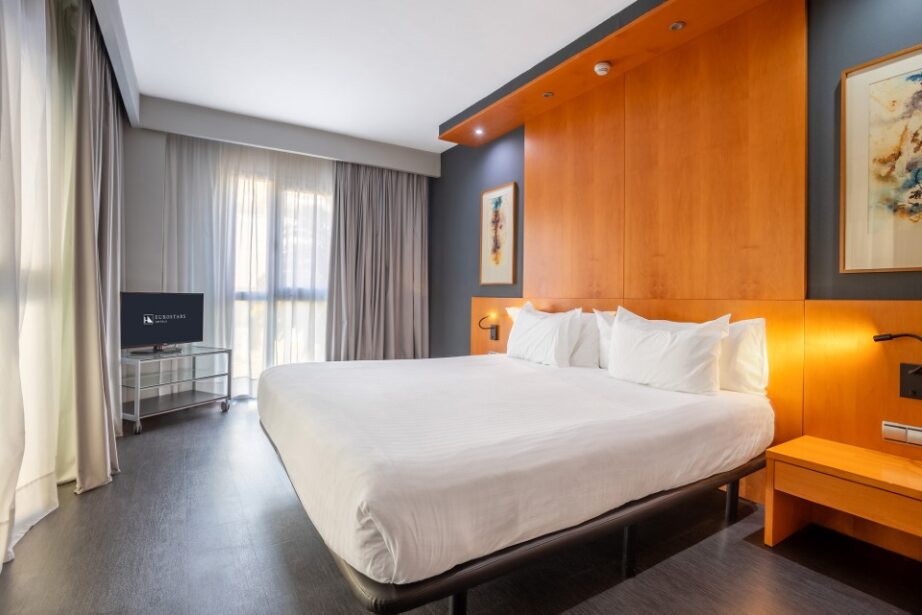
Santa Cruz de Tenerife
R$670 / night

Santa Cruz de Tenerife
R$603 / night

Santa Cruz de Tenerife
R$829 / night

Santa Cruz de Tenerife
R$757 / night

Santa Cruz de Tenerife
R$795 / night
Must-sees, local secrets, experiences, and hotels — filter layers and tap the pins.
Everything you need to know to plan your trip
Get notified when hotel prices in Santa Cruz De Tenerife drop. No spam.
We use your email only to send this price alert. Unsubscribe anytime.
Extend your trip to incredible destinations nearby
Still unsure? See side-by-side comparisons to decide.
We personalize every moment of your journey — from iconic landmarks to hidden cultural gems.
Available 24/7 · Personalized consultations · Local expertise
Updated on July 27, 2026 · Methodology · Authors
Sources
Testimonials
Stories from travelers who have already visited. Share your experience — your comment appears in the cards below.
Visiting Santa Cruz De Tenerife exceeded all expectations. The energy of the place is contagious!
Tiago Bueno
Traveler from Campinas
We traveled as a family and Santa Cruz De Tenerife delighted kids and adults alike. Great hotel and attraction picks.
Yara Bastos
Eco traveler
I arrived without a fixed itinerary and Santa Cruz De Tenerife surprised me at every corner. So welcoming.
Aline Moura
Traveler from Fortaleza
Stayed near downtown and walked everywhere. Santa Cruz De Tenerife is even better on foot.
Daniel Figueiredo
Backpacker


