
San Martín de la Vega
Hostal San Marcos
R$573 / night

Destination
Explore San Martin! Discover the historical charm of its cities and regions across Latin America. Find unique itineraries and book your trip with Aeriva.
San Martin · Brasil
Editorial guide with history, culture, and practical tips to plan your trip.
The name San Martín is an epithet of profound geographical and historical reach across the Americas, referring to a multitude of locations spanning several countries in South and Central America. For the modern traveler, understanding “San Martín” requires recognizing its multifaceted nature, as it does not point to a single destination, but rather to a rich collection of regional subdivisions, provinces, and even urban neighborhoods scattered throughout several countries.
This ubiquity suggests that the name's strength is linked to its historical resonance—primarily the legacy of prominent figures. Whether in a vibrant city in Argentina, a district in Peru, or a municipality in Guatemala, San Martín represents a fascinating cultural and historical meeting point. The beauty of this destination does not lie in uniformity, but in diversity: every location carrying this name offers unique experiences, whether it's the colonial charm of Peru, the urban vibrancy of Argentina, or the rich indigenous tapestry of Guatemalan municipalities.
When planning a trip that explores any of these locations, the traveler must be aware that they are diving into different cultural and geographical contexts. What unites these places is a powerful sense of historical identity, whether linked to Latin American independence or deep regional tradition.
The historical weight associated with San Martín transcends listed geographical borders. Fundamentally, the name evokes the monumental figure of José de San Martín. He is recognized throughout South America as an extraordinary general and incontestable hero of independence. His military career was crucial for the emancipation of great nations, notably Argentina, Chile, and Peru. This legacy is not merely a historical footnote; it has shaped national identity and the sense of patriotism that permeates places bearing his name.
The historical significance of the name is intrinsically linked to the 19th-century emancipatory movements, marking a period of intense political transformation in the region. The legacy of these revolutionary leaders continues to be a source of pride and study in various communities, often honored in public monuments, commemorative dates, and cultural institutions.
Geographically, this historical heritage materializes in diverse locations: from San Martín being a province or region in Peru to references to urban neighborhoods like San Martin in Recife. This presence suggests that, even where it only carries a name, these places were important points in the sociopolitical formation of their respective regions.
The culture of the various municipalities and regions associated with San Martín is a vibrant mosaic characteristic of Latin America. Although cultural specificities vary drastically among listed destinations—such as the residual Mayan impact in Guatemala or the strong coastal tradition of Peru—there are transversal elements that enrich the traveler's experience.
Local culture is deeply marked by the syncretization of influences: millennial indigenous heritage coexisting with Hispanic traditions brought by colonizers and the dynamism of urban cultures. In regions like Guatemala, the municipalities of San Martín Jilotepeque, Sacatepéquez, and Zapotitlán preserve rich artistic expressions, traditional craftsmanship, and native languages.
In a broader sense, the culture of any location named San Martín is a celebration of resilience and identity. Whether in festivities honoring local heroes or in the daily life manifestations of the people, there is a strong communal sense tied to the historical and geographical memory of the place. It is an invitation to the traveler to immerse themselves in vibrant traditions, distinctive cuisine, and authentic rhythms of life.
Geographically speaking, San Martín reveals a notable distribution across three distinct countries: Peru, Guatemala, Colombia, and Argentina. This dispersion demonstrates the depth of the name's cultural impact throughout South America.
In Peru, the name is found with great administrative variety, referring to regions (San Martín region), provinces (San Martín province), or specific districts, such as Emilio San Martín and San Martín de Porres. This density of names within the same country attests to the historical depth of the place's presence in the Peruvian structure.
Guatemala also houses important municipalities under this name, including San Martín Jilotepeque, San Martín Sacatepéquez, and San Martín Zapotitlán. These locations are situated in regions with rich geographical diversity, ranging from fertile valleys to mountainous landscapes.
In Colombia, the name appears associated with different localities, such as San Martín de Loba, San Martín (Cesar), and San Martín (Meta), indicating established urban centers across various regions of the country. In Argentina, it can be found at an important urban landmark: San Martín, a city located in the Buenos Aires province.
Beyond these major centers, the name also appears in more localized contexts, such as the neighborhood of San Martin in Recife, Brazil, attesting to the concept's influence across diverse urban areas. This broad geographical network makes San Martín a fascinating case study on nomenclature and territorial occupation in the Americas.
Given the vast geographical dispersal of places called San Martín—spanning from the mountainous interior of Peru to the tropical areas of Colombia—it is impossible to describe a single climate. The climate varies dramatically depending on altitude and specific location.
In general, the countries where these locations are situated (Peru, Guatemala, and Colombia) have predominantly tropical or subtropical climates. This implies that temperatures are generally high for most of the year, but with significant variations between rainy and dry seasons.
Regions located at higher altitudes, such as some areas in the Peruvian or Guatemalan Andes, tend to exhibit an altitude temperate climate, characterized by pleasant daytime temperatures and cold nights. Coastal locations may experience more humid and warmer climates.
It is always recommended to check the specific weather conditions of the chosen destination, as the geographical diversity of San Martín requires total adaptation to the local climate to ensure the best trip enjoyment.
The tourism potential of a “San Martin” is equally diverse and rich. Visitors can be interested in itineraries that explore its historical legacy, cultural aspects, or natural exploration across its multiple facets.
For history enthusiasts, the focus should be on the memory of General San Martín, visiting museums and sites of military and political importance celebrating the independence movement. It is possible to trace historical routes connecting these events in Peru or Argentina, diving into the background of the great Latin American revolutions.
Cultural tourism is an invitation to discover ethnic and artistic diversity. In Guatemalan municipalities, for example, tourists can find immersion in surviving indigenous cultures through artisan markets, colorful festivals, and ancient gastronomy.
In general terms, the experience varies: in some regions it will be characterized by rural tranquility and natural landscapes; in others (like large cities in Argentina or urban neighborhoods in Brazil), the focus will be on vibrant nightlife and urban points of interest. The key is that every “San Martin” offers a unique tourism narrative, requiring the traveler to possess curiosity and flexibility to absorb its richness.
One of the biggest curiosities about San Martín lies precisely in the polysemy of the name. It is a notable example of how a toponym can be adopted by a vast geographical area, conferring a collective and historical identity upon various places without direct physical connection between them.
Its presence in multiple countries—from Peru to Guatemala and Colombia—underscores the importance of the name on the social cartography of Latin America. It serves as a constant reminder of the profound influence of historical figures who left indelible marks on the formation of modern states.
Another curiosity is the administrative variety that the name carries: it can be a neighborhood in a metropolis (Recife), a specific district (Peru), or even the full name of an autonomous municipality (Guatemala). This amplitude shows how the concept of “San Martín” has adapted to different levels of social and urban organization.
In summary, visiting San Martín is participating in a kind of Latin American circuit of memory. It is living proof that a single name can house vast histories, distinct cultures, and breathtaking landscapes, making every destination an adventure in regional self-discovery.
Everything you need to know to plan your trip
Reference figures to help plan your trip
Attractions
9
Selected stays available to book
228 travelers searched San Martin this week
Stays for these dates are among the most sought-after in San Martin
San Martín de la Vega
R$573 / night

San Martín de los Andes
R$2,255 / night

San Martín de los Andes
R$1,441 / night

San Martín de los Andes
R$915 / night

San Martín de los Andes
R$1,148 / night

San Martín de los Andes
R$1,390 / night
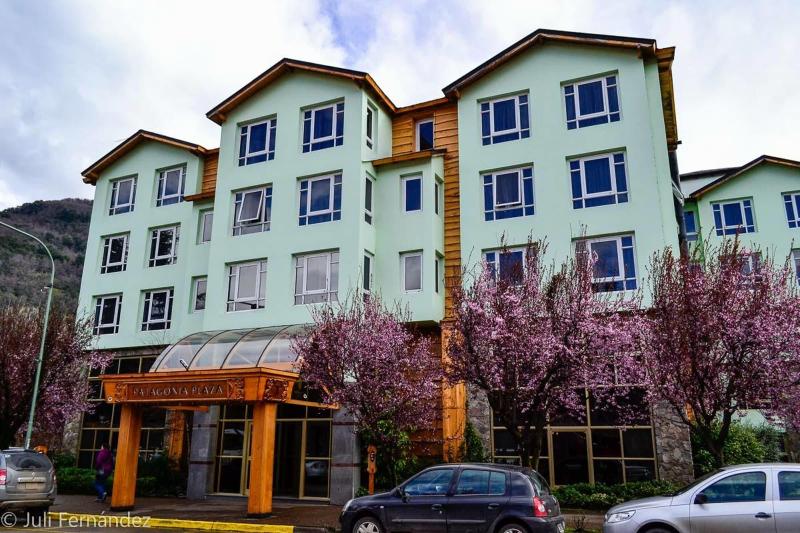
San Martín de los Andes
R$1,300 / night

San Martín de los Andes
R$1,715 / night

San Martín de los Andes
R$767 / night

San Martín de los Andes
R$319 / night

San Martín de los Andes
R$731 / night

San Martín de los Andes
R$708 / night
Must-sees, local secrets, experiences, and hotels — filter layers and tap the pins.
Everything you need to know to plan your trip
Get notified when hotel prices in San Martin drop. No spam.
We use your email only to send this price alert. Unsubscribe anytime.
Extend your trip to incredible destinations nearby
Still unsure? See side-by-side comparisons to decide.
We personalize every moment of your journey — from iconic landmarks to hidden cultural gems.
Available 24/7 · Personalized consultations · Local expertise
Updated on July 27, 2026 · Methodology · Authors
Sources
Testimonials
Stories from travelers who have already visited. Share your experience — your comment appears in the cards below.
Visiting San Martin exceeded all expectations. The energy of the place is contagious!
Daniel Figueiredo
Backpacker
We traveled as a family and San Martin delighted kids and adults alike. Great hotel and attraction picks.
Graziela Pacheco
Repeat visitor
I arrived without a fixed itinerary and San Martin surprised me at every corner. So welcoming.
João Victor
Traveler from Recife
Stayed near downtown and walked everywhere. San Martin is even better on foot.
Monique Barbosa
Food enthusiast


