Veneza
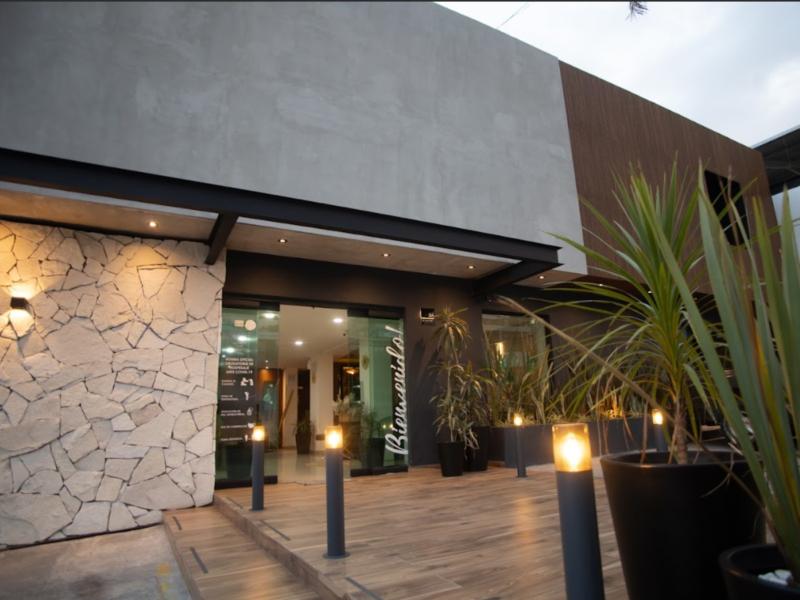
San Clemente Palace, Venice
R$6,564 / night

Destination
Discover the Basilica di San Clemente, a magical architectural journey through time in Rome. Explore layers of history and art.
San Clemente · Brasil
Photos
Discover the landscapes and culture of San Clemente


Editorial guide with history, culture, and practical tips to plan your trip.
San Clemente does not refer to a city in the traditional sense of a fully autonomous tourist destination, but rather to a focal point of immense historical, religious, and architectural importance: the Basilica di San Clemente in Rome. This site is considered one of the oldest religious structures in the Eternal City, serving as a living testament to the depth of Christian and pagan roots that shaped Mediterranean cultural development.
For those seeking to understand the temporal layers of human history, the Basilica di São Clemente offers a unique experience. Its nature is not merely architectural but archaeological. It represents a structural complex where different eras—from the most remote times to the present day—coexisted under one roof and under the watchful eye of centuries. Visiting this site means taking a journey through time, traversing ruins that were functionally incorporated into later buildings.
Essentially, San Clemente is a living museum of Ancient Rome. Its uniqueness lies in its ability to present the viewer not only with a majestic and active church but also with subterranean systems that reveal vestige of past civilizations. It is this stratified nature—the superposition of eras—that elevates its cultural value, making it one of the main World Heritage sites of the city.
The history of the Basilica di San Clemente is a complex and fascinating tapestry, marked by continuity and transformation. The fact that it is classified as "one of the oldest churches in Rome" is not just an honorific title; it reflects a millennia-long trajectory crossing the transition from paganism to Christianity. Its historical roots trace back to periods when Rome was a cultural and religious epicenter, absorbing diverse influences.
The original site was inhabited by structures whose religious function had been adapted over millennia. Throughout its existence, the site underwent various phases of reconstruction, modification, and architectural superimposition. This evolution is crucial for understanding the historical complexity of the place: it does not just tell the story of a single cult, but rather the narrative of Rome itself—a city that knew how to absorb its past traditions into new forms of faith.
This historical depth allows visitors to tread a path through time. They can observe how the use of a sacred space radically changed over the centuries, passing from structures dedicated to ancient rites and emerging later as centers of Christian devotion. This chronological superposition is a material testament to Roman cultural resilience.
Culturally, San Clemente is more than just a place of worship; it is a radiating center of artistic, architectural, and spiritual knowledge that shaped Western artistic identity. The Basilica and its associated archaeological site are stages where various cultural manifestations intertwine: from Catholic religious practices to vestiges of ancient Roman lifestyle.
The influence of Roman culture is palpable in every detail of the visit. The use of materials, structural engineering, and urban planning surrounding the temple reflect the apex of Roman civilization. The art present at the site, including mosaics, frescoes, and decorative elements, tells stories of a world where the sacred was intrinsically linked to daily life.
The most notable cultural aspect is the synergy between the sacred and the historical. The worship that developed here over the centuries did not only preserve dogmas but also absorbed artistic elements from all the civilizations that Rome conquered or influenced, making it a unique cultural melting pot in Rome.
Although the focus is on the Basilica, it is important to understand its geographical context within the vast urban fabric of Rome. The location of the site contributes to its mysterious and secluded atmosphere, allowing visitors to feel momentarily detached from modern bustle, transported into a deep past.
Geographically speaking, the Basilica is situated in an area that has witnessed dramatic urban changes over millennia. The very structure of the archaeological site is a study in human geography: how buildings were constructed atop other buildings and foundations, adapting to local topography and the population needs of the time. It is historical micro-geography.
The surrounding area through which the visitor passes complements the archaeological experience by contextualizing the temple within the urban fabric that historically pulsed around important religious centers. This strategic position in the heart of Roman history is what gives the site its magnitude and permanent relevance to global cultural geography.
The climate of Rome, where the Basilica di San Clemente is located, typically follows a Mediterranean pattern. This type of climate is characterized by hot and dry summers, ideal for outdoor tourist activities, but also mild winters. This seasonality directly influences the rhythm of local cultural life.
Climatic variations must be considered when planning the visit. During the hotter months, it is advisable to plan with breaks and moments of contemplation in cool environments, such as the subterranean levels of the temple, where the architecture helps maintain a stable temperature.
The milder seasons, on the other hand, allow for deeper and more comfortable exploration of the various archaeological levels. It is the climate that, over time, allowed life to flourish upon these ancient foundations, maintaining the constant flow of visitors and scholars who continue to unravel its secrets.
For the tourist, visiting San Clemente is an experience of academic and spiritual immersion. It is not merely about contemplating architectural beauty in a superficial sense; it is a deep dive into the history of faith and civilizational power. The site attracts visitors from all fields: archaeologists, Christian historians, lovers of Roman art, and spiritual travelers.
The tourist experience is notably multifaceted. Visitors have access to different structural levels: the most modern level, dedicated to liturgy; the intermediate levels, which show architectural adaptations over the centuries; and finally, the deep subterranean levels (the impietum), where the foundations of pagan eras are found. This vertical progression of discoveries is a central element of the tourist itinerary.
The visit demands curiosity and a willingness to explore what is hidden. The guide must be capable of narrating the complex history behind every wall, column, and mosaic, transforming a simple visit into a masterclass on Rome and Western civilization.
The primary intriguing aspect of the Basilica di San Clemente lies in its stratified nature. It is a monument that does not settle for a single story; it has collected time itself. It is as if the building were composed of several stacked time capsules, each representing a distinct era: pagan, early Christian, and medieval.
Curious details include observing architectural elements that show abrupt stylistic transitions, where an ancient Roman colonnade coexists alongside a late Byzantine fresco. This is physical evidence of the adaptive capacity of cultures in Rome.
Another fascinating point is how the subterranean complex allowed early Christians to maintain their religious practices, often under the veil of structures that seemed unoccupied or dedicated to other purposes. San Clemente, therefore, not only preserves artifacts; it has preserved narratives of resistance and faith through the centuries.
Everything you need to know to plan your trip
Recommended stay
3 days
Reference figures to help plan your trip
Hotels in the area
1
Attractions
9
1 properties in the area
64 travelers searched San Clemente this week
7 stays booked in San Clemente in the last 7 days
Must-sees, local secrets, experiences, and hotels — filter layers and tap the pins.
Everything you need to know to plan your trip
Get notified when hotel prices in San Clemente drop. No spam.
We use your email only to send this price alert. Unsubscribe anytime.
Extend your trip to incredible destinations nearby
Still unsure? See side-by-side comparisons to decide.
We personalize every moment of your journey — from iconic landmarks to hidden cultural gems.
Available 24/7 · Personalized consultations · Local expertise
Updated on July 27, 2026 · Methodology · Authors
Sources
Testimonials
Stories from travelers who have already visited. Share your experience — your comment appears in the cards below.
Visiting San Clemente exceeded all expectations. The energy of the place is contagious!
Simone Aragão
Traveler from Salvador
We traveled as a family and San Clemente delighted kids and adults alike. Great hotel and attraction picks.
Wagner Lisboa
Traveler from Manaus
I arrived without a fixed itinerary and San Clemente surprised me at every corner. So welcoming.
Arthur Klein
Tourist from Germany
Stayed near downtown and walked everywhere. San Clemente is even better on foot.
Cíntia Rodrigues
Family with kids