Farol da Barra
Localizado na Praia do Porto da Barra, o Farol é mais que um cartão postal; é o ponto perfeito para assistir ao pôr do sol com uma vista deslumbrante do oceano.

Destination
Explore Salvador! Discover the rich history of Brazil's first capital and dive into vibrant Afro-Brazilian culture. Enjoy unique gastronomy and music.
Salvador · BA · Brasil
Photos
Discover the landscapes and culture of Salvador


Editorial guide with history, culture, and practical tips to plan your trip.
Salvador, the vibrant and historic capital of Bahia state, is far more than just a Brazilian municipality; it is a pulsating cultural center, a melting pot of influences that has uniquely shaped Brazilian identity. Since its founding, it has established itself as a hub of intense social, artistic, and commercial life. It is widely recognized at national and international levels for its rich architectural tapestry, the depth of its cuisine, and especially, the unparalleled potency of its music.
The city holds the title of being one of the oldest metropolises on the American continent to remain continuously inhabited. This historical longevity gives Salvador a unique charm, mixing the grandeur of a colonial capital with the enormous energy of a modern megalopolis. Its impressive population and central role in the Northeast region consolidate its position as the cultural and economic heart of Bahia state.
The most striking characteristic of Salvador is, undoubtedly, its deep connection to African roots. This influence does not only permeate local art and religious rituals; it is intrinsically linked to the way of life and the vibrant personality that defines the Soteropolitan spirit. It is within this multifaceted cultural context that Salvador exercises its role as a true epicenter of Afro-Brazilian culture in Brazil.
Historical records point to the formal founding of Salvador on March 29, 1549. This milestone was not just the beginning of a city, but the strategic point for the establishment of the General Government of Brazil by the powerful Portuguese Empire. The arrival of Tomé de Sousa as a central figure in this process elevated Salvador to the status of the first Brazilian colonial capital, a role that defined its destiny and political importance during the initial period of colonization.
The city's urban development was marked by remarkable planning for its time. It was not merely a fortified settlement; Salvador pioneered the construction of a planned city in Brazilian territory, establishing the concept of urban organization from its first streets and structures, a concept that lasted for centuries.
Over the centuries, the city's trajectory has been marked by profound changes—from colonial height to modern times. This historical transition gave rise to a unique cultural structure. The legacy of the first capital of Colonial Brazil can be seen on every corner, in every preserved building, and in traditions that have resisted the passage of time, telling an ongoing story of resilience and adaptation.
Soteropolitan culture is a rich and complex fusion, where different matrices—European, Indigenous, and predominantly African—met and coexist in vibrant harmony. The African influence is not merely cultural ornamentation; it is the fundamental substratum that sustains Salvador's identity, making it the largest and most powerful center of Afro-Brazilian culture in the country.
This richness manifests palpably in various artistic forms. Local gastronomy is a reflection of this fusion, utilizing ingredients and techniques that narrate stories of cultural exchange and historical resistance. Bahia flavors are internationally renowned and represent a unique cuisine on the global stage.
Similarly, music is the most expressive vehicle of the Salvadoran soul. The rhythm, songs, and musical traditions do not only accompany daily life; they tell the story of the people who inhabit this place. This synergy between art, sound, and flavor has elevated Salvador to a level of global recognition, making it an unmissable destination for those seeking authentic cultural immersion.
Located in the state of Bahia, Salvador occupies a strategic geographical position that contributed enormously to its historical and economic development. Its location in the Northeast region of Brazil is crucial, positioning it at a meeting point of trade routes and cultural flows for centuries.
Today, the city has consolidated itself as a significant metropolis. With a population exceeding two million four hundred thousand inhabitants, Salvador represents not only the most developed urban pole of the Northeast region but also a giant demographic and cultural engine for the entire state of Bahia.
Geographically, the city is synonymous with contrasts: historic areas embraced by modern urban infrastructure. This coexistence between preserved heritage and accelerated growth creates a dynamic and fascinating urban landscape for visitors, keeping alive the memory of the colonial era while advancing at the pace of the 21st century.
Although historical sources do not specifically detail the climate, it can be deduced that Salvador is located in a tropical region. This geographical positioning guarantees a hot and humid climate for much of the year, characteristic of the Brazilian coast in the Northeast.
The tropical nature gives the city vibrant luminosity and intense colors, reflected not only in the architecture but also in the energy of the people and the exuberance of the surrounding vegetation. Climate is a factor that contributes to a relaxed pace of life, yet one paced by the intensity of its people's culture.
This warm and constant climate allows for outdoor festivities almost year-round, making streets, squares, and public spaces permanent stages of celebration and cultural manifestation. It is an environment naturally conducive to the vibrant life and infectious energy that defines Salvador.
Tourism in Salvador is a complete sensory experience, intended for those who seek to dive deeply into Brazil's historical and cultural roots. Visitors are attracted by an unequal combination of monumental architectural heritage, authentic gastronomic experiences, and the inexhaustible liveliness of its artistic expressions.
The city's historic area acts as an open-air museum. Its streets, with a layout dating back to the colonial period, invite slow and contemplative exploration, allowing tourists to admire the architectural mastery that has withstood time. It is possible to walk among buildings that have witnessed centuries of history.
Beyond architecture, the visitor finds a vibrant cultural circuit. Music is the itinerary: whether in the rhythms of the sacred grounds or public festivals, Bahia's sound permeates every moment. Similarly, gastronomy offers a mandatory culinary route, where dishes and flavors are synonymous with history and African heritage.
One of the most fascinating and notable aspects of Salvador is its unique status within the American context. It not only stands out as the first capital of Colonial Brazil but also for being among the oldest continuously inhabited cities in the entire American continent.
Additionally, the city was meticulously planned for its time, established as one of the first Brazilian cities conceived under a planned urban model. This initial planning is visible in the layout of its historical squares and streets, which preserve the memory of its beginning.
In summary, Salvador carries within it the title of pioneering: it was pioneering as a colonial capital; it was pioneering in the concept of a planned city in Brazil. It is this combination of deep history, initial urban planning, and such rich culture—driven by the strong African influence—that makes Salvador an unparalleled and fascinating destination for any traveler.
Everything you need to know to plan your trip
Language
Portuguese
Reference figures to help plan your trip
Attractions
9
Unforgettable adventures and memorable cultural moments
Localizado na Praia do Porto da Barra, o Farol é mais que um cartão postal; é o ponto perfeito para assistir ao pôr do sol com uma vista deslumbrante do oceano.
Conhecida por suas fitinhas coloridas e pela forte tradição religiosa, esta igreja é um símbolo de fé e sincretismo cultural baiano. Visitar é uma experiência única.
Este icônico elevador liga a Cidade Baixa à Cidade Alta, sendo um ponto turístico obrigatório para fotos e uma visão panorâmica do centro da cidade.
O coração histórico e cultural de Salvador. Caminhe pelas ruas coloridas, admire a arquitetura colonial e sinta o ritmo da música baiana neste Patrimônio Mundial.
Editorial guides to pick the right neighborhood and stay type
Carefully crafted journeys for different travel styles
Day 1 — Dia de História e Cor: Pelourinho e Elevador Lacerda
Day 2 — Fé, Mar e Pôr do Sol na Barra
Selected stays available to book
159 travelers searched Salvador this week
Stays for these dates are among the most sought-after in Salvador

Salvador de Bahía
R$1,384 / night

San Salvador
R$1,042 / night

San Salvador
R$1,504 / night

San Salvador
R$1,776 / night

San Salvador
R$1,185 / night

Salvador de Bahía
R$1,341 / night
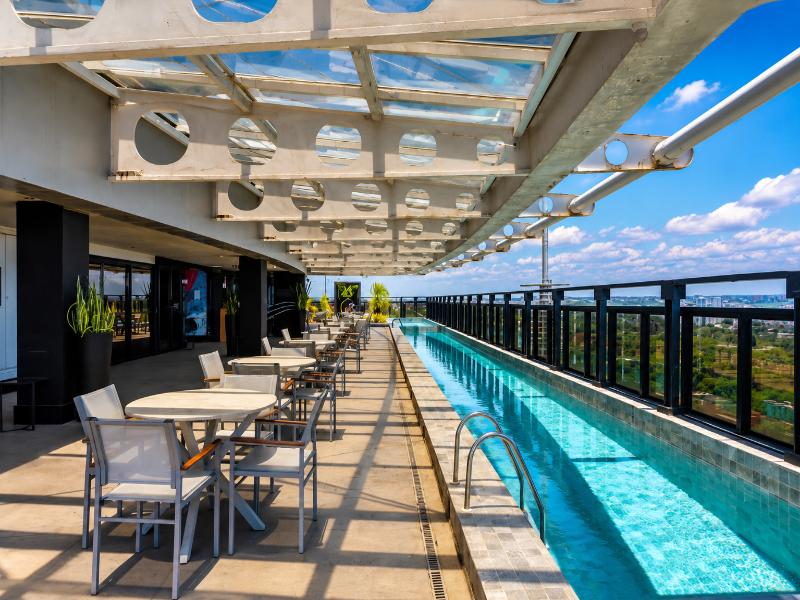
Salvador de Bahía
R$1,762 / night

Salvador de Bahía
R$1,378 / night

San Salvador
R$1,139 / night

San Salvador
R$1,145 / night

San Salvador
R$1,398 / night

Salvador de Bahía
R$1,376 / night
Compare options by price, location, and travel style — clean URLs for search engines.
Must-sees, local secrets, experiences, and hotels — filter layers and tap the pins.
Editorial guides to deepen your experience
Everything you need to know to plan your trip
Get notified when hotel prices in Salvador drop. No spam.
We use your email only to send this price alert. Unsubscribe anytime.
Extend your trip to incredible destinations nearby
Still unsure? See side-by-side comparisons to decide.
We personalize every moment of your journey — from iconic landmarks to hidden cultural gems.
Available 24/7 · Personalized consultations · Local expertise
Updated on July 19, 2026 · Methodology · Authors
Sources
Testimonials
Stories from travelers who have already visited. Share your experience — your comment appears in the cards below.
Pelourinho at dusk with the sound of drums is priceless.
Renata Barros
Traveler from Recife
Stayed in Barra and the beach was two minutes away. Salvador makes it easy for visitors.
Márcio Teles
Family with teens


