
Porto de Sagunto
EXE PUERTO DE SAGUNTO
R$1,232 / night
Destination
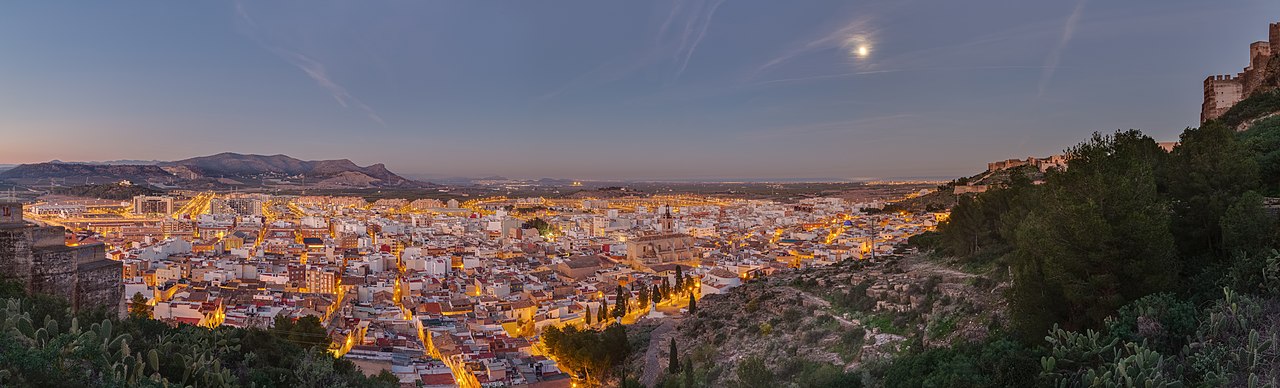
Explore Sagunto, a historic city in the Valencian Community. Discover its medieval charm, cultural attractions, and rich Spanish tradition.
Sagunto · Brasil
Photos
Discover the landscapes and culture of Sagunto


Editorial guide with history, culture, and practical tips to plan your trip.
Sagunto, also spelled Sagunt, is a historical and cultural destination deeply rooted in the province of Valencia, within the Valencian Community, Spain. This municipality possesses a rich identity that transcends centuries, recognized not only for its strategic location but also for the depth of its historical roots. The city holds the distinction of being the most important and central nucleus of the district known as Camp de Morvedre.
In demographic and urban terms, Sagunto is a significant community. According to recent estimates available until 2021, its population was approximately 67,043 inhabitants. This population density reflects the importance the municipality holds within the administrative and social network of the Valencian region.
Covering a territorial area of 132 km², Sagunto balances its urban development with a rich geographical environment. Its position in the Camp de Morvedre Comarca is no accident; it places it at a nodal point that allowed civilizations and cultures to flourish over millennia, making it an essential destination for those seeking deep immersion into Mediterranean history.
The mere mention of its historical names—Murviedro(es) or Morvedre(val)—tells volumes about its resilience and the passage of time. Sagunto is therefore a living testament to Iberian history, a point where the past manifests itself on every street and structure.
The historical trajectory of Sagunto is marked by multiple transformations and names that reflect its strategic importance over time. It is crucial to understand that the current identity of the city holds within it the memories of previous civilizations, which gives it inestimable archaeological value.
Before being widely known as Sagunto, this territory was called by other notable historical names. Among them, Murviedro(es) and Morvedre(val) stand out. These eponyms not only indicate the passage of time but also signal different cultural and political influences that shaped human development in the region.
The maintenance of these ancient names serves as a guide for researchers and tourists, showing layers of history. Each name is a temporal anchor, connecting the visitor not only to contemporary Valencia but to its deepest origins. Mentioning these historical names underlines that Sagunto has always been a convergence pole, whether commercial, military, or cultural.
The evolution from Murviedro(es) to Morvedre(val), and finally the modern recognition as Sagunto, tells a complex saga of human occupation. This historical process is not merely a change of label; it represents the adaptation of the population and social structures in response to the geopolitical changes of the Mediterranean, consolidating its position as a vital center in the Camp de Morvedre Comarca.
Sagunto's culture is intrinsically linked to its vast historical tapestry. It is not only evident in museums or ruins but in daily life, traditions, and even the architecture that bear witness to centuries of human occupation.
By exploring Sagunto, the visitor immerses themselves in a culture that has absorbed diverse influences—from those associated with Murviedro(es) to the more recent manifestations of the Valencian Community. This blend is the unique cultural flavor of the city and its surroundings.
Knowledge of ancient history, evidenced by past names like Morvedre(val), nourishes a deep sense of belonging among its inhabitants. The local culture values this ancestral memory, using it to enrich its festivities, gastronomy, and artistic expressions. The past is actively celebrated in the cultural present.
Life in the area that Sagunto represents as the center of the Camp de Morvedre Comarca results in a vibrant cultural identity. It is a place where oral tradition and historical knowledge are passed down, ensuring that the rich cultural tapestry of its ancestors is not lost. Sagunto's culture is thus an homage to time and resilience.
Geometrically speaking, Sagunto is located in the province of Valencia, within the Valencian Community, in the heart of Spain. Its geographical location makes it a nerve center that historically facilitated trade and cultural exchange via the Mediterranean Sea.
In terms of dimensions, the municipality covers a total area of 132 km². This size allows for a balance between dense urban areas—where most of the estimated population resides—and a natural surroundings that preserves Mediterranean beauty.
The geographical importance is reinforced by its administrative role: Sagunto is recognized as the most important city within the boundaries of the Camp de Morvedre district. This central position is not merely administrative but also strategic in terms of regional connectivity and access to the province's natural resources.
Valencian geography is known for its variety, ranging from coastal landscapes to interior plateaus, and Sagunto falls into this picture. The very administration of the municipality ensures that human development is anchored in a territory of natural and historical value, making the landscape an extension of the cultural narrative.
While the provided facts do not explicitly detail annual climate variations in Sagunto, it is impossible to discuss its geography without mentioning the surrounding climate. As part of the Valencian Community and located close to the Mediterranean, the region typically enjoys a Mediterranean climate.
This type of climate is characterized by hot and dry summers, ideal for outdoor activities, and mild winters. The constant Mediterranean sea breeze softens extreme temperatures and gives the region a pleasant atmosphere in almost all seasons.
Seasonality is a determining factor in the rhythm of life in the municipality. It is within this climatic setting that the population of Sagunto, estimated at 67,043 inhabitants, has flourished and maintained its vitality for centuries. The interaction between the favorable climate and robust geographical positioning consolidated it as a prominent urban center.
Sagunto's tourist appeal is multifaceted, combining the fascination of millennia-old archaeology with the vibrancy of a modern city. It is this balance that attracts visitors from around the world and solidifies its status as a cultural hub in the Camp de Morvedre Comarca.
For tourists interested in History and Archaeology, Sagunto is a must-visit destination. The vestiges of its ancient times—reflected in the names Murviedro(es) and Morvedre(val)—guarantee journeys through time. It is possible to trace a line of civilizational development in a single location.
The tourist experience goes beyond the ruins; it embraces the vibrant culture of the Valencian Community. Visitors can enjoy walking through the urban area, understanding Sagunto's role as the most important city in the district, and participating in events that celebrate its rich cultural heritage.
The combination of Mediterranean climate ideal for outdoor activities (fueling leisure tourism) and the historical depth within its 132 km² territory ensures a varied tourist schedule, catering both to the academic seeking historical vestiges and the traveler looking for coastal relaxation.
Sagunto is a living repository of historical curiosities. Its multifaceted identity, evidenced by the diverse names under which it has existed—including Murviedro(es) and Morvedre(val)—tells a story of unparalleled resilience.
A curious fact is its administrative size: Sagunto covers exactly 132 km², an area that houses both population density (with its nearly 67,043 inhabitants in 2021) and vast spaces of archaeological value.
The fact that it is recognized as the most important municipality in the Camp de Morvedre Comarca underscores its role as a center of regional command and integration, making it a point of geographic and cultural convergence.
It is fascinating to note how the mere change of nomenclature over time—from Murviedro(es) to Morvedre(val), to the current name—functions like a chronological map. Each name carries with it the account of a distinct era, making Sagunto a true open-air history lesson.
The city's ability to maintain this connection between its remote past and its modern vitality is its most striking characteristic, offering visitors an unparalleled temporal journey in the Valencian Community.
Everything you need to know to plan your trip
Reference figures to help plan your trip
Hotels in the area
2
Attractions
8
2 properties in the area
116 travelers searched Sagunto this week
17 stays booked in Sagunto in the last 7 days
Must-sees, local secrets, experiences, and hotels — filter layers and tap the pins.
Everything you need to know to plan your trip
Get notified when hotel prices in Sagunto drop. No spam.
We use your email only to send this price alert. Unsubscribe anytime.
Extend your trip to incredible destinations nearby
Still unsure? See side-by-side comparisons to decide.
We personalize every moment of your journey — from iconic landmarks to hidden cultural gems.
Available 24/7 · Personalized consultations · Local expertise
Updated on July 27, 2026 · Methodology · Authors
Sources
Testimonials
Stories from travelers who have already visited. Share your experience — your comment appears in the cards below.
Visiting Sagunto exceeded all expectations. The energy of the place is contagious!
Ingrid Viana
Honeymoon
We traveled as a family and Sagunto delighted kids and adults alike. Great hotel and attraction picks.
Leandro Meirelles
Traveler from Porto Alegre
I arrived without a fixed itinerary and Sagunto surprised me at every corner. So welcoming.
Olívia Fontes
Traveler from Brasília
Stayed near downtown and walked everywhere. Sagunto is even better on foot.
Simone Aragão
Traveler from Salvador


