
Punta Arenas
Hotel Almasur Express Punta Arenas
R$469 / night

Destination
Visit Punta Arenas! Discover the charm of this capital in Chilean Patagonia's extreme south. Gateway to incredible destinations. Book your trip today.
Punta Arenas · Brasil
Photos
Discover the landscapes and culture of Punta Arenas


Editorial guide with history, culture, and practical tips to plan your trip.
Punta Arenas is not just a name on the vast map of southern Chile; it is the pulsating heart and gateway to one of the most singular and dramatically beautiful regions in South America. Characterized as a vibrant commune, and above all, an essential port city, Punta Arenas plays a vital role as the administrative capital for the entire Magallanes y Antártica Chilena region. Its identity is intrinsically linked to the sea, serving as a strategic point that channels maritime movement through the Strait of Magellan, one of the most notorious and complex navigable corridors on the planet.
To be in Punta Arenas means being at the extreme south of Chile—a geographical location that grants the city a unique status, making it not merely a regional metropolis, but also a landmark of civilization at the tip of Patagonia. The growth and development of the city were dictated by its port vocation, transforming the area into a crucial point for maritime commerce and logistics activities that sustain life throughout the surrounding region.
Punta Arenas' urban structure reflects this duality: it is an established city with historical characteristics marked by time, yet also a modern, dynamic community oriented toward the future of maritime exploration. Its importance transcends municipal borders, acting as a command center that manages life across a vast geographical region extending through Austral Patagonia. The city thus functions not just as a residence, but as a point of cultural and commercial convergence for those seeking to understand the pulse of extreme southern Chile.
The history of Punta Arenas is a deep narrative dating back to the 19th century, marked by strategic growth and the consolidation of its role in the Patagonian landscape. Its official founding occurred on December 18, 1848. This temporal milestone does not merely represent the start of a civil calendar; it marks the moment when the city began taking shape as a residential and commercial pole in the vast plains of Patagonia.
Since its establishment, Punta Arenas has followed the geopolitical changes of the Strait of Magellan. Its historical trajectory is marked by the strategic importance of its location. The growth was not a spontaneous event; it developed through dialogue with the need for support and supply for activities carried out in neighboring regions, making its position relative to the former settlement of Forte Bulnes particularly relevant. Being located 62 kilometers north of what was the military camp of Forte Bulnes suggests an organic evolution concerning the strategic centers of interest of the time.
The fact that it was founded a significant period ago—according to records, 177 years ago—confers it with a deep sense of historical memory and resilience. The city preserves the atmosphere of having survived decades, witnessing the advancement of navigation techniques in the Strait and the growing economic importance of the port. This long history is not just a chronological datum; it manifests in the streets, the architecture, and above all, in the identity of its inhabitants, who are guardians of Patagonian maritime memory.
The passage of time transforms Punta Arenas into a living museum of Chilean colonization in the extreme south. It tells the story of man adventuring to the coldest and wildest edges of the continent, using the Strait of Magellan as the main artery of life and commerce.
The culture in Punta Arenas is a rich mosaic flourishing at the intersection of traditional Chilean heritage, incessant maritime influence, and the resilience of the Patagonian people. Living here means absorbing the slow, majestic rhythm of life in the far south, where the sea dictates the pace of days.
As the capital of Magallanes y Antártica Chilena, Punta Arenas functions as a regional cultural reservoir. This means that local culture incorporates diverse traditions: festivals related to fishing and the port are central; tales and stories often speak of sailors, whalers, and explorers who crossed the Strait of Magellan.
The art and social life of the city are strongly connected to the port environment. The sea is not just a means of transportation; it is a fundamental cultural element. Local culture celebrates the cycle of tides, the challenges of navigating the Strait of Magellan, and the power of the Patagonian wind. Cultural expressions tend to be epic and grandiose, mirroring the magnitude of the surrounding nature.
Local gastronomy, in turn, reflects this maritime connection. The focus is on fresh seafood and hearty dishes, suitable for the harsh climate and a life dependent on constant fishing. Furthermore, there is a strong appreciation for Patagonian identity, a feeling of belonging to a unique territory that demands respect and adaptation.
In summary, culture is a continuous tribute to the Strait of Magellan—the great geographical and symbolic watershed. It is maritime by essence, where every corner of the commune carries echoes of sails, port bells, and stories of long distances.
From a geographic point of view, Punta Arenas holds a place of extreme uniqueness in Chilean Patagonia. It is a city whose location is defined by the convergence of magnificent natural elements: the Brunswick Peninsula and the Strait of Magellan.
The commune is situated in an area with an almost immediate connection to the ocean, bathed by the waters of the strait. The geographical proximity to the Strait of Magellan is crucial, as this waterway not only defines the city's economy (by being a port) but has also shaped its historical development and port structure.
The location on the Brunswick Peninsula is not accidental. The peninsula grants the region a specific topography, more protected in certain points than the open continent of Patagonia, yet still immersed in the challenging and wild climate characteristic of the extreme south.
The surrounding geography is one of vast Patagonian magnitude. This is not a modest place; it is a region of open landscapes, constant winds, and powerful rivers descending from the mountains to the sea. The city has established itself strategically on the edge of this natural immensity. This position makes it a nodal point: a bridge between civilized urban life and the raw force of austral nature.
Geographically, Punta Arenas is synonymous with extremes. It stands at the apex of the American continent in terms of latitude and is permanently involved in the fluvial and maritime dynamics that occur in the Strait of Magellan. This position not only makes it a global geographical reference point but also imposes logistical and environmental challenges that are part of its identity.
The climate in Punta Arenas is profoundly influenced by its positioning at the extreme south of Chile and the constant influence of the Strait of Magellan. It is a temperate Atlantic climate, but with singular characteristics dictated by intense cold and powerful oceanic winds.
Residents must prepare for significant climatic variability. The most notable factor is the influence of Patagonian winds—winds that are a constant part of daily life in the region, shaping both the natural environment and human rhythm. These winds carry the force of the ocean and the Strait.
Although detailed seasonal data is not provided, it can be inferred that the climate is rigorous, characteristic of extreme southern latitudes. The humidity from the Pacific Atlantic and the cold influence of surrounding seas guarantee a landscape where the sea is always the protagonist. Temperatures tend to be moderate compared to other Chilean coastal regions, but never exempt from sudden changes due to the maritime nature of its location.
The climate, therefore, is not a passive backdrop; it is an active participant in the life of Punta Arenas. It demands preparation and respect. Weather conditions dictate port schedules, vessel operations in the Strait, and even the planning of tourist activities, reinforcing the link between the city and the constant cycle of austral nature.
Punta Arenas' tourism potential is vast and multifaceted, ranging from cultural exploration within its own port commune to grand expeditions into the planet’s wildest natural environments. The city serves as a natural springboard for extreme ecotourism.
The primary tourist focus revolves around the connection with the Strait of Magellan and Austral Patagonia. Visitors are drawn by the opportunity to navigate these ancient waters, observing wildlife inhabiting the strait's banks and feeling the grandeur of the surrounding landscapes.
In addition to navigating the Strait, the tourism interest is rooted in history. Visitors can delve into the narratives of explorers, whalers, and colonizers who passed through here, reliving the era when Punta Arenas consolidated its status as a vital port. The historical urban structure itself offers fascinating walks for those interested in late 19th and early 20th-century architecture.
Tourism is also an experience of geographical extremity. Visiting Punta Arenas is, in itself, a journey to the bottom of the inhabited world on the American continent, attracting tourists who seek the feeling of being in a place truly outside of time, where life's rhythm is dictated by the movement of the tides and the immensity of nature.
In summary, Punta Arenas offers a rare combination: the convenience of a modern, active port coupled with the deep history and wild majesty of a Patagonian destination. It is a tourist hub that sells more than just landscapes; it sells a journey through time and global geography.
One of the most striking pieces of trivia about Punta Arenas is its status as the administrative capital of the Magallanes y Antártica Chilena region. This title is not merely honorary; it grants the city a crucial regulatory and strategic role for life throughout the territory it governs, being the central point from which resources and activities of this vast region are managed.
Another curious fact is its position on the global map. Punta Arenas is not just in Patagonia; it is recognized as one of the most southerly cities in the world. This geographical characteristic elevates it to a level of cartographic importance, attracting researchers and travelers interested in extreme geographical limits.
Historical reference to the former settlement of Forte Bulnes also adds a fascinating layer to the city's narrative. Being situated 62 kilometers north of this historical point suggests that the development of Punta Arenas was, from an early stage, a process of overcoming and expanding beyond existing military centers, ensuring its growing autonomy.
It is important to note that all this complexity—the vital port function, the robust history (since 1848), the wild Patagonian setting, and its status as regional capital—converge to make Punta Arenas a destination of fascinating contrast. It is where the most intense human activity meets the untouched vastness of austral nature.
This unique combination allows the city to maintain a vibrant energy, despite the climatic rigor and distance from major population centers. It is an obligatory stop for anyone seeking to understand the indomitable spirit of southern Chile.
Everything you need to know to plan your trip
Reference figures to help plan your trip
Hotels in the area
20
Attractions
9
20 properties · high demand in Punta Arenas this season
180 travelers searched Punta Arenas this week
Stays for these dates are among the most sought-after in Punta Arenas
Punta Arenas
R$469 / night

Punta Arenas
R$811 / night

Punta Arenas
R$231 / night
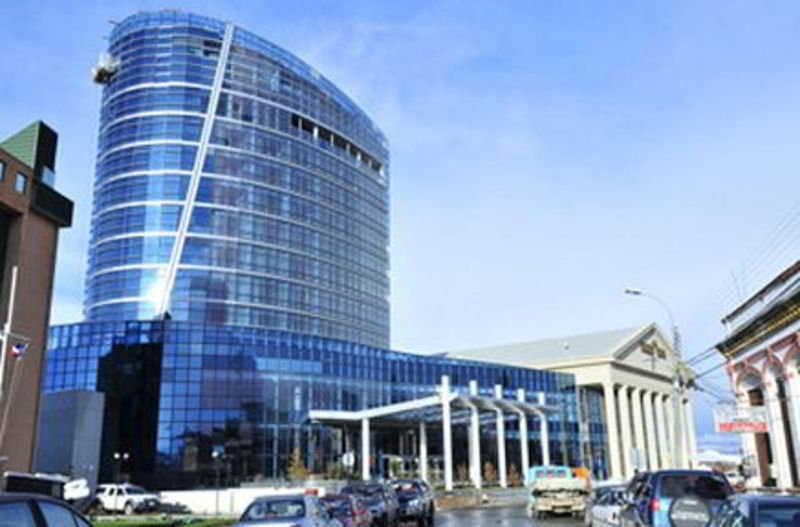
Punta Arenas
R$1,266 / night

Punta Arenas
R$861 / night
Punta Arenas
R$720 / night

Punta Arenas
R$631 / night

Punta Arenas
R$515 / night

Punta Arenas
R$1,084 / night

Punta Arenas
R$997 / night

Punta Arenas
R$508 / night

Punta Arenas
R$783 / night
Must-sees, local secrets, experiences, and hotels — filter layers and tap the pins.
Everything you need to know to plan your trip
Get notified when hotel prices in Punta Arenas drop. No spam.
We use your email only to send this price alert. Unsubscribe anytime.
Extend your trip to incredible destinations nearby
Still unsure? See side-by-side comparisons to decide.
We personalize every moment of your journey — from iconic landmarks to hidden cultural gems.
Available 24/7 · Personalized consultations · Local expertise
Updated on July 27, 2026 · Methodology · Authors
Sources
Testimonials
Stories from travelers who have already visited. Share your experience — your comment appears in the cards below.
Visiting Punta Arenas exceeded all expectations. The energy of the place is contagious!
Graziela Pacheco
Repeat visitor
We traveled as a family and Punta Arenas delighted kids and adults alike. Great hotel and attraction picks.
João Victor
Traveler from Recife
I arrived without a fixed itinerary and Punta Arenas surprised me at every corner. So welcoming.
Monique Barbosa
Food enthusiast
Stayed near downtown and walked everywhere. Punta Arenas is even better on foot.
Priscila Gomes
Friend group


