
Puno
Casa Andina Premium Puno
R$1,551 / night
Destination
Discover Puno, Peru. Experience the majestic Lake Titicaca and explore rich indigenous Andean culture. Plan your journey today!
Puno · Brasil
Photos
Discover the landscapes and culture of Puno


Editorial guide with history, culture, and practical tips to plan your trip.
Puno is more than just a city; it is a breathtaking cultural and geographical crossroads in southeastern Peru. Serving as the capital for both the province and department of the same name, Puno occupies a strategic position in the Andes Mountains.
Its unique location places it directly on the majestic Andean Altiplano and on the crystalline shores of the legendary Lake Titicaca. This positioning not only defines its visually stunning landscape but also profoundly shapes the way of life of its inhabitants, creating a unique blend of ancient tradition and the grandeur of Peruvian nature.
Puno's identity is intrinsically linked to its environment: the high altitude, the vast skies, and the eternal reflection of the lake. It is a destination that invites travelers to slow down, absorb the millennia-old Andean culture, and contemplate one of South America's largest water basins.
Although primary sources provide only current geographical information about the locality, it is impossible to speak of Puno without evoking its historical depth. The territory where the city stands today was for centuries a vital crossroads of civilizations.
The Andean Altiplano region and its glacial waters have always been centers of cultural and commercial resistance for peoples who lived millennia ago. Puno, situated at this natural epicenter, witnessed the passage of great pre-Inca empires and the subsequent influence of the Incas.
Its history is told through the communities that resisted at high altitudes, adapting their lives to the rigorous cycles of the altiplano. Life here has always been a narrative of human resilience in the face of imposing mountains and vast lakes. It is this deep historical layer that permeates the daily life and local traditions.
The culture in Puno is a vibrant mosaic, resulting from the meeting of different Andean ethnic groups over centuries. It pulsates with a unique energy, deeply rooted in the natural cycle of high altitude and the surrounding waters.
Cultural traditions manifest themselves in the colorful clothing of its inhabitants and rich folkloric festivities. These celebrations honor life, faith, and the inseparable bond with Andean nature. It is a spectacle of colors, rhythms, and rituals that remain alive to this day.
Life in the departmental capital is marked by the maintenance of ancestral dialects and customs, which have been preserved thanks to the natural isolation provided by the altiplano. Local cuisine reflects this: robust ingredients, adapted to Andean cold, such as quinoa and lacustrine products, form the authentic flavor of the region.
Geographically speaking, Puno has a prominent position in southeastern Peru. This location is defined by an extraordinary geographical combination: it is situated on the Andean Altiplano at high altitude and bathed by the imposing Lake Titicaca.
The Andean altiplano covering the surrounding area gives the landscape features of a semi-arid, elevated plateau. This geographic characteristic determines a majestic topography, with vast plains interspersed by dramatic mountain elevations. The topography is therefore dramatically grand.
Lake Titicaca does not just delineate Puno's horizon; it is the central axis of its geography. This large and deep lake is a vital component that moderates the local environment and attracts wildlife and riverside communities, making the interaction between land (the altiplano) and water (the lake) the defining aspect of its territory.
Due to its location on the Andean Altiplano, Puno's climate is characteristically cold. The high altitude imposes a rigorous climate regime that residents have learned to embrace and respect.
The temperature variations between day and night are pronounced. Days tend to be sunny and cool, but the thin air of the altitude requires caution. Mornings and nights bring intense cold, making it essential to dress in layers.
The influence of Lake Titicaca helps mitigate climate extremes, providing a certain atmospheric stability that is crucial for life in the region. It is the high-altitude, lake climate that defines the rhythm of local life: an imposing, cold, and wonderfully open environment.
For the traveler, Puno offers a multi-faceted tourism experience that goes far beyond urban sightseeing. The main focus is the connection with monumental nature and the living traditions of Andean communities.
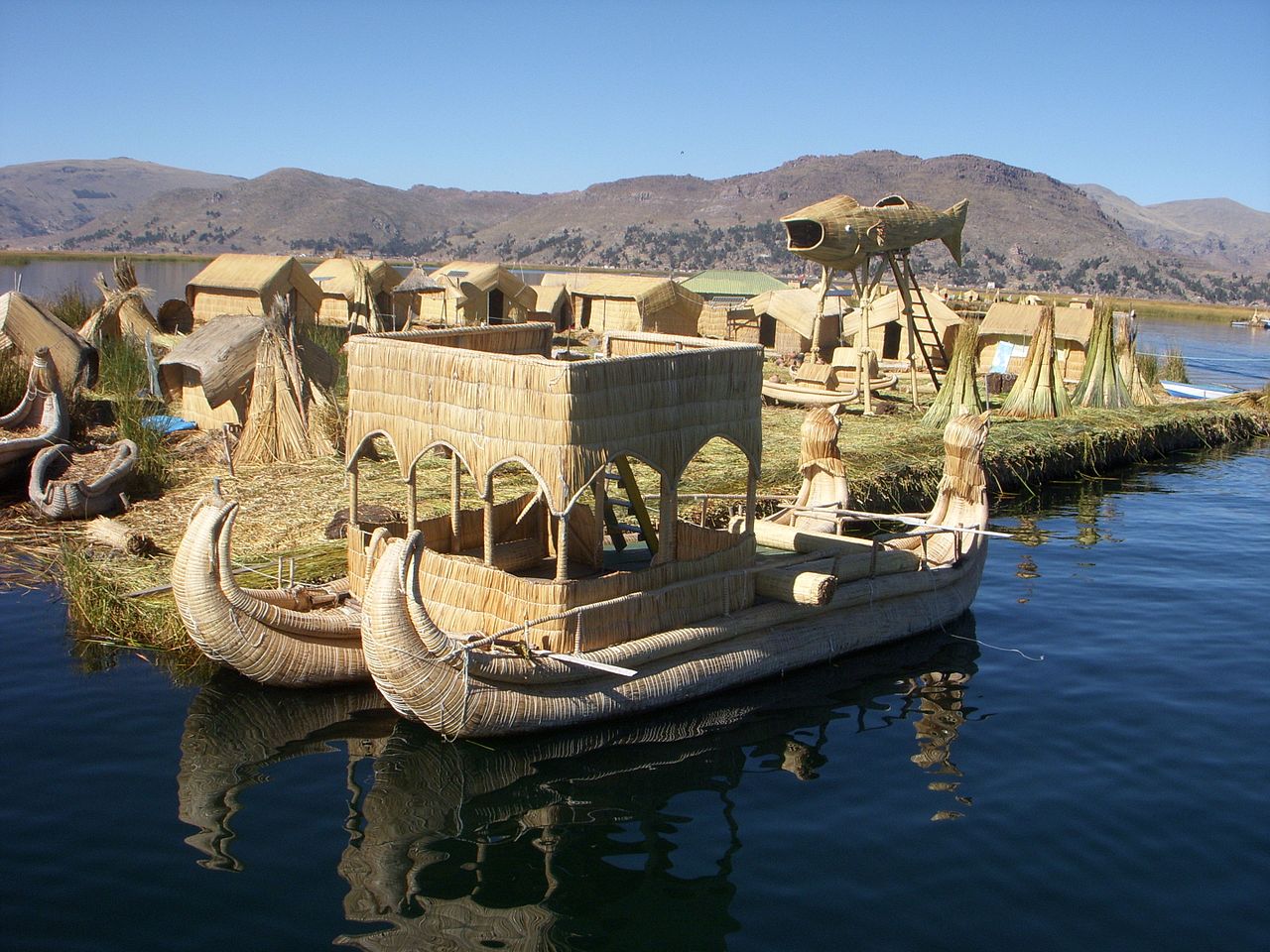
Lake Titicaca is the tourist epicenter, attracting visitors from various parts of the world to sail through its mystical waters. The floating totora islands and the different observation points within the lake basin constitute one of the greatest natural attractions.
Beyond aquatic activities on the lake, tourism revolves around cultural immersion. Visitors can explore communities that have kept their traditions alive at the altiplano altitude. Puno is a destination for ecotourism, where the grandeur of the Andes Mountains and the serenity of the waters create unforgettable itineraries.
One of the most notable curiosities about Puno is its ability to coexist with an incredibly rich cultural life, despite the geographical rigor. Being in this department's capital, in the heart of the altiplano and bathed by a legendary lake like Titicaca, gives the place a mystical aura.
The very concept of being on an elevated Andean plateau means that life there is shaped by resistance and adaptation. Local artisanal techniques, which use typical altiplano materials, are true manifestations of this historical resilience.
Puno functions as a portal for understanding pre-Columbian cultures still present in contemporary Peru. Its location and natural surroundings ensure that Andean history and culture are experienced in an intense and authentic way, making it a focal point of global interest due to its unique geography.
Everything you need to know to plan your trip
Reference figures to help plan your trip
Hotels in the area
32
Attractions
9
32 properties · high demand in Puno this season
239 travelers searched Puno this week
Stays for these dates are among the most sought-after in Puno
Puno
R$1,551 / night

Puno
R$1,472 / night
Puno
R$693 / night
Puno
R$674 / night

Puno
R$512 / night

Puno
R$455 / night

Puno
R$405 / night

Puno
R$1,174 / night

Puno
R$429 / night

Puno
R$537 / night
Must-sees, local secrets, experiences, and hotels — filter layers and tap the pins.
Everything you need to know to plan your trip
Get notified when hotel prices in Puno drop. No spam.
We use your email only to send this price alert. Unsubscribe anytime.
Extend your trip to incredible destinations nearby
We personalize every moment of your journey — from iconic landmarks to hidden cultural gems.
Available 24/7 · Personalized consultations · Local expertise
Updated on June 30, 2026 · Methodology · Authors
Sources
Testimonials
Stories from travelers who have already visited. Share your experience — your comment appears in the cards below.
Visiting Puno exceeded all expectations. The energy of the place is contagious!
Nelson Duarte
Retired couple
We traveled as a family and Puno delighted kids and adults alike. Great hotel and attraction picks.
Rafael Santoro
Photographer
I arrived without a fixed itinerary and Puno surprised me at every corner. So welcoming.
Valéria Nogueira
Family with teens
Stayed near downtown and walked everywhere. Puno is even better on foot.
Zélia Carmo
Traveler from Goiânia