
Prado
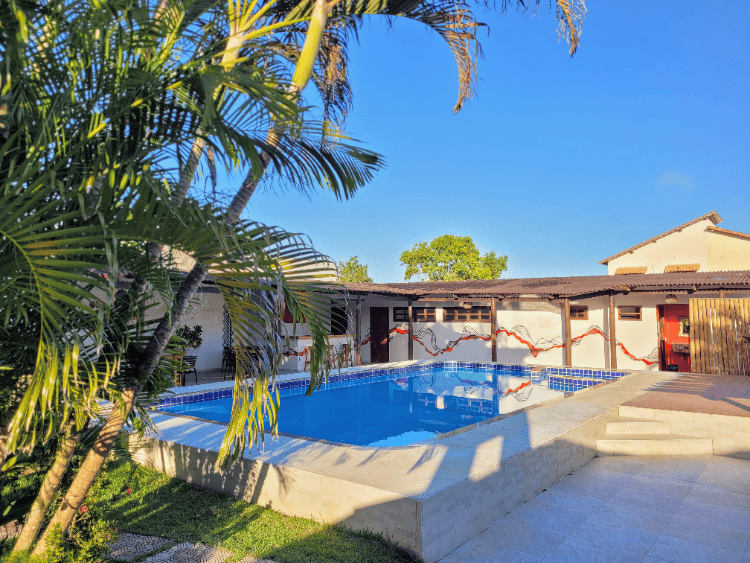
Pousada Novo Prado
R$557 / night

Destination
Discover the vast beauty of the Pampa grasslands, where rich culture meets endless natural landscapes. Plan your immersive journey today!
Prado · Brasil
Photos
Discover the landscapes and culture of Prado: Exploring Brazil's Pampas


Editorial guide with history, culture, and practical tips to plan your trip.
The prairie or grassland is one of the most impressive and grandiose ecosystems on the planet. This is not just any landscape; it is defined by its vast and imposing openness. In essence, a prairie constitutes an open plain where the predominant element is abundant low grass. This characteristic defines an almost infinite horizon, free from the density that characterizes forests or woods.
This unique landscape shows no signs of tall trees or shrubs, creating a green, undulating carpet that stretches for miles under the open sky. It is this visual simplicity, combined with the magnitude of scale, that gives the prairie its unmatched charm and global ecological importance. The beauty of the grassland lies in its horizontality, in the harmony between the low grass and the vastness of the horizon.
Internationally, these geographical formations are present on practically every continent where climate and soil conditions allowed for their development. However, it is notable that the largest concentration and occurrence of this type of natural formation is registered in North America, a breadbasket of vast plains. But Brazil possesses an equally rich and emblematic manifestation: the Brazilian prairie, world-renowned as the Pampa Gaúcho.
Historically, prairie areas have always represented both a challenge and an invitation for human exploration. Life in these vast expanses required remarkable adaptation from man, shaping unique cultures and ways of life in regions like the Pampa.
The first inhabitants who crossed these plains had to develop deep knowledge of the land, utilizing the natural resources available in the grassland environment. The absence of large vegetative barriers allowed for freer passages, but also required specific subsistence skills amid the immensity of low grass.
The arrival of agricultural and livestock cultures intensified human interaction with the grasslands. The region's vocation for extensive livestock farming, exemplified by the traditional way of life in the Pampa Gaúcho, transformed the social history of the area itself. Man adapted to the majestic and constant rhythm of the open plain, making the great landscape a central stage for his daily and economic activities.
The culture that flourishes in prairie areas is profoundly marked by the relationship between humanity and the vast plain. The Pampa way of life is synonymous with tradition, resilience, and a strong bond with the wild nature of the grassland.
The central element of this culture is, undoubtedly, the open field. Life revolves around livestock farming and activities that require large free spaces, such as cattle management or practicing traditional equestrian sports. This connection ensures that local traditions are preserved through festivals, gastronomy, and attire that evokes the history of the Gaúchos.
Prairie culture is synonymous with hospitality and openness, mirroring the nature of the biome itself: vast, open, and welcoming. Celebrating these cultural roots allows visitors an authentic glimpse into living in full communion with a landscape defined by the absence of arboreal barriers, only abundant low grass under the sky.
Geometrically speaking, the prairie is defined by its specific geographical characteristics: a vast and open plain. It is a predominantly flat or gently rolling terrain, without sharp mountain peaks that break the horizon.
Its vegetation does not depend on the presence of tree species; instead, it is sustained by a dense and uniform cover of grasses. The visual result is an extensive green carpet—the perfect definition of grassland. The distribution of these plains becomes an important geographical marker across various continents.
In Brazil, the Pampa Gaúcho represents this natural phenomenon at its greatest geographical expression. It not only covers a immense region but also defines a large part of Rio Grande do Sul's territorial identity. The vastness of this biome is a testament to how geology molded a unique landscape where grasses predominate, maintaining the characteristic vast and open plain throughout its entire territory.
Prairie ecosystems are generally associated with temperate or subtropical climates featuring pronounced characteristics of well-defined seasons. The ideal climate for sustaining grasslands is one that allows for adequate cycles of growth and dormancy, making the water regime crucial.
This geographical area receives climatic influences that ensure rainfall at strategic times of the year, allowing for the lushness of low grass. The thermal variations between seasons are marked, contributing to the richness of life and resilience of local flora. It is a climate that supports grassy vegetation in its most abundant form.
The climatic cycle is essential for maintaining the balance of the Pampa Gaúcho. Climate variations not only influence crops but also dictate the rhythm of traditional livestock activities, making climate an intrinsic part of the local culture and the entire experience of visiting a prairie.
Tourism in prairie regions offers immersive experiences in wild nature, focused on the grandeur of open space. It is not just about contemplating landscapes; it is participating in a deep connection with the life cycle in the grassland.
Tourist activities can range from observing local fauna in its natural habitat—such as birds and small mammals that thrive in this tree-less environment—to rural tourism experiences. Visiting a Pampa farm means immersing oneself in the routine of Gaúcho traditions, watching cattle management amidst immensity.
For those seeking adventure and connection with historical roots, horseback riding tours through the vast plains are unmissable. These trails provide a unique feeling of freedom and vastness. The goal is to make the visitor understand the beauty of the vast open plain, learning to admire the details of abundant low grass under an endless sky.
The fact that prairies are located on practically every continent demonstrates a remarkable plant adaptive capacity. This global distribution makes the prairie a fascinating study for both biology and human geography.
The main curiosity, however, lies in comparing the Pampa Gaúcho with other great world plains, especially those located in North America. Although all are defined as grasslands without shrubs, each possesses unique characteristics of soil, climate, and culture that have molded its destiny.
It is crucial to understand that the Brazilian prairie is the Pampa Gaúcho, a natural treasure that attracts not only nature lovers but also those fascinated by tradition. Its existence serves as a reminder of how powerful a landscape defined by its simplicity can be: the undeniable beauty of a vast open plain, where low grass is the absolute protagonist.
Everything you need to know to plan your trip
Reference figures to help plan your trip
Hotels in the area
14
Attractions
9
14 properties · high demand in Prado: Exploring Brazil's Pampas this season
129 travelers searched Prado this week
Stays for these dates are among the most sought-after in Prado
Prado
R$557 / night

Prado
R$593 / night

Prado
R$290 / night

Prado
R$308 / night

Prado
R$284 / night

Prado
R$349 / night

Prado
R$469 / night

Prado
R$505 / night

Prado
R$399 / night

Prado
R$474 / night
Prado
R$343 / night

Madrid
R$1,376 / night
Must-sees, local secrets, experiences, and hotels — filter layers and tap the pins.
Everything you need to know to plan your trip
Get notified when hotel prices in Prado: Exploring Brazil's Pampas drop. No spam.
We use your email only to send this price alert. Unsubscribe anytime.
Extend your trip to incredible destinations nearby
We personalize every moment of your journey — from iconic landmarks to hidden cultural gems.
Available 24/7 · Personalized consultations · Local expertise
Updated on July 26, 2026 · Methodology · Authors
Sources
Testimonials
Stories from travelers who have already visited. Share your experience — your comment appears in the cards below.
Visiting Prado: Exploring Brazil's Pampas exceeded all expectations. The energy of the place is contagious!
Hugo Santana
Local from Belo Horizonte
We traveled as a family and Prado: Exploring Brazil's Pampas delighted kids and adults alike. Great hotel and attraction picks.
Karen Abreu
Trip planner
I arrived without a fixed itinerary and Prado: Exploring Brazil's Pampas surprised me at every corner. So welcoming.
Nelson Duarte
Retired couple
Stayed near downtown and walked everywhere. Prado: Exploring Brazil's Pampas is even better on foot.
Rafael Santoro
Photographer
