
Pompeia
Hotel Palma
R$1,043 / night
Destination
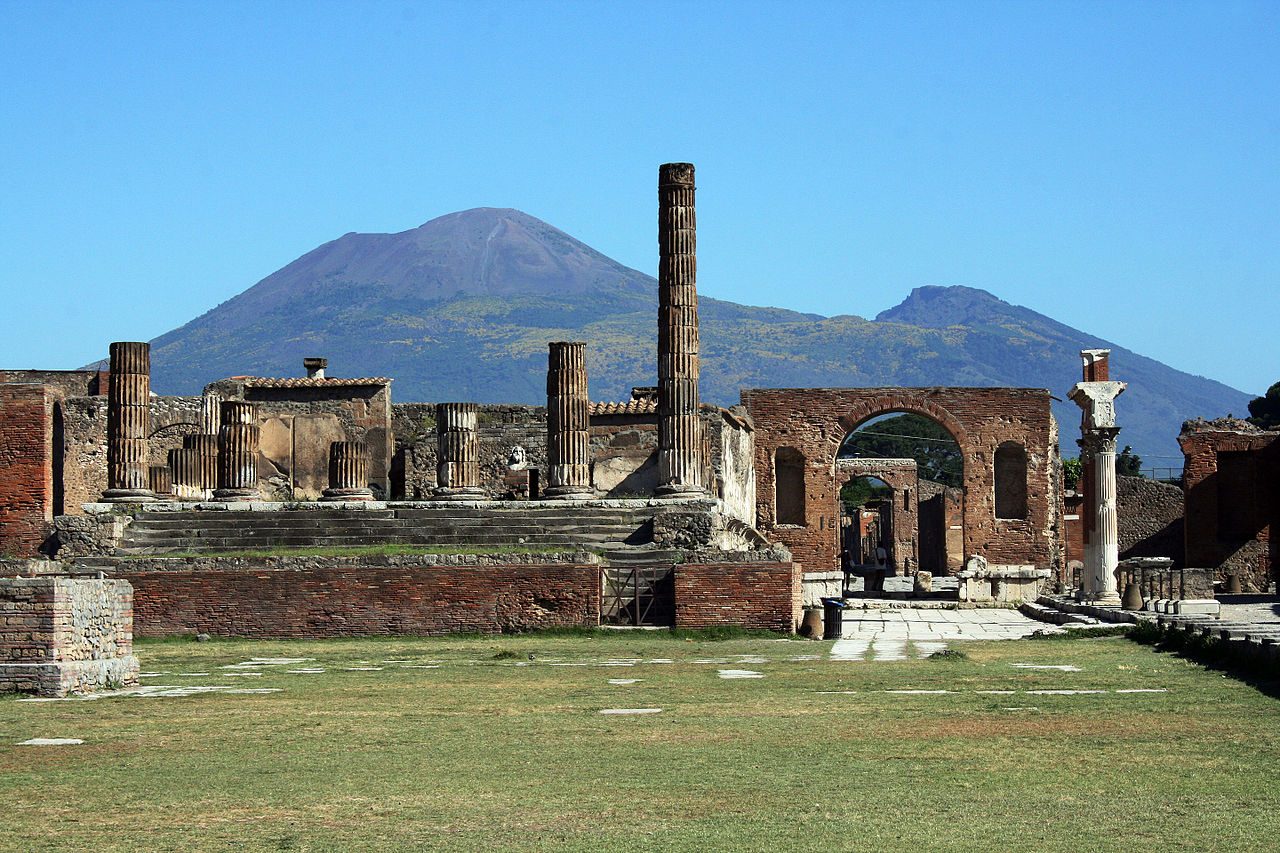
Visit Pompeii and walk the streets of a Roman city buried by Vesuvius in 79 AD. Discover daily life in antiquity!
Pompeia · Brasil
Photos
Discover the landscapes and culture of Pompeii


Editorial guide with history, culture, and practical tips to plan your trip.
Pompeii, historically also known as Pompeios, is not just a destination; it is a literal journey through time. This ancient metropolis flourished under the Roman Empire and today stands as one of the most fascinating and preserved archaeological sites in the world.
Located in a strategic position in modern Italy, the city was tragically interrupted by an event of apocalyptic proportions. Its uniqueness lies precisely in this interruption: Pompeii froze daily Roman life in 79 AD, preserving it under thick layers of volcanic ash and mud.
The site, which now belongs to the municipality of Pompeii, is a relatively short distance from the bustling city of Naples. However, the experience of stepping onto its paved streets is transportive; visitors feel like time travelers, walking through thoroughfares where life and commerce flourished more than two millennia ago.
What makes Pompeii unparalleled is not merely that it is Roman ruins, but the way this destruction functioned as a perfect mechanism of preservation. The fine ash and volcanic debris acted as a protective blanket, sealing the structures and household objects from the corrosive effects of time and nature, offering humanity an unprecedented view of daily Roman life.
Since its accidental rediscovery in 1748, Pompeii has undergone meticulous excavations. This archaeological work not only unearthed bricks and columns but also revealed intimate details of what it was like to live at the height of Roman power, transforming the site into an open-air museum—a powerful testament to the ingenuity and routine of a thousand-year civilization.
The history of Pompeii begins in its days of prosperity as a vibrant part of the vast Roman Empire. The city was an active center of commerce and cultural life, a direct witness to Roman politics and customs for centuries. Its location allowed it to flourish in the heart of ancient Italy.
The turning point in its existence was the cataclysmic year of 79 AD. That day, the region was hit by the violent eruption of the imposing Vesuvius volcano. It was not just an explosion; it was a massive geological event that radically transformed the landscape and life in the city.
The force of nature manifested through intense and persistent rain of ash, debris, and volcanic material. This constant, dense precipitation completely covered Pompeii, burying it entirely under a natural blanket of pyroclastic materials. The impact was devastating, but ironically, it preserved everything.
Following the cataclysm, the city entered a long period of oblivion. Remaining hidden from human eyes and modern history for approximately sixteen hundred years, Pompeii patiently awaited beneath the volcanic rubble until its destiny was rewritten by human curiosity.
The cycle of silence was broken in 1748. The discovery was not planned by archaeologists, but rather by sheer chance. This accidental reunion with the past transformed Pompeii from forgotten ruins into one of humanity's greatest historical treasures. Since then, the journey of excavations has provided researchers and the public with a deep understanding not just of what Rome was, but of how it was to live there, day after day.
The culture of Pompeii is a living mosaic of Roman habits, beliefs, and social organization. Walking through the archaeological site, visitors are confronted with tangible evidence of a rich and complex life that flourished two thousand years ago.
What makes the cultural experience in Pompeii so impactful is that it is not just about seeing vestiges; it is witnessing the complete environment. The ruins display in detail what daily life was like in the city: from public baths, social centers, and private houses with their ornamental mosaics, to theaters where shows were held.
The preserved material culture speaks of a society that valued both commerce and art. It is possible to observe remains of shops (tabernae), places for social gathering, and advanced drainage systems, indicating sophisticated urban planning for the standards of the era. Life was vibrant, intense, governed by the routines of the Roman Empire.
Beyond the majestic buildings, the posthumous culture is the most moving and unique element: human preservation. The ash did not just cover; it molded the bodies of the victims at the exact moment they were hit by the Vesuvius eruption. This extraordinary phenomenon allows a visceral and unprecedented view of the tragedy, but also a macabre portrait of life frozen in time.
Studying Pompeii is plunging into a culture where architecture speaks of imperial power and walls whisper stories of local commerce, community celebrations, and the relentless rhythm of a civilization at its peak. The preservation of these elements makes the visitor feel closer to Roman life than anywhere else.
Pompeii is located in the Campania region of Italy. Geographically speaking, it is an example of how volcanic activity can be both a destructive force and an unparalleled mechanism for historical preservation.
The city sits within the territory of the current municipality of the same name and is positioned approximately 22 km from the large coastal metropolis of Naples. This geographical proximity not only facilitated trade but also ensured that Pompeii was embedded in an established Roman cultural hub.
The crucial geological backdrop for understanding Pompeii's fate is the presence of the Vesuvius volcano. The city’s location is directly linked to its proximity to this dormant, and sometimes active, giant. It was from this very geothermal and volcanic source that the catastrophe came in 79 AD, permanently changing the geographic course of the area.
The archaeological site itself reveals an impressive human adaptation to a coastal and fertile environment, typical of Roman cities in the Mediterranean. The urban layout follows a planned grid that maximizes access to water resources and trade routes. Therefore, the geographical setting is not just a background; it is part of the historical narrative, as the volcanic geography determined both the splendor and the disappearance of the city.
The natural climate of the region where Pompeii is located is typically Mediterranean, characterized by hot, dry summers and mild winters. This climatic characteristic was fundamental for allowing a vibrant civilization to flourish for centuries.
However, the most striking climatic event in the city's history was not caused by the seasons, but by the volcanic catastrophe of 79 AD. The disaster involved an abrupt and dramatic climate shift. The eruption of Vesuvius generated an unusual and devastating type of precipitation: intense ash rain.
This climatic event was not merely a rainfall; it was the agent of the city's complete burial. The ashes, mixed with volcanic mud, fell over the landscape, completely covering buildings and daily lives beneath a natural material that paradoxically became its greatest conservator.
Although the site remains under the Mediterranean climate of Italy today, it is essential for visitors to understand that the historical atmosphere was defined by this extreme climatic event. It was this storm of ash and mud that suspended Pompeii in geological time, ensuring its unique preservation.
Visiting Pompeii is a tourist experience that transcends simple archaeological tourism; it is a dive into human history at its most dramatic point. The destination attracts millions of visitors annually due to its unmatched uniqueness.
The visit to the site is structured as a walk through Roman ruins, where every corner and wall tells a part of past life. Tourists stroll through streets that have been meticulously restored to simulate the original layout of the Roman Empire. It is a journey guided by time itself.
One of the highlights is the ability to observe minute details: preserved frescoes, colorful mosaics in the floors of homes and public baths, and domestic architecture that allows one to imagine daily Roman life. Tourism in Pompeii focuses on the narrative of life before the tragedy.
Another crucial tourist aspect is the visit to the archaeological context museum, where artifacts removed from excavations are displayed: from household utensils and tools to works of art. It is here that the visitor understands the science behind the preservation—how the ash was capable of protecting both organic and inorganic objects.
The experience is deeply educational, mixing history, archaeology, and geology into a single package. The tourist is not merely admiring ruins; they are participating in a scientific journey that reveals exactly how Romans lived, died, and left their legacy for the modern world.
The most fascinating and striking aspect of Pompeii is its almost supernatural preservation. The city was not simply buried; it was encapsulated in a natural cocoon made of ash and volcanic mud, which constitutes a historical rarity.
Firstly, note the long pause of 1600 years in its active history. The fact that it remained hidden from the modern world until it was accidentally rediscovered in 1748 is an element that lends the city a near-magical mystery.
The way the bodies and objects were preserved defies common scientific understanding. The ash and mud did not just cover; they acted chemically, protecting structures from rapid collapse and preventing degrading natural elements from running their normal course. This preservative effect allowed for a level of detail unseen in other great civilizations.
A particularly striking curiosity is the state of the bodies found during excavations. The ash molded the victims of the disaster, leaving impressions that represent individuals exactly at the moment and position they were struck by the eruption. This transforms history from a distant study into a personal and shocking view of Roman mortality.
Pompeii constantly reminds us of nature's unpredictable power while celebrating the resilience of human legacy. It is a living laboratory that teaches about the fragility of time and the extraordinary capacity for preservation given by geology.
Everything you need to know to plan your trip
Best time to visit
Spring (April-June) or Autumn (Sept-Oct)
Currency
Euro (€)
Language
Italian
Recommended stay
3 days
Timezone
CET/CEST
Reference figures to help plan your trip
Hotels in the area
102
Attractions
9
102 properties · high demand in Pompeii this season
122 travelers searched Pompeia this week
Stays for these dates are among the most sought-after in Pompeia
Pompeia
R$1,043 / night

Pompeia
R$1,146 / night

Pompeia
R$2,231 / night

Pompeia
R$1,298 / night

Pompeia
R$887 / night

Pompeia
R$1,900 / night

Pompeia
R$881 / night

Pompeia
R$940 / night
Must-sees, local secrets, experiences, and hotels — filter layers and tap the pins.
Everything you need to know to plan your trip
Get notified when hotel prices in Pompeii drop. No spam.
We use your email only to send this price alert. Unsubscribe anytime.
Extend your trip to incredible destinations nearby
Still unsure? See side-by-side comparisons to decide.
We personalize every moment of your journey — from iconic landmarks to hidden cultural gems.
Available 24/7 · Personalized consultations · Local expertise
Updated on July 26, 2026 · Methodology · Authors
Sources
Testimonials
Stories from travelers who have already visited. Share your experience — your comment appears in the cards below.
Visiting Pompeii exceeded all expectations. The energy of the place is contagious!
Olívia Fontes
Traveler from Brasília
We traveled as a family and Pompeii delighted kids and adults alike. Great hotel and attraction picks.
Simone Aragão
Traveler from Salvador
I arrived without a fixed itinerary and Pompeii surprised me at every corner. So welcoming.
Wagner Lisboa
Traveler from Manaus
Stayed near downtown and walked everywhere. Pompeii is even better on foot.
Arthur Klein
Tourist from Germany


