
Pasco, WA
Red Lion Hotel Pasco Airport & Conference Center
R$806 / night

Destination
Explore the different cities of Pasco! Discover the charm in Washington (USA) or the rich history of Peru. Plan your trip to see unmissable attractions.
Pasco · Brasil
Photos
Discover the landscapes and culture of Pasco


Editorial guide with history, culture, and practical tips to plan your trip.
The name Pasco possesses a notable geographical and administrative complexity, making it a term that can refer to various locations on distinct continents. For the traveler seeking to explore this area or concept, it is crucial to understand this diversity of names. Essentially, "Pasco" does not define a single point on the map, but rather a reference covering multiple contexts:
Firstly, we find Pasco in the United States of America. Specifically, it is a city located in Franklin County, Washington State. This urban location has distinct characteristics and is associated with specific demographic data, with historical records pointing to a considerable population and a delimited territorial area.
In a completely different context, the term Pasco takes on larger administrative proportions in South America, particularly in Peru. In this country, it designates not only a province—the Pasco Province—but also an entire department bearing the same name. This department and its associated province form an important Andean geographical region.
Within this broader Peruvian structure, Cerro de Pasco stands out. This is the city that serves as both the capital of the Department and the Province of Pasco in Peru, configuring a vital urban center for the entire mountainous region. Beyond the Peruvian and American references, the name can also be found in Argentina, where it indicates a specific locality within its territory.
Therefore, whether it is the American urbanism of Washington State, the administrative dynamism of Andean Peru, or the Argentine location, Pasco represents a concept that requires prior investigation to direct the tourist itinerary accurately. It is this breadth that makes the discovery of this region so rich and multifaceted.
The history associated with the different locations named Pasco is marked by distinct narratives, reflecting the geographical contexts in which they developed. Analyzing the references richest in administrative details—the Peruvian case—the historical importance is intrinsically linked to its role as a regional hub and departmental capital.
The development of Pasco, Peru, reflects centuries of occupation in a challenging Andean environment. The emergence of urban centers like Cerro de Pasco was not merely population growth, but rather the result of natural resource exploitation and the establishment of administrative structures that required a central command point to govern both the department and its associated province.
In parallel, even where detailed historical information is less available (as in the American city in Washington), the locality's development follows its own trajectory. Whether shaped by regional economy or connection to broader trade routes, every Pasco has a past that contributed to its current identity.
The concept of "capital" is central to this historical narrative. The fact that Cerro de Pasco is the capital of both the department and the province elevates its historical significance, transforming it into a crossroads of cultures, power, and economic activity since immemorial times. The history here told is not just about dates, but about resilience and human capacity to build civilizations flourishing in the heart of the Andean mountains.
The geographical multiplicity of names—from Peru to Washington (USA) and even Argentina—shows how the term "Pasco" has become a marker of importance, whether administrative, demographic, or culturally recognized in different American nations.
Although sources do not specifically detail folklore customs or local festivities for all Pascos, the geographical and administrative context suggests a rich cultural tapestry. When thinking about Peruvian Pasco, culture is profoundly influenced by the high Andean environment and mining history.
Life in a departmental capital like Pasco is marked by traditions that honor both pre-Hispanic cultures and more recent heritages. The interaction between indigenous communities, migrant groups, and the strength of regional trade results in a vibrant and syncretic culture.
It can be inferred that local gastronomy is an essential cultural pillar, based on high-altitude products—tubercles, grains, and animals adapted to the cold climate. The cuisine reflects this adaptation and serves as a portal to understanding the region's age-old dietary habits.
In artistic terms, Pasco's culture can be seen in the architecture of its nodal cities and the crafts that use local materials, often related to the mineral itself or regional flora. The visual identity is a reflection of coexistence between the industrial (mineral extraction) and the traditional (the habits of Andean communities).
For the city of Pasco in Washington, USA, the cultural focus tends to reflect more American urban characteristics of the state, but the underlying idea is that any locality with such a distinct name carries deep regional pride. Regardless of national borders, cultural strength lies in the ability to keep roots alive while embracing modern development.
Geographically speaking, the reference "Pasco" is vast and varies drastically in terms of landscape and physical characteristics. Geography forces us to differentiate between the American urban context, the Andean department of Peru, or the Argentine locality.
In the most detailed case—Pasco in Peru—we are talking about a typically mountainous and high-altitude environment. The status as both a department and province confers upon it a vast and complex geographical area, traversing landscapes typical of the Peruvian Andes Cordillera. This region is defined by its elevated peaks and the climate associated with large-scale mining.
In direct contrast, if we consider Pasco in Washington (USA), the geographic focus shifts to an area of smaller territorial extension compared to an entire department, but which retains distinct characteristics of Washington state. Population specifications and calculated area confer a specific urban and metropolitan profile.
The mention of multiple locations—Peru (mountain tourism/mining), the United States (state city), or Argentina (specific locality)—underscores that topography is the determining factor. Where sources focus on the Peruvian context, we speak of extreme altitude geography, with rugged reliefs and rich subterranean mineralogy.
The geographical study of diverse Pascos reveals not only political boundaries (department vs. province) but also contrasting biomes: from the cold plateaus of the Andean altiplano to the more temperate environment of a US city, adapting to a full spectrum of South American and North American landscapes.
The climate in "Pasco" is a topic that must be approached with caution, as it varies drastically depending on the geographical context. However, the most robust sources point to a high-altitude region in Peru, which dictates very specific and challenging climatic parameters.
In general terms, a department or province at an Andean altitude like Pasco is characterized by low temperatures and notable thermal variations between day and night. The climate is cold, with altitude being the determining factor for all climatic manifestations.
This climate environment requires visitors to be prepared for conditions of low pressure and thin air. Climate risk management necessarily involves adequate preparation for travel in mountainous areas.
When considering Pasco in the United States, the climate would be influenced by Washington state, generally characterized by well-defined seasons that can range from temperate to colder, depending on the sub-region. However, it is crucial to recognize that the Peruvian reference (the center of administrative data) is where the climatic characteristics associated with Andean altitude are the defining element of the destination.
In summary, planning a trip to any Pasco requires maximum attention to local climate. If the route is in the Andean South America, intense cold and altitude are the primary climatic factors guiding the entire traveler experience.
The tourist wealth of the various places called "Pasco" is multifaceted, ranging from mountain adventure experiences to urban cultural immersions. The destinations point towards a tourism that values history and natural resources.
In the most detailed context—Peru—tourism focuses on exploring altitude and mining historical legacy. It is possible to develop itineraries focused on visiting ancient mineral extraction centers, providing a fascinating view of human engineering that shaped the region. The capital, Cerro de Pasco, attracts visitors interested in robust Andean culture.
Cultural and gastronomic tourism also plays an important role. Experiences can involve participating in local markets that celebrate agricultural products adapted to the cold climate and unique regional cuisine. Visiting administrative structures (the department and province) allows for immersion into daily mountain life.
For those seeking Pasco in the United States, tourism would be more directed towards typical activities of Washington State cities, such as natural trails, local museums, and urban tours exploring Franklin County's history. The choice depends entirely on the type of desired experience: mountain adventure or state urban charm.
The main recommendation is always to hire specialized guides in each destination to ensure not only safety in high-altitude areas, but also deep knowledge of the traditions that make Pasco such a unique and attractive place on the American map.
A fascinating curiosity about "Pasco" is precisely its ability to be a geographic marker for multiple places. This term does not belong to a single national or regional identity, but rather spans the broad geography of South America and the United States.
The very existence of Pasco as a city in Washington, US, and simultaneously as a department/province in Peru, demonstrates the complexity of geographic nomenclature. It is a perfect case of nominal convergence in very distant territories.
The data provided on the American city are specific: a registered population and a delimited territorial area (92.801228 square kilometers), elements that help us understand the urban profile of this particular Pasco. On the other hand, in the Peruvian context, the term carries significant administrative weight, serving as the capital of entire departments.
It is interesting to note how one same word is associated with both broad administrative contexts (a department) and specific, localized urban centers (a capital city). This geographic polysemy enriches the traveler, but requires them to be clear about which "Pasco" they are actually planning to visit.
In sum, Pasco is a case study in nominal geography: a single word that encompasses the diversity of the American continent—from temperate American hills to the beating heart of the Peruvian Andes mountains. It is this variation that makes its exploration so fascinating and educational for any itinerary.
Everything you need to know to plan your trip
Reference figures to help plan your trip
Attractions
9
Selected stays available to book
135 travelers searched Pasco this week
Stays for these dates are among the most sought-after in Pasco
Pasco, WA
R$806 / night
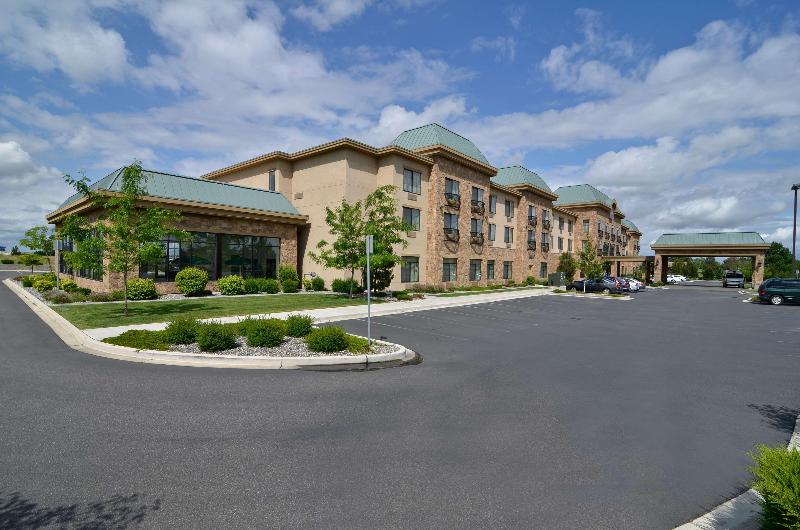
Pasco, WA
R$1,241 / night
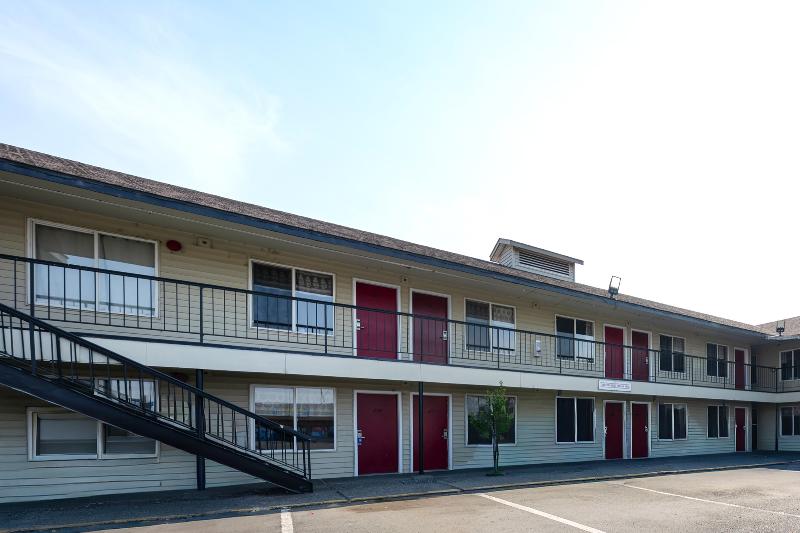
Pasco, WA
R$457 / night
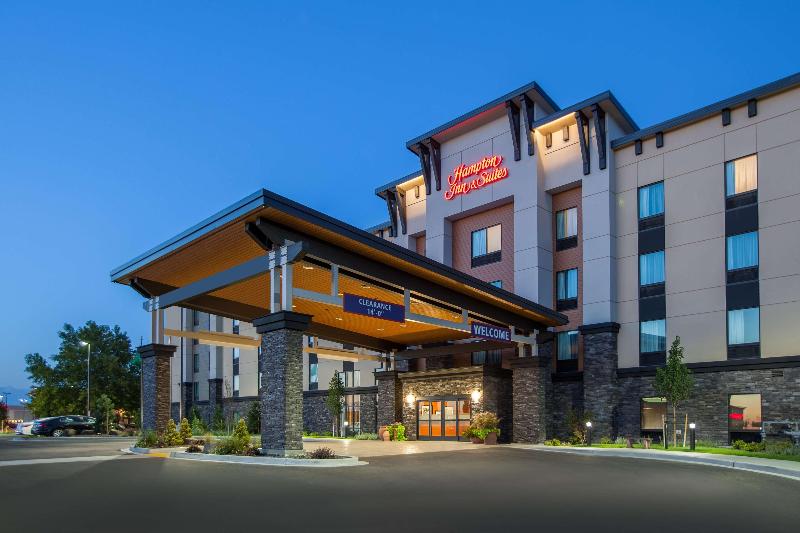
Pasco, WA
R$1,209 / night

Pasco, WA
R$1,413 / night

Ilha de Páscoa
R$2,897 / night

Ilha de Páscoa
R$1,751 / night

Porto Seguro
R$499 / night
Must-sees, local secrets, experiences, and hotels — filter layers and tap the pins.
Everything you need to know to plan your trip
Get notified when hotel prices in Pasco drop. No spam.
We use your email only to send this price alert. Unsubscribe anytime.
Extend your trip to incredible destinations nearby
Still unsure? See side-by-side comparisons to decide.
We personalize every moment of your journey — from iconic landmarks to hidden cultural gems.
Available 24/7 · Personalized consultations · Local expertise
Updated on July 26, 2026 · Methodology · Authors
Sources
Testimonials
Stories from travelers who have already visited. Share your experience — your comment appears in the cards below.
Visiting Pasco exceeded all expectations. The energy of the place is contagious!
Fabiano Lopes
Food lover
We traveled as a family and Pasco delighted kids and adults alike. Great hotel and attraction picks.
Ingrid Viana
Honeymoon
I arrived without a fixed itinerary and Pasco surprised me at every corner. So welcoming.
Leandro Meirelles
Traveler from Porto Alegre
Stayed near downtown and walked everywhere. Pasco is even better on foot.
Olívia Fontes
Traveler from Brasília


