
Pamplona
Pamplona Catedral Hotel
R$2,168 / night

Destination
Explore Pamplona, the historic capital of Navarra. Experience rich culture and vibrant festivals in this fascinating northern Spanish destination.
Pamplona · Brasil
Photos
Discover the landscapes and culture of Pamplona


Editorial guide with history, culture, and practical tips to plan your trip.
Pamplona is a destination of great historical and geographical significance in Spain. It is not just a city in itself, but the municipality that holds the crucial status of capital for the province and the autonomous comarca (or 'foral community') of Navarra. This dual identity elevates Pamplona to a central role, not only in its immediate surroundings but throughout the entire surrounding region.
Its strategic location is undeniable: it is situated in northern Iberia. This geographical position grants it a natural and historical connection to the European continent, being located a short distance—just a few dozen kilometers—from the border demarcating the limits between Spain and France. This cross-border proximity adds an extra layer of cultural fascination and ease of access for international travelers.
In administrative terms, Pamplona is not an isolated point. It serves as the main center of the region known as Cuenca de Pamplona (Pamplona Basin), which also encompasses the entire vast Pamplona Metropolitan Area. This geographical arrangement demonstrates that the municipality's impact and influence extend over a considerable area, projecting it as a regional pole of attraction and development.
The municipality itself has specific and well-defined dimensions, covering 25.24 km². In contrast, but complementary to its immediate area, the Metropolitan Area expands this scope to an impressive 439.9 km², reflecting the region's urban and population growth.
Although the provided facts do not detail deep historical chronologies, it is impossible to understand Pamplona without recognizing its structural importance as a capital. The status of the capital of the autonomous comarca of Navarra suggests centuries of political and administrative power concentrated in this location.
Pamplona has always been more than just a mere settlement; it was the core where governmental and communal structures associated with the region of Navarra developed. This central administrative function maintained the city as a convergence point for various cultures, influences, and trade routes over time.
Its location in northern Iberia has always been key to its development. Being at the geographical intersection connecting Spain to France not only facilitates population movements but also ensures a rich cultural exchange. This 'gateway' or natural connection position with neighboring countries molded the municipality’s identity and historical trajectory.
The demographic growth reflected in the data is a living testament to this continuous history of habitation and development. In 2021, the municipality of Pamplona already had a significant population of 203,081 inhabitants, and when considering the entire metropolitan area in 2021, that number grew to an impressive 366,532 inhabitants. These numbers are not just statistics; they represent the legacy of generations who made this city a vibrant center.
Pamplona's culture is intrinsically linked to its role as the capital and regional pole of Navarra. Being the seat of the autonomous comarca implies profound respect for tradition, local customs, and the cultural dynamism that accompanies such a vast metropolitan area.
The municipality is located in a region where the historical Iberian influence blends with the cultural characteristics of European borders, notably those of France. This fusion results in a rich cultural melting pot, visible in gastronomy, festivities, and daily life.
The territorial organization around the Cuenca de Pamplona reinforces this aspect of belonging. The 'Cuenca' or basin is not just a geographical term; it represents a regional identity that unites the people to their territory, fostering festivals and shared cultural practices across the entire metropolitan area.
The development of the Metropolitan Area up to 439.9 km² demonstrates cultural synergy. Life in Pamplona is a mosaic of Spanish regional cultures enriched by constant contact with international flow from neighboring countries. This dynamism ensures that local culture remains alive and constantly evolving.
Geographically, Pamplona occupies a privileged position in the northern quadrant of the Iberian Peninsula. This location not only defines its territorial limits but also influences its climate, economy, and connectivity with other European regions.
The municipality's territory is crossed by a notable water system that plays a vital role in the landscape and daily life of its inhabitants. The Arga, Elorz, and Sadar rivers flow through Pamplona, providing essential natural resources and defining the course of both urban and rural life in the vicinity.
In terms of administrative size, it is crucial to distinguish between the strict area of the municipality and its metropolitan influence. The municipal core has a compact area of 25.24 km². However, its role as a center expands across the Metropolitan Area, which covers vast 439.9 km². This enormous extension reflects urban integration around the main pole.
This central positioning within the Cuenca de Pamplona ensures that the city functions not only for itself but as a true geographical and population motor for the entire region. Census data confirms this importance: the municipality alone housed 203,081 inhabitants in 2021, while the Metropolitan Area supported a robust population of 366,532 inhabitants in the same year.
Although detailed climate data is not provided, the fact that Pamplona is situated in northern Iberia allows us to infer that the region is subject to a temperate climate influenced by proximity to Atlantic climate systems and also by the effect of the French border. This combination tends to moderate extreme temperature variations.
The geography, marked by the Arga, Elorz, and Sadar rivers, adds a moderating factor to the local climate. The constant presence of fresh waterways contributes to maintaining a certain microclimatic stability compared to drier areas in central Spain.
The large Metropolitan Area (439.9 km²) and its connection to trans-border flow ensure that the region receives a mix of climatic influences, generally marked by well-defined seasons. Months can show notable variations between the more urbanized zones of the municipality (25.24 km²) and the rural outskirts of the metropolitan area.
Climate is a component that must be considered when planning a visit, as climate variation is intimately linked to the typical seasons of northern Spain. The Atlantic influence gives the region an amenity characteristic, making the rhythm of the four seasons very noticeable and welcoming.
Pamplona attracts tourists not only for its architectural and historical beauty but above all for its role as a nodal point of cultural and geographical convergence. Its status as the capital of the autonomous comarca of Navarra is the main engine behind this tourist magnetisim.
The location just a few dozen kilometers from the French border is a major tourist attraction. This facilitates cross-border tourism routes, allowing visitors to explore both Spanish culture and neighboring French attractions on short and enriching trips.
Being the center of the Cuenca de Pamplona means that the city functions as an irradiating pole. Tourists do not just come to experience the 25.24 km² municipality but rather to explore the tourist potential that extends across the vast 439.9 km² Metropolitan Area. This concept ensures a diversity of experiences, from vibrant urban centers to natural and rural landscapes.
Population data is an indirect reflection of tourism. The ability of the metropolitan area to support over 366,000 inhabitants (in 2021), combined with its function as a pole, guarantees robust tourist infrastructure to receive constant flows of visitors looking for cultural immersion and modern comfort.
One of the most fascinating aspects of Pamplona is the clarity of its geographical distinctions. It is crucial to note the difference between the strict municipality, which has 25.24 km², and its expanded metropolitan area, which occupies a significantly larger territory: 439.9 km². This disparity helps understand the magnitude of Pamplona's urban influence on the region.
The population number in 2021 reveals the demographic rhythm of this capital. The municipality already housed 203,081 people, but when considering the entirety of the Metropolitan Area, that number grew to an impressive 366,532 inhabitants. This high rate of population concentration reinforces its role as a pole of attraction.
The administrative management covering this area is done by the autonomous comarca of Navarra, granting the city and its surroundings a high degree of autonomy and cultural preservation. This special status is an administrative peculiarity that attracts both investment and historical respect.
The importance of the Arga, Elorz, and Sadar rivers is not limited to the hydrological aspect; they are elements that shape the historical landscape and life routes of the municipality. Being watered by multiple streams gives the city a natural charm that distinguishes it from other urban centers lacking this feature.
Everything you need to know to plan your trip
Best time to visit
Spring and Autumn (April–June; Sept–Oct)
Currency
Euro
Language
Spanish
Recommended stay
3 days
Timezone
CEST/CET
Reference figures to help plan your trip
Hotels in the area
23
Attractions
9
23 properties in the area
82 travelers searched Pamplona this week
13 stays booked in Pamplona in the last 7 days
Pamplona
R$2,168 / night

Pamplona
R$1,354 / night
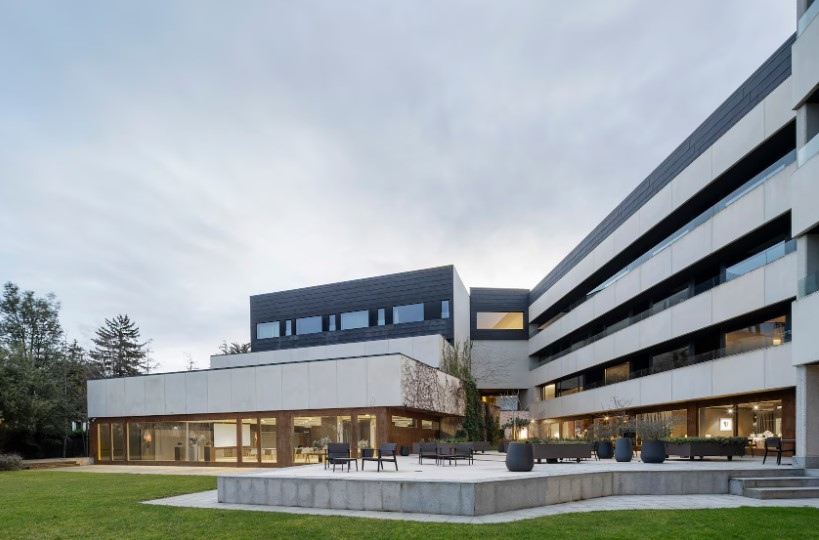
Pamplona
R$1,136 / night

Pamplona
R$806 / night

Pamplona
R$714 / night

Pamplona
R$1,838 / night
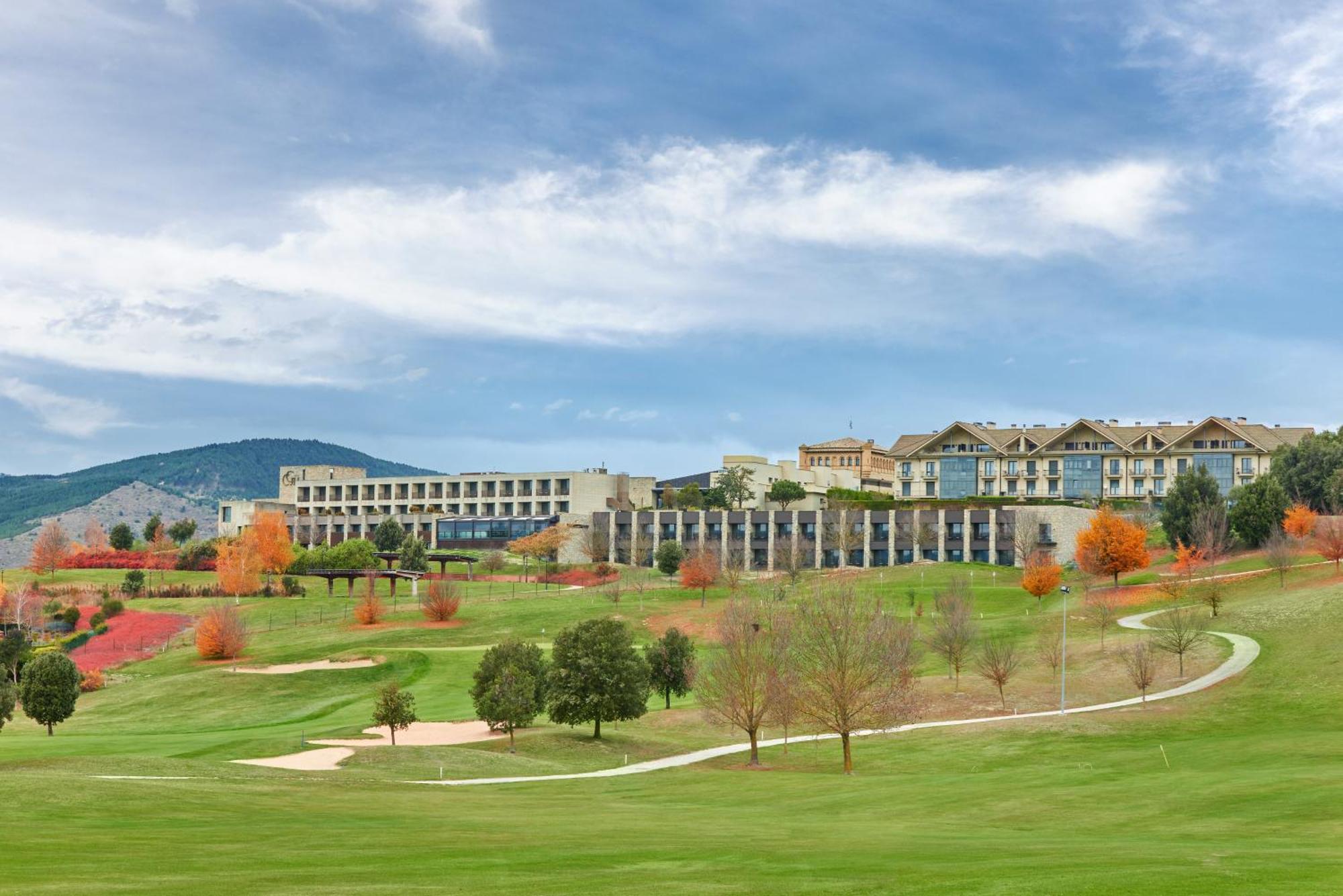
Pamplona
R$1,149 / night

Pamplona
R$2,185 / night

Pamplona
R$1,412 / night

Pamplona
R$949 / night

Pamplona
R$410 / night
Must-sees, local secrets, experiences, and hotels — filter layers and tap the pins.
Everything you need to know to plan your trip
Get notified when hotel prices in Pamplona drop. No spam.
We use your email only to send this price alert. Unsubscribe anytime.
Extend your trip to incredible destinations nearby
Still unsure? See side-by-side comparisons to decide.
We personalize every moment of your journey — from iconic landmarks to hidden cultural gems.
Available 24/7 · Personalized consultations · Local expertise
Updated on July 26, 2026 · Methodology · Authors
Sources
Testimonials
Stories from travelers who have already visited. Share your experience — your comment appears in the cards below.
Visiting Pamplona exceeded all expectations. The energy of the place is contagious!
Priscila Gomes
Friend group
We traveled as a family and Pamplona delighted kids and adults alike. Great hotel and attraction picks.
Tiago Bueno
Traveler from Campinas
I arrived without a fixed itinerary and Pamplona surprised me at every corner. So welcoming.
Yara Bastos
Eco traveler
Stayed near downtown and walked everywhere. Pamplona is even better on foot.
Aline Moura
Traveler from Fortaleza


