
Palestina TX
Rodeway Inn Palestine
R$612 / night
Destination
Discover Palestine, a destination of profound history and culture. Visit areas with rich heritage in the Middle East. Plan your trip!
Palestina · Brasil
Photos
Discover the landscapes and culture of Palestine


Editorial guide with history, culture, and practical tips to plan your trip.
Officially known as the State of Palestine, the territory spans a region of deep and complex geopolitical significance in the heart of the Middle East. It is crucial to understand that Palestine is characterized by being a country with limited international recognition. Currently, its status is formally recognized by 157 out of the 193 member states of the United Nations (UN), which reflects its unique and challenging position in global politics.
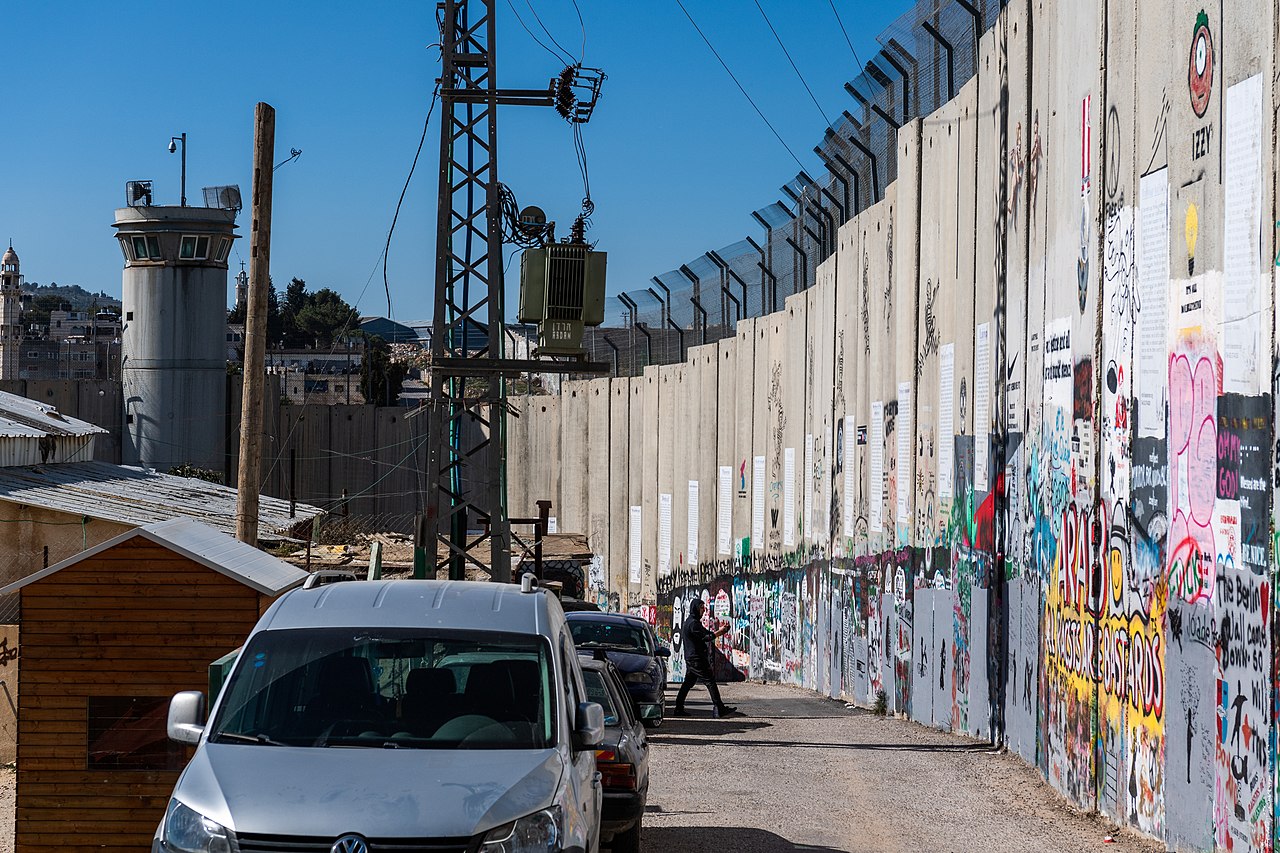
Geographically, the occupied Palestinian territories comprise three distinct areas: the West Bank, the Gaza Strip, and East Jerusalem. These regions collectively constitute the territorial scope of Palestine, encompassing an area rich in history and culture that stretches back centuries.
In terms of governance and administration, it is important to note the distinction between national symbols and the current administrative structure. Palestine designates East Jerusalem as its most significant capital in symbolic and historical terms; however, its operational administrative center is established in the city of Ramallah.
The estimated population resides at a significant number, reaching approximately 4 million and 55 thousand inhabitants, living in an area that has been the scene of great historical and political transformations since the 20th century. The country's political landscape is shaped by complex international agreements and the socio-political administration exercised by major regional authorities.
The modern political trajectory of Palestine is intrinsically linked to monumental global events, marked by partition plans and periods of occupation. One of the initial milestones in this historical development occurred after World War II, in 1947. It was during this period that the United Nations adopted a Plan for the Partition of Palestine. This plan recommended dividing the territory into two independent states—one Arab and one Jewish—while also proposing the internationalization of Jerusalem.
The following years brought periods of intense turbulence, culminating in the Six-Day War in 1967. Since this crucial event, much of the areas claimed by Palestinians have been under occupation, a fact that has profoundly shaped the political and social map of the region to this day.
The pursuit of self-determination culminated in the declaration of independence of the State of Palestine on November 15, 1988. This act was performed by the Palestine Liberation Organization (PLO), alongside the Palestinian government in exile in Algeria, a moment that symbolized a vigorous national aspiration.
Efforts for a more defined political status led to the Oslo Accords in 1993. These agreements were historically relevant as they established the Palestinian National Authority (PNA). The PNA was tasked with carrying out socio-political administration in delimited areas within the Palestinian territories, establishing a governmental structure to manage local day-to-day life.
In the most recent political context, the power structure is complex. While the Palestinian National Authority operates in the administrative areas defined by the Oslo Accords, a different political wing, Hamas, maintains administrative and military control in the Gaza Strip, demonstrating the fragmentation of territorial management.
Although the provided facts are primarily political and geographic, it is impossible to speak about Palestine without acknowledging that its culture is a rich tapestry of traditions, millennia-old beliefs, and a profound connection with the land. Palestinian culture is synonymous with historical resilience and vibrant cultural heritage.
Cultural identity is deeply linked to the sacred sites that make up the region. East Jerusalem, in particular, serves as a center of religious convergence for various world faiths, giving local culture an incomparable layer of spiritual meaning. This center is globally recognized for its traditions and historical significance.
Palestinian artistic and social traditions preserve collective memories dating back to times of grand partition plans and struggles for sovereignty. Culture manifests in hospitality, local crafts, and daily practices that celebrate life despite adverse political circumstances.
The sense of cultural belonging is a central pillar of Palestinian society, uniting the different ethnicities and groups residing in the territories. This culture has not only survived political upheavals but has become an engine for preserving national identity in the face of ongoing challenges.
Palestine is a complex geographical and political entity, covering multiple regional environments in the Middle East. Its territorial area is politically divided among the occupied Palestinian territories, which include the West Bank, the Gaza Strip, and East Jerusalem.
The West Bank is a vastly important region from a geopolitical point of view, being the central stage for Palestinian territorial aspirations. Its geographical features vary significantly, presenting landscapes that range from fertile agricultural areas to more mountainous and arid terrains.
The Gaza Strip constitutes a smaller, densely populated territorial block. Due to its coastal location and population density, it possesses a geography marked by intense urban and maritime activity. Its administration is under the control of Hamas, establishing a functional division of the region.
East Jerusalem, while not merely a geographical point, is a pole of unparalleled global importance. Its central location on the map of Palestine gives it a significance that transcends any purely cartographic description, serving as the historical and symbolic epicenter of the Palestinian people.
This geographical composition—with dense urban centers, arable rural areas, and the strategic importance of its main population hubs—makes studying Palestine an exercise in understanding the intersection between humanity, territory, and history.
Given Palestine's location in the Middle East, its region tends to follow Mediterranean climatic patterns across much of its domain. However, it is crucial to note that the vast geography of the occupied territories results in considerable climatic diversity.
The coastal areas and regions closer to the Mediterranean Sea typically enjoy mild winters and hot summers. The climate tends to be influenced by the proximity of the sea, which moderates extreme temperature variations compared to the continental interior.
However, due to distinct geographical features—with mountain zones in the West Bank and the more confined environment of the Gaza Strip—there are climatic fluctuations. Inland regions may present greater thermal variation and periods of pronounced aridity at certain times of the year.
Local meteorology varies greatly throughout the day and between different elevations, making the observation of climatic particularities a factor that enriches the experience of exploring the Palestinian territories. Well-defined seasons dictate the rhythm of rural and agricultural life.
Tourism in Palestine is a journey of profound cultural, historical, and political immersion. Upon visiting the occupied Palestinian territories, the traveler finds a destination that challenges traditional notions of travel, being more of a study of human history than a simple tourist outing.
The universally recognized focal point is East Jerusalem. This location attracts pilgrims and enthusiasts of world history due to its multifaceted religious and cultural heritage. Visiting the city reveals historical layers dating back millennia, making it essential for any traveler interested in Middle Eastern history.
Beyond the global spiritual center, cities administered by the Palestinian National Authority offer a glimpse into contemporary Palestinian life. Ramallah, for instance, serves as a relevant administrative and population center, allowing visitors to observe the local socio-economic dynamics.
The itinerary can also include recognition of the agricultural landscapes of the West Bank, where farming traditions and rural ways of life persist in contrast with urban centers. The journey is therefore a mosaic of visits: from undeniable historical sites to observing current social and economic structures.
For the modern tourist, Palestine offers not only monuments but an experience of living cultural resistance, where every corner tells a complex narrative of history, struggle, and millennia-old culture.
The Palestinian political structure is a fascinating example of how diplomacy and international law intertwine with territorial reality. It is notable that Palestine designates East Jerusalem as its symbolic capital, granting it undeniable historical weight.
However, this symbolic designation coexists with a practical administrative reality: the de facto administrative center is located in the city of Ramallah. This duality—between nominal capital and functional administrative center—is a unique characteristic defining the governance of the country in its occupied territories.
Political fragmentation is another crucial curiosity for understanding daily life: the Oslo Accords divided administrative responsibilities. While the Palestinian National Authority handles socio-political administration in specific areas, another political group, Hamas, exercises control in the Gaza Strip. This division demonstrates the complexity and multi-party nature of local power.
The history of recognition itself is also a curious data point: although Palestinians formally declared their independence in 1988, most of its claimed areas have been subject to Israeli military occupation since the significant event of the Six-Day War in 1967. This temporal and legal discrepancy shapes the entire political landscape.
Everything you need to know to plan your trip
Reference figures to help plan your trip
Attractions
9
Selected stays available to book
82 travelers searched Palestina this week
13 stays booked in Palestina in the last 7 days
Must-sees, local secrets, experiences, and hotels — filter layers and tap the pins.
Everything you need to know to plan your trip
Get notified when hotel prices in Palestine drop. No spam.
We use your email only to send this price alert. Unsubscribe anytime.
Extend your trip to incredible destinations nearby
Still unsure? See side-by-side comparisons to decide.
We personalize every moment of your journey — from iconic landmarks to hidden cultural gems.
Available 24/7 · Personalized consultations · Local expertise
Updated on July 26, 2026 · Methodology · Authors
Sources
Testimonials
Stories from travelers who have already visited. Share your experience — your comment appears in the cards below.
Visiting Palestine exceeded all expectations. The energy of the place is contagious!
Monique Barbosa
Food enthusiast
We traveled as a family and Palestine delighted kids and adults alike. Great hotel and attraction picks.
Priscila Gomes
Friend group
I arrived without a fixed itinerary and Palestine surprised me at every corner. So welcoming.
Tiago Bueno
Traveler from Campinas
Stayed near downtown and walked everywhere. Palestine is even better on foot.
Yara Bastos
Eco traveler


