
Ottawa
AC Hotel BY Marriott Ottawa Dwtn
R$1,153 / night

Destination
Discover vibrant Ottawa, Canada's captivating capital. Explore the iconic Parliament, national museums, and enjoy incredible gastronomy and shopping.
Ottawa · Brasil
Photos
Discover the landscapes and culture of Ottawa
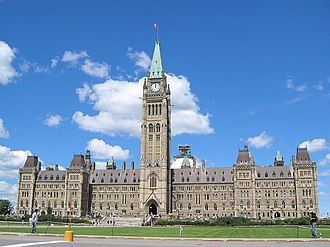


Editorial guide with history, culture, and practical tips to plan your trip.
Ottawa is more than just a city; it is the political and administrative heart of Canada. As the national capital, Ottawa concentrates the essence of Canadian life, serving as an attraction hub not only for citizens but also for visitors from around the world seeking to explore the country's history and grandeur.
Located in the southeast portion of Ontario, it benefits from a privileged geographical position. Its location is marked by the natural and strategic meeting point of two vital rivers: the Ottawa River and the Rideau River. This confluence not only defines the urban landscape but was also crucial for the region's historical and economic development.
In terms of population size, Ottawa stands out as a significant urban center. In 2021, the strictly municipal population was estimated at 1,017,449 residents. However, when considering the full metropolitan area, the numbers expand considerably, reaching 1,488,307 people. This high resident count reinforces its role as one of Canada's largest urban agglomerations.
Its demographic importance is confirmed by its national ranking: Ottawa is recognized as the fourth largest city and also the fourth largest metropolitan center throughout Canadian territory. This population scale ensures vast infrastructure for services, commerce, and culture for both residents and visitors.
While the provided facts do not detail specific historical events, it is crucial to understand that designating Ottawa as Canada's capital implies a central role in shaping national identity. The city emerged at a natural and strategic crossroads—the confluence of the Ottawa and Rideau Rivers—making it a naturally suitable place for the development of centers of power.
This location, in southeast Ontario, determined not only its founding but also its growing political influence over the centuries. Being the capital means being the stage where decisions that shape Canada are made, continuously attracting governmental architects and important cultural institutions.
Ottawa's own geography reflects this historical importance. Its proximity to the neighboring province of Quebec, especially across the border with Gatineau, creates a highly integrated region known as the Ottawa–Gatineau Census Metropolitan Area (CMA) and the National Capital Region (NCR). This cultural and administrative co-existence is a living testament to the complex and rich history defining this metropolitan area.
The evolution of the city into one of Canada's largest urban agglomerations—with over one million inhabitants in its municipal area and nearly 1.5 million in the metro region (2021 data)—is the materialization of this long process of historical growth, consolidating it as a vital axis of Canadian history.
Ottawa's culture is deeply shaped by its status as capital and its location in a cultural meeting point. Its fact of bordering Gatineau, which belongs to Quebec, means the city is a constant point of cultural fusion, blending Anglophone and Francophone influences in its daily life.
Although the source material does not detail specific museums or arts, its function as a national political center implies a rich preservation of heritage and traditions that celebrate Canadian diversity. The very geographic organization, forming the core of the National Capital Region (NCR), attests to this cultural importance at the federal level.
Ottawa's urban culture is vibrant and cosmopolitan, mirroring its high population density. With a municipal count exceeding one million residents and a metro area reaching nearly 1.5 million, there is room for diverse artistic, gastronomic, and social expressions. Nightlife and local commerce thrive in this environment of high population density.
This cultural fusion is palpable from its geography: the confluence of the Ottawa and Rideau Rivers serves as a natural metaphor for the mixture of cultures that form the city's spirit, celebrating the dialogue between its Ontario roots and its neighbors bordering Quebec.
Geometrically, Ottawa is strategically positioned in southeast Ontario. Its location is not accidental; it was determined by the striking confluence of the Ottawa and Rideau Rivers. This fluvial meeting defines the central geographic and historical axis of the city.
The rivers play a crucial role in the landscape, providing not only scenic beauty but also the foundation for infrastructure and transportation development that sustained population growth to current levels. The interaction between the courses of these two rivers is the most distinctive geographical element of the region.
Ottawa's territorial aspect is particularly noteworthy for its integration with neighboring areas. It is not merely in Ontario, but forms an integral part of the core encompassing the National Capital Region (NCR) and the Ottawa–Gatineau Census Metropolitan Area (CMA). This metropolitan area even extends across provincial boundaries, reaching Gatineau, in Quebec.
In terms of scale, Ottawa's geography is robust. With a municipal population exceeding one million residents and a metro core approaching 1.5 million, it not only represents the fourth largest city by urban area in the country but also hosts one of Canada's largest metropolitan centers. This vast population requires a complex geographical network of transport and services.
The climate in Ottawa is typically temperate, characteristic of southeastern Ontario, influenced directly by the prominent presence of the Ottawa River and the Rideau River. The location near these large bodies of water tends to moderate temperature extremes, smoothing both winters and summers compared to more inland regions.
Although the source text does not detail seasons or temperatures, it can be inferred that a temperate climate allows for a wide variety of outdoor activities throughout most of the year. The rivers and their banks offer vital riparian ecosystems for local life and recreation.
Managing life in Ottawa must take into account this climatic transition, supporting a population reaching nearly 1.5 million in the metro area. This implies that the city needs robust systems to handle seasonal variations, from cold winters to warmer months.
The dynamic interplay of climate and geography work together: the river system is not just a pretty feature; it is a shaping force that influences lifestyle, architecture, and possible tourism activities in the city. The constant presence of these rivers makes the experience of living or visiting Ottawa highly linked to the natural rhythms of the water cycle.
Ottawa attracts tourists not only for its natural beauty, defined by the confluence of the Ottawa and Rideau Rivers, but primarily for its institutional role as a capital. It is a destination that balances governmental majesty with the charm of a growing city.
The city's tourism identity revolves around its central status to Canada. While visitors are drawn to government-linked landmarks, they can also enjoy the commercial and cultural infrastructure accompanying such a vast and populous urban center (with over one million residents in the municipal area). The tourist experience is an immersion into the life of a functioning metropolis.
Ottawa's appeal extends beyond governmental buildings. Its bordering status with Gatineau, Quebec, adds a component of cross-border cultural tourism, allowing visitors to explore two neighboring cultures from a single geographical base.
The tourist infrastructure must account for the magnitude of the metropolitan region (1,488,307 inhabitants). This ensures not only variety in dining and commerce but also the presence of diverse recreational areas around the rivers, offering activities for all tastes: from historical walks to modern cultural events.
A fundamental fun fact about Ottawa is its status as a geographical confluence. The point where the Ottawa and Rideau Rivers meet is not merely a visual characteristic; historically, it was a nerve center for any economic or military activity passing through the region.
It is important to note the city's unique administrative dynamic: it forms the heart of the Ottawa–Gatineau Census Metropolitan Area (CMA) and also comprises the National Capital Region (NCR). This means that, while recognized as Canada's capital par excellence, its urban life is deeply interwoven with the geographical and cultural characteristics of the neighboring province of Quebec.
From a demographic standpoint, Ottawa's population growth places it at a high level on the Canadian map. With 1,017,449 residents in the municipal area alone (2021 data), and over 1.4 million when considering the full metropolitan region, it is a demographic force driving local commerce and continuous development.
Finally, the fact that Ottawa is classified as the fourth largest city (and metro area) in Canada highlights its massive scale. It is not just a political hub; it is a colossal urban center, sustaining a complex web of modern life along the banks of rivers defining its identity.
Everything you need to know to plan your trip
Reference figures to help plan your trip
Hotels in the area
63
Attractions
9
63 properties in the area
82 travelers searched Ottawa this week
13 stays booked in Ottawa in the last 7 days
Ottawa
R$1,153 / night

Ottawa
R$1,331 / night

Ottawa
R$1,555 / night

Ottawa
R$989 / night

Ottawa
R$1,047 / night

Ottawa
R$1,012 / night

Ottawa
R$1,597 / night

Ottawa
R$1,092 / night

Ottawa
R$1,751 / night

Ottawa
R$997 / night

Ottawa
R$944 / night

Ottawa
R$1,850 / night
Must-sees, local secrets, experiences, and hotels — filter layers and tap the pins.
Everything you need to know to plan your trip
Get notified when hotel prices in Ottawa drop. No spam.
We use your email only to send this price alert. Unsubscribe anytime.
Extend your trip to incredible destinations nearby
Still unsure? See side-by-side comparisons to decide.
We personalize every moment of your journey — from iconic landmarks to hidden cultural gems.
Available 24/7 · Personalized consultations · Local expertise
Updated on June 30, 2026 · Methodology · Authors
Sources
Testimonials
Stories from travelers who have already visited. Share your experience — your comment appears in the cards below.
Visiting Ottawa exceeded all expectations. The energy of the place is contagious!
Nelson Duarte
Retired couple
We traveled as a family and Ottawa delighted kids and adults alike. Great hotel and attraction picks.
Rafael Santoro
Photographer
I arrived without a fixed itinerary and Ottawa surprised me at every corner. So welcoming.
Valéria Nogueira
Family with teens
Stayed near downtown and walked everywhere. Ottawa is even better on foot.
Zélia Carmo
Traveler from Goiânia


