
Oaxaca
Grand Fiesta Americana Oaxaca
R$3,937 / night

Destination
Discover the charm of Oaxaca! Explore millennia-old traditions, taste authentic mole, and artisanal mezcal in this cultural gem of Mexico.
Oaxaca · Brasil
Photos
Discover the landscapes and culture of Oaxaca


Editorial guide with history, culture, and practical tips to plan your trip.
Oaxaca is much more than just a state; it is a living tapestry of ancient history, vibrant culture, and an identity deeply rooted in Mexico. Officially known as the Free and Sovereign State of Oaxaca, this territory holds a unique place among the thirty-one Mexican states, forming the cultural and geographical heartland of the United Mexican States. The administrative magnitude and socio-cultural richness of Oaxaca are unmatched, making it a destination of profound interest for travelers seeking authentic and deep experiences.
The focal point of this fascinating state is the city of Oaxaca de Juárez. It not only serves as the political capital but also stands as its most significant population center. This historical metropolis acts as a hub that channels the traditions and diversities of the surrounding regions. Oaxaqueños are known for their cultural resilience and for maintaining millennial practices in a modern setting. When visiting Oaxaca, the traveler is invited to dive not only into the paved streets of the capital but also into the vastness of its 570 municipalities that constitute the state’s political body.
Oaxaca's administrative organization is notable for its complexity and decentralization. The state is divided into these 570 municipalities, a structure that reflects the ethnic and geographic diversity of its population. It is at this municipal level that we find one of Mexico's most unique features: the system of local self-governance.
The history of Oaxaca is an epic narrative spanning millennia, surpassing mere political accounts to touch upon social structures and systems of governance. Throughout its trajectory, this region has maintained a remarkable cultural strength, which is reflected in its community ways of life.
The most fascinating element of Oaxaca's socio-political history is its local government system. Of the 570 municipalities existing in the state, a substantial and significant group of 418 are governed under a model known as "usos y costumbres" (uses and customs). This is not merely an administrative detail; it represents a deeply rooted form of local self-governance. These 418 municipalities operate with local forms of government that are recognized, preserving traditional methods of community management, justice, and decision-making.
This persistence in maintaining power structures based on ancestral customs gives Oaxaca an incomparable historical weight in the Mexican landscape. History here is not just written by governmental decrees; it is lived in the daily practices, festivals, religiosity, and community administration of its people. This rich historical tapestry makes the state stand out as a bastion of pre-Columbian and post-colonization traditions.
The culture in Oaxaca is a sensory and spiritual kaleidoscope, a celebration of regional and ethnic diversity. It is a place where art, gastronomy, and traditions are intrinsically linked to the daily life of its inhabitants across 570 municipalities.
The most evident cultural pillar is the "usos y costumbres" system, which permeates a massive part of the state. This self-governance method is not just political; it dictates social and cultural aspects of community life, keeping alive recognized local forms of social organization. This cultural autonomy ensures that regional traditions are preserved vigorously.
Oaxacan cuisine is world-renowned for its complexity and vibrant use of native ingredients, serving as a mirror to this cultural wealth. Each region, grouped into eight large geographic zones, contributes unique dishes, specific artisanal techniques, and their own gastronomic narratives. The craft culture also flourishes intensely, manifesting in pieces that tell stories from past generations.
Oaxaca invites the visitor to be an attentive observer of cultural practices that remain alive, from community ceremonies to colorful festivals celebrating agricultural cycles and religious festivities. The culture here is participatory; it asks you not only to observe, but to feel and interact with its diverse manifestations.
Geographically, Oaxaca presents a vastness and diversified topography, which explains its organization into countless municipal centers. The state is notably composed of 570 municipalities, each potentially representing a distinct microclimate and subculture.
This large number of administrative divisions reflects the area's intricate geography. Its inhabitants were naturally grouped into eight distinct regions, allowing natural variations—whether mountainous, coastal, or plain—to shape local lifestyles and economies.
The capital and largest population center is Oaxaca de Juárez. It is strategically positioned to be a nodal point connecting these eight regions. This geographical arrangement allows for diverse experiences over short distances, moving from the tropical heat of the coast to the cool mountain altitude of the interior.
The regional structure is crucial for understanding Oaxacan geography. It is through these eight regions that environmental particularities and lifestyles manifest, guaranteeing a geographic mosaic that defies any single classification. The combination of municipal administration with this natural grouping by region creates a state of wonderful contrasts.
Due to its vast geographical extent and division into eight distinct regions, Oaxaca's climate cannot be described by a simple formula; it is extremely varied. This climatic variation is what ensures the region's biodiversity and directly influences the cultivation and daily routines of the 570 municipalities.
Different altitudes and proximity to the sea result in notable microclimates. While some coastal areas enjoy a tropical climate, other mountainous regions feature milder and cooler temperatures, especially at night. This climatic diversity is the engine behind the rich agricultural production and regional cultural expressions.
The climatic cycles dictate the rhythms of community activities, which are often administered by the "usos y costumbres" systems. For example, rainy seasons affect agriculture in certain mountainous areas, while coastal heat imposes a different pace of life in areas near the Pacific. The traveler must be prepared for this climatic and cultural transition when moving between the different regional groups that make up Oaxaca.
Tourism in Oaxaca is a deep immersion into Mexican culture, an invitation to slow down and experience the community rhythm. The state attracts visitors not only for its natural beauty but primarily for its rich socio-cultural fabric.
A visit to the capital, Oaxaca de Juárez, is a tourist destination in itself, with its colonial buildings, vibrant markets, and art galleries. However, the true heart of the tourist experience lies in exploring the eight administrative regions and the 570 smaller municipalities. It is at this level that the most authentic experiences are found.
Tourist activities go beyond the traditional circuit: they include tasting unique regional cuisines, learning about local crafts in communities that preserve ancestral techniques, and participating (as an observer) in community festivities. The "usos y costumbres" governance system is a tourist attraction in itself, as it guarantees visitors access to ways of life that have resisted modern homogenization.
For the traveler seeking a genuine connection with Mexican roots and wishing to understand how entire communities self-govern through ancestral customs, Oaxaca is an unparalleled destination. Each region offers a different perspective on Mexican identity, enriching the trip at every step.
What makes Oaxaca particularly fascinating for lovers of culture and social structures? It is its unique system of community administration. The main curiosity lies in the division into 570 municipalities, where an impressive 418 operate under an autonomous regime known as "usos y costumbres".
This mechanism is not just a legal formality; it represents the strength of local traditions and respect for recognized self-governance. It means that, in large parts of the state, the rules of community life—from social organization to resource management—are defined by the ancestral customs of the inhabitants themselves, and not exclusively by external decrees.
Another striking detail is how the state is structured into eight major regions. These regions function almost as macro-cultures, where variations in climate, economy, and tradition crystallize. This explains why a single state can present such a wide range of experiences: from highly traditional communities in mountainous areas to more modern centers in the capital.
In summary, Oaxaca is a living laboratory of Mexican culture, where power resides not only in major urban centers like Oaxaca de Juárez, but in the deep roots and autonomous systems of its 570 municipalities. This structural complexity is the destination's greatest treasure.
Everything you need to know to plan your trip
Language
Spanish
Reference figures to help plan your trip
Hotels in the area
188
Attractions
9
188 properties in the area
117 travelers searched Oaxaca this week
18 stays booked in Oaxaca in the last 7 days
Oaxaca
R$3,937 / night

Oaxaca
R$2,669 / night

Oaxaca
R$2,557 / night
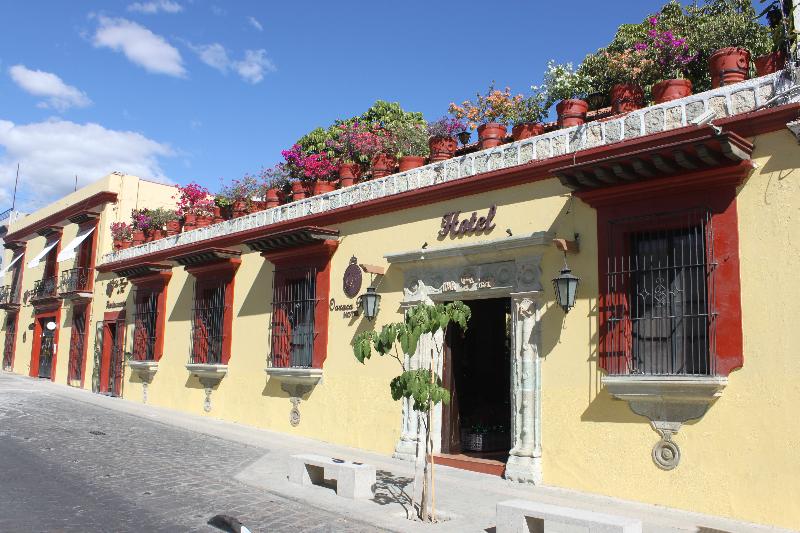
Oaxaca
R$922 / night

Oaxaca
R$565 / night

Oaxaca
R$385 / night

Oaxaca
R$1,038 / night

Oaxaca
R$625 / night

Oaxaca
R$1,182 / night

Oaxaca
R$5,008 / night

Oaxaca
R$643 / night

Oaxaca
R$2,659 / night
Must-sees, local secrets, experiences, and hotels — filter layers and tap the pins.
Everything you need to know to plan your trip
Get notified when hotel prices in Oaxaca drop. No spam.
We use your email only to send this price alert. Unsubscribe anytime.
We personalize every moment of your journey — from iconic landmarks to hidden cultural gems.
Available 24/7 · Personalized consultations · Local expertise
Updated on June 30, 2026 · Methodology · Authors
Sources
Testimonials
Stories from travelers who have already visited. Share your experience — your comment appears in the cards below.
Visiting Oaxaca exceeded all expectations. The energy of the place is contagious!
Zélia Carmo
Traveler from Goiânia
We traveled as a family and Oaxaca delighted kids and adults alike. Great hotel and attraction picks.
Bruno Carvalho
Couple from Curitiba
I arrived without a fixed itinerary and Oaxaca surprised me at every corner. So welcoming.
Elaine Coutinho
Solo traveler
Stayed near downtown and walked everywhere. Oaxaca is even better on foot.
Hugo Santana
Local from Belo Horizonte