
Milwaukee WI
The Westin Milwaukee
R$1,502 / night

Destination
Explore Milwaukee! Known for its rich German and Polish heritage, it's a vibrant center for festivals and craft beer in Wisconsin. Plan your US trip today.
Milwaukee · Brasil
Photos
Discover the landscapes and culture of Milwaukee


Editorial guide with history, culture, and practical tips to plan your trip.
Milwaukee is recognized as the largest and most populous city within the state of Wisconsin, United States. Its privileged geographical position, situated on the west coast of the vast Lake Michigan, contributed to its historical growth and economic development. The city is not merely a significant urban point, but also a metropolitan hub that attracts thousands of residents and visitors. Population data reflects this importance: according to the 2020 census, the city's population reached approximately 577,222 people. Statistically, this positions it as one of the 31 most populous cities in the United States and guarantees its prominence as the fifth largest city in the American Midwest region.
It is important to note that Milwaukee’s influence extends far beyond its municipal boundaries. The complete metropolitan area, encompassing various connected regions, has a population exceeding 1.57 million residents. This demographic figure places the region at a level of great national relevance, classifying it as one of the top 40 largest metro areas in the country. This robust structure ensures that Milwaukee maintains its central role in the social and economic dynamics of the region, serving as the beating heart of Milwaukee County.
Although the facts provided do not detail specific dates or historical events, the very existence of Milwaukee as a large population and metropolitan center tells a story of continuous growth and industrial development. Its strategic location on the western shore of Lake Michigan has always been a crucial factor in its establishment. The natural harbor and waterways emanating from the lake facilitated trade, transforming the region into a convergence point for different cultures and economies.
The city's trajectory is intrinsically linked to its ability to absorb and integrate large immigrant communities. This cultural movement was vital in shaping the unique character Milwaukee carries today, solidifying it as a vibrant center where European traditions—especially German and Polish cultures—were incorporated into the fabric of modern American urban life. Its history is a testament to the vigor of colonization and cultural adaptation in one of the most important regions of the United States.
Milwaukee’s rich cultural tapestry is marked by the celebration of its ethnic heritage, which has always been central to local identity. The city prides itself on being an important center where German and Polish communities built their roots and traditions. This age-old mix gives daily life and local festivities a notable cultural depth.
This heritage is not just something remembered; it manifests actively, serving as a catalyst for the annual calendar of events and festivals that honor local culture. The vibrant metropolitan atmosphere ensures there is a constant celebration of these diverse roots, attracting both descendants and visitors from around the world interested in the rich culture of the Great Lakes region. Festivals are the stage where history and traditions meet the contemporary energy of a large urban center.
Milwaukee is located in Wisconsin, United States of America. Geographically, its location is marked by a defining characteristic: it flourished on the western shore of majestic Lake Michigan. This positioning not only gave it scenic natural beauty but also the logistical connectivity necessary for large-scale commercial development.
Administratively, Milwaukee holds a prominent role as the seat of Milwaukee County, which solidifies its status as a regional administrative center. In terms of population and urban area, its metropolitan region is vast, covering an area with over 1.57 million inhabitants. This geographic magnitude reflects not only urban concentration but also the integration of diverse suburban areas that comprise the city's economic axis.
Located in the Midwest region and close to Lake Michigan, Milwaukee enjoys a typically continental climate. Although the facts do not detail exact seasonal variations, the influence of the Great Lakes tends to temper both extreme cold and excessive heat, providing a degree of climatic moderation to the area.
Generally, the area experiences well-defined seasons. Autumn is particularly famous for its vibrant colors, and summers are ideal for outdoor activities near the lake. This combination of lacustrine natural scenery with a climate that allows for year-round festival development makes Milwaukee an attractive destination at various times of the calendar, favoring both tourists and residents alike.
Tourism in Milwaukee is driven by its status as a large metropolitan center and the celebration of its cultural identity. The city attracts visitors interested in the unique blend of American industrial history, rich immigrant traditions (such as German and Polish cultures), and leisure provided by the vast Lake Michigan.
The metropolitan area, with over 1.57 million residents, is a constant hub of events and festivals. These events are not merely tourist attractions; they represent the preservation of community and cultural traditions that define the city. For the traveler, Milwaukee offers a combination of growing urban attractions, museums focused on cultural history, and lakeside leisure opportunities, making it a rich destination for those seeking both deep culture and modern entertainment.
The most striking fact about Milwaukee is its demographic role. Not only is it one of the most populous cities in Wisconsin, but it also boasts a gigantic metropolitan area, with numbers exceeding 1.57 million inhabitants. This growth has consolidated its position as an American Midwest giant.
Another geographical and administrative feature is that Milwaukee serves as the official county seat of Milwaukee County, granting it governmental importance at both the state and regional levels. Furthermore, its statistical profile ranks it as the 31st most populous city in the US, while simultaneously guaranteeing its relevance as one of the top 40 largest metropolitan areas nationwide. These statistics not only quantify the size of Milwaukee but attest to its central and multifaceted role in the American landscape.
Everything you need to know to plan your trip
Reference figures to help plan your trip
Attractions
9
Selected stays available to book
92 travelers searched Milwaukee this week
13 stays booked in Milwaukee in the last 7 days
Milwaukee WI
R$1,502 / night

Milwaukee WI
R$1,148 / night

Milwaukee WI
R$2,063 / night

Milwaukee WI
R$971 / night

Milwaukee WI
R$1,390 / night

Milwaukee WI
R$1,119 / night

Milwaukee WI
R$1,572 / night
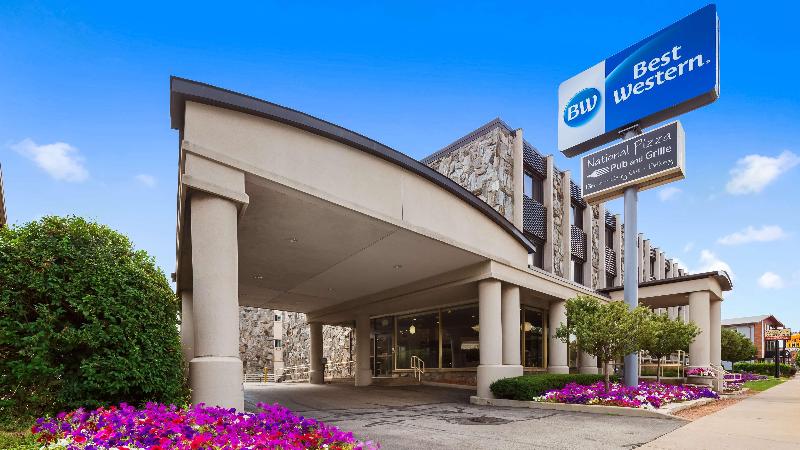
Milwaukee WI
R$1,013 / night

Milwaukee WI
R$959 / night

Milwaukee WI
R$1,673 / night

Milwaukee WI
R$1,592 / night

Milwaukee WI
R$1,365 / night
Must-sees, local secrets, experiences, and hotels — filter layers and tap the pins.
Everything you need to know to plan your trip
Get notified when hotel prices in Milwaukee drop. No spam.
We use your email only to send this price alert. Unsubscribe anytime.
Extend your trip to incredible destinations nearby
Still unsure? See side-by-side comparisons to decide.
We personalize every moment of your journey — from iconic landmarks to hidden cultural gems.
Available 24/7 · Personalized consultations · Local expertise
Updated on June 30, 2026 · Methodology · Authors
Sources
Testimonials
Stories from travelers who have already visited. Share your experience — your comment appears in the cards below.
Visiting Milwaukee exceeded all expectations. The energy of the place is contagious!
Valéria Nogueira
Family with teens
We traveled as a family and Milwaukee delighted kids and adults alike. Great hotel and attraction picks.
Zélia Carmo
Traveler from Goiânia
I arrived without a fixed itinerary and Milwaukee surprised me at every corner. So welcoming.
Bruno Carvalho
Couple from Curitiba
Stayed near downtown and walked everywhere. Milwaukee is even better on foot.
Elaine Coutinho
Solo traveler


