
Ceará
Golden Tower Maracanaú by Fênix Hotéis
R$395 / night
Destination
Discover the Maracanã, Rio de Janeiro's legendary football stadium. Explore its rich history and discover a global icon of the world's most passionate sport.
Maracana · Brasil
Photos
Discover the landscapes and culture of Maraca Stadium (Estádio do Maracanã)


Editorial guide with history, culture, and practical tips to plan your trip.
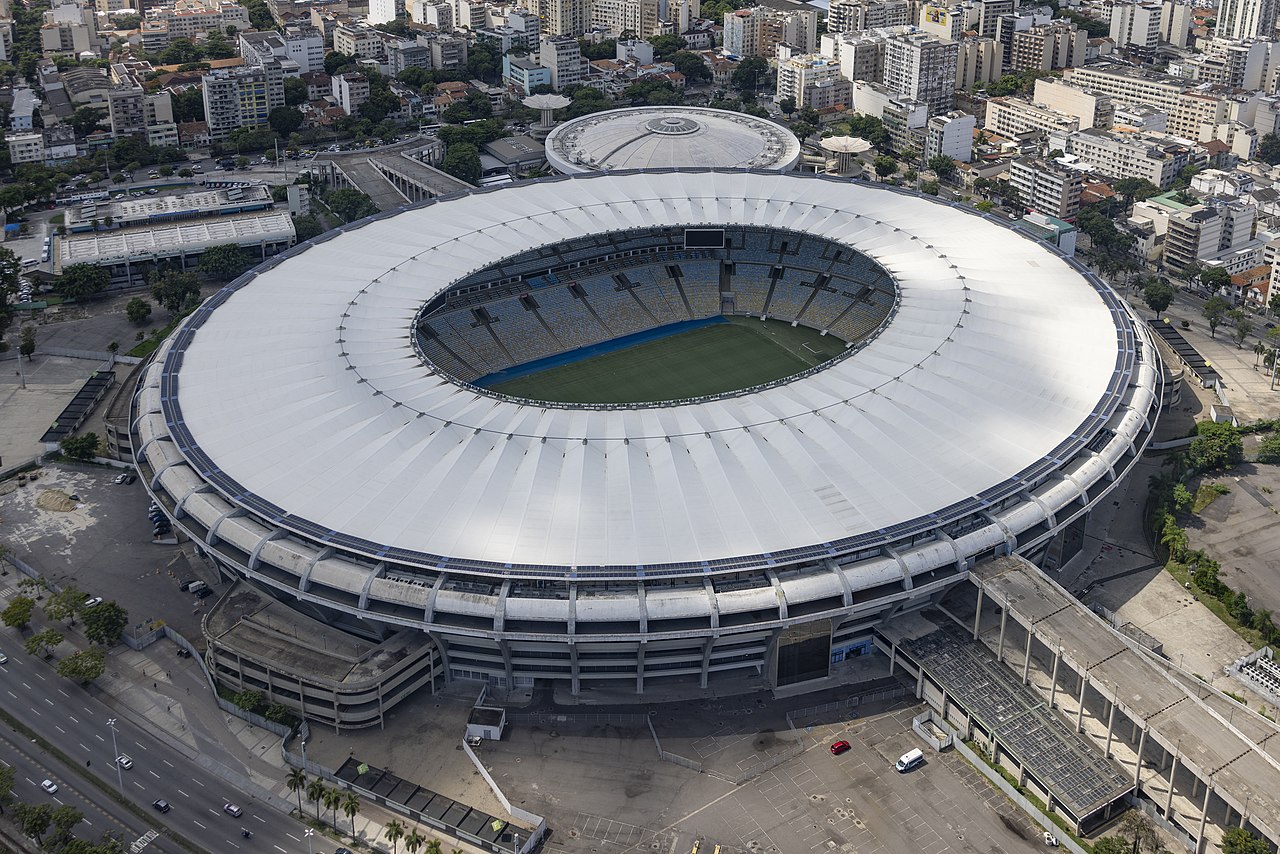
The Jornalista Mário Filho Stadium, affectionately known as Maraca or simply Maracanã, is one of the most emblematic sites in Brazilian and world sports. Located in a neighborhood of the same name, in the vibrant North Zone (Zona Norte) of Rio de Janeiro, this stadium transcends the function of mere physical structure to become a cultural icon, a symbol of passion and monumental capacity.
Its construction was an initiative of the municipality of Rio de Janeiro (then the Federal District). Maracanã is not just a venue for games; it is the stage where Carioca and Brazilian sporting history unfolded, witnessing moments of glory that placed Rio on the map of major global events. Since its inauguration, it was designed to receive massive crowds, quickly establishing itself as an architectural landmark of epic proportions.
The history of Maracanã is intrinsically linked to the development of major international sports competitions. The construction began under municipal command and was planned with a crucial deadline: the 1950 World Cup. For this reason, it opened that same year, initially named Estádio Municipal.
From its first days, its concept was grand. The initial official capacity projected for the stadium was impressive, reaching 155,000 seats. This magnitude meant that Maracanã not only became a giant in the regional sports scene but even surpassed renowned structures like Hampden Park in Glasgow, Scotland, catapulting it to the title of world's largest stadium at that time.
Thus, it quickly consolidated its historical position, undergoing countless transformations and becoming a permanent symbol of the cultural and sporting strength that pulses through Rio de Janeiro’s North Zone.
Maracanã is more than just brick and concrete; it is the epicenter of a vibrant culture, deeply rooted in the passion for football. The experience of watching an event in this stadium is immersed in Carioca traditions. The place holds not only sporting records but also collective memories of fans who gather there.
The atmosphere created within the stands reflects the spirit of Rio de Janeiro: fervent, grandiose, and passionate. The stadium taught how a sporting event can catalyze community feelings on a gigantic scale. It represents the human capacity to unite under a common cause—sport—transforming it into a cultural ritual that crosses generations.
Located in the North Zone of Rio de Janeiro, Maracanã occupies a strategic geographical point within the urban fabric of the capital. Its location allows it to function as an attraction and meeting hub for local residents and external visitors.
Although situated in a densely populated urban area—a characteristic typical of the North Zone—the stadium is a monumental space that marks the city's landscape. This central geographical position reinforces its importance, making it easily accessible and visually recognizable as an undeniable architectural landmark on Rio de Janeiro’s map.
Although Maracanã is physical structure, it is permeated by the vibrant climate of the city in which it is located. The environment around the stadium reflects the energy and heat typical of a large tropical metropolis like Rio de Janeiro.
In terms of cultural and emotional atmosphere, the location creates a unique "climate": one of epic anticipation. It is an atmosphere of grandeur that manifests in every stand. Its historical capacity to host up to 155,000 spectators demonstrates how the structure was designed to handle all climatic variations and crowds, ensuring that the internal spectacle always prevails over the external environment.
For tourists visiting Rio de Janeiro, Maracanã represents an unmissable destination, even outside game days. It is a journey through time and sporting history. The stadium attracts visitors interested in understanding the scale of Brazilian football passion.
The tourist experience goes beyond sport; it involves immersion in a cultural environment that breathes history, from its original name Estádio Municipal to its global fame as the stage for World Cups. Visiting this location allows the traveler to understand the symbolic power of football in Carioca and Brazilian identity.
It is fascinating to note Maracanã's monumental trajectory. Inaugurated in 1950, it was not only built to be a modern stadium but also established world records for capacity in its era.
With an initial official capacity of impressive 155,000 seats, Maracanã managed to surpass iconic structures like Hampden Park in Glasgow. This feat guaranteed it immediate and lasting recognition as the largest stadium on the planet in the early 1950s.
Its initial function, being prepared for the 1950 World Cup, cemented its global reputation. Furthermore, it underwent several phases and names—Estádio Municipal, Maracanã, and even affectionate nicknames like "Maraca"—reflecting not only its longevity but also the deep emotional bond that the Carioca community has with this sporting monument.
Everything you need to know to plan your trip
Reference figures to help plan your trip
Attractions
8
Selected stays available to book
77 travelers searched Maracana this week
Stays for these dates are among the most sought-after in Maracana
Must-sees, local secrets, experiences, and hotels — filter layers and tap the pins.
Everything you need to know to plan your trip
Get notified when hotel prices in Maraca Stadium (Estádio do Maracanã) drop. No spam.
We use your email only to send this price alert. Unsubscribe anytime.
Extend your trip to incredible destinations nearby
Still unsure? See side-by-side comparisons to decide.
We personalize every moment of your journey — from iconic landmarks to hidden cultural gems.
Available 24/7 · Personalized consultations · Local expertise
Updated on July 25, 2026 · Methodology · Authors
Sources
Testimonials
Stories from travelers who have already visited. Share your experience — your comment appears in the cards below.
Visiting Maraca Stadium (Estádio do Maracanã) exceeded all expectations. The energy of the place is contagious!
Priscila Gomes
Friend group
We traveled as a family and Maraca Stadium (Estádio do Maracanã) delighted kids and adults alike. Great hotel and attraction picks.
Tiago Bueno
Traveler from Campinas
I arrived without a fixed itinerary and Maraca Stadium (Estádio do Maracanã) surprised me at every corner. So welcoming.
Yara Bastos
Eco traveler
Stayed near downtown and walked everywhere. Maraca Stadium (Estádio do Maracanã) is even better on foot.
Aline Moura
Traveler from Fortaleza