
Málaga
ME Malaga by Melia
R$3,041 / night

Destination
Explore Malaga! This Andalusian jewel offers Mediterranean beaches, rich culture, and fascinating history. Plan your trip to southern Spain.
Malaga · Brasil
Photos
Discover the landscapes and culture of Malaga


Editorial guide with history, culture, and practical tips to plan your trip.
Málaga is more than just a city; it is a portal to millennia of history and a vibrant urban center nestled in the heart of Andalusia, Spain. Known for its strategic location on the southern coast of the country, Málaga embraces the blue splendor of the Mediterranean in its horizon, offering visitors an experience that blends rich Mediterranean culture with the dynamism of a modern hub. As the capital of its namesake province, it pulsates with the energy of an established metropolis deeply rooted in its traditions. The city represents the perfect meeting point between historical grandeur—testified by the layers of civilizations that flourished on its soil—and the fast pace of a contemporary urban center.
With an estimated population of over 560,000 inhabitants, Málaga establishes itself as one of the largest cities in Spain. This size not only reflects its national demographic importance but also supports vast and complex cultural and tourism infrastructure. The old neighborhoods tell stories whispered by salty waters, while modern buildings attest to its contemporary economic relevance. It is this unique balance between a glorious past—from its first Phoenician foundations in 12 BC—and the cosmopolitan development visible today that gives Málaga an unmatched charm and unparalleled depth for anyone seeking to travel through Spain.
The historical narrative of Málaga is, in itself, an epic book written in stone and sea. Its roots are not single, but rather a fascinating mosaic built over millennia, attesting to the region's ability to attract powerful civilizations. The first milestones of this grand trajectory date back to the Phoenicians, who established their presence in the area as early as 12 BC. This initial foundation not only marked the beginning of significant settlement but also positioned Málaga as a vital point on ancient trade routes.
Subsequently, the city witnessed the arrival and development of Greek influences, which established a colony in Málaga during Classical Antiquity. This phase is crucial because it not only added academic and artistic depth to urban life but also shaped part of the Mediterranean identity that still resonates today. Over subsequent centuries, the city maintained its strategic relevance, absorbing influences from various empires and cultures passing through Andalusia.
A decisive milestone in its modern trajectory was the year 1487. During this period, Málaga underwent an important political and institutional process by being incorporated into the Crown of Castile. This integration not only guaranteed political stability for it to continue prospering as a regional pole but also helped solidify its position in recent Spanish history. From a city founded by Phoenician navigators thousands of years ago and developed by Greek classical art, Málaga thus emerges as a living testament to cultural resilience and the attractive power of its Mediterranean coast. Its history is a deep dive into the maritime currents of time.
Málaga's culture is intrinsically linked to its geography and the historical flow that crosses it. It is a vibrant celebration of the fusion of styles, where Greek heritage meets Arab traditions (though not detailed in the sources, they are inherent to Andalusia) and the cosmopolitan energy of the Mediterranean.
The city's cultural rhythm reflects its role as a natural port for the exchange of ideas and people. Life in Andalusia is lived intensely, manifesting itself in colorful festivals, robust gastronomy, and performing arts that flow through narrow, picturesque streets. Málaga's cultural traditions are deeply rooted in daily life, serving as a mirror to the history of its people. The city, therefore, is not limited to being an open-air museum; it is a complete sensory experience.
Local culture values encounter—whether in the lively square, the vibrant markets, or the artistic motifs decorating its historical buildings. To study Málaga means diving into a tapestry where every neighborhood tells a different chapter of its origins: from the Greek colony to the Castilian fortress, passing through the steps of Phoenician merchants. This cultural syncretism is what makes the experience in Malaga so rich and multifaceted, offering the visitor more than just monuments; it offers an immersion into the Andalusian soul.
Located in its namesake province of Málaga, the city occupies a privileged geographical point in southern Spain. Its location is marked by the Mediterranean coast, which defines not only its climate but also its commercial and historical identity since Phoenician times. Being positioned on the Mediterranean guarantees it a natural connection to the maritime routes that shaped classical civilization.
Geographically, Málaga stands out as the center of a dynamic coastal hub, while also being the capital of its province. This dual function—administrative and port/touristic—is fundamental to its urban organization. The city dramatically utilizes the topography of southern Spain, developing an urban area that extends towards the sea, an idyllic setting for coastal development.
Its position in Andalusia is no coincidence; it is a point of cultural and natural convergence. The surrounding Mediterranean geography contributes directly to its sunny and vibrant character. Natural elements—the beaches, the deep blue sea, and the mild climate—are as important as the millennia-old architectural landmarks that compose its urban fabric, giving it an almost perfect backdrop of natural and historical beauty.
Although there is no detailed description of its climate regime in the original sources, it is impossible to ignore the crucial information of its location: the Mediterranean. This geographical position gives Málaga a typically Mediterranean climate, characterized by seasonal variations that generally ensure ideal conditions for tourism and outdoor life.
The climate of southern Spain is known for the predominance of sunny days and mild temperatures. The seasons are well-defined: summers tend to be hot and dry, perfect for enjoying coastal activities in the Mediterranean. Springs and autumns bring a softer and more pleasant climate, ideal for strolling through the rich historical architecture dating back to Phoenician and Greek times.
This climatic stability, directly linked to its Mediterranean coast, allows Málaga to maintain constant tourism vitality throughout the year. The climate is not merely a backdrop; it is an active component of the Malagueño experience, encouraging life in the squares and conviviality by the blue waters that define its landscape.
Málaga established itself as a world-class tourist destination precisely because of this unique fusion: millennia of history meets Mediterranean leisure. Its tourism appeal is extremely diversified, catering both to the culturally curious traveler and the tourist seeking beach relaxation and vibrant activities.
Visitors are attracted by the contrast between historical neighborhoods, where architecture echoes Greek colonies and Phoenician past; and the modernity of its port on the south coast. Tourism here is not limited to monuments viewed in a single day; it is an immersive experience involving local gastronomy, beach walks, and exploration of densely populated historic centers.
The city attracts travelers with the charm of Andalusia, the easy access to the Mediterranean, and, of course, its ability to tell multiple stories. Whether you are an admirer of ancient ruins recalling the Phoenician foundation in 12 BC, or drawn to cultural celebrations reminiscent of classical Greek times, Málaga offers a complete and engaging itinerary. It is a city where the sea invites relaxation, but the winding alleys of the urban center demand the exploration of every historical detail.
What makes Málaga so fascinating is precisely its historical superposition. When visiting the city, the traveler is not just exploring a single era; they traverse centuries and civilizations in distinct layers. This stratification is the region's greatest curiosity.
Firstly, we have the vestiges of the Phoenicians, who laid the foundations for human settlement in the area as early as 12 BC, establishing it as a vital commercial point. The city, therefore, carries maritime and mercantile DNA from its origins.
Secondly, the Greek classical touch is undeniable. The development of a Greek colony during Classical Antiquity not only enriched its art but also connected it directly to the great cultural centers of the ancient Mediterranean, leaving an artistic and structural legacy that can still be observed. This influence is a testimony to the passage of civilization styles.
Finally, there is the institutional turning point in 1487, when it was incorporated into the Crown of Castile. This event not only changed its political status but also marked the continuity of urban and cultural development that has solidified to this day. It is this triad—the founding Phoenicians, the civilizing Greeks, and the consolidating Castilians—that gives Málaga an unparalleled historical character in Spain, making it a true gem of the Mediterranean south.
Everything you need to know to plan your trip
Reference figures to help plan your trip
Attractions
9
Selected stays available to book
99 travelers searched Malaga this week
9 stays booked in Malaga in the last 7 days
Málaga
R$3,041 / night

Málaga
R$2,912 / night

Málaga
R$2,160 / night
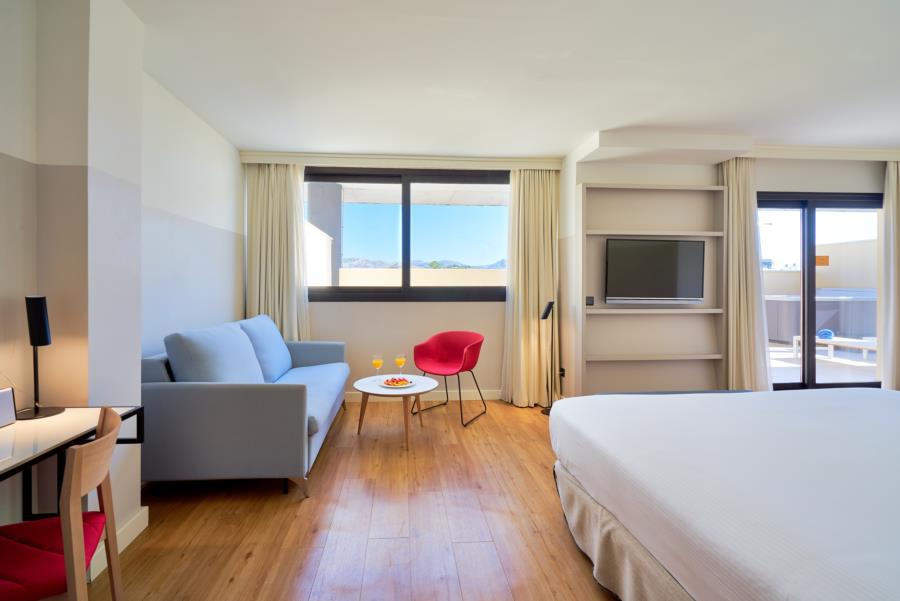
Málaga
R$1,545 / night

Málaga
R$2,545 / night

Málaga
R$2,082 / night

Málaga
R$1,837 / night

Málaga
R$1,412 / night

Málaga
R$2,850 / night

Málaga
R$1,674 / night

Málaga
R$2,035 / night
Must-sees, local secrets, experiences, and hotels — filter layers and tap the pins.
Everything you need to know to plan your trip
Get notified when hotel prices in Malaga drop. No spam.
We use your email only to send this price alert. Unsubscribe anytime.
Extend your trip to incredible destinations nearby
Still unsure? See side-by-side comparisons to decide.
We personalize every moment of your journey — from iconic landmarks to hidden cultural gems.
Available 24/7 · Personalized consultations · Local expertise
Updated on July 25, 2026 · Methodology · Authors
Sources
Testimonials
Stories from travelers who have already visited. Share your experience — your comment appears in the cards below.
Visiting Malaga exceeded all expectations. The energy of the place is contagious!
Aline Moura
Traveler from Fortaleza
We traveled as a family and Malaga delighted kids and adults alike. Great hotel and attraction picks.
Daniel Figueiredo
Backpacker
I arrived without a fixed itinerary and Malaga surprised me at every corner. So welcoming.
Graziela Pacheco
Repeat visitor
Stayed near downtown and walked everywhere. Malaga is even better on foot.
João Victor
Traveler from Recife


