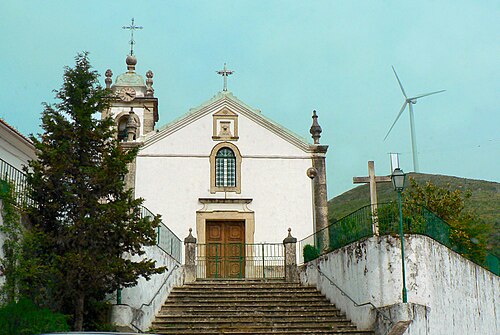
Mafra
Mafra Hotel
R$1,082 / night

Destination
Discover Mafra, a charming town in Portugal. Explore its historic National Palace and dive into rich local culture. Your ideal destination awaits!
Mafra · Brasil
Photos
Discover the landscapes and culture of Mafra


Editorial guide with history, culture, and practical tips to plan your trip.
Mafra is a name that echoes across different geographies, but its most prominent and historically rich manifestation is within the province of Portugal. For the traveler seeking to dive into the charm of European history, Mafra (Portugal) presents itself as a town center filled with architectural and cultural significance. Its mention is also made by another locality, the homonymous parish within the same municipality, giving it administrative and historical depth.
However, the name "Mafra" also exists in Brazil, as a municipality located in Santa Catarina. This geographical polysemy gives the destination an additional layer of complexity for the explorer. Nevertheless, when discussing the architectural icon that attracts most history and European culture enthusiasts, the Portuguese context inevitably dominates records.
Mafra, in Portugal, is not just a town; it is a monumental testament to past eras. It is home to the imposing National Palace of Mafra, a colossal work encapsulating the ambition and power of Portuguese Baroque architecture. Whether exploring the picturesque streets connecting the main municipality to its neighboring parishes, or contemplating the magnitude of this royal palace, the visitor finds a setting where the past manifests in every stone, every tile, and every square.
The history of Mafra is intrinsically linked to the grandeur of the Portuguese monarchy and the artistic development of the Baroque period. What captivates visitors most is the National Palace of Mafra, a structure that not only represents a unique architectural collection but also narrates the political and religious relations of the era. The construction of this palace was a gigantic undertaking, reflecting the elevated status of the Portuguese Crown and its devotion to art and faith.
The development of the municipality of Mafra spans several epochs, passing through the gradual formation of a town center that became the administrative and social heart of its territory. Local history is told not only by the imposing walls of the palace but also by the narrow streets of the attached parishes, each with its own temporal marks. It is an urban fabric where different historical periods coexist harmoniously.
The historical importance of Mafra lies precisely in this fusion: it is the point of convergence between the civil life of the municipality and the great achievements of Portuguese royal history, making it a living museum that attracts both historians and admirers of Baroque culture. The National Palace, by itself, is a live lesson on past engineering, power, and artistic style.
Culture in Mafra pulses with the resonance of its rich artistic and religious heritage. The town celebrates traditions dating back to the golden ages of the Portuguese monarchy. This influence is manifested not only in architecture but also in local festivities and the way of life of its inhabitants.
The National Palace is the cultural heart of this understanding. It is not merely a place for silent admiration; it is a stage for events that celebrate the continuity of Portuguese tradition. Mafra's culture is profoundly ornamental, reflecting the Baroque taste for excess and magnificent details—whether in internal coatings, paintings, or the architecture of surrounding churches.
The various parishes of the municipality contribute to this cultural tapestry. Each neighborhood carries its own rhythm of local life, keeping alive community traditions and knowledge passed down through the centuries. The interaction between the monumental National Palace and the intimacy of small local communities creates a multifaceted cultural experience, where splendor meets coziness.
Located in a strategic point in Portugal, Mafra occupies a geographical space that allows for both urban expansion and the preservation of rural and historic landscapes. The concept of "town center municipality" defines its geographic importance: it is the administrative and population nerve center of the area.
Geographically, Mafra is structured around the main urban core and its various administrative subdivisions—the parishes. This organization allows visitors to explore a relatively compact but extremely rich radius of cultural and historical influence with distinct geographical details. The roads and layout of the city reflect this articulation between centralized life and the more dispersed environment of surrounding communities.
The general topography of the region contributes to a visually varied landscape, mixing the formal rigor of the monumental palace with the organic contours of traditional dwellings. It is this combination of grand planning and community spontaneity that gives Mafra its unique geographic identity within Portuguese territory.
Although sources do not provide detailed climatic data, it can be inferred that, due to its location in a coastal region or influenced by the Atlantic, Mafra's climate tends to exhibit temperate and Atlantic characteristics. This type of climate is characterized by its moderate consistency throughout the year.
The rhythm of the seasons here generally features mild winters and pleasant summers, without the extremes of heat or cold found in other continental regions. This climatic stability contributes significantly to the city's habitability, allowing the tourist flow to remain constant and comfortable across various times of the year.
It is an ideal climate for prolonged tourist excursions, walks through cobblestone streets, and long hours dedicated to contemplating architectural works. The temperate nature not only protects the built heritage but also guarantees the visitor a climatic comfort that enhances the experience of historical immersion.
Tourism in Mafra is a rich and deeply cultural experience, attracting visitors of different profiles: lovers of Baroque art, enthusiasts of monarchical history, and those seeking the charm of a preserved Portuguese village. The undeniable focal point is the National Palace of Mafra.
A visit to the palace is not limited only to its luxurious halls; it encompasses a complete architectural complex, including its imposing churches and adjacent areas. It is an outing that requires time to be absorbed in its total majesty.
Beyond the main monument, the tourist itinerary includes exploring the various parishes. Walking through local streets allows the visitor a more intimate and daily immersion into Portuguese life. The pace is relaxed, ideal for detours into small artisan shops or savoring local gastronomy. Mafra thus offers a perfect balance between large-scale monumental tourism and the pleasure of spontaneous discovery.
One of the most interesting curiosities about the name "Mafra" is its geographical multiplicity. It is crucial to distinguish among the Portuguese municipality, the parish within it, and even the parallel in Santa Catarina, Brazil. This duality demonstrates how names can travel and take root in distinct cultures.
Another curious fact resides in the administrative structure of the area: the coexistence of the town center with its multiple administrative units (parishes) is not merely a bureaucratic detail but a physical reflection of historical social organization. Each parish represents an autonomous community that contributed to shaping the complete identity of the municipality.
Finally, when observing the National Palace of Mafra, one notices the scale of royal ambition. Its colossal magnitude is a fascinating reminder of how historical figures and determined artistic periods could materialize works that resist the test of time. It is a living testament to human engineering in its most grandiose form.
Everything you need to know to plan your trip
Reference figures to help plan your trip
Hotels in the area
2
Attractions
9
2 properties in the area
93 travelers searched Mafra this week
14 stays booked in Mafra in the last 7 days
Must-sees, local secrets, experiences, and hotels — filter layers and tap the pins.
Everything you need to know to plan your trip
Get notified when hotel prices in Mafra drop. No spam.
We use your email only to send this price alert. Unsubscribe anytime.
Extend your trip to incredible destinations nearby
Still unsure? See side-by-side comparisons to decide.
We personalize every moment of your journey — from iconic landmarks to hidden cultural gems.
Available 24/7 · Personalized consultations · Local expertise
Updated on July 25, 2026 · Methodology · Authors
Sources
Testimonials
Stories from travelers who have already visited. Share your experience — your comment appears in the cards below.
Visiting Mafra exceeded all expectations. The energy of the place is contagious!
Cíntia Rodrigues
Family with kids
We traveled as a family and Mafra delighted kids and adults alike. Great hotel and attraction picks.
Fabiano Lopes
Food lover
I arrived without a fixed itinerary and Mafra surprised me at every corner. So welcoming.
Ingrid Viana
Honeymoon
Stayed near downtown and walked everywhere. Mafra is even better on foot.
Leandro Meirelles
Traveler from Porto Alegre