
Southall Greater London
Crowne Plaza London Ealing by IHG
R$1,656 / night

Destination
Explore London! Discover the rich Roman and modern history of this vibrant capital. From iconic museums to charming neighborhoods, find everything to do in the UK.
London · Brasil
Photos
Discover the landscapes and culture of London
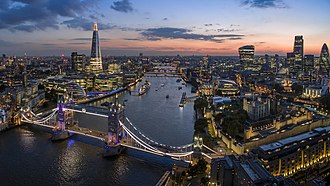


Editorial guide with history, culture, and practical tips to plan your trip.
London is much more than just a capital; it is an urban palimpsest, a colossal metropolis where millennia of history coexist with the vibrant pulse of modern life. Officially the heart of England and, by extension, the gateway to the United Kingdom, London has achieved global status as an irreplaceable destination. Its identity is complex and multifaceted, being a confluence of cultures and eras that manifest in every street, square, and historical building.
The name "London" today evokes the image of a vast and organized metropolis, a global center of power and art that attracts eyes from all over the planet.
The historical narrative of London is extraordinary in its depth. Its journey dates back over two millennia, a period that attests to its resilience and strategic importance. It begins with the Romans, who founded the settlement, originally naming it Londinium. This starting point is not merely an academic fact; it defines the city's DNA, ensuring that even modernity always maintains a visible connection to its imperial origins.
It is crucial to note the distinction between the original core and the modern metropolis. While the Roman foundations established the birthplace of Londinium, the historical center maintains a timeless aspect: this is the old City of London. This medieval heart preserves its original boundaries, acting as an anchor in time. However, over the centuries, particularly since the 19th century, the concept and name "London" began to refer not only to this ancient core but to the gigantic metropolis that flourished around it.
This expansion was gradual, building a complex conurbation. Today, this vast area is formally designated Greater London, a modern administrative concept that has managed to encompass both the old and the new under the same governmental management, granting it its own elected mayor and local assembly. It is this continuous process of growth that has allowed the city to maintain its function as a global epicenter without losing its historical memory.
London's culture is a vibrant kaleidoscope, a direct result of its ancient history and status as a global hub. London does not merely preserve traditions; it absorbs them, blending them with global influences that arrived through its ports and roads. The cultural fabric manifests at all levels: from the imposing architecture that narrates past stories to the modern rhythms found in its neighborhoods. This fusion is the core of its cultural identity.
In terms of social life, London caters to an extremely diverse public. The metropolis is organized into various boroughs, each with a specific cultural vocation. They are areas that not only house world-famous tourist attractions but also sophisticated gastronomic niches, lively bars, and vibrant nightclubs. This wealth of cultural districts ensures that visitors will find something that resonates with their deepest interests, whether classical art or contemporary avant-garde.
The very existence of the headquarters of the United Nations (UN) in the city solidifies its cultural and political role as a stage for human convergence. This places London permanently at the center of global discussions, ensuring that its culture is synonymous with international interconnection.
Geographically, the concept of London is that of a vast and stratified metropolis. It is essential to differentiate between the original historical core and its subsequent growth. The city center, the old City of London (known as The Square Mile or simply The City), possesses unique geographical characteristics because it preserved its original medieval boundaries. This sector is an area of almost museum-like urban arrangement.
On the other hand, the term "London" today mainly refers to the vast conurbation that developed from the 19th century onwards. This metropolis expanded its reach beyond the medieval walls, forming the great region of Greater London. This area is not just a physical extension; it is a cohesive administrative entity, equipped with its own governmental mechanisms—an elected mayor and local assembly. This modern geographical organization allows for the management of millions of residents and tourists.
The urban structure itself can be divided into distinct boroughs. Each borough represents a geographic zone with its own characteristics, whether commercial, residential, or culturally specialized. This layout ensures that the city is not monolithic, but rather a rich collection of urban micro-landscapes within a single giant metropolitan domain.
While detailed climate information is not available in primary facts, it is important to consider that London is located in a region with temperate climatic characteristics. Its geographic location in England, part of the United Kingdom, influences a climate pattern that varies considerably throughout the year. Like any major European metropolis, the city has a rhythm and environment that adapt to the four distinct seasons.
The experience of visiting London requires being prepared for the typical climatic variability of large northern European capitals. This aspect contributes in part to the unpredictable and welcoming charm of the city, forcing visitors to live through a continuous cycle of changes, reflected both in the sky and the vibrant atmosphere of its districts.
London's tourist appeal is vast and operates on multiple levels. It is an experience that goes far beyond simply visiting monuments; it is exploring a complete urban ecosystem. The metropolis functions as a great open catalog of activities: offering everything from unparalleled historical attractions to cutting-edge culinary experiences, varied accommodations, and pulsating nightlife.
The offering of visitor services is highly specialized. Boroughs do not just contain lists of points of interest; they are true entertainment hubs. Whether it is a sophisticated restaurant in Savile Row or a vibrant nightclub in Shoreditch, there is always a cultural and social meeting point awaiting the urban explorer. Tourism in London is synonymous with programmed diversity.
For the international traveler, the city also fulfills a crucial diplomatic role, hosting the United Nations (UN). This attracts a global clientele of visitors and participants, ensuring that the intellectual and political aspect is always part of the tourist experience. Therefore, tourism is a mirror of the social, historical, and political complexity of the United Kingdom.
The fascinating history of London is loaded with quirks that make it unique on the world stage. The distinction between the original core of Londinium, founded by the Romans two millennia ago, and the modern metropolis is a curiosity in itself—a city that preserved its medieval boundaries (The Square Mile or The City) while expanding to cover all of Greater London.
It is notable how the name "London" evolved. Although the Romans gave birth to the foundation, the modern term reflects a metropolis that flourished and radically reorganized after the 19th century. This temporal duality is a striking fact: the city operates under two distinct, yet complementary, geographical identities.
Another peculiar feature is its modern governance structure. Greater London is not just a geographic area; it constitutes an administrative entity with its own autonomy, managed by an elected mayor and dedicated assembly. This gives the city an additional layer of organizational complexity, something rare in historic metropolises with such great antiquity.
Everything you need to know to plan your trip
Best time to visit
Spring to Autumn
Currency
GBP
Language
English
Recommended stay
3 days
Timezone
BST/GMT
Reference figures to help plan your trip
Attractions
9
Selected stays available to book
232 travelers searched London this week
Stays for these dates are among the most sought-after in London
Southall Greater London
R$1,656 / night

Southall Greater London
R$880 / night

London, Ontario
R$1,542 / night

Southall Greater London
R$928 / night

Southall Greater London
R$1,224 / night

Southall Greater London
R$1,115 / night

Southall Greater London
R$896 / night

London, Ontario
R$990 / night

London, Ontario
R$924 / night

Southall Greater London
R$952 / night

Southall Greater London
R$703 / night

Southall Greater London
R$1,150 / night
Must-sees, local secrets, experiences, and hotels — filter layers and tap the pins.
Everything you need to know to plan your trip
Get notified when hotel prices in London drop. No spam.
We use your email only to send this price alert. Unsubscribe anytime.
Extend your trip to incredible destinations nearby
Still unsure? See side-by-side comparisons to decide.
We personalize every moment of your journey — from iconic landmarks to hidden cultural gems.
Available 24/7 · Personalized consultations · Local expertise
Updated on July 25, 2026 · Methodology · Authors
Sources
Testimonials
Stories from travelers who have already visited. Share your experience — your comment appears in the cards below.
Visiting London exceeded all expectations. The energy of the place is contagious!
Arthur Klein
Tourist from Germany
We traveled as a family and London delighted kids and adults alike. Great hotel and attraction picks.
Cíntia Rodrigues
Family with kids
I arrived without a fixed itinerary and London surprised me at every corner. So welcoming.
Fabiano Lopes
Food lover
Stayed near downtown and walked everywhere. London is even better on foot.
Ingrid Viana
Honeymoon

