
Český Krumlov
Largo
R$1,333 / night
Destination
Discover the beauty of 'largos'! Explore vibrant public spaces, ideal for pedestrian walks, community life, and leisure during your travels.
Largo · Brasil
Photos
Discover the landscapes and culture of Largo: The Art of Open Urban Spaces


Editorial guide with history, culture, and practical tips to plan your trip.
The largo represents one of the most vital and often underestimated elements of urban fabric: the free public space. In its broadest definition, it is any urban area designated for human gathering or recreation, characterized by the absence of permanent structures limiting its use. It is not merely a common square; the concept of 'largo' carries a specific meaning within Brazilian urban planning and cultural traditions.
The great differentiator of this space lies in its intrinsic capacity to facilitate unimpeded social interaction. It is an open stage for daily life, where people meet without the visual or auditory interruption of commercial architecture. The primary function of the largo is to serve as an urban breath-space, a location that returns priority to the human rhythm and the experience lived on foot.
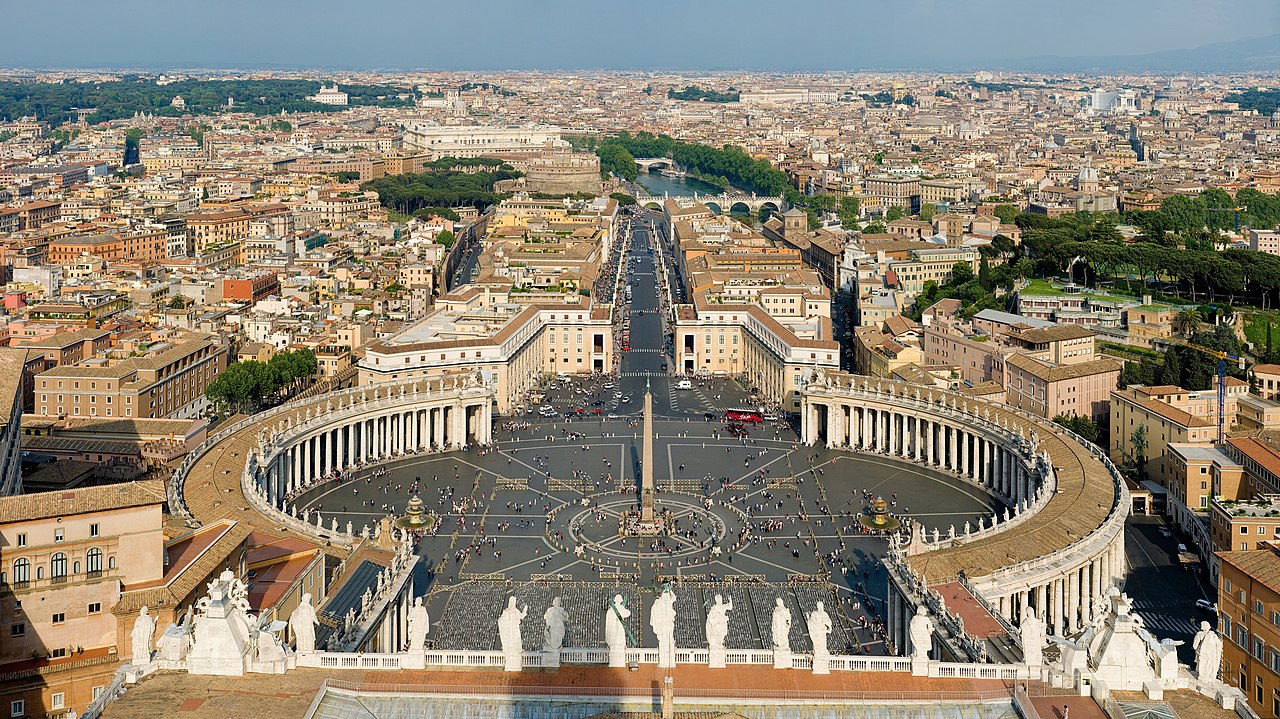
It is crucial to understand that the precise perception of what constitutes a 'square' varies significantly from community to community, shaped by local history, culture, and traditions. This variation reflects Brazil's cultural diversity, where public space assumes multi-faceted social roles. In the Brazilian context, for example, the traditional idea of a square is often closely linked to abundant landscaping. This is where the largo distinguishes itself, as it conceptually corresponds to the type of open area that shares parallels with large urban plazas found in Mediterranean countries like Italy, Spain, and Portugal.
Because of this nature, a largo is frequently classified by landscape architecture as a "dry square." This nomenclature does not diminish its importance; on the contrary, it underlines its functional purity: the focus is on open space, openness to the sky, and human interaction, without the need for extensive green barriers that might restrict its use at certain times or climates. It is a space that celebrates the monumentality of meeting.
While the concept of the square as a focal point of community life is ancient, the modern structuring of the largo reflects a conscious evolution in urban theory. Historically, large open spaces were necessary for collective activities—markets, religious celebrations, and political meetings. Over time, as cities grew in complexity and population density, the need for breathing areas became an architectural imperative.
The modern largo can be viewed as a response to the pressures of accelerated urbanization, where buildings were erected without proper planning to maintain open spaces. It represents, essentially, the collective memory of the need for pause within the urban journey. Its history is linked to the recognition that coexistence cannot be confined within commercial or residential walls; it requires a transitional area, a neutral and welcoming meeting point.
By associating itself with the idea of open spaces from Iberian culture, the largo draws historical parallels with urban models that prioritized the pedestrian from their origins. This historical influence suggests planning methodology that always valued the fluidity of human movement over vehicular circulation. This conceptual resilience is what allows the largo to survive and adapt, maintaining its central function despite the constant pressures of automotive modernity.
Culturally, a largo transcends the mere geometric definition of "open space." It is a cultural vector. The way a population uses the largo reveals much about their social priorities: whether it will be a stage for artisan fairs, spontaneous cultural manifestations, family picnics, or simply observation points of daily flow.
The central element of this space is "coexistence" (convivência). It is not enough to be physically present; there must be an interaction that promotes leisure and gathering. The largo thus becomes the great catalyst for community life. It allows different social strata to cross paths on equal footing, without obvious economic or physical barriers.
Cultural variation in the perception of urban space is the engine of this richness. While some cultures tend to associate public space with floral exuberance and dense landscaping—a very strong characteristic in Brazil—others, like those that historically shaped the concept of the European largo, prioritize open paving and ease of pedestrian circulation. Both approaches are valid because they meet the greater goal: creating a refuge where the community can exercise its fundamental right to leisure and recreation.
The largo, thus, is not just a location; it is a living manifestation of human sociability, a testament to the continuous desire to be together.
From an urban geographical point of view, the largo occupies a strategic position. It functions as a social lung in the heart of the metropolis. Its location is usually central or at high circulation nodes, becoming a gravitational pole for human activity.
The most defining aspect of its geographic role is the radical prioritization of the pedestrian. While acknowledging that this is not an absolute rule (and there are always exceptions in urban design), in its functional essence, it establishes a spatial hierarchy: the human body and its movement are the masters of ceremony, and the vehicle is secondary.
This pedestrian priority has direct implications for the social microclimate of the area. The pace slows down, interaction increases, and the sense of community strengthens in contrast to expressways dedicated solely to vehicular speed. Geographically speaking, a largo is a perfect example of planning that manages to mitigate the physical impact of population density.
It acts as both a geographical and emotional point of reference within the city. It is the place that allows the resident to reorient themselves amidst constructed chaos, finding in open space a physical demarcation between private confinement and the chaotic flow of major avenues.
The relationship between a largo and climate is one of mutual support. By its nature, an open plaza has a much superior ventilation capacity compared to areas enclosed by tall buildings. This natural characteristic increases thermal comfort for users on hot days.
While an entire city may suffer from heat islands due to high density of concrete and asphalt, the largo enters as a passive climate mitigator. Its open structure allows breezes to flow freely over the space, benefiting both pedestrians and existing flora (even in spaces classified as "dry").
However, it is important to note how landscaping, when present, enhances this effect. Vegetation not only offers aesthetic beauty but also contributes to a cooler microclimate through plant evapotranspiration. This element of landscaping, being a hallmark of the Brazilian square, complements the functionality of the largo, ensuring that the space remains welcoming in different climatic conditions.
In summary, under any climatic condition, the largo fulfills its function: to be a meeting point where nature (even when controlled by landscape design) and humans interact directly with the open element of fresh air. It is therefore more than just an area; it is a social climate system.
For the modern tourist, visiting a largo offers a vastly different travel experience than that provided by shopping malls or closed monuments. Largo tourism is synonymous with slow, contemplative, and culturally immersive travel.
The great tourist appeal of the largo lies precisely in its multifaceted nature and the absence of a single defined purpose. It does not force the visitor to consume in a specific store or follow a predetermined tourist route. On the contrary, it invites spontaneous exploration and "aimless wandering," which is one of the richest ways to discover a city.
Largos become living stages for studying local culture. The visitor can observe daily routines—from seniors playing checkers to groups of youth practicing sports—and understand, through observing the use of space, the soul of that community. This capacity to serve as a social mirror is an immense attraction for travelers interested in urban anthropology.
By connecting with the concept of the "dry square," the largo appeals to the desire for authenticity. The tourist does not just seek a pretty picture, but the feeling of being in the beating, less commercially curated heart of local life. It is a destination that invites pausing, having coffee in a quiet corner, and simply contemplating human movement.
One of the most curious and fascinating aspects of the largo is its fluid identity. It does not have a single function; it adapts to the daily cycle of the city. In the morning, it can be a place for physical exercise; in the afternoon, a resting spot; and at night, a vibrant stage for gatherings and cultural manifestations.
It is also essential to dispel the idea that the largo is merely an extension of a garden or plaza. Although landscaping is often present—following Brazilian tradition—the heart of the largo remains that open space, free of buildings, guaranteeing its essence as a "dry square."
Another cultural curiosity lies in the variation of how it is perceived. While some may view it only through an aesthetic lens (the beautiful and landscaped), others—with greater urban knowledge—see the largo through its primary function: creating a space that guarantees, above all else, pedestrian circulation. It is this duality of vision, between art/beauty and social functionality, that makes the largo so rich.
Ultimately, understanding the largo means understanding a fundamental architectural principle: even in the most densely built and complex urban centers, there is always the visceral human need for planned emptiness. This open space is not a luxury; it is a vital necessity for the social and cultural sustainability of the city.
Everything you need to know to plan your trip
Reference figures to help plan your trip
Attractions
9
Selected stays available to book
184 travelers searched Largo this week
Stays for these dates are among the most sought-after in Largo
Český Krumlov
R$1,333 / night

Key Largo FL
R$2,070 / night

Key Largo FL
R$2,544 / night

Key Largo FL
R$1,492 / night

Key Largo FL
R$928 / night

Key Largo FL
R$2,504 / night

Key Largo FL
R$1,417 / night

Key Largo FL
R$1,008 / night

Key Largo FL
R$985 / night

Key Largo FL
R$1,217 / night

Key Largo FL
R$1,182 / night
Key Largo FL
R$2,068 / night
Must-sees, local secrets, experiences, and hotels — filter layers and tap the pins.
Everything you need to know to plan your trip
Get notified when hotel prices in Largo: The Art of Open Urban Spaces drop. No spam.
We use your email only to send this price alert. Unsubscribe anytime.
Extend your trip to incredible destinations nearby
We personalize every moment of your journey — from iconic landmarks to hidden cultural gems.
Available 24/7 · Personalized consultations · Local expertise
Updated on July 25, 2026 · Methodology · Authors
Sources
Testimonials
Stories from travelers who have already visited. Share your experience — your comment appears in the cards below.
Visiting Largo: The Art of Open Urban Spaces exceeded all expectations. The energy of the place is contagious!
Karen Abreu
Trip planner
We traveled as a family and Largo: The Art of Open Urban Spaces delighted kids and adults alike. Great hotel and attraction picks.
Nelson Duarte
Retired couple
I arrived without a fixed itinerary and Largo: The Art of Open Urban Spaces surprised me at every corner. So welcoming.
Rafael Santoro
Photographer
Stayed near downtown and walked everywhere. Largo: The Art of Open Urban Spaces is even better on foot.
Valéria Nogueira
Family with teens
