
Hanói
Meritel Hanoi
R$817 / night

Destination
Explore Hanoi, a vibrant capital blending French colonial architecture, historical lakes (Hoàn Kiếm), and ancient Vietnamese culture.
Hanói · Brasil
Photos
Discover the landscapes and culture of Hanoi


Editorial guide with history, culture, and practical tips to plan your trip.
Hanoi is not merely the capital of Vietnam; it is a vibrant center of culture and power, consolidating itself as one of the country's most populous municipalities. Its grandeur extends beyond mere numbers; it represents a fascinating melting pot where millennia of history collide with pulsating modern energy.
Geographically situated over an area of 3,358.6 km² (approximately 1,296.8 square miles), Hanoi is an epicenter of economic and political activity. The city does not waste time on development; its indicators show robust economic strength, having registered the second-largest regional Gross Regional Product (GRP) among all Vietnamese provinces in 2023, with an impressive value of US$ 48 billion—just trailing Ho Chi Minh City.
This economic dynamism is supported by globally recognized infrastructure. Hanoi hosts over 78 foreign embassies, attesting to its world diplomatic importance. Furthermore, it houses the headquarters of the Vietnamese People's Army (VPA) and is home to a vast and respected academic system, Vietnam National University. This concentration of governmental and academic power transforms Hanoi into a unique destination for travelers interested in geopolitics and complex urban culture.
For tourists, the appeal is equally colossal. In 2022, Hanoi welcomed an impressive 18.7 million visitors, both domestic and international, proving its status as a must-see destination on any Asian itinerary.
The history of Hanoi is a complex tapestry woven from imperial influences, colonial periods, and the continuous drive of modern development. The city's historical core is represented by the majestic Thăng Long Imperial Complex, which attests to centuries of occupation and importance to the Vietnamese royal lineage.
Hanoi’s urban growth is a living testament to these historical layers. The current architectural structures tell this story: they feature the grand traits of French colonial architecture, marking the period of foreign occupation and European influence; alongside brutalist residential buildings, reflecting eras of 20th-century reconstruction and development.
This urban evolution has resulted in a unique social and physical fabric. The city’s rapid growth generated winding alleyways and disorganized tube houses that permeate the rest of the neighborhoods, creating an authentic and chaotic, yet incredibly rich atmosphere. This mixture of eras is not accidental; it reflects Hanoi's resilience and continuous capacity to reinvent itself while honoring its past.
The capital's historical development ensured that it maintained its central role in Vietnamese politics, serving as an undeniable center of power from its imperial roots to its modern status as a regionally dominant metropolis. It is this superposition of eras—from the royal palace to the modernist apartment blocks—that gives the city its unparalleled historical depth.
Hanoi’s culture is deeply rooted in its natural spaces and unique architectural patterns. The pulsing heart of cultural and social life resides around historic lakes, such as Hồ Hoàn Kiếm (Sword Lake) and West Lake (Hồ Tây).
These bodies of water are not just scenery; they are stages for social encounters, ceremonial centers, and cultural symbols. A walk around them allows the visitor to absorb a unique atmosphere that blends natural tranquility with urban buzz.
Architecturally, Hanoi is a lesson in contrasts. On one hand, we find the imposing French colonial architecture in public buildings and historical structures, recalling past eras. On the other side, there is the vibrant meeting with the functional brutality of modern apartments, followed by the daily poetry found in the labyrinthine alleys and disorganized tube houses.
Culture in Hanoi is marked by the coexistence of these aesthetics: the formal power of Ho Chi Minh's Mausoleum balances the chaotic spontaneity of the older quarters. This cultural balance reflects the Vietnamese spirit: an ability to preserve ancestral traditions (as seen in the Imperial City) while embracing and propelling a modern, globalized future.
With a total area of 3,358.6 km², Hanoi possesses geography that mixes colossal urban density with preserved natural touches on its fringes. While widely known for its bustling city center, it is strategically linked to calmer landscapes.
The urban lakes are crucial geographical elements for the quality of life and cultural rhythm of the city. Hồ Hoàn Kiếm and West Lake (Hồ Tây) do not merely beautify the metropolis; they function as green lungs that mitigate the pace of urban growth.
Natural expansion around Hanoi is represented by important conservation areas. Although the city limits are vast, it is very close to national parks, with Ba Vì National Park being a notable example of natural reserves inviting exploration and relaxation outside the dense core.
This dual geography—the density of the historic-economic center versus the proximity of surrounding green areas—is what gives Hanoi its balanced profile. It allows visitors to experience the energy of a global capital without being isolated from the natural, serene beauty of its surroundings.
While detailed climate data is outside the scope of this analysis, it is important to note how Hanoi's diverse geography influences your experience. The prominent presence of Ba Vì National Park nearby suggests a microclimatic variation that visitors can explore.
The region generally follows Asian tropical patterns, characterized by well-defined seasons and high humidity. However, easy access to higher, natural environments, such as those found in Ba Vì, offers refuges with potentially milder or different climates than the typical temperatures of the urban valley.
When planning a trip, it is advisable to consider that this transition from a dense, humid environment to the mountainous landscapes of the surroundings can offer significant variations in sensory experience—from the heat of the metropolis to the coolness of high altitudes.
Hanoi's tourism sector is a vital economic engine, responsible for receiving 18.7 million visitors in just one year (2022). This figure underlines its global appeal and diverse attractions for different traveler profiles.
The tourist sites are a fascinating mix of the sacred, the historical, and the natural. Ho Chi Minh's Mausoleum is a pilgrimage site encapsulating Vietnam's political memory; the Thăng Long Imperial City transports visitors to a rich dynastic past; and Hồ Hoàn Kiếm acts as the cultural and social heart—a must-visit meeting point.
For those seeking peace and contemplation, West Lake offers relaxing strolls. For lovers of architectural history, exploring the French colonial traits and winding 20th-century alleys is an adventure in itself. And for nature enthusiasts, Ba Vì National Park invites hiking and immersion into preserved ecosystems.
In sum, Hanoi caters to tourists seeking not only world-famous monuments but also an immersive experience in daily Vietnamese life, from vibrant markets to the tranquility of its great urban lakes.
The most fascinating aspect of Hanoi lies in its capacity to accumulate layers of history and modernity without losing its soul. This cultural superposition is visible in every architectural detail.
Because it is the country's political and administrative center, the city concentrates an extraordinary level of global power. Hosting 78 foreign embassies and housing the headquarters of major governmental institutions—such as the Vietnamese People's Army (VPA) and the national university system—lends it a unique diplomatic energy on the world stage.
This concentration of institutions is a direct reflection of its continuous historical importance. Hanoi has maintained its role as the country's nerve center, ensuring that imperial history coexists alongside the dynamism of modern capitalism and cutting-edge academic structures.
Furthermore, the urban landscape is a living museum of styles: the elegant French colonial buildings do not simply blend with brutalist apartments; they mingle with the organic spontaneity of tube houses. This disorganized yet culturally rich mixture is what makes Hanoi a truly unmissable city, full of surprises around every corner.
Everything you need to know to plan your trip
Reference figures to help plan your trip
Hotels in the area
703
Attractions
9
703 properties · high demand in Hanoi this season
151 travelers searched Hanoi this week
Stays for these dates are among the most sought-after in Hanoi
Hanói
R$817 / night

Hanói
R$990 / night
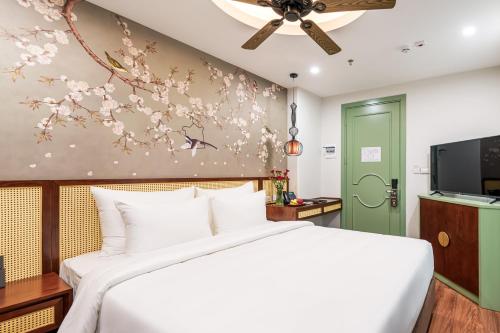
Hanói
R$577 / night

Hanói
R$987 / night

Hanói
R$607 / night
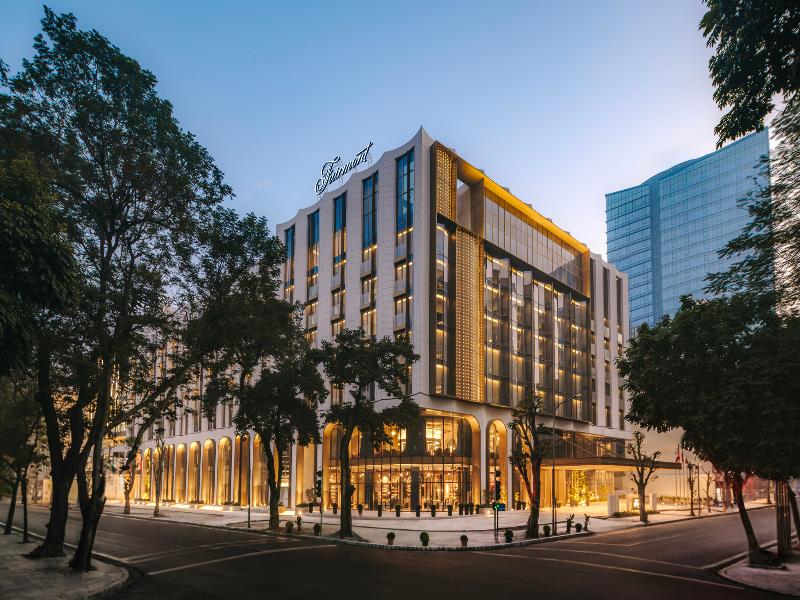
Hanói
R$2,851 / night

Hanói
R$760 / night

Hanói
R$620 / night

Hanói
R$4,837 / night

Hanói
R$1,220 / night

Hanói
R$2,197 / night

Hanói
R$957 / night
Must-sees, local secrets, experiences, and hotels — filter layers and tap the pins.
Everything you need to know to plan your trip
Get notified when hotel prices in Hanoi drop. No spam.
We use your email only to send this price alert. Unsubscribe anytime.
We personalize every moment of your journey — from iconic landmarks to hidden cultural gems.
Available 24/7 · Personalized consultations · Local expertise
Updated on July 8, 2026 · Methodology · Authors
Sources
Testimonials
Stories from travelers who have already visited. Share your experience — your comment appears in the cards below.
Visiting Hanoi exceeded all expectations. The energy of the place is contagious!
Rafael Santoro
Photographer
We traveled as a family and Hanoi delighted kids and adults alike. Great hotel and attraction picks.
Valéria Nogueira
Family with teens
I arrived without a fixed itinerary and Hanoi surprised me at every corner. So welcoming.
Zélia Carmo
Traveler from Goiânia
Stayed near downtown and walked everywhere. Hanoi is even better on foot.
Bruno Carvalho
Couple from Curitiba