
Goiania
Ibis Goiania
R$589 / night

Destination
Explore Goiânia, the modern capital of Goiás. Discover rich culture, cuisine, and a unique blend of urban life in the Cerrado heartland.
Goiania · Brasil
Photos
Discover the landscapes and culture of Goiânia


Editorial guide with history, culture, and practical tips to plan your trip.
Goiânia is recognized as an important Brazilian municipality and, more significantly, the administrative and populated center of Goiás state. Strategically located in the vast Center-West region of Brazil, this city represents a developing urban hub that attracts the attention of both travelers and regional researchers. Designated as the state capital, Goiânia concentrates a series of geographical, demographic, and structural characteristics that make it a fascinating destination for anyone wanting to know the cultural heart of the Brazilian Cerrado.
Its definition is not limited merely to the consolidated urban center; it encompasses a significant area, giving it impressive dimensions. The city boasts approximately 728,296 square kilometers, a size that attests to its territorial extent and planning complexity. This vast area is crucial for understanding urban development and its interconnections with the natural environment of the Central Plateau.
From a geographical point of view, Goiânia stands out for presenting continuous geography, meaning it lacks large natural ruptures like pronounced mountain ranges. Its landscape is marked by the predominance of lowlands and few significant hills. This geographical uniformity contributes to a specific rhythm of urban construction and expansion, facilitating the development of multiple residential centers.
Structurally, Goiânia does not constitute a single homogeneous block; it is formed by two main urban centers: the central district (distrito-sede) and Vila Rica district. This dual division reflects the history of its growth and how different areas of the city were settled and developed over time. Each center carries with it an identity that contributes to the richness and multifaceted city life, offering visitors diverse aspects to explore during their journeys.
Although the chronological details of its founding are too vast to be condensed into available facts alone, it is essential to understand Goiânia within the context of its role as a capital. The existence of the city is intrinsically linked to the administrative and demographic consolidation of Goiás state. Its strategic location placed it on a vital axis connecting southeastern Brazil to the continental heartland, making it a nerve center for regional development.
Historically, Goiânia underwent growth processes that not only increased its population—which today exceeds 1.39 million inhabitants—but also defined its architecture and contemporary way of life. This growth was so robust that it required organization into multiple occupation areas, evidenced by the division between the central district and Vila Rica.
This structuring in multiple cores is not a geographical accident; it is a reflection of the planned and organic expansion of human settlement. The city managed to incorporate its vast dimensions (728,296 km²) in such a way that urban development kept pace with demographic growth, ensuring constantly mutating infrastructure. This historical trajectory of growth has transformed it into the metropolis we know today.
Its proximity to other major urban centers, such as Brasília, is an important historic and logistical milestone. The 209 km distance not only establishes a physical connection but also a constant flow of people and goods, solidifying Goiânia's position on the Brazilian socio-economic map.
Goiânia culture is a vibrant mosaic reflecting the mixture of Center-West influences with broader Brazilian traditions. As the cultural and administrative center of the state, Goiânia serves as a point of convergence for diverse artistic, gastronomic, and social expressions.
The city's cultural identity is profoundly shaped by its geography. Living in a Central Plateau, with its specific climate and landscape characteristics, places local culture in constant dialogue with the Cerrado, a biome that provides raw material for legends, festivals, and regional cuisine.
While the facts focus more on its physical structure (its urban centers of Vila Rica and central district), it is this duality that mirrors cultural diversity. Each center can preserve different traditions or absorb distinct influences from migratory flows, resulting in a rich and complex cultural tapestry for the pioneering visitor.
The city's very organization—with its two well-defined cores—stimulates a sense of discovery. The tourist who explores Goiânia is not just visiting a single point, but rather experiencing two distinct urban facets. It is this spatial duality that enhances the cultural experience, inviting the visitor to explore everything from vibrant commercial centers to more residential and historical areas.
Geometrically speaking, Goiânia is a city of considerable dimensions and singular location on the map of Brazil. It stands as a municipality covering approximately 728,296 square kilometers, giving it significant regional stature within the Center-West macro-region.
Its geographical position is vital: it not only belongs to Goiás but is located in an area classified as the Central Plateau of Brazil. This geological classification determines climatic and relief aspects that shape all life in the city, from types of vegetation to the type of soil used for construction.
One of the most striking features of Goiânia's landscape is its continuous geography. The term "continuous" indicates a territorial formation without abrupt natural barriers or severe geological interruptions, such as large mountain chains. Instead, the relief is characterized by lowlands and few steep hills. This feature facilitates not only transport logistics but also large-scale urban planning.
Additionally, the city's urban structure is remarkably organized by dividing into two main centers: the central district (distrito-sede) and Vila Rica district. This geographical division allows for a detailed analysis of how different areas may have evolved separately within the same larger territory, creating micro-centers with their own characteristics. Being located 209 km from Brasília, the capital of Brazil, not only defines a point of reference in the Center-West region but also places Goiânia within a logistics grid that ensures its regional importance.
Given Goiânia's location on the Central Plateau and the typical climate of the Center-West region, the city enjoys a seasonal climate regime. Although specific details of climatic variations are not provided in the facts, it can be deduced that the climate is closely linked to the Cerrado characteristics.
This position on the Central Plateau implies a striking climatic transition throughout the year. The city experiences cycles of well-defined seasons, varying between wetter and drier periods. This cycle is a determining factor for local flora, which adapts to the resilience and water variations characteristic of this biome.
Climate directly influences the rhythm of urban life. During the rainy seasons, the dynamic of growth and flowering in the region intensifies. In the drier periods, the landscape takes on earthier tones, reflecting the natural resistance of the Central Plateau. This climatic alternation is a vital element for anyone seeking to understand the local biome.
In practical terms for the traveler, understanding this cyclical climate is essential. Temperature and atmospheric conditions dictate both cultural events and the pace of life in the areas of the two centers (Vila Rica and central district), making the travel experience more complete when considering this natural variation of the Central Plateau.
Goiânia attracts tourists seeking immersion in a rapidly expanding metropolis, rich in urban planning and Center-West culture. Although it is primarily a state-interest destination, its location just 209 km from Brasília gives it a constant flow of tourist interest, both local and national.
The main tourist appeal of the city lies precisely in its dual geography: the two urban centers, Vila Rica and the central district. This duality invites the traveler to undergo an experience of comparative tourism—exploring different rhythms of life over short periods of time. One day may be dedicated to exploring the most cosmopolitan centers, while another focuses on areas that maintain a calmer, residential pace.
For visitors interested in regional history, a visit is an opportunity to understand how a modern capital was built upon the continuous geography of the Central Plateau. Walking through the avenues allows one to observe architectural evolution alongside population growth (with over 1.3 million inhabitants). This urban observation constitutes a fascinating cultural trip in itself.
Beyond the central urban experience, Goiânia serves as an excellent logistical base for exploring the surrounding areas of Goiás state. Its strategic position makes it an ideal starting point for trips that value the Cerrado biome and the natural characteristics inherent to the Central Plateau region, complementing the urban itinerary with surrounding natural beauty.
The most striking fact about Goiânia is its highly strategic geographical location. Located in the heart of Center-West, it not only defines its political role as the capital of Goiás but also establishes a vital connection point with the rest of the country. Its proximity to Brasília (only 209 km) makes it a city that never loses the vibrant and accelerated pace of major federal centers.
A notable curiosity is its spatial organization into two distinct urban centers: Vila Rica and the central district. This division is not only administrative but culturally perceptible. Visitors are advised that the experience of "walking through Goiânia" should be divided to absorb the nuances of each neighborhood, turning the visit into a true exercise in urban comparison.
In geological and relief terms, it is important to remember that despite its large territorial extent (728,296 km²) and constant flow of people, Goiânia maintains remarkably flat geography. The characteristic of being a Central Plateau with little mountainous elevation contributes to the ease of massive urban development—a rarity in large metropolitan centers that frequently face significant natural barriers.
Finally, its population size—exceeding 1.3 million inhabitants and constantly growing—demonstrates the demographic vitality of the municipality. Goiânia is not just a capital; it is a living urban organism, constantly adapting to the demands of its vast territory, maintaining its central role on the Brazilian map.
Everything you need to know to plan your trip
Reference figures to help plan your trip
Hotels in the area
84
Attractions
9
84 properties in the area
96 travelers searched Goiania this week
6 stays booked in Goiania in the last 7 days
Goiania
R$589 / night

Goiania
R$892 / night

Goiania
R$529 / night

Goiania
R$345 / night

Goiania
R$910 / night

Goiania
R$623 / night

Goiania
R$973 / night

Goiania
R$252 / night

Goiania
R$190 / night

Goiania
R$612 / night

Goiania
R$435 / night
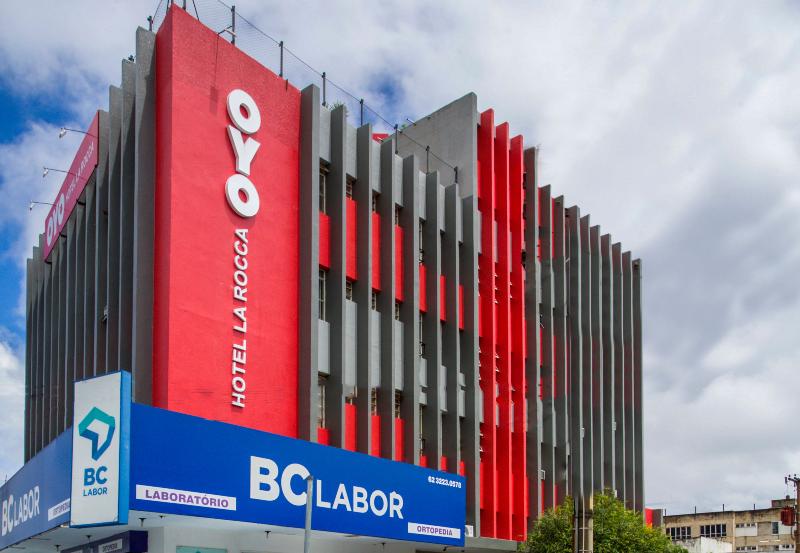
Goiania
R$255 / night
Must-sees, local secrets, experiences, and hotels — filter layers and tap the pins.
Everything you need to know to plan your trip
Get notified when hotel prices in Goiânia drop. No spam.
We use your email only to send this price alert. Unsubscribe anytime.
Extend your trip to incredible destinations nearby
Still unsure? See side-by-side comparisons to decide.
We personalize every moment of your journey — from iconic landmarks to hidden cultural gems.
Available 24/7 · Personalized consultations · Local expertise
Updated on July 24, 2026 · Methodology · Authors
Sources
Testimonials
Stories from travelers who have already visited. Share your experience — your comment appears in the cards below.
Visiting Goiânia exceeded all expectations. The energy of the place is contagious!
Valéria Nogueira
Family with teens
We traveled as a family and Goiânia delighted kids and adults alike. Great hotel and attraction picks.
Zélia Carmo
Traveler from Goiânia
I arrived without a fixed itinerary and Goiânia surprised me at every corner. So welcoming.
Bruno Carvalho
Couple from Curitiba
Stayed near downtown and walked everywhere. Goiânia is even better on foot.
Elaine Coutinho
Solo traveler


