
All destinations
Destination
Gili Trawangan
Discover Gili Trawangan, Indonesia's paradise island. Known for diving and barefoot charm, it's a car-free destination! Perfect for relaxation.
Gili Trawangan · Brasil
Photos
Visual journey
Discover the landscapes and culture of Gili Trawangan


The spirit of Gili Trawangan
Editorial guide with history, culture, and practical tips to plan your trip.
About Gili Trawangan
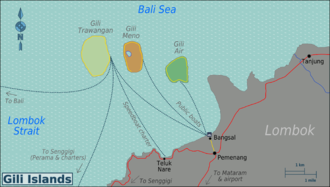
Located in Indonesia, the Gili archipelago is a destination that reveals itself as a paradisiacal sanctuary in the heart of the Bali Sea. The main focal point of this island group is Gili Trawangan, the largest and most visited of the three sibling islands—along with Gili Meno and Gili Air. The Gilis form a magical triangle of small islands noted for their unique natural beauty. For local inhabitants, these three islands are affectionately known as "Gili Indah," an Indonesian expression that literally means "beautiful little islands."
Since its conception as a peaceful retreat destination, Gili Trawangan has evolved significantly. While establishing itself as a vibrant and well-developed tourist spot—especially due to its rich diving industry—it has masterfully maintained its small-scale charm. One of the most striking features defining the experience in Gili Trawangan is undoubtedly the absence of motorized traffic; visitors here can travel exclusively by bicycle or on foot, guaranteeing a slow and serene pace of life.
Administratively, the island group possesses a fascinating history. Previously, it was under the jurisdiction of Lombok Barat Regency, alongside Senggigi. This administration changed in 2010 when the Gilis were relocated to the new jurisdiction of North Lombok Regency. Today, the three islands form an administrative unit (desa) within the Pemenang District (kecamatan) of North Lombok Regency. This geographic and historical structure reinforces its deep roots in Indonesian local culture and administration.
History
The history of the Gilis is intrinsically linked to the archipelago's geography and its strategic position on the northwestern coast of Lombok, Indonesia. While detailed sources on ancient colonization are scarce, what stands out is the administrative trajectory of the islands over time.
Originally, this island group was administered along with other areas such as Senggigi, under the command of Lombok Barat Regency. This previous administration reflects the gradual integration of these small residential and tourist centers into local life in Lombok. A crucial turning point occurred in 2010. During this period, the Gilis received a new administrative jurisdiction, moving to the domain of the newly established North Lombok Regency. This territorial redefinition consolidated the management of the islands.
From the perspective of tourism development, Gili Trawangan has traveled an impressive path. Its roots can be seen in a time when it primarily attracted backpackers (a backpacker's haven). Over the years, this peaceful calling evolved into a more developed and sophisticated tourist island. This transformation was driven by the consolidation of an extremely prosperous diving industry, attesting not only to the underwater beauty but also to the growing international recognition of the destination.
Despite this robust commercial and tourist development, residents and visitors note that conscious efforts have been made to preserve the island's original charm. Maintaining a small and intimate scale is a historical and cultural legacy carefully upheld by local communities and the destination management itself.
Culture
Gili culture, despite intense tourist flow, maintains a pace that reflects the tranquility of Balinese and Lombok traditions. Life here is marked by a slow cadence, dictated by the tides and surrounding natural beauty. Although tourism has introduced global elements of hospitality and service, the cultural essence remains deeply rooted in the local community.
The fact that the three islands form a single administrative district (desa) within the Pemenang District suggests a strong communal cohesion. This administrative organization reinforces the sense of belonging among inhabitants from different islands: Gili Trawangan, Gili Meno, and Gili Air.
Local culture is intrinsically linked to the sea. Diving and marine life are not merely economic activities; they represent a vital part of the cultural identity of the residents. Cultural interactions manifest in respect for nature, which is evident in the absence of motorized vehicles on main roads—a cultural habit that favors environmental preservation over modern convenience.
Cultural aspects are noted even in the administration: the division into recognized communities as 'desa' and embedded within the local district (kecamatan), ensuring that traditional ways of life coexist with the modern flow of tourism, creating a unique and fascinating balance for visitors.
Geography
Geographically, Gili Trawangan belongs to an island group known as the Gilis archipelago. This is a trio of small islands—the three most notable are Gili Trawangan, Gili Meno, and Gili Air—located on the northwest coast of the larger Lombok Island, Indonesia.
The geographical positioning of the islands is privileged, offering breathtaking views of the open sea. They are situated in a region that is part of the broader administrative state or area of North Lombok Regency. The distribution of these islands not only gives them unparalleled visual beauty but also determines their natural interconnections and community life among them.
The geographical features of the three islands are unique. Gili Trawangan stands out for being the largest in size and, consequently, the most touristy. However, despite its population growth (with an estimated residential population around +700 people, according to available data), its geographic structure has been maintained to preserve a small and welcoming charm.
The administrative formation reflects this geography: the three islands are not isolated entities but jointly form an administrative unit (desa) within the Pemenang District. This proximity and territorial integration shape both the logistics of life and the communal sense of the populations residing there.
Climate
Although the extract does not provide specific climate details, it is possible to infer a tropical maritime climate ideal for island destinations like the Gilis. The location on the northwest coast of Lombok and the fact that they are a small archipelago guarantee that the climate is hot, humid, and highly influenced by sea breeze.
This type of environment is fundamental to the prosperity of the diving industry, attracting visitors seeking crystal-clear tropical waters. The island nature ensures temperate daytime temperatures and a rhythm inviting constant relaxation. The tropical climate contributes directly to maintaining the vibrant colors of the sea and coral reefs, central elements of the tourist attraction.
The ideal climate is the engine sustaining these islands' natural appeal. The combination of warm water, white sands, and a typically tropical sky establishes Gili Trawangan as a perfect climatic sanctuary in Indonesia. The rhythm of seasons influences the tourist season directly, but the constant climate is the most recognizable element of the destination.
Tourism
Tourism in Gili Trawangan is multifaceted and has undergone remarkable transformation over the years. Originally a backpacker's haven, the destination matured and developed, now attracting a more diverse audience looking not only for lively parties but also genuine relaxation.
The backbone of the tourism economy is undeniably the diving industry. The fascination with the reefs and submerged marine life has transformed Gili Trawangan into a recognized hub for diving enthusiasts. Water activities are the main attraction, allowing visitors to explore marine ecosystems safely and thrillingly.
However, it is precisely how this tourist development was managed that constitutes a unique selling point: despite growing popularity, Gili Trawangan has managed to maintain its small-scale charm. This preservation of intimate size prevents the destination from losing its tropical paradise essence, ensuring that tourists can enjoy the beaches and villages in an almost untouched atmosphere.
The tourist experience is defined by simplicity and the absence of motorized vehicles. This not only ensures a quieter environment but also enforces the slow pace of island life, encouraging visitors to reconnect with a more natural and relaxed way of living.
Fun Facts
One of the most fascinating facts about Gili Trawangan is its ability to harmonize modern tourist development with cultural preservation. The transition from a simple stopping point to an internationally known destination was achieved without sacrificing its rustic charm, evidenced by the absence of skyscrapers or large motorized structures.
The local name is worth noting: "Gili Indah," which means "beautiful little islands." This nickname perfectly captures the essence of the archipelago. It serves as a constant reminder of the natural beauty that gave rise to the community, reinforcing respect for the unique geography of the three islands (Trawangan, Meno, and Air).
The administrative question is another relevant curiosity: in 2010 there was a change in jurisdiction, moving from Lombok Barat Regency to North Lombok Regency. This restructuring was not just a bureaucratic move; it cemented the administrative status of the archipelago as a cohesive village (desa) within the Pemenang District. This shows that the community and its lands are treated as a functional unit.
The maintenance of free movement for only pedestrians and bicycles is perhaps the greatest operational curiosity of the destination. This rule is not just a tourism policy; it is a vital component defining the daily rhythm and ensuring the unique experience of being in a place where the speed of life seems intentionally reduced for the pleasure of visitors.
Quick facts
Everything you need to know to plan your trip
Destination at a glance
Reference figures to help plan your trip
Hotels in the area
147
Attractions
9
Best hotels
We are still connecting hotels for this destination. Search stays in the area in the meantime.
53 travelers searched Gili Trawangan this week
6 stays booked in Gili Trawangan in the last 7 days
Coming soon
We are still connecting hotels for this destination. Search stays in the area in the meantime.
Search hotelsDestination map
Must-sees, local secrets, experiences, and hotels — filter layers and tap the pins.
Frequently asked questions
Everything you need to know to plan your trip
Price alert for Gili Trawangan
Get notified when hotel prices in Gili Trawangan drop. No spam.
We use your email only to send this price alert. Unsubscribe anytime.
Nearby destinations
Extend your trip to incredible destinations nearby
Ready to experience Gili Trawangan?
We personalize every moment of your journey — from iconic landmarks to hidden cultural gems.
Available 24/7 · Personalized consultations · Local expertise
Updated on July 1, 2026 · Methodology · Authors
Sources
Testimonials
What people say about Gili Trawangan
Stories from travelers who have already visited. Share your experience — your comment appears in the cards below.
Visiting Gili Trawangan exceeded all expectations. The energy of the place is contagious!
Tiago Bueno
Traveler from Campinas
We traveled as a family and Gili Trawangan delighted kids and adults alike. Great hotel and attraction picks.
Yara Bastos
Eco traveler
I arrived without a fixed itinerary and Gili Trawangan surprised me at every corner. So welcoming.
Aline Moura
Traveler from Fortaleza
Stayed near downtown and walked everywhere. Gili Trawangan is even better on foot.
Daniel Figueiredo
Backpacker