
Fredericton
Chateau Fredericton, Trademark Collection by Wyndham
R$1,453 / night

Destination
Discover Fredericton, a vibrant capital in New Brunswick. Explore rivers, history, and culture in this gradually developed Canadian city.
Fredericton · Brasil
Photos
Discover the landscapes and culture of Fredericton


Editorial guide with history, culture, and practical tips to plan your trip.
Fredericton emerges as a vibrant and fundamental hub within the Canadian landscape, serving as the capital of New Brunswick. This city is not merely an administrative center; it represents a historical and demographic focal point for the entire region.
Strategically located in the west-central quadrant of New Brunswick, Fredericton has an identity intrinsically linked to its natural resources, with the Saint John River being the most defining element of its urban landscape. The winding course of this river not only passes through the city but literally cuts and crosses it, shaping both its architectural development and its pace of life.
As one of the province's main urban centers, Fredericton has managed to consolidate a considerable population over time. According to data recorded during the 2011 Canadian census, the city had an estimated population of more than 56,000 inhabitants. This number reinforces its position as a vital center for the economic and social life of New Brunswick.
Although it is the third largest population settlement in the province—surpassed only by Moncton and Saint John—Fredericton maintains an atmosphere that balances modern urban growth with the calmness inherent to the presence of a majestic river. It is this unique combination, where capital status meets dominant nature, that gives the city its undeniable charm.
While sources do not detail specific historical milestones, Fredericton's role as the provincial capital is at the core of its historical importance. The very definition of being the administrative center of New Brunswick cements its relevance on the Canadian geopolitical map.
The history of urban and population growth is inextricably linked to the fluvial dynamics that cross it. The Saint John River, for instance, is not just a geographical feature; it was historically a vital artery for trade, subsistence, and connection between the communities of the west-central region.
Over its decades as a development hub, Fredericton grew in importance gradually. Maintaining its status as the main urban center means that it has been a place of permanence for diverse human activities, from traditional commerce to modern government administration.
Its trajectory is marked by being a convergent point. It was not just a city that grew; it established itself as a hub where administrative needs and natural resources found functional balance. This continuous evolution ensures that the historical fabric of the city continues to influence its contemporary life, keeping alive the memory of its roots in the bed of the powerful Saint John River.
Fredericton's culture is deeply intertwined with its natural environment and its role as a capital. The daily coexistence with the majestic Saint John River imparts a simple yet profound artistic and communal rhythm.
Living in a city where dominant nature is an element as powerful as any building or institution gives local culture a particular sensitivity. Cultural activities tend to embrace riverside spaces, utilizing the river as a natural backdrop for events and community gatherings.
Despite being classified as the third largest urban hub in the province, Fredericton manages to maintain a strong sense of community. This feeling is fueled by its central vocation within New Brunswick. Whether through local traditions or festivals celebrating life by the riverbank, the communal spirit is palpable.
The cultural strength lies in the way the past manifests in the present. The architecture and public spaces reflect this fusion between human development (characteristic of a major urban center) and respectful coexistence with natural forces, symbolized by the constant flow of the Saint John.
Geometrically speaking, Fredericton occupies a privileged position in the west-central quadrant of New Brunswick. This central positioning is no coincidence; it establishes it as a crucial nodal point for regional development.
The most impactful and dominant geographical element is unquestionably the Saint John River. This natural, powerful, and extensive waterway plays the role of shaping all human geography in the metropolitan area. It has a notable path, flowing from west to east, cutting through the city's physical and urban structure as it passes.
The presence of the river is more than just beautiful scenery; it determines the circulation map, the natural limits of construction, and even the direction of roads. The interaction between dense urban settlement and the constant, powerful flow of water defines Fredericton's physical identity.
In demographic terms, the city establishes itself as one of the main urban centers not only because of its capital status but also due to its significant population. The 2011 Canadian census recorded an expressive population force of 56,224 inhabitants, consolidating its role compared to other neighboring cities in the province.
Although specific climate details are not present in the provided data, Fredericton's location in Canada's coastal and continental province, bathed by the influence of the Saint John River, suggests a temperate climate marked by well-defined seasons.
The proximity to large bodies of water, like the river itself, tends to moderate thermal extremes. This means that temperature variations may be attenuated compared to inland regions without such significant water influence. However, the climate must also accommodate both cold winters and milder, humid summers.
Life in the city is therefore marked by the need for seasonal adaptation. The cycle of seasons directly influences tourist activities and the population's routine, from perfect warm days for riverside walks in summer to the slower pace of the colder months.
The river’s dominant nature ensures that even during climate changes, it remains a constant element of beauty and strength, influencing the city's atmosphere throughout all seasons. The climate is thus an integral part of the scene experienced by the Fredericton resident.
Fredericton's main tourist attraction is, undoubtedly, the Saint John River itself. It is not just a geographical trace; it is the backbone of tourist activities, offering spectacular scenery for walking, strolling, and wildlife observation.
The city of Fredericton attracts visitors looking for an urban experience rich in history and culture, but who also desire the peace and constant contact with nature. The areas near the rivers are the focal points for leisure and social interaction.
As one of New Brunswick's main urban centers, Fredericton offers a combination of attractions: museums that tell the story of provincial capital status, vibrant local markets celebrating regional products, and public spaces along the Saint John for contemplation.
For the visitor, exploring Fredericton is diving into a slower rhythm. The population of 56 thousand inhabitants (2011 data) allows the city to maintain a welcoming feel, where tourists can feel part of local daily life, enjoying cultural outings and the constant majesty of the river.
One of the most notable aspects about Fredericton is its central role within the province of New Brunswick. It not only holds the title of provincial capital but has also established itself as one of the three largest and most significant urban centers in the region.
It is important to note that its demographic position places it on equal footing with other important cities, consolidating it as a robust population and economic force. In 2011, the census recorded an expressive total population of 56,224 inhabitants.
The geographical characteristic of the Saint John River is worth mentioning: it not only passes through the city but cuts across it, flowing in a distinctive and direct trajectory from west to east. This constant flow has shaped urban development over the centuries.
Being located in the west-central part of the province solidifies its logistical importance. It acts as a natural meeting point, attracting people and commercial developments in all directions from this main river axis. It is this tripod—capital status, population size, and geographic location centralized by the river—that defines Fredericton's uniqueness.
Everything you need to know to plan your trip
Reference figures to help plan your trip
Hotels in the area
15
Attractions
9
15 properties in the area
88 travelers searched Fredericton this week
9 stays booked in Fredericton in the last 7 days
Fredericton
R$1,453 / night

Fredericton
R$1,130 / night

Fredericton
R$1,369 / night

Fredericton
R$2,066 / night

Fredericton
R$1,217 / night

Fredericton
R$1,074 / night
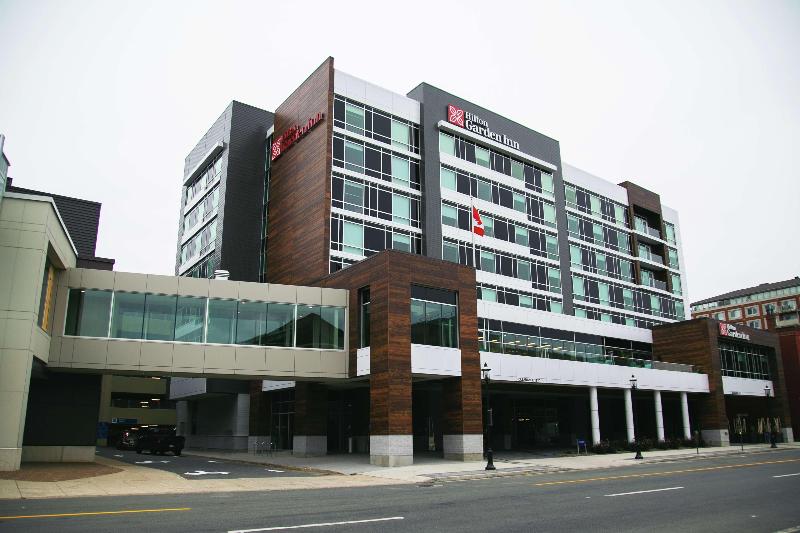
Fredericton
R$1,391 / night

Fredericton
R$1,241 / night

Fredericton
R$814 / night

Fredericton
R$1,226 / night

Fredericton
R$1,260 / night

Fredericton
R$861 / night
Must-sees, local secrets, experiences, and hotels — filter layers and tap the pins.
Everything you need to know to plan your trip
Get notified when hotel prices in Fredericton drop. No spam.
We use your email only to send this price alert. Unsubscribe anytime.
Extend your trip to incredible destinations nearby
Still unsure? See side-by-side comparisons to decide.
We personalize every moment of your journey — from iconic landmarks to hidden cultural gems.
Available 24/7 · Personalized consultations · Local expertise
Updated on July 24, 2026 · Methodology · Authors
Sources
Testimonials
Stories from travelers who have already visited. Share your experience — your comment appears in the cards below.
Visiting Fredericton exceeded all expectations. The energy of the place is contagious!
Aline Moura
Traveler from Fortaleza
We traveled as a family and Fredericton delighted kids and adults alike. Great hotel and attraction picks.
Daniel Figueiredo
Backpacker
I arrived without a fixed itinerary and Fredericton surprised me at every corner. So welcoming.
Graziela Pacheco
Repeat visitor
Stayed near downtown and walked everywhere. Fredericton is even better on foot.
João Victor
Traveler from Recife