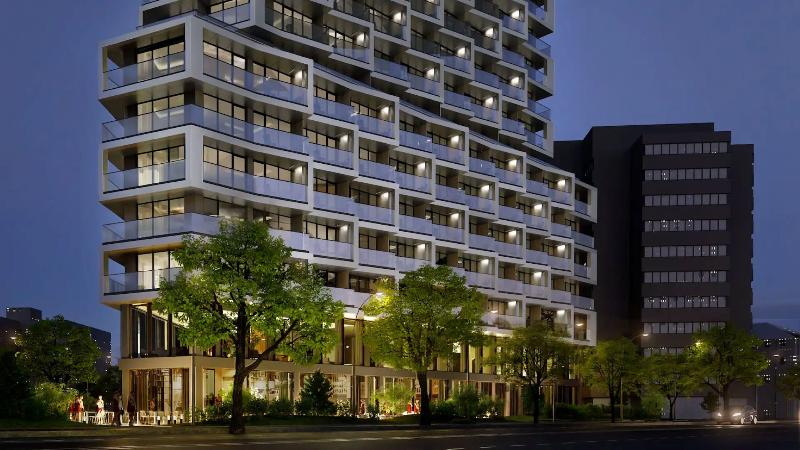
Frankfurt
Kennedy 89 Hotel Frankfurt, part of Hyatt
R$1,489 / night

Destination
Explore Frankfurt (Oder), a charming city in Brandenburg, situated directly on the historic border between Germany and Poland.
Frankfurt · Brasil
Photos
Discover the landscapes and culture of Frankfurt (Oder)


Editorial guide with history, culture, and practical tips to plan your trip.
Frankfurt an der Oder, often simply called Frankfurt (Oder), is a city of profound historical and geographical importance in Germany. Its name literally translates to 'Frankfurt on the Oder,' immediately highlighting its umbilical relationship with the Oder River—an element defining its environment and identity. It is crucial to note that this location must not be confused with the much more famous Frankfurt am Main, another equally prominent German city.
The geographical uniqueness of Frankfurt (Oder) is notable: it is situated directly on the western bank of the Oder River. This position makes it a focal point of intense cultural and historical interaction between the German side of the border and its Polish neighbor.
Located within the state of Brandenburg, Germany, Frankfurt (Oder) holds a strategic position among the easternmost centers of the country. By population size, it is a considerable city, currently home to approximately 58,018 residents. This figure not only reinforces its regional importance but also establishes it as the largest German urban center situated on the Oder River banks. Its ranking within Brandenburg places it as the fourth largest city, following Potsdam and Cottbus. This hierarchy attests to its administrative and population relevance in eastern Germany.
The city is more than just a geographic point; it represents a complex cultural fusion. Its immediate proximity to Poland, evident by the direct bridge connection to the Polish sister city of Słubice, grants it unique characteristics that resonate through its architecture and community life. The border dynamic itself is an integral part of daily Frankfurt life, transforming the visit into a transnational journey.
The history of Frankfurt (Oder) is profoundly marked by its geographical and political shifts, especially concerning its Polish neighbor. The recent past carries traces of these transformations, making it a historical point worthy of special attention to understand its ongoing development.
A fascinating aspect of its trajectory is the period before 1945. During this era, much of Frankfurt (Oder)’s territory and urban identity were intrinsically linked to Poland. The urban core that today falls within its limits was previously known by a different name: Dammvorstadt. This nickname reflects a period when the city was an extension or area associated with neighboring Polish settlements, reinforcing the trans-border historical bond.
Located at a relatively short distance from Berlin, the German capital, Frankfurt is situated approximately 80 kilometers to the east. This distance positions it in the southern part of the historic region known as Lubusz Land (or Lusatia), an area that has always been a point of cultural meeting and dispute between Germanic and Slavic powers. Its existence within a historic *Land* suggests centuries of population, commercial, and cultural exchange.
The Oder River is not merely a waterway; it has been the central axis of urban life since its beginnings. Being on the western bank allowed the city to develop unique characteristics, especially visible in its port and commercial infrastructure. This historical fluvial location shaped its growth and maintained it as an attraction pole for trade in eastern Germany.
The culture of Frankfurt (Oder) is a rich mosaic that celebrates the duality between centuries-old German traditions and strong Slavic influences from the Polish side. This cultural mix is not merely observable; it is part of the daily rhythm of life on the border.
The most evident element of this fusion is the physical and symbolic connection with Słubice, the Polish settlement historically linked to Frankfurt's identity. The bridge connecting the two cities is more than just an engineering marvel; it is a cultural portal allowing residents to experience the cohabitation of two distinct cultures daily, yet interconnected by centuries of shared history. This symbiotic relationship enriches the local scene and fosters artistic and gastronomic exchange.
The surrounding region, Lubusz Land, possesses a rich cultural tapestry that absorbs both eastern and western influences. Local inhabitants maintain a deep sense of belonging to their borderland, which manifests in festivals, gastronomy, and the preservation of customs. This regional identity is much stronger than any administrative political boundary.
Beyond transnational influence, the city's nature itself offers unique cultural settings for leisure. The presence of Lake Helene (Helenesee), an important recreational area located within Frankfurt's urban limits, contributes to a lifestyle where coexisting with water and natural spaces is valued, integrating environmental well-being into daily culture.
Geographically, Frankfurt (Oder) is defined by its precise location in Germany. It is situated in the state of Brandenburg, a region known for its flat, rural landscapes that contrast with the population density of its neighboring capital, Berlin.
The dominant geographic feature across the entire area is the Oder River. The city was strategically structured on the river's west bank. This location not only granted it commercial and military importance over time but also dictates its intimate relationship with the opposite side of the border.
In terms of positioning relative to larger centers, Frankfurt is located approximately 80 kilometers east of Berlin. This distance is short enough to maintain significant economic and social ties, yet far enough to preserve a distinct regional identity from the federal capital.
The city occupies part of the historic and cultural area known as Lubusz Land. This geographical context points to an environment that historically functioned as a confluence of civilizations—between the Kingdom of Poland and Germanic realms—which shapes the physical landscape, architecture, and even the characteristics of its soils. The immediate proximity to Słubice, Poland, solidifies this borderland identity.
The urban area also boasts notable natural leisure spaces, such as Lake Helene. This recreational lake is contained within the city limits, ensuring residents and visitors a green and aquatic refuge in the heart of the dense urban environment.
*(Note: As the provided factual source does not explicitly detail specific climatic information for Frankfurt (Oder), this section focuses on describing the implied environmental conditions and geographical factors that influence the region's climate.)*
Given its location in southern Brandenburg, Germany, and its proximity to large bodies of water like the Oder River and Lake Helene, Frankfurt (Oder) enjoys a typically temperate continental climate, characteristic of central eastern Europe. The riverine influence is crucial for mitigating climatic extremes.
The presence of the Oder acts as a natural thermal regulator; compared to more isolated areas, temperature variation tends to be softened. Summers are generally mild and pleasant, providing ideal conditions for outdoor recreational activities on the riverbanks and in natural spaces like Lake Helene.
Winters tend to be colder, but the region's nature, which also crosses a border with different climatic regimes (the Polish one), suggests seasonal variations. However, it is vital to remember that any detailed climate description requires a complete meteorological study and cannot be based solely on geographical coordinates. The city's climate is a factor that invites seasonal exploration, with various activities possible throughout the year.
Frankfurt (Oder) offers a unique tourist experience, marked by the convergence of transnational history and tranquil nature. Its primary attraction lies in its border location, which encourages cultural exploration beyond national borders.
A visit must inevitably include crossing or observing the connection between Frankfurt (Oder) and Słubice, Poland. This experience is more than simply crossing a bridge; it is immersing oneself in a cultural meeting point where historical past—evidenced by the old name Dammvorstadt—meets modern interconnected life. Tourists are invited to live this binational dynamic, understanding the depth of ties between the two cities.
For those seeking relaxation amidst nature, Lake Helene is a mandatory tourist destination within the urban perimeter. This large recreational area offers outdoor leisure activities and direct contact with the natural beauty of the Oder waters. It is perfect for peaceful walks, picnics, and any activity utilizing the lacustrine environment.
Exploring the city should also include reflecting on its position in southern Lubusz Land. Visitors can admire architecture that has witnessed centuries of change, feeling the cultural pulse of European borders. The journey to Frankfurt (Oder) is an attraction itself, as it is located in a relatively eastern and historical part of the German map, ensuring itineraries that deviate from the most obvious circuits.
Frankfurt (Oder), or Frankfurt an der Oder, carries several unique facts that make it a mandatory stop for the curious traveler. Its history and location are full of fascinating details worth highlighting.
A notable fact is its title as the largest German urban center located on the banks of the mighty Oder River—an recognition that highlights the historical importance of river navigation to the city. Furthermore, it holds the record (among listed criteria) of being one of the easternmost cities in Germany, giving it an air of a gateway to Eastern European cultures.
Its position as the fourth largest city in Brandenburg is statistically significant, placing it above other important localities like Cottbus and Potsdam in terms of population. This scale confirms it as a significant regional pole in the area.
The city's history also reveals a curiosity: the section that today forms the center was previously known by the name Dammvorstadt. This nickname relates directly to its connection with Polish settlements, reinforcing the narrative of cultural and geographical integration. This change in nomenclature is a tangible reminder of the historical transformations of Eastern Europe.
Finally, one cannot ignore the role of Lake Helene. The fact that this extensive and beautiful recreational space is entirely contained within the municipal borders adds an extra layer of urban quality of life, allowing visitors to enjoy wild nature without leaving the civilized environment of the city.
Everything you need to know to plan your trip
Reference figures to help plan your trip
Hotels in the area
305
Attractions
9
305 properties in the area
99 travelers searched Frankfurt this week
9 stays booked in Frankfurt in the last 7 days
Frankfurt
R$1,489 / night
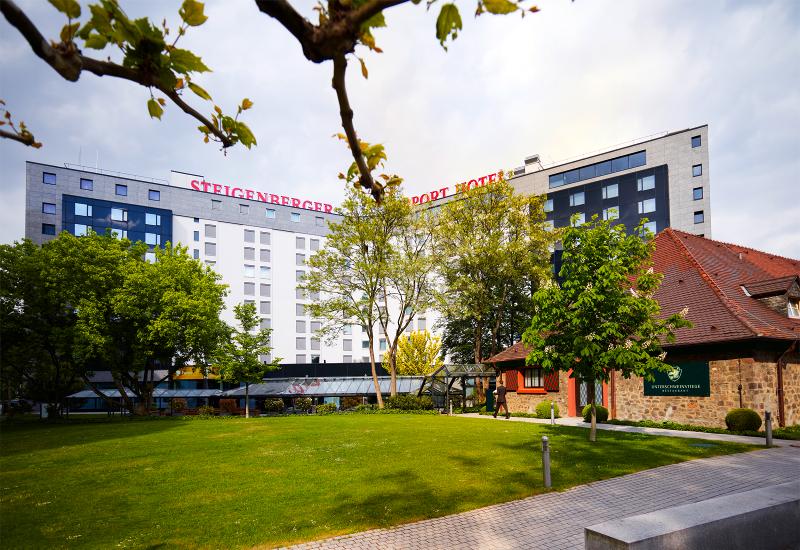
Frankfurt
R$784 / night

Frankfurt
R$755 / night

Frankfurt
R$738 / night

Frankfurt
R$668 / night

Frankfurt
R$696 / night

Frankfurt
R$983 / night
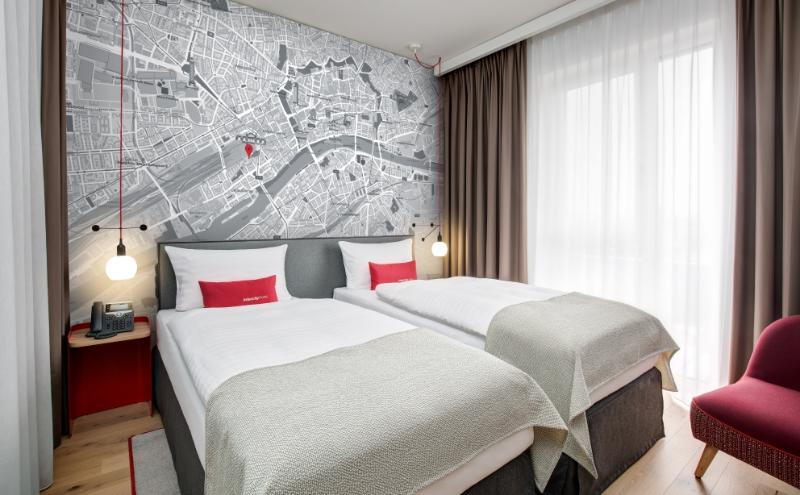
Frankfurt
R$519 / night

Frankfurt
R$886 / night

Frankfurt
R$970 / night

Frankfurt
R$757 / night

Frankfurt
R$524 / night
Must-sees, local secrets, experiences, and hotels — filter layers and tap the pins.
Everything you need to know to plan your trip
Get notified when hotel prices in Frankfurt (Oder) drop. No spam.
We use your email only to send this price alert. Unsubscribe anytime.
Extend your trip to incredible destinations nearby
We personalize every moment of your journey — from iconic landmarks to hidden cultural gems.
Available 24/7 · Personalized consultations · Local expertise
Updated on June 20, 2026 · Methodology · Authors
Sources
Testimonials
Stories from travelers who have already visited. Share your experience — your comment appears in the cards below.
Visiting Frankfurt (Oder) exceeded all expectations. The energy of the place is contagious!
Rafael Santoro
Photographer
We traveled as a family and Frankfurt (Oder) delighted kids and adults alike. Great hotel and attraction picks.
Valéria Nogueira
Family with teens
I arrived without a fixed itinerary and Frankfurt (Oder) surprised me at every corner. So welcoming.
Zélia Carmo
Traveler from Goiânia
Stayed near downtown and walked everywhere. Frankfurt (Oder) is even better on foot.
Bruno Carvalho
Couple from Curitiba


