
All destinations
Destination
Flores Da Cunha
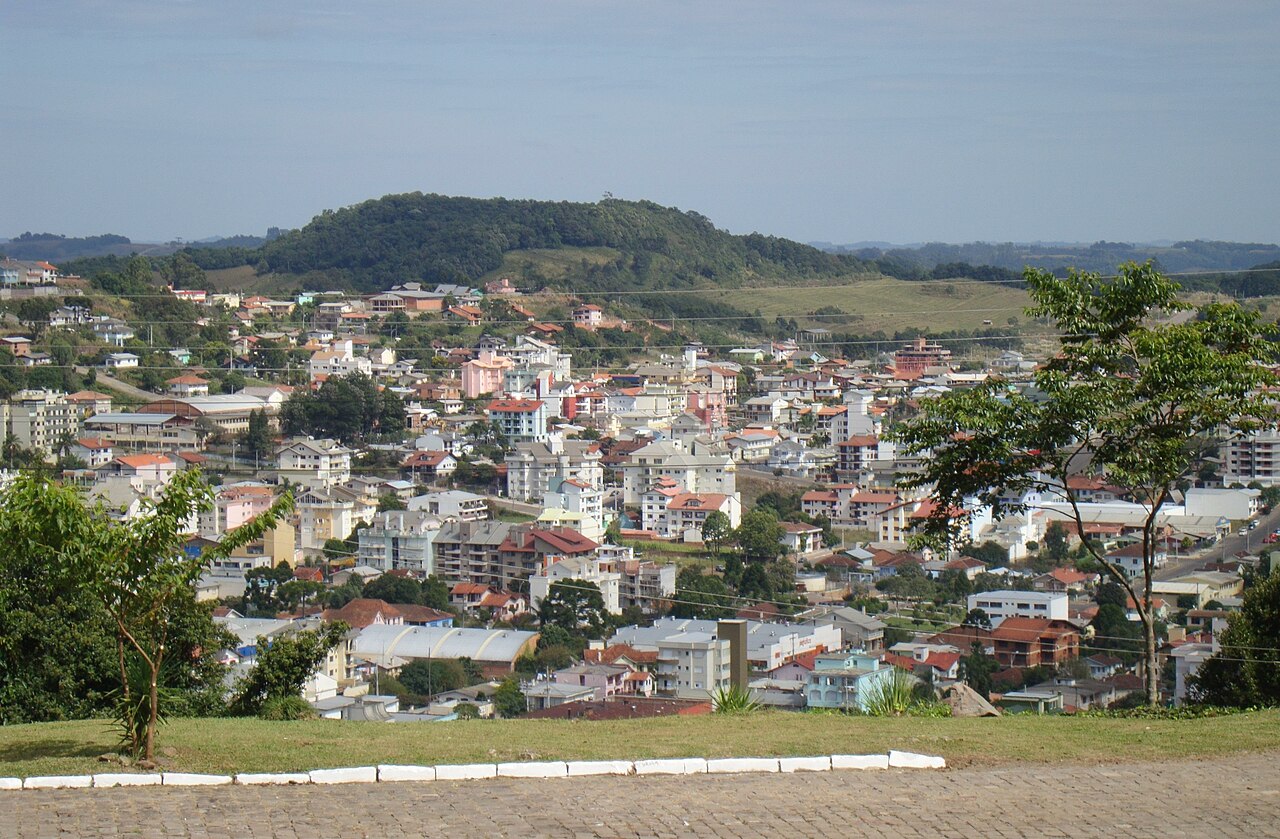
Discover Flores da Cunha, a charming destination in the Gaúcho heartland! Explore the history and charm of this unique municipality. Plan your perfect trip to RS.
Flores Da Cunha · Brasil
Photos
Visual journey
Discover the landscapes and culture of Flores Da Cunha


The spirit of Flores Da Cunha
Editorial guide with history, culture, and practical tips to plan your trip.
About
Flores da Cunha is a vibrant and significant municipality, deeply rooted in the heart of Rio Grande do Sul state, Brazil. It is situated in a region marked by its history of emancipation and community development, serving as a cultural passing point that attracts visitors interested in the rich tapestry of Southern Brazil.
In demographic terms, the municipality has a robust population, estimated at over 27 thousand inhabitants. This number not only attests to the city's continuous growth but also reflects the strength of its community and its central role in the regional economy of Rio Grande do Sul. The population and urban structure result from a complex historical process of local development, shaped by prominent political figures and important infrastructure promises.
Flores da Cunha's identity is intrinsically linked to its political and social history. It is not merely a point on the map; it is the result of a trajectory toward administrative autonomy. Its creation as an autonomous municipality was marked by the emancipation from another neighboring city, Caxias do Sul. This event represented not only an administrative division but also the consolidation of a strong and independent local identity.
The name it carries is more than just a geographical epithet; it is a historical tribute. Flores da Cunha received this name in honor of José Antônio Flores da Cunha, a prominent political figure who served as ex-governor of the state of Rio Grande do Sul. Mentioning his name refers to a crucial period of development and regional planning in Rio Grande do Sul.
History
The historical journey of Flores da Cunha is marked by chapters of administrative transformation and promises of the future that have shaped urban development until today. Its recent history is directly linked to the process of political emancipation, a fundamental milestone that allowed the community to establish its own municipal autonomy.
This separation process occurred relative to the city of Caxias do Sul, characterizing the formation of a new administrative unit with its own identity and specific needs. This change in status was not merely bureaucratic; it represented the social maturity of the locality to manage its own interests and resources.
'Flores da Cunha' name is a living testament to this history, being a posthumous tribute to José Antônio Flores da Cunha. The link between this name and the ex-governor is not limited merely to an honorific title; it is tied to an important infrastructure promise that he had made.
Specifically, Governor José Antônio flores da Cunha had a visible strategic plan: guaranteeing the construction of a railway line. This promised railroad was vital for connecting the municipality in question to the rest of the state of Rio Grande do Sul, thereby promising easy access to larger markets and boosting the entire surrounding region economically. The memory of this railway promise remains a pillar in the city's historical narrative, symbolizing the hope for development that guided its foundations.
Culture
The culture in Flores da Cunha is a rich mix of traditional Gaúcho heritage and the impact of its political formation. The local cultural identity reflects this history of autonomy and ambition for development, characteristics manifested in festivities, crafts, and regional cuisine.
The tribute to José Antônio Flores da Cunha, an ex-governor, adds a layer of political culture to the city. This implies that the sense of community belonging is very strong, valuing historical figures and milestones representing the social and administrative progress of Rio Grande do Sul state.
Although sources do not detail specific cultural manifestations, the mention of the emancipation process and the need to economically connect with the rest of the state suggests a commerce- and interaction-focused culture. The community therefore celebrates its own journey since administratively separating from Caxias do Sul.
The appreciation for historical memory and the recollection of the railway promise are not just passive facts; they nourish a collective cultural sense of perseverance. The inhabitants carry the legacy of a region that fought for its status and better connections, elements that permeate their popular festivities and way of community life.
Geography
Located in the state of Rio Grande do Sul, Brazil, Flores da Cunha occupies a strategic geographic position within Southern Brazil. Its location relative to Caxias do Sul is a key geographical element for understanding its historical development and neighborhood structure.
As a Gaúcho municipality, it is part of a region that historically possesses notable geographical characteristics. While the source material does not detail specific biomes or reliefs, the historical need to build a railway line to connect to the rest of the state suggests terrain with potential for transit and the establishment of important logistical routes.
The municipality currently has an estimated population of over 27 thousand individuals. This population concentration defines the urban area and administrative limits of the city, making it a considerable regional center within the geographic context of Rio Grande do Sul. The very definition as a "municipality" establishes its legal borders within the state's territorial division.
Geographically speaking, Flores da Cunha is an example of urban development in a process of consolidation and self-affirmation, an area that won its administrative independence (emancipation) to exercise its own spatial and demographic planning. This geographic factor underscores its regional importance within the Gaúcho map.
Climate
The climate of Flores da Cunha, due to its location in Rio Grande do Sul, is typically characteristic of the southern regions of Brazil. Although the source material does not provide specific data on average temperatures or detailed climate seasons, we can infer that its environment is subject to regional weather patterns.
The climate of a Gaúcho area tends to be subtropical or temperate with certain variations, being a determining factor for the type of vegetation and agricultural activities that sustain its population. The climate directly influences the daily life of the 27 thousand inhabitants and more.
The existence of large infrastructure projects in the past, such as the promised railway, suggests that the location is favorable both for transport and for establishing diverse economic activities, regardless of seasonal climatic fluctuations. The community's resilience in prospering and growing after its emancipation points to a climate conducive to human and commercial development.
Tourism
The tourist potential of Flores da Cunha is profoundly intertwined with its rich historical narrative and its status as an autonomous municipality. Visitors are attracted not only by local beauty but also by the ability to experience a past built around promises and struggles for autonomy.
A central point of tourism is the memory of the emancipation from Caxias do Sul. Visiting Flores da Cunha means traversing the steps of a story of self-definition, where the municipality conquered its administrative status. This trajectory lends palpable historical value to its streets and buildings.
The legacy of José Antônio Flores da Cunha adds a touch of political-historical tourism to the destination. Tourists can explore not only modern geography but also the echoes of past governmental promises, such as the ambitious railway project that should have connected the area to the rest of Rio Grande do Sul.
The tourist attraction is complemented by the population density of over 27 thousand inhabitants. This ensures a vibrant urban life with active commerce, regional gastronomy, and services, allowing visitors complete immersion in contemporary and historical Gaúcho culture.
Curiosities
One of the most fascinating aspects about Flores da Cunha is the origin of its own name. The designation is not random; it serves as a living memorial to José Antônio Flores da Cunha, the ex-governor who left his mark on the political history and regional planning of Rio Grande do Sul.
The link between the name and future infrastructure is a notable curiosity. The tribute is directly associated with the commitment to build a railway line. This promise not only christened the municipality but also outlined an economic growth vector that lasted for decades, making it a nodal point in the Gaúcho regional network.
It is interesting to note how fundamental the history of emancipation is to its identity. The process of ceasing to be part of Caxias do Sul and becoming an independent unit (a municipality) is a milestone that residents deeply value, reinforcing the sense of local belonging against the backdrop of Rio Grande do Sul's great geography.
In summary, Flores da Cunha is not defined only by its current population or its geographical limits; it carries with it the history of great visions and commitments from leaders like José Antônio Flores da Cunha, keeping alive the narrative of a destination built through political effort and community determination.
Quick facts
Everything you need to know to plan your trip
Destination at a glance
Reference figures to help plan your trip
Attractions
8
Best hotels
We are still connecting hotels for this destination. Search stays in the area in the meantime.
215 travelers searched Flores Da Cunha this week
Stays for these dates are among the most sought-after in Flores Da Cunha
Coming soon
We are still connecting hotels for this destination. Search stays in the area in the meantime.
Search hotelsDestination map
Must-sees, local secrets, experiences, and hotels — filter layers and tap the pins.
Frequently asked questions
Everything you need to know to plan your trip
Price alert for Flores Da Cunha
Get notified when hotel prices in Flores Da Cunha drop. No spam.
We use your email only to send this price alert. Unsubscribe anytime.
Nearby destinations
Extend your trip to incredible destinations nearby


Compare with other destinations
Still unsure? See side-by-side comparisons to decide.
Ready to experience Flores Da Cunha?
We personalize every moment of your journey — from iconic landmarks to hidden cultural gems.
Available 24/7 · Personalized consultations · Local expertise
Updated on July 24, 2026 · Methodology · Authors
Sources
Testimonials
What people say about Flores Da Cunha
Stories from travelers who have already visited. Share your experience — your comment appears in the cards below.
Visiting Flores Da Cunha exceeded all expectations. The energy of the place is contagious!
Graziela Pacheco
Repeat visitor
We traveled as a family and Flores Da Cunha delighted kids and adults alike. Great hotel and attraction picks.
João Victor
Traveler from Recife
I arrived without a fixed itinerary and Flores Da Cunha surprised me at every corner. So welcoming.
Monique Barbosa
Food enthusiast
Stayed near downtown and walked everywhere. Flores Da Cunha is even better on foot.
Priscila Gomes
Friend group