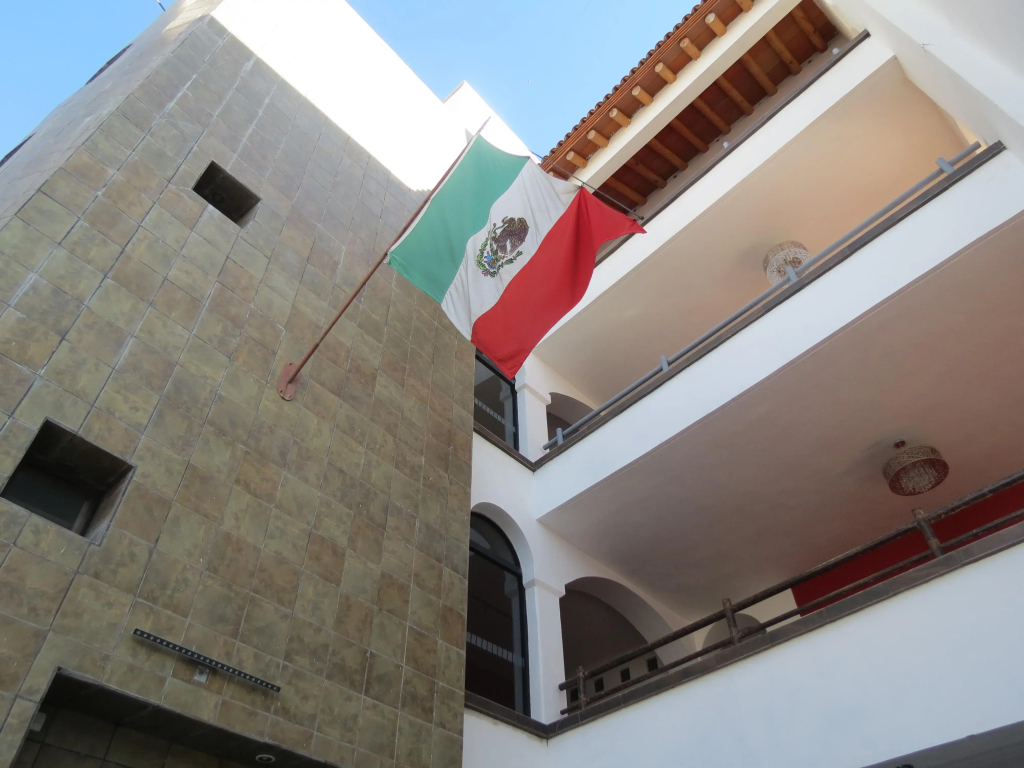
Dolores Hidalgo
Hotel Mamá Dolores
R$1,567 / night

Destination
Discover Dolores Hidalgo, the birthplace of Mexican independence. Explore Guanajuato’s rich history and visit where 'The Cry' began in 1810. Plan your trip!
Dolores Hidalgo · Brasil
Photos
Discover the landscapes and culture of Dolores Hidalgo


Editorial guide with history, culture, and practical tips to plan your trip.
Dolores Hidalgo is more than just a municipality; it is an historical and cultural epicenter, situated in the vibrant heart of Guanajuato state, Mexico. This city not only possesses a privileged geographical location in the north-central region of the state but also carries within its walls the founding memory of Mexican identity itself.
Its significance transcends administrative boundaries, as it is globally recognized as the Birthplace of Mexican Independence. This honorific title is not merely folklore; it represents a concrete historical fact that occurred on its soil and permanently shaped the political and cultural trajectory of an entire nation. For travelers and history enthusiasts, Dolores Hidalgo offers a unique immersion into the revolutionary fervor of the 19th century.
The city established itself as a crucial point for the unfolding events that culminated in the liberation from Spanish colonies. The importance of Dolores Hidalgo is so intrinsically linked to its past that every street, square, and building seems to whisper tales of bravery, resistance, and a passion for sovereign future. It is this palpable legacy that attracts visitors from all parts of the world seeking a deep connection with profound historical roots.
The historical narrative of Dolores Hidalgo is marked by an undeniable and monumental climax: the Grito de Dolores (Cry of Dolores). This event is not just a chapter in Mexican history; for many, it is the zero mark of its independence. September 16, 1810, was a date that irreversibly changed the course of events in the Viceroyalty of New Spain and challenged the authority of the Spanish crown.
It was in this tense context that Miguel Hidalgo y Costilla, an influential cleric and intellectual, took the bold decision to issue an initial call for people to arm themselves and fight for freedom. This call—the famous Grito—reverberated far beyond the city walls, igniting a revolutionary flame that was never extinguished. The strength of this cry lay not only in the words spoken but in the collective feeling of a people thirsty for autonomy and dignity.
A crucial and deeply significant detail about this period is the physical location where history unfolded: the parish tribunal. It was within this enclosure that the events were witnessed, transforming a religious space into a political stage of continental magnitude. The presence of this specific place attests to how Dolores Hidalgo was the physical epicenter of the emancipation movement. The official recognition of this fact, both by local decrees and the Mexican federal government, solidifies its unequaled status.
The history of Dolores Hidalgo is thus a living testimony of popular resistance against oppressive regimes and a powerful reminder of the cost and glory of freedom. Walking through the streets of the city is literally walking through the footsteps of pioneers who dared to dream of a free nation.
The culture of Dolores Hidalgo is inseparable from its revolutionary past. The historical sentiment is not confined to museums; it permeates the traditions, craftsmanship, and daily life of the people who inhabit this municipality in Guanajuato. The memory of the Grito de Dolores fuels a unique cultural vitality, mixing patriotic fervor with the vibrant colors of Mexican life.
Local celebrations frequently incorporate elements that pay tribute to the struggle for independence. National symbols and historical figures are celebrated with an almost ritualistic enthusiasm, ensuring that the ideals of sacrifice and freedom remain alive in new generations. Culture is, essentially, a continuous narrative of civil heroism.
Cultural syncretism is evident in the fusion of religious faith—represented by the parish where the event took place—with civic and political fervor. This marriage between the sacred and the revolutionary creates a unique atmosphere for visitors, allowing them to feel the depth of a secular tradition while witnessing the passion for a modern ideal. Literature, music, and even local flavors reflect this complex cultural tapestry, telling stories of courage and sacrifice.
Exploring Dolores Hidalgo is participating in a cultural dive where the past is not merely remembered but actively celebrated, keeping alive the flame of patriotism that began on September 16, 1810.
Located in the state of Guanajuato, Dolores Hidalgo occupies a strategic geographical position in the north-central region of Mexico. With an estimated territorial area of 1,590 km², the municipality is an integral part of one of the country's most culturally and historically rich states.
The geographic location not only defines the physical boundaries of the city but also contributed to its strategic importance during periods of conflict. Being in the central region of Guanajuato state places Dolores on a vital communication artery, connecting it to important population centers and historical trade routes.
The surrounding geographical environment is characteristic of the semi-arid plains and cultural landscape offered by central Mexico. The topography contributes to a setting where colonial architectural elements harmonize with the vastness of Mexican territory, creating an aesthetic of historical permanence and resistance to time.
This rich geography is supported by notable human characteristics. The municipality has a considerable population (with estimates above 152 thousand inhabitants), which keeps alive traditions linked to its historical vocation, transforming geology into a stage for the theater of memory and national founding myth.
While the provided facts do not explicitly detail the climate, it is possible to trace a typical climate profile for the Guanajuato region, which falls within the context of the high plains of central Mexico. Generally, the area presents a semi-arid or temperate highland climate, with marked seasonal variations.
The seasons tend to feature hot and dry summers, where the sun dominates the daytime hours, making it ideal for exploring historical sites. However, it is crucial to note that the high altitude moderates these extreme temperatures compared to other regions of Mexico.
Winter, on the other hand, can be milder and more humid, bringing a cooler climate, especially in the mornings and evenings. This seasonal variation gives the municipality a rich climatic experience, requiring visitors to prepare with layered clothing to enjoy the best of both seasons.
The climate, therefore, is a co-star in the tourist narrative, ensuring that the visit can be enjoyable throughout almost the entire year. This climatic resilience allows the weight of Dolores Hidalgo's history and culture to be appreciated without extreme seasonal interruptions.
Tourism in Dolores Hidalgo is fundamentally 'experiential historical tourism.' Visitors do not come merely to admire old buildings; they come to relive a decisive moment in Mexican history. The main attraction and the neuralgic point of the tourism are, undoubtedly, the sites connected to the Grito de Dolores.
The tourist circuit focuses on preserving and exhibiting the memory of Independence. The place where the famous cry occurred, specifically the parish, is a living sanctuary of history. This site is not just a church; it is the stage where the nation began its journey toward sovereignty. Visiting this point allows tourists to touch (metaphorically) history in its purest and most dramatic state.
Beyond the historic core, tourism expands to contemplate the colonial architecture of Guanajuato, which surrounds Dolores Hidalgo. Wandering through the streets is an open-air classroom on life in Mexico during the colonial and revolutionary periods. It is possible to find art galleries, local craft shops, and restaurants that celebrate regional gastronomy.
The tourist focus is not merely contemplative; it is educational and participatory. Local guides and monuments themselves help weave an immersive narrative, allowing the visitor to feel part of the historical drama lived over two centuries ago. It is a destination that demands reflection and admiration for the strength of the national spirit.
The title that distinguishes Dolores Hidalgo in the Mexican landscape is unparalleled: Birthplace of Mexican Independence. This recognition, conferred by decree at both local and federal levels, is not merely a geographical fact; it is a declaration of worldwide historical importance.
It is fascinating to consider the power that a single event—the Grito de Dolores on September 16, 1810—had to radically transform Latin America's geopolitics. This initial call, issued by Miguel Hidalgo y Costilla in the parish tribunal, symbolizes how an idea can have a more enduring and powerful impact than any army or military apparatus.
Another peculiar feature is that the memory of this event is so deeply rooted in local identity that it even shapes the rhythm of community life. Celebrating this historical milestone is not just a festival; it is a cultural duty, a way to keep the flame of founding patriotism alive.
For those interested in History and epic travel, Dolores Hidalgo offers a level of authenticity difficult to find in other colonial destinations. It is where history books come alive with echoes of revolutionary cries, making every visit a true journey back in time to the dawn of the Mexican nation.
Everything you need to know to plan your trip
Reference figures to help plan your trip
Hotels in the area
3
Attractions
9
3 properties · high demand in Dolores Hidalgo this season
217 travelers searched Dolores Hidalgo this week
Stays for these dates are among the most sought-after in Dolores Hidalgo
Must-sees, local secrets, experiences, and hotels — filter layers and tap the pins.
Everything you need to know to plan your trip
Get notified when hotel prices in Dolores Hidalgo drop. No spam.
We use your email only to send this price alert. Unsubscribe anytime.
Extend your trip to incredible destinations nearby
Still unsure? See side-by-side comparisons to decide.
We personalize every moment of your journey — from iconic landmarks to hidden cultural gems.
Available 24/7 · Personalized consultations · Local expertise
Updated on July 24, 2026 · Methodology · Authors
Sources
Testimonials
Stories from travelers who have already visited. Share your experience — your comment appears in the cards below.
Visiting Dolores Hidalgo exceeded all expectations. The energy of the place is contagious!
Cíntia Rodrigues
Family with kids
We traveled as a family and Dolores Hidalgo delighted kids and adults alike. Great hotel and attraction picks.
Fabiano Lopes
Food lover
I arrived without a fixed itinerary and Dolores Hidalgo surprised me at every corner. So welcoming.
Ingrid Viana
Honeymoon
Stayed near downtown and walked everywhere. Dolores Hidalgo is even better on foot.
Leandro Meirelles
Traveler from Porto Alegre