
Croydon
Hilton London Croydon
R$1,185 / night

Destination
Discover Croydon, a vibrant and historic borough in South London, England. Find attractions, must-see routes, and tips for your perfect trip.
Croydon · Brasil
Photos
Discover the landscapes and culture of Croydon


Editorial guide with history, culture, and practical tips to plan your trip.
Croydon is a vibrant and historically rich destination, situated within the vast and complex London Region in England. More than just a point on the map, it represents a residential and commercial area deeply integrated into the dynamic British metropolitan life. It is crucial to understand that Croydon is not the main center of London, but rather a *borough*—an autonomous administrative division—which grants it unique characteristics regarding community and urban development.
Strategically located in South London, the borough offers a fascinating combination of older neighborhoods and areas undergoing intense modernization. This geographic position, facing the heart of inner London, allows Croydon to serve as a nodal point for connections, influencing both the population flow and commerce of the larger metropolis. Its own administration and identity ensure that it maintains distinct features, despite being part of such a colossal region as London.
In terms of dimensions, Croydon covers a significant area of 86.52 km². This size is not trivial; it establishes it as one of the most important *boroughs* in England. Its inhabited and developed area reflects the location's demographic importance. With an estimated population exceeding 379,000 inhabitants, Croydon has a high population density, characteristic of constantly growing metropolitan areas.
Being a borough of the London Region guarantees access to international-level transport infrastructure and services, while simultaneously preserving a distinct local identity. It is a testament to English urban development, maintaining its own autonomy within one of the most populous and economically powerful regions in the world.
While detailed historical accounts require external sources, Croydon’s nature as a borough in the London Region tells a long and multifaceted chapter of English history in itself. Its evolution reflects the continuous growth of South London over the centuries.
Historically, the area has undergone significant transformations that shaped its architecture and cultural character. The concept of *borough* in Croydon suggests a history of self-governance or established local administration, allowing it to maintain traces of a distinct identity even while nested within the complex urban fabric of the London Region.
The population growth and urban expansion that led it to cover 86.52 km² did not happen overnight. This gradual process mirrors British metropolitan development, where rural or smaller areas are absorbed by the growing need for housing and services around major urban centers like London.
The current population, with figures exceeding 379,000 inhabitants, is a direct reflection of this history of growth. Croydon has managed to maintain intense residential vitality, adapting to the economic and social changes of modern England. It is this historical capacity for resilience and adaptation that defines its role in the London Region.
Its location in the south of the region was historically strategic, facilitating commercial and population connections with other parts of the United Kingdom, establishing it as a development hub from ancient times. This rich past is palpable in its architecture, which mixes styles and eras.
Culturally, Croydon is a vibrant mosaic, typical of large English metropolitan cities. As a borough of the London Region, it absorbs the cultural diversity of South London, creating a unique cosmopolitan atmosphere. This fusion makes daily life in Croydon exceptionally rich.
The local culture is marked by a blend of Anglo-Saxon traditions with global influences brought by its over 379,000 inhabitants. Cultural life overflows from its streets, commercial spaces, and parks, reflecting the diversity accompanying a borough of this size.
The fact that it occupies a considerable area of 86.52 km² means that culture is not concentrated in few points but rather spread across various neighborhoods. There are vibrant cultural centers, traditional markets, and residential areas where different ethnic groups have created strong communities, keeping their own traditions alive.
The art of living in South London, in Croydon, is deeply rooted in the history of commerce and habitation. Whether through local festivities celebrating borough identity, or the art galleries found in its oldest centers, the cultural pulse is constant. Croydonian culture values both its English roots and its capacity for global inclusion.
This cultural plurality adds layers of depth to tourism and local experience, making a visit to Croydon an immersion into a microcosm of modern, multicultural England. It is where history and diversity coexist in perfect urban harmony.
Geographically speaking, Croydon occupies a singular position in South London. Its territorial boundary is clear, covering 86.52 km²—a considerable area that gives it regional importance within the metropolitan landscape.
Its location in the southern quadrant of the London Region positions it on a vital axis of development for England. This strategic position is crucial as it facilitates both population flow and the transport of goods, connecting it to the most important centers of the United Kingdom.
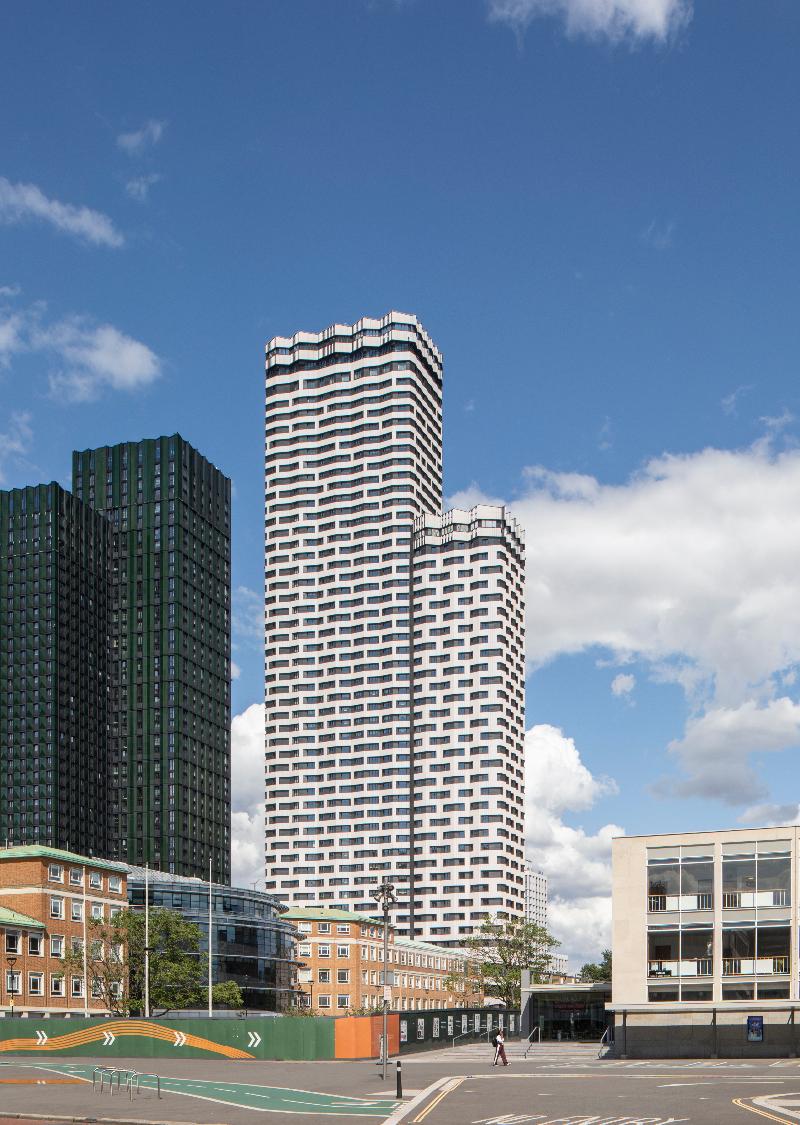
Croydon's topography and urban geography are its most notable features: there is a complex mixture of densely built urban landscapes (characteristic of a borough with an estimated high population of 379,000 people) interspersed with areas that attempt to preserve a sense of greenery and open space, despite the total size being defined by its 86.52 km².
The area of 86.52 km² allows for an impressive internal geographic diversity; in some points it is characterized by dense architecture and intense commerce, while others may display more residential traits. This variety ensures that the geographical experience is dynamic and multifaceted for the visitor.
Being an established borough in the south does not only define its physical boundaries but also its economic and social role in the regional hierarchy of the United Kingdom. It is a fundamental piece in this vast geographic puzzle.
While climate is not explicitly provided in primary facts, we must situate Croydon within the climatic context of England and the London Region. As being situated in England, the climate is typically temperate maritime, influenced by its proximity to the English Channel.
In practical terms for a tourist visiting a South London borough like Croydon, this translates into typical UK seasonal variations: mild, but often rainy winters; soft and invigorating springs; pleasant, though sometimes unstable, summers; and autumns with vibrant colors.
Despite the climatic fluctuations characteristic of the region, Croydon's urban environment offers protection and comfort, with infrastructure built to withstand the variations of English temperate climate. Daily life and tourism are planned around this seasonal resilience.
It is important to note that the internal microclimate can vary drastically due to the population density of 379,000 people. The greener areas, which are still part of its geographic boundaries (86.52 km²), tend to mitigate some urban effects, offering natural refuges within the borough.
Tourism in Croydon must be understood not merely as visiting iconic monuments (like those found in central London), but rather as an immersion into local life and cultural complexity within a large borough. Its attraction lies precisely in this balance between metropolitan character and neighborhood identity.
For tourists, Croydon offers diverse experiences. Walking through its streets allows exploration ranging from modern commercial centers to traditional markets carrying centuries of trade history. Its population of 379,000 ensures a constant flow of local cultural activities and gastronomy.
Due to its vast expanse of 86.52 km², tourism can be segmented: visitors can explore the South London business hub or venture into quieter, more residential neighborhoods. This geographic variety is a tourist asset.
Croydon's main tourist attraction is the sense of authenticity and scale. It is a destination that allows visitors to experience the fast pace of metropolitan life, but without losing the charm and nuances of an established local community in South London. Local museums (if any), markets, and parks are focal points for those seeking to understand the English social dynamic.
Tourism here is synonymous with discovery: discovering one of England's most important boroughs, with all its history and vibrant multicultural present.
One of the most striking curiosities about Croydon is its status within the English hierarchy. It is not only a *borough*, but also stands out as the 256th largest borough in England by territorial area, covering an impressive 86.52 km².
This ranking reflects not just size, but administrative and demographic importance. Maintaining this large relative size, despite urban pressures, is a testament to its capacity for local management and urban planning within the London Region.
Another curiosity lies in its demographic profile. With a population approaching 379,000 inhabitants, Croydon manages to balance the anonymity of big cities with the intimacy of a vibrant neighborhood. This population density makes it a hub of constant energy.
The combination of these characteristics—being one of the largest boroughs by area and having an expressive population—suggests that Croydon is more than just a location; it is a complete urban ecosystem, where history merges with modern dynamism. It is a lesson in urban geography within England.
For the traveler, understanding the significance of this status (the 256th largest borough) helps contextualize the size and scope of the destination, ensuring they grasp the scale of its surroundings in South London.
Everything you need to know to plan your trip
Best time to visit
Spring and Autumn
Currency
GBP
Language
English
Recommended stay
3 days
Timezone
GMT/BST
Reference figures to help plan your trip
Hotels in the area
24
Attractions
9
24 properties · high demand in Croydon this season
118 travelers searched Croydon this week
Stays for these dates are among the most sought-after in Croydon
Croydon
R$1,185 / night

Croydon
R$1,900 / night

Croydon
R$1,310 / night

Croydon
R$1,033 / night

Croydon
R$1,192 / night

Croydon
R$1,061 / night

Croydon
R$1,238 / night

Croydon
R$1,417 / night

Croydon
R$1,091 / night
Croydon
R$1,453 / night

Croydon
R$1,806 / night

Croydon
R$1,421 / night
Must-sees, local secrets, experiences, and hotels — filter layers and tap the pins.
Everything you need to know to plan your trip
Get notified when hotel prices in Croydon drop. No spam.
We use your email only to send this price alert. Unsubscribe anytime.
Extend your trip to incredible destinations nearby
Still unsure? See side-by-side comparisons to decide.
We personalize every moment of your journey — from iconic landmarks to hidden cultural gems.
Available 24/7 · Personalized consultations · Local expertise
Updated on July 24, 2026 · Methodology · Authors
Sources
Testimonials
Stories from travelers who have already visited. Share your experience — your comment appears in the cards below.
Visiting Croydon exceeded all expectations. The energy of the place is contagious!
Bruno Carvalho
Couple from Curitiba
We traveled as a family and Croydon delighted kids and adults alike. Great hotel and attraction picks.
Elaine Coutinho
Solo traveler
I arrived without a fixed itinerary and Croydon surprised me at every corner. So welcoming.
Hugo Santana
Local from Belo Horizonte
Stayed near downtown and walked everywhere. Croydon is even better on foot.
Karen Abreu
Trip planner


