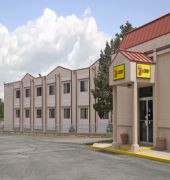
City in Colorado, US
All destinations

Destination

Colorado Springs, CO

Discover Colorado Springs, a vibrant city in Colorado's heart. Explore Pikes Peak, unique attractions, and rich regional culture.

Colorado Springs, CO · Brasil

Photos

Visual journey

Discover the landscapes and culture of Colorado Springs, CO

City in Colorado, US
Colorado Springs, CO
Colorado coal lease application C - 27931 - environmental assessment - draft (IA coloradocoalleas9161unit).pdf
Colorado recreation - backyard to backcountry (IA coloradorecreati00unse).pdf
Dallas Creek Project, Colorado - final environmental statement (IA dallascreekproje00unit).pdf
Fish and wildlife plan for Colorado - biennial report of accomplishments, FY 1991 and 1992 (IA fishwildlifeplan84unit).pdf

The spirit of Colorado Springs, CO

Editorial guide with history, culture, and practical tips to plan your trip.

About

Colorado Springs is more than just a city; it is an urban and administrative hub of significant importance in the heart of Colorado state, USA. Characterized as a 'home rule city'—meaning it possesses great governmental autonomy relative to state structures—the locality not only serves as one of the most populous centers and the county seat of El Paso County, but also establishes itself as a crucial point in the western American urban landscape. Looking at demographic data, it is clear how significant this destination is: the 2020 census recorded a robust population of 478,961 residents.

The city's ascent and growth are notable, reflecting remarkable population dynamism in the region. Compared to 2010 data, Colorado Springs experienced an impressive increase of 15.02% in its population. This growth rate not only attests to the area's ability to attract new residents and investments but also solidifies its role as an economic engine for the surrounding region.

In terms of scale and relevance within Colorado state, the city holds a dual position. It is recognized not only as the second most populous center in the state—a metric that highlights its importance relative to the capital—but also for boasting the title of being the largest locality by territorial area within Colorado. This combination of high population density and vast geographical extent gives it a unique profile for urban development.

Beyond its municipal status, it is the primary center of the Colorado Springs Metropolitan Area, a region that boasts an impressive 755,105 residents in 2020. This metropolitan core positions it as the second most prominent municipality within the Front Range Urban Corridor, confirming its central role in North American connectivity and regional development.

History

Although provided sources do not detail a chronological founding timeline, it is undeniable that the modern history of Colorado Springs is intrinsically linked to its accelerated population growth and administrative function. Its status as the county seat of El Paso County suggests from its early days that the area was strategically designated as a governance hub, attracting settlers and investors seeking institutional stability.

The demographic development of the city tells a story of resilience and constant attraction. The population jump recorded between 2010 and 2020 is particularly revealing. An impressive increase of 15.02% in just one decade points to periods of intense economic development and improvement in living infrastructure. This kind of rapid growth is not accidental; it reflects the city's success in maintaining an attractive balance between commercial opportunities and quality of life.

The geographical location, situated in the east-central part of Colorado and resting along Fountain Creek, suggests that water presence has always been a catalyzing factor for human settlement and growth. Historically, water is vital for any permanent settlement, allowing the first population centers to establish themselves and flourish along its course.

In summary, the historical trajectory of Colorado Springs is told through numbers: by the evolution of its population, by the constant increase in its inhabitants, and by the consolidation of its role as a dominant metropolitan center in the Front Range Corridor. It is a story of planned and organic growth happening parallelly.

Culture

Colorado Springs' vibrant culture is shaped by its strategic geographical location, which places it at a nodal point between major urban development corridors. Its cultural identity is strongly tied to the concept of 'home rule' (municipal autonomy), an element that allows the local community to have a voice and decisive role in the pace and style of its own development.

As both the most populous city and the primary metropolitan center, it naturally concentrates a rich cultural fusion. It receives influences from various parts of the United States while maintaining a strong sense of regional identity tied to Colorado. This diversity is sustained by its role as a regional hub in the Front Range Urban Corridor.

While artistic and folklore details are not explicitly cited in the sources, the metropolitan structure itself suggests a culture oriented toward movement, commerce, and large-scale interaction. It is an area where the pace of life is accelerated, yet it still manages to maintain the natural appeal provided by its proximity to Fountain Creek.

The cultural experience in Colorado Springs is therefore a mix of metropolitan dynamism with American Southwest natural characteristics. It is an environment where a population of over 478,000 lives and interacts daily, building a vibrant culture that expands into the 755,000 residents of its metropolitan area.

Geography

Located in the east-central portion of Colorado state, Colorado Springs occupies a privileged geographical niche. Its position is not accidental; it is situated at a strategic point that connects it directly to the large urban grid extending throughout the region.

The central natural element of its geography is Fountain Creek, along which the city was built and along whose course its development unfolded. The presence of this waterway not only defines the local landscape but has also historically supported population growth.

From a regional reference point, Colorado Springs is located approximately 70 miles (about 113 kilometers) south of Denver. This relative distance establishes the city as a secondary, yet equally powerful, hub in the development axis that characterizes the Front Range Urban Corridor. It thus becomes a second major reference point in Colorado's urban dynamics.

In terms of territorial and demographic scale within the state: it is notable geographically that the city has the largest total area in Colorado; and demographically, it holds the title of being the second most populous city. This contrast between large surface land and high housing capacity is part of its unique geographical profile.

Climate

Colorado Springs' climate is typically influenced by its east-central location in the Southwest US, with the pronounced influence of Fountain Creek shaping the local microclimate. Although seasonal details are not provided by sources, its settlement along a waterway suggests climate mitigation and stabilization compared to drier areas.

Being an urban center that serves as the main core of a vast metropolitan area implies that the climate must support complex life cycles, varying between the need for outdoor activities in warmer months and the comfort of cooler seasons. This climatic adaptability is essential for sustaining such a large population.

The influence of the Front Range Urban Corridor suggests an environment where weather conditions are part of the daily experience, with topography influenced by the presence of large urban and natural areas surrounding it. Fountain Creek plays a vital role in this context, not only as a water resource but also as a local thermal regulator.

Tourism

The tourist appeal of Colorado Springs is intrinsically linked to its status as a major regional center and its strategic geographical position. The city attracts visitors because it is the main urban hub of El Paso County, making it a mandatory stop on scenic routes throughout the American Southwest.

The tourism engine is sustained not only by its size (with over 478,000 residents in the city and a metro population exceeding 755,000), but by its function as the second major reference point in the Front Range Urban Corridor. This means it constantly interacts with various regional attractions, making the visiting experience rich and multifaceted.

For the visitor, it is a unique combination: the chance to experience the modern infrastructure of a robust metropolitan hub—which ranks among the top 40 most populous cities in the US, according to rankings—alongside the natural environment provided by Fountain Creek. The demographic magnitude suggests diverse tourism offerings, catering from casual tourists to business travelers.

Curiosities

What makes Colorado Springs particularly interesting is how it balances its status as an autonomous city (home rule) with its enormous regional influence. It is not merely a local municipality; it is the vibrant administrative center of El Paso County.

It is important to note the demographic metrics solidifying its importance: in 2020, the city's population was composed of 478,961 residents. This number reflects not only the present but also exponential and sustained growth, with an impressive increase of 15.02% since records from a decade earlier.

The magnitude of its metropolitan area is another notable fact: it housed 755,105 residents in 2020. This population volume positions it as a central player in the Colorado economy, surpassing mere status as a big city to become an undeniable regional hub.

Furthermore, it is interesting to observe its ranking magnitude: Colorado Springs not only competes for the titles of second most populous and largest by area in Colorado; it also ranks among the top 40 most populous cities in the United States. These numbers are statistical testaments to its continuous development and relevance on the national stage.

Quick facts

Everything you need to know to plan your trip

Destination at a glance

Reference figures to help plan your trip

Attractions

9

Best hotels

We are still connecting hotels for this destination. Search stays in the area in the meantime.

Coming soon

We are still connecting hotels for this destination. Search stays in the area in the meantime.

Search hotels

Destination map

Hotels, attractions, and experiences in the area

Frequently asked questions

Everything you need to know to plan your trip

Price alert for Colorado Springs, CO

Get notified when hotel prices in Colorado Springs, CO drop. No spam.

We use your email only to send this price alert. Unsubscribe anytime.

Ready to experience Colorado Springs, CO?

We personalize every moment of your journey — from iconic landmarks to hidden cultural gems.

Available 24/7 · Personalized consultations · Local expertise

Updated on June 18, 2026

Sources

Testimonials

What people say about Colorado Springs, CO

Stories from travelers who have already visited. Share your experience — your comment appears in the cards below.

Share your testimonial

Visiting Colorado Springs, CO exceeded all expectations. The energy of the place is contagious!

Maria Silva

Maria Silva

Traveler from São Paulo

We traveled as a family and Colorado Springs, CO delighted kids and adults alike. Great hotel and attraction picks.

Carla Ribeiro

Carla Ribeiro

Family with kids

I arrived without a fixed itinerary and Colorado Springs, CO surprised me at every corner. So welcoming.

Beatriz Nunes

Beatriz Nunes

Solo traveler

Stayed near downtown and walked everywhere. Colorado Springs, CO is even better on foot.

Thiago Martins

Thiago Martins

Traveler from Minas Gerais

Visiting Colorado Springs, CO exceeded all expectations. The energy of the place is contagious!

Maria Silva

Maria Silva

Traveler from São Paulo

We traveled as a family and Colorado Springs, CO delighted kids and adults alike. Great hotel and attraction picks.

Carla Ribeiro

Carla Ribeiro

Family with kids

I arrived without a fixed itinerary and Colorado Springs, CO surprised me at every corner. So welcoming.

Beatriz Nunes

Beatriz Nunes

Solo traveler

Stayed near downtown and walked everywhere. Colorado Springs, CO is even better on foot.

Thiago Martins

Thiago Martins

Traveler from Minas Gerais