
Chihuahua
Courtyard by Marriott Chihuahua
R$1,493 / night
Destination
Explore Chihuahua, one of Mexico's largest states. Discover its rich culture, vibrant history, and must-see attractions.
Chihuahua · Brasil
Photos
Discover the landscapes and culture of Chihuahua


Editorial guide with history, culture, and practical tips to plan your trip.
Chihuahua is much more than just a state in Mexico; it represents a vast geographical and cultural expanse, recognized as the largest by territorial extent among the thirty-one Mexican states. This magnitude is not confined merely to its internal borders but also defines its strategic role in the North American border region.
The scale of Chihuahua is impressive: an area covering 244,938 km², granting it one of the country's largest biomes and landscapes. With this vast extent, the resident population sums up to 3,406,465 inhabitants, distributed among cities that reflect its economic and historical development.
It is important to note that, although the state has an official capital—the city of Chihuahua—it also possesses an equally monumental urban center in Ciudad Juárez. The latter is mentioned as its largest city, housing a significant population of approximately 800,000 inhabitants. This duality between the historical capital and the border metropolis defines much of the Chihuahuan social and economic dynamics.
The state's geographical location positions it at a point of cultural and natural convergence, bordering not only other neighboring Mexican states—such as Coahuila de Zaragoza, Durango, Sinaloa, and Sonora—but also the US states of Texas and New Mexico. This combination of influences is fundamental to understanding Chihuahua's unique identity.
The history of a state as colossal as Chihuahua is intrinsically linked to its position on the border between cultures and civilizations. The vast territory, covering 244,938 km², suggests a rich and complex historical trajectory, shaped by the passing of indigenous peoples and the constant influence of neighboring regions.
Although specific chronological details are too broad to summarize in one overview, it is evident that the state was forged at the intersection of different cultures. It serves as a physical testament to this mixture, being a natural and economic meeting point with the United States, through its borders established with Texas and New Mexico.
The state's administrative management, recognized for having Chihuahua city as its official capital, demonstrates a consolidated governmental structure that has managed to organize populations of over 3,406,465 inhabitants within such a dispersed territory. This organization is crucial for maintaining services and development in such a large setting.
Historically, the presence of Chihuahua city, and primarily the growing importance of Ciudad Juárez as the largest urban center, indicates periods of intense economic development and population transition. The growth of these cities was not accidental, but rather a reflection of their economic vitality in a highly commercial border setting.
Chihuahua's culture is a vibrant mosaic that directly reflects its geography and its multiple neighboring connections. By bordering Mexican states such as Sonora, Sinaloa, Coahuila de Zaragoza, and Durango, and also the US states—Texas and New Mexico—the state has absorbed and blended traditions that vary enormously across its 244,938 km².
Culturally, the population, totaling about 3,406,465 people, demonstrates a remarkable ability to preserve its Mexican roots while adopting elements from other cultures influenced by commerce and cross-border migration. This fusion is visible in the architecture of historical cities, such as Chihuahua itself, and in the urban pace of life concentrated in Ciudad Juárez.
Despite the vast area it covers—a gigantic space that can be divided into very diverse ecosystems—the cultural identity is maintained by a sense of belonging to the state. Chihuahua city, as the administrative and cultural center, plays the role of guardian of these traditions, while the large border cities drive a more globalized culture.
The coexistence between Mexican and North American cultures is not just a geographical fact; it translates into social habits, cuisine, and even local festivities. It is this constant cultural exchange that makes Chihuahua a rich and multifaceted destination for those seeking to understand border dynamics.
The most striking aspect of Chihuahua is, unquestionably, its colossal geography. With an impressive area of 244,938 km², it not only holds the title of Mexico's largest state but also boasts a physical domain that varies between arid plateaus, semi-arid deserts, and areas of denser forest in certain regions.
Its geographical positioning is strategic for Mexico. It borders multiple land frontiers: internally, it shares boundaries with neighboring states Coahuila de Zaragoza, Durango, Sinaloa, and Sonora. These internal connections are part of a complex geopolitical system.
Most notably, its borders extend north, touching directly the geography of the United States. Specifically, it borders the American states of Texas and New Mexico. This extensive border line is the engine of the region's commercial and population development.
The urban areas housing an estimated 3,406,465 inhabitants are concentrated in significant nuclei. The administrative city, Chihuahua, serves as a central hub. Meanwhile, Ciudad Juárez stands out as the state's largest urban center and a demographic powerhouse in its own right, with approximately 800,000 residents. This population distribution reveals growth patterns linked to trans-border economies.
Due to its continental dimensions and location at latitudes that bring it close to the North American desert climate, the climate in Chihuahua tends to be highly varied. This variation is a direct reflection of its gigantic area, 244,938 km², which allows different climatic zones to coexist.
Generally, the most interior and northern regions tend to have a semi-arid or arid climate, characterized by high temperature amplitudes—meaning very hot days and cold nights. This characteristic is typical of elevated plateaus in continental latitudes.
However, the state is not uniformly dry. Near borders with neighboring Mexican states (such as Sinaloa and Sonora) or further south, areas receiving higher rainfall can be found, mitigating the purely desert character in some spots. Altitude variations also drastically influence climatic conditions, making the climate experience radically different between Chihuahua city and a more elevated area near the border.
Seasonality is pronounced: summers are generally hot, and winters can be cold. This climatic fluctuation is part of the region's natural cycle, requiring that trip planning considers the characteristic thermal amplitude of this large North American area within Mexican territory.
Tourism in Chihuahua is a direct reflection of its dual nature: it offers both concentrated historical cultural experiences and the commercial dynamism and cosmopolitan life of its border cities. The main tourist attractions revolve around the populated centers that sustain the 3,406,465 inhabitants.
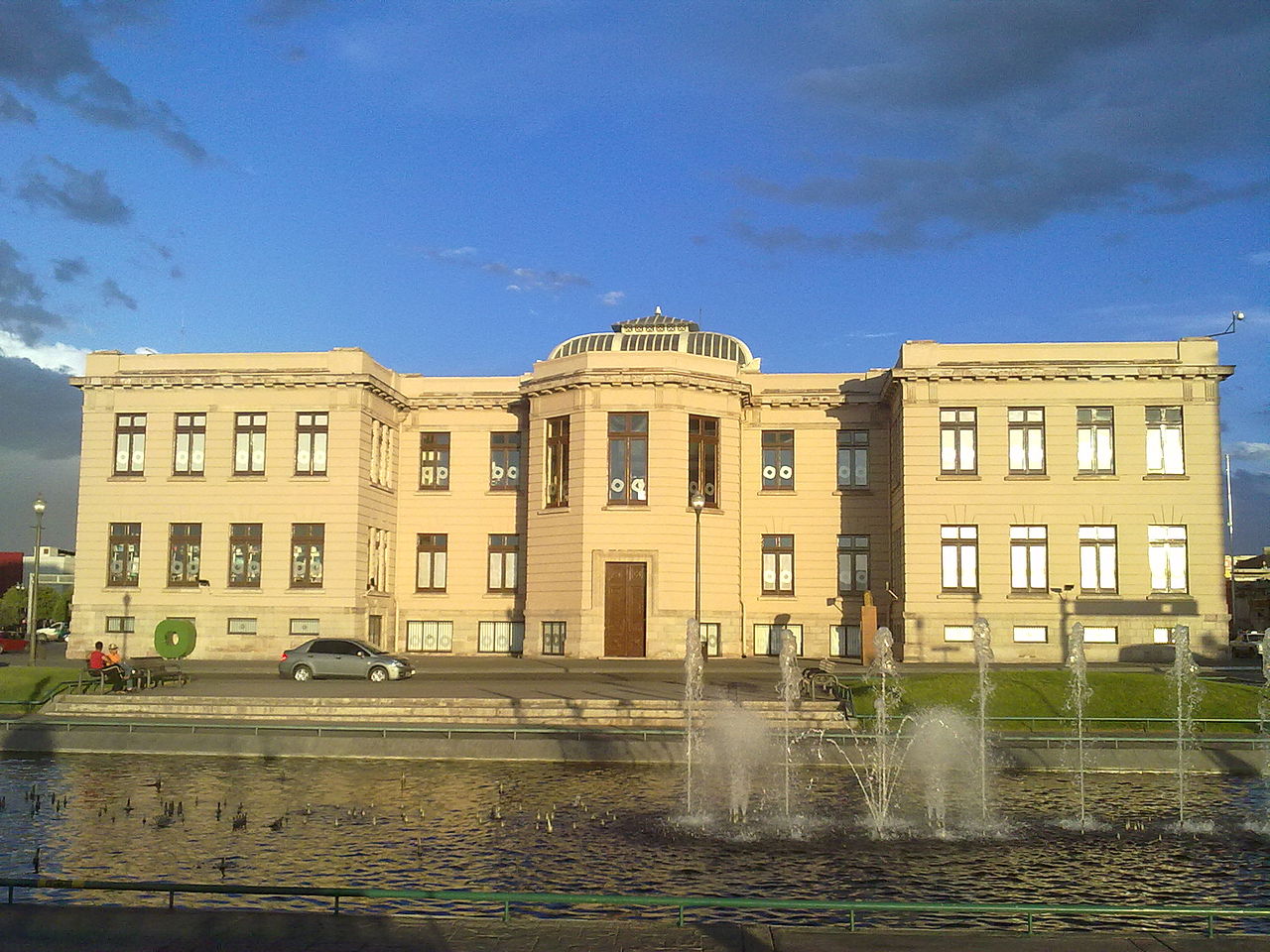
Chihuahua city, as the state capital, attracts tourists interested in history and traditional Mexican architecture. It is an ideal starting point for exploring rich Chihuahuan culture in a more controlled and historical environment.
On the other hand, Ciudad Juárez, being the largest city by population (with its 800,000 inhabitants), attracts travelers interested in modern dynamism. The tourism experience here is marked by border energy and intense cultural interaction with neighboring US states.
The very geography, due to its vastness (244,938 km²), allows for a secondary niche focused on ecotourism in more remote areas. Although sources do not detail these exact spots, the existence of borders and large rivers in the region suggests natural trails and experiences outside urban centers.
In summary, travelers should expect a mix that ranges between the preserved colonial architecture of the capital and the industrial/commercial pulse of the border metropolises. The Chihuahuan experience is thus a journey of contrasts: ancient history coexisting with the rapid pace of transnational commerce.
Chihuahua presents unique characteristics that deserve attention. Firstly, its title as the largest state among the thirty-one Mexican states is not merely a statistical fact; it defines the scale of life in the area, requiring complex logistics to sustain its population of 3,406,465 inhabitants.
A notable curiosity is the distinction between the urban centers that comprise it. Although Chihuahua is recognized as the state capital and an administrative/historic hub, Ciudad Juárez holds the title of largest city, with a significant estimated population of 800,000. This difference highlights how demographic power can supersede administrative importance in dynamic border regions.
The way the state positions itself geographically and culturally is another curious fact. Its borders are not just lines on a map; they represent a constant exchange of influences. Bordering both Mexican states such as Durango, Sonora, Sinaloa, and Coahuila de Zaragoza, and also the vast territories of the US in Texas and New Mexico, makes it a true point of cultural convergence hard to find elsewhere on the continent.
Finally, the contrast between the colossal area (244,938 km²) and the population concentration in the two main urban centers is fascinating. This fact demonstrates how human civilization can settle and thrive even within such a vast and geographically diverse territory.
Everything you need to know to plan your trip
Reference figures to help plan your trip
Hotels in the area
41
Attractions
9
41 properties in the area
82 travelers searched Chihuahua this week
13 stays booked in Chihuahua in the last 7 days
Chihuahua
R$1,493 / night

Chihuahua
R$687 / night

Chihuahua
R$1,134 / night

Chihuahua
R$417 / night

Chihuahua
R$1,640 / night

Chihuahua
R$422 / night

Chihuahua
R$671 / night

Chihuahua
R$894 / night

Chihuahua
R$742 / night

Chihuahua
R$608 / night

Chihuahua
R$315 / night

Chihuahua
R$532 / night
Must-sees, local secrets, experiences, and hotels — filter layers and tap the pins.
Everything you need to know to plan your trip
Get notified when hotel prices in Chihuahua drop. No spam.
We use your email only to send this price alert. Unsubscribe anytime.
Extend your trip to incredible destinations nearby
Still unsure? See side-by-side comparisons to decide.
We personalize every moment of your journey — from iconic landmarks to hidden cultural gems.
Available 24/7 · Personalized consultations · Local expertise
Updated on July 24, 2026 · Methodology · Authors
Sources
Testimonials
Stories from travelers who have already visited. Share your experience — your comment appears in the cards below.
Visiting Chihuahua exceeded all expectations. The energy of the place is contagious!
Fabiano Lopes
Food lover
We traveled as a family and Chihuahua delighted kids and adults alike. Great hotel and attraction picks.
Ingrid Viana
Honeymoon
I arrived without a fixed itinerary and Chihuahua surprised me at every corner. So welcoming.
Leandro Meirelles
Traveler from Porto Alegre
Stayed near downtown and walked everywhere. Chihuahua is even better on foot.
Olívia Fontes
Traveler from Brasília
