
Cancun
Grand Hyatt Cancun Beach Resort
R$1,204 / night

Destination
Cancún is a world-class destination on the Riviera Maya. Relax on pristine beaches and explore vibrant culture. Your Mexican paradise awaits!
Cancún · Brasil
Photos
Discover the landscapes and culture of Cancún


Editorial guide with history, culture, and practical tips to plan your trip.
Cancún is more than just a destination; it is a world-class experience. Located in the magical Yucatán Peninsula, within the vibrant state of Quintana Roo, Mexico, this tourist city has established itself as an international icon of tropical tourism. Geographically situated in the municipality of Benito Juárez, Cancún stands out not only for its stunning scenery—with pristine beaches and crystal clear waters—but also for its significant demographic importance to the state. Census data from the National Institute of Statistics and Geography (INEGI), relating to the year 2020, reveals that the city holds the title of being the most populous in Quintana Roo, housing an estimated community of nearly one million inhabitants: 888,797 people. This large population reflects its multifaceted function, not limited only to tourist leisure, but also serving as a vibrant and constantly growing urban center. It is believed that Cancún's structured development was rigorously planned from its inception. The project officially began operations in 1974, initially conceived as an Integrated Planned Center. This pioneering approach was crucial, establishing a model of urban development subsequently led by Fonatur (National Tourism Foundation), an entity that had previously undergone transformation under the name Infratur. This initial and planned trajectory is what solidified its reputation as a world-class tourist destination, even validated with certifications recognized by the World Tourism Organization (UNWTO). Cancún thus represents a perfect fusion between exuberant natural beauty and meticulous urban engineering, ensuring infrastructure capable of receiving visitors from all corners of the globe.
The historical narrative of Cancún is deeply connected to strategic planning and development vision. Although the Yucatán Peninsula has been inhabited by millennia-old civilizations, the modern development of the city as a global tourist hub has specific roots tracing back to the 1970s. The turning point occurred when the Cancún project was officially launched in 1974. It was not an organic and chaotic growth; on the contrary, it was conceived from the beginning as an Integrated Planned Center. This rigorous planning was not merely an aesthetic issue, but a methodology aimed at ensuring sustainable development and maximum tourism functionality.
This pioneering model of development placed Cancún at the forefront of modern tourism cities. It was a precursor project in the use of Fonatur (National Tourism Foundation), an entity whose history is marked by its evolution, having been previously known as Infratur. The performance of these institutions was fundamental in transforming the coastal area into something recognized globally. This trajectory shows that Cancún's tourist success is not accidental; it is the result of progressive institutional and urban planning. Since those first operational steps in the seventies, the goal was clear: to create a destination capable of meeting the highest global standards, transforming the natural landscape into a stage for international tourism excellence. This historical foundation ensures that every aspect of the city—from its streets to its resorts—carries the stamp of careful and visionary planning.
Cancún's culture is a vibrant mosaic where rich Mayan heritage meets the cosmopolitan rhythm of global tourism. Although the modern focus is grand in terms of hotel infrastructure and tourist services, the cultural roots of the region are deep and millennia-old. The historical influence of pre-Columbian civilizations, especially the Maya, permeates the local identity. This heritage manifests not only in archaeological remnants found nearby but also in the local gastronomy and lifestyle traditions of the permanent residents of Quintana Roo state.
The cultural experience in Cancún is often enriched by the cohabitation between the modern and the ancestral. Global tourism brings with it a diversity of cultures that meet in the urban landscape, resulting in a vibrant and eclectic atmosphere. Local celebrations mix traditional rituals with international entertainment events. This duality can be observed in the architecture: next to skyscrapers and internationally designed resorts, there is the presence of elements referencing the life and beliefs of the native cultures of the Yucatán Peninsula. Cuisine is a perfect example of this blend; while enjoying dishes with global influences, distinctive local flavors are equally present, resulting directly from the historical and geographic fusion of the area. Thus, Cancún's culture cannot be reduced to a single facet; it pulsates in the rhythm between the majestic past of Mayan ruins and the ceaseless energy of a globally connected destination.
Cancún is situated in a privileged geographic location: on the Yucatán Peninsula, which is part of the state of Quintana Roo, Mexico. This location not only defines its tourist appeal but also shapes all its urban and economic development. The peninsula is famous for its unique geological features, such as its extensive beaches and rich marine ecosystem.
The municipality to which the city belongs, Benito Juárez, encompasses a coastal area that greatly benefits from the Caribbean geography. The city is particularly notable for being the focal point of human development amidst this spectacular natural setting. Geographic and demographic data converge to show significant population concentration; according to the 2020 census, Cancún registered 888,797 inhabitants, solidifying itself as the most populous residential center in the neighboring state. The coastal geography was crucial for the project initiated in 1974 to flourish. Planners utilized this strategic location—basked by a sea of calm waters and sparkling beaches—to create a tailor-made tourist pole. The fact that it was conceived as an Integrated Planned Center reflects mastery of geography: maximizing tourist attractiveness by fully utilizing the coastline, while developing complex infrastructure, pioneering for its time and still expanding today.
Cancún's climate is typically tropical, characteristic of the Mexican Caribbean region. This type of climate ensures ideal conditions of temperature and luminosity for most of the year, making it an extremely attractive destination for international tourism in any season. Temperatures are consistently warm and pleasant, accompanied by the high humidity typical of Caribbean coastal zones.
Although we do not have specific seasonal details in the source data, it is possible to infer that climate stability was a key factor in the planning of the city's development since 1974. The tropical climate directly contributes to the vibrant ecosystem and marine activities for which Cancún is globally famous. Its proximity to the Caribbean Sea guarantees ocean breezes and a constant environment of humid warmth, ideal for the long tourism season. Climate variations tend to follow tropical patterns, requiring caution regarding hurricane season (if applicable to the year), but generally maintaining an overall index of thermal comfort that attracts visitors all year round. It is this constant and favorable climate that allows Cancún to maintain its reputation as a world-renowned stop, where tropical nature embraces the sophistication of planned architecture.
Tourism is undeniably the economic and cultural engine of Cancún. Considered a world-class tourist destination and possessing World Tourism Organization (UNWTO) certification, the focus of all urban infrastructure—a result of its planning since 1974—is directed toward the visitor experience. Tourism in Cancún is extremely diversified, spanning from high-standard luxury resorts to ecotourism adventures in the surrounding Yucatán Peninsula nature.
The tourist attractions are vast and utilize the coastal geography as their main stage. Visitors are captivated by pristine beaches, aquatic activities in the crystal clear Caribbean seas, and exploring Mayan ruins that dot the Quintana Roo state. The city's strategic planning ensured not only accommodation (hosting a robust local population of 888,797 inhabitants) but also all the necessary logistics to receive massive flows of international and domestic tourists. The pioneering model established by Fonatur/Infratur allowed Cancún to become a reference tourism hub, where sophisticated entertainment goes hand-in-hand with the serenity of wild nature. The tourist experience is totally immersive: combining dives in colorful reefs, cultural excursions through historical sites, and moments of relaxation in complex resorts that seem straight out of a tropical dream.
One of the most fascinating curiosities about Cancún is its past as a meticulously planned project. Unlike many coastal cities that grew naturally over time, Cancún's modern and iconic structure owes much to its operational beginnings in 1974. This year marks the official start of its life as an Integrated Planned Center.
The concept of "Integrated Planned Center" is not just a historical detail; it defines the city's identity. It means that from the first blueprints and developments, it was designed to be efficient, organized, and perfectly integrated into the natural environment of the Yucatán Peninsula. This pioneering planning was orchestrated by entities like Fonatur (previously Infratur), ensuring that growth was controlled, following a roadmap of international tourism excellence. Another notable curiosity is its demographic function: despite its global status as a tourist pole, Cancún also stands out for being the most populous city in Quintana Roo state (with 888,797 inhabitants in 2020). This reveals a unique and complex balance between the frantic pace of global tourism and the maintenance of a vibrant and established local community, all anchored in the spectacular backdrop of the Yucatán Peninsula.
Everything you need to know to plan your trip
Currency
Mexican Peso
Language
Spanish
Reference figures to help plan your trip
Attractions
9
Selected stays available to book
80 travelers searched Cancun this week
12 stays booked in Cancun in the last 7 days
Cancun
R$1,204 / night
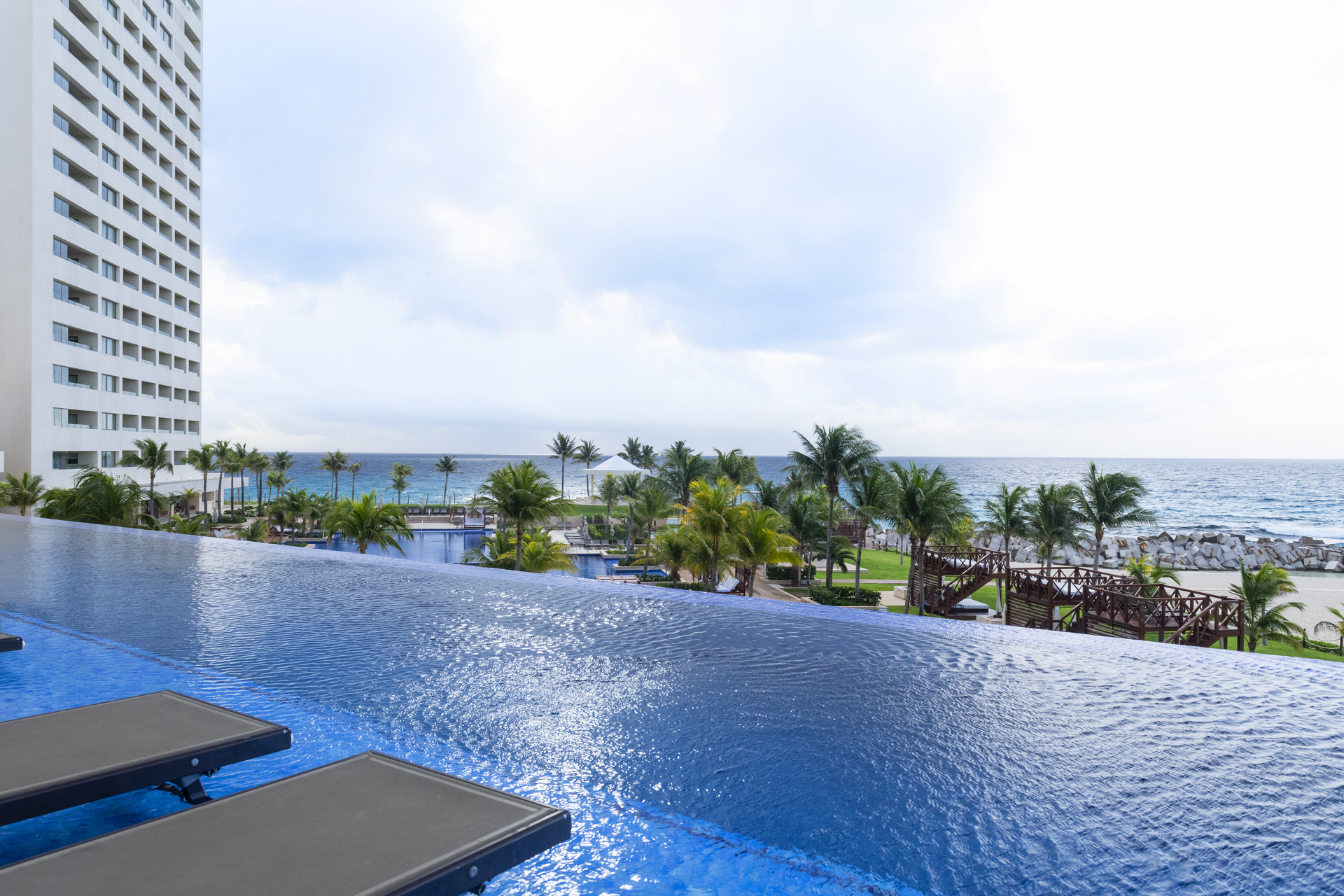
Cancun
R$1,193 / night
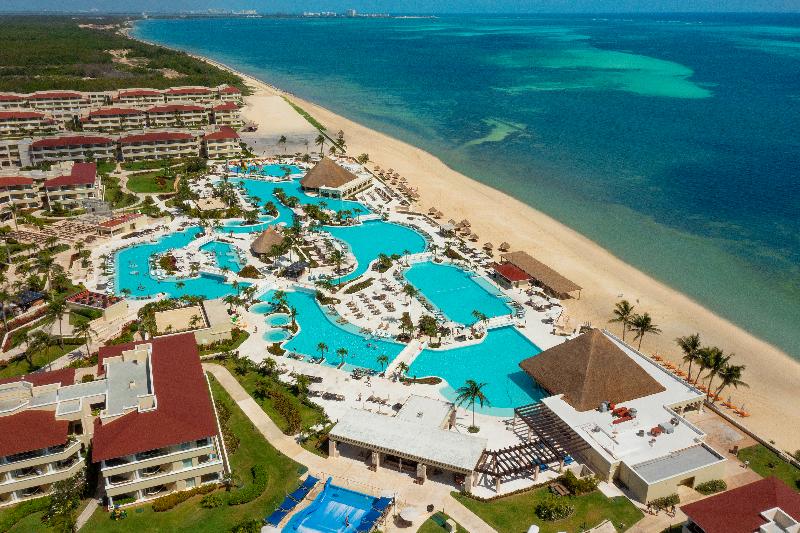
Cancun
R$1,568 / night

Cancun
R$1,691 / night

Cancun
R$979 / night
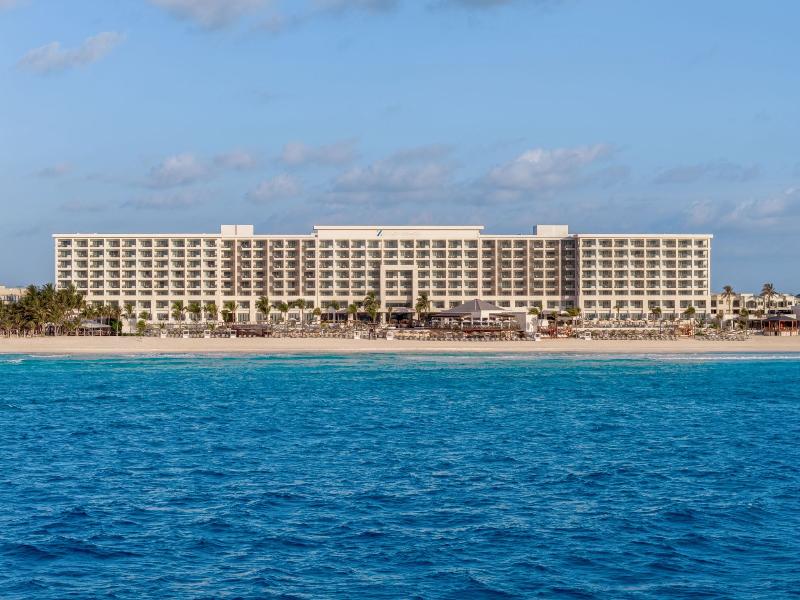
Cancun
R$1,576 / night

Cancun
R$945 / night

Cancun
R$1,222 / night

Cancun
R$1,063 / night

Cancun
R$929 / night

Cancun
R$1,316 / night

Cancun
R$1,310 / night
Must-sees, local secrets, experiences, and hotels — filter layers and tap the pins.
Everything you need to know to plan your trip
Get notified when hotel prices in Cancún drop. No spam.
We use your email only to send this price alert. Unsubscribe anytime.
Extend your trip to incredible destinations nearby
Still unsure? See side-by-side comparisons to decide.
We personalize every moment of your journey — from iconic landmarks to hidden cultural gems.
Available 24/7 · Personalized consultations · Local expertise
Updated on July 19, 2026 · Methodology · Authors
Sources
Testimonials
Stories from travelers who have already visited. Share your experience — your comment appears in the cards below.
Visiting Cancún exceeded all expectations. The energy of the place is contagious!
Simone Aragão
Traveler from Salvador
We traveled as a family and Cancún delighted kids and adults alike. Great hotel and attraction picks.
Wagner Lisboa
Traveler from Manaus
I arrived without a fixed itinerary and Cancún surprised me at every corner. So welcoming.
Arthur Klein
Tourist from Germany
Stayed near downtown and walked everywhere. Cancún is even better on foot.
Cíntia Rodrigues
Family with kids


