
Angkor
Sokhalay Angkor Residence and Spa
R$384 / night

Destination
Dive into history in Angkor, Cambodia. Visit the majestic Angkor Wat and explore the incredible temples of the Khmer Empire. A magical adventure awaits!
Angkor · Brasil
Photos
Discover the landscapes and culture of Angkor


Editorial guide with history, culture, and practical tips to plan your trip.
Angkor is a name that evokes mystery, grandeur, and the splendor of forgotten empires. Originally known as Yasodharapura, this place was much more than just a city; it represented the beating heart of the powerful Khmer Empire's capital during its era of peak power. Today, the Angkor Archaeological Park, located near Siem Reap, Cambodia, is one of the most fascinating and significant archaeological sites in all of Southeast Asia.
More than just a collection of ruins, Angkor was a colossal metropolis. Its scale was extraordinary, recognized as the largest pre-industrial city on Earth. Visitors are transported to a period when this region was an unmatched center of religious and political power. The architectural complexity of the site, encompassing everything from sacred temples to elite residential structures, tells the story of a civilization that mastered not only divine ritual but also the sciences of hydraulic engineering.
The narrative of Angkor is a deep dive into the golden age of the Khmer Empire. This empire flourished during a vast and crucial historical period, spanning roughly from the 9th to the 15th centuries. Over these thousand years, the region solidified itself as a civilizational epicenter that profoundly shaped the culture and political landscape of Tropical Asia.
The importance of Angkor is not limited to its most famous temples. The site was a vast urban network, designed to sustain both religious rituals and complex state administration. The existence of this capital required monumental social and logistical planning. The ruins preserved today are testaments to that magnificent past, where kings built not only monuments to the divine but also structures of power that governed vast territories.
The culture in Angkor is intrinsically linked to religion and engineering. The archaeological site houses an impressive variety of religious temples, each with its unique architecture and deep spiritual significance. These complexes were more than places of worship; they were vital ceremonial centers for the religious life of the time.
The social structure behind these monuments was equally sophisticated. Beyond sacred altars, the park has also revealed remnants of libraries and moats. There was a large royal palace dedicated to the residence of the Khmer king, which functioned as the highest administrative center. This organization suggests a highly hierarchical society, where the daily life of officials and royalty was as grand as the worship of the gods.
An undeniable cultural highlight is Angkor Wat, a temple complex in itself, that remains one of the most visited and emblematic symbols not only of Cambodia but of all Asian religious architecture. It encapsulates the artistic devotion and political power of the Khmer era.
Located in the territory of modern Cambodia, the Angkor area is situated in a geographical context that was fundamental to the empire's development. The Angkor Archaeological Park is not just a scattered collection of buildings; it is a monumental feat of territorial engineering. Its dimensions are impressive: it is estimated to cover an area of approximately 3,000 square kilometers.
The sheer scale of this pre-industrial city was sustained by the hydraulic mastery of its original inhabitants. Angkor is famous for being a pioneer example in global water engineering, which allowed it to support a massive and complex population amidst tropical landscapes. This control over water resources was the geographical pillar that supported the flourishing of an entire civilization.
Due to its archaeological nature, specific climatic descriptions are not detailed in historical records. However, being located in Cambodia, the region has a typically tropical climate. This implies marked seasonal variations between periods of dry season and intense rainy seasons—a cycle that historically influenced agriculture and, consequently, the development of sophisticated hydraulic systems seen at Angkor.
Visiting Angkor is embarking on a journey back in time. The tourist focus lies on exploring this vast complex of ruins, where every temple tells a fragment of Khmer history. The main and most visited attraction is undoubtedly the majestic temple complex of Angkor Wat. Travelers can wander through an impressive variety of constructions—from grand religious cathedrals to smaller administrative buildings.
Tourism in Angkor offers the unique opportunity not only to understand architectural splendor but also the complex social systems. It is possible to visualize the areas reserved for officials and, most prominently, the large royal palace where the king ruled, completing an immersive experience into the life of the Khmer Empire.
The scale of Angkor is a feat that defies imagination. The fact that it was one of the largest pre-industrial cities on Earth and covered 3,000 km² is a direct indicator of its civilizational impact. This monumentalism can only be compared to the great capitals of the most famous empires.
A fascinating detail about the construction reveals that not all structures were made of stone. The smaller buildings, those designated for daily and administrative use by officials around the main complex, did not utilize materials as sophisticated as the central temples. This shows a material variation in architecture, depending on function (ritualistic versus utilitarian) and structural importance within the capital.
Finally, the knowledge of the hydraulic engineering that sustained this giant city continues to impress historians and archaeologists, reaffirming Angkor not just as a religious monument, but first and foremost, as an achievement in environmental and urban management. It celebrates the power of human organization in harmonizing urban life with natural cycles.
Everything you need to know to plan your trip
Reference figures to help plan your trip
Hotels in the area
459
Attractions
9
459 properties in the area
58 travelers searched Angkor this week
9 stays booked in Angkor in the last 7 days
Angkor
R$384 / night

Angkor
R$329 / night
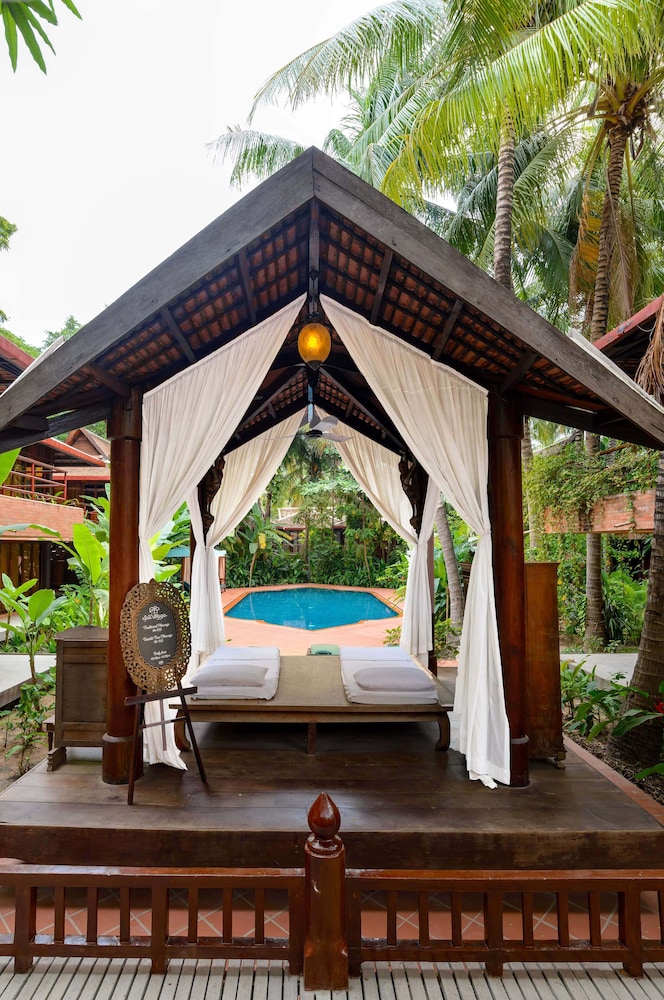
Angkor
R$1,383 / night

Angkor
R$360 / night

Angkor
R$622 / night

Angkor
R$408 / night

Angkor
R$1,081 / night

Angkor
R$454 / night

Angkor
R$1,576 / night
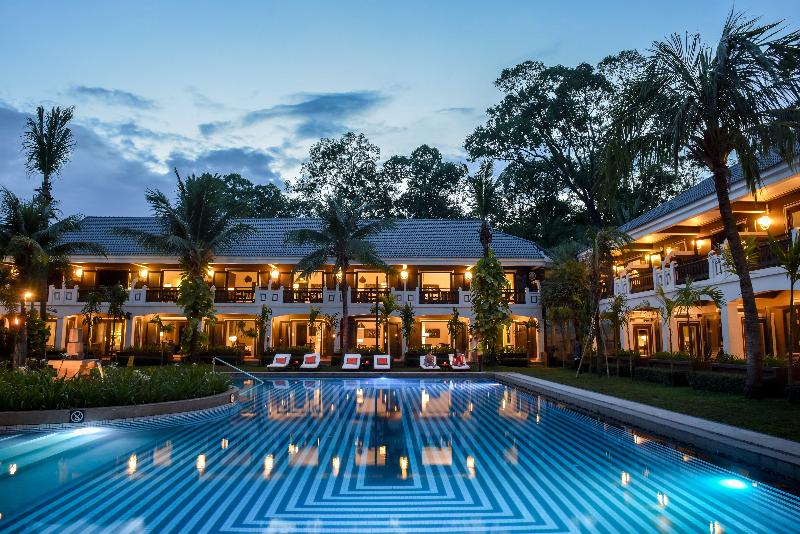
Angkor
R$1,460 / night

Angkor
R$663 / night

Angkor
R$650 / night
Must-sees, local secrets, experiences, and hotels — filter layers and tap the pins.
Everything you need to know to plan your trip
Get notified when hotel prices in Angkor drop. No spam.
We use your email only to send this price alert. Unsubscribe anytime.
We personalize every moment of your journey — from iconic landmarks to hidden cultural gems.
Available 24/7 · Personalized consultations · Local expertise
Updated on July 11, 2026 · Methodology · Authors
Sources
Testimonials
Stories from travelers who have already visited. Share your experience — your comment appears in the cards below.
Visiting Angkor exceeded all expectations. The energy of the place is contagious!
Fabiano Lopes
Food lover
We traveled as a family and Angkor delighted kids and adults alike. Great hotel and attraction picks.
Ingrid Viana
Honeymoon
I arrived without a fixed itinerary and Angkor surprised me at every corner. So welcoming.
Leandro Meirelles
Traveler from Porto Alegre
Stayed near downtown and walked everywhere. Angkor is even better on foot.
Olívia Fontes
Traveler from Brasília