
All destinations
Destination
Angatuba
Discover Angatuba, a charming city nestled in the interior of São Paulo. Explore its culture, attractions, and tips for visiting this gem near Sorocaba.
Angatuba · Brasil
Photos
Visual journey
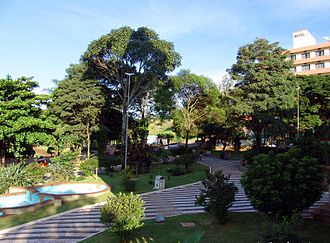
Discover the landscapes and culture of Angatuba


The spirit of Angatuba
Editorial guide with history, culture, and practical tips to plan your trip.
About
Angatuba is established as a vibrant and significant municipality in the heart of São Paulo state. Located in the Sorocabana region, the city represents an important reference point in inland São Paulo, combining the charm of smaller towns with the growing infrastructure typical of expanding urban centers. Its municipal identity is not defined by just one populated core but by the harmonious integration between its main seat and its neighboring district, Bom Retiro da Esperança.
With an estimated demographic base for 2025 of approximately 24,573 inhabitants, Angatuba has a constantly evolving social fabric. This number not only attests to the local population's vitality but also reflects the economic and residential dynamism that characterizes life in the Sorocabana region. The municipality has consolidated itself as a destination of interest for those seeking residency amidst rural tranquility as well as for visitors interested in the culture and typical landscapes of São Paulo state.
The concept of Angatuba, therefore, encompasses more than just geographical boundaries; it includes the synergy among its communities. The established coexistence between the administrative center (the seat) and the historical roots represented by the district of Bom Retiro da Esperança forms a unique cultural and urban mosaic, characteristic of São Paulo municipalities that have managed to preserve their local identity while adapting to the fast pace of regional development.
History
While detailed historical records are extensive, the municipality of Angatuba is intrinsically linked to the expansion and development of the Sorocabana metropolitan region. Its history is a reflection of Paulistano rural occupation that intensified over time, transforming agricultural landscapes into structured populated cores.
The formation of Angatuba as an autonomous municipality is directly linked to the evolution of settlements and the administrative needs of surrounding rural communities. The specific mention of the district of Bom Retiro da Esperança is a crucial reminder of this trajectory. This district not only shares geographical boundaries with the seat but also holds fragments of the local collective memory, dating back to the most modest and bucolic origins that paved the way for the current municipality.
Angatuba's evolution shows a gradual process of consolidation. The population growth, which culminated in an estimate of 24,573 inhabitants for 2025, is living proof of this historical development. It is not merely about numbers but about the narrative of families and communities who built their lives on this fertile ground. Angatuba's history is therefore a tale of resilience, adaptation, and continuous growth, while maintaining respect for the roots established in its diverse neighborhoods and rural areas.
Culture
Angatuba’s culture is deeply rooted in the typical community spirit of inland São Paulo. It is a culture that celebrates both ancestral traditions and the energy of modern life, balancing the quiet rhythm of rural zones with the vibrant pulse of urban centers.
The local cultural identity manifests itself in the harmonious coexistence between different groups and the appreciation of their communal bonds. The municipal structure, composed of the administrative seat and the district of Bom Retiro da Esperança, is a mirror of this cultural richness, where distinct traditions coexist side by side. Local celebrations, religious festivals, and family gatherings keep the flame of Paulistano regional culture alive.
When visiting Angatuba, the traveler will find an immersion in local cuisine that reflects the abundance of surrounding agricultural products, as well as artistic manifestations that celebrate simple and welcoming daily life. Angatuban culture is one lived through shared community: in municipal markets, in conversation circles, and in celebrations that reinforce the bonds among its inhabitants. It is a living testament to the persistence of inland São Paulo traditions.
Geography
Angatuba possesses a strategic and privileged location within the geographical landscape of São Paulo state. Its integration into the Sorocabana region grants it not only proximity to important economic centers but also access to characteristic inland São Paulo landscapes.
Geographically, the municipality is defined by the functional integration between its seat and its historical district, Bom Retiro da Esperança. This structural division reflects a human geography, where different areas have developed their own characteristics and vocations, but which today unite under the municipal administration of Angatuba.
The Angatubana territory is immersed in a geographical context that mixes growing urban environment with portions of rural landscape. This geographic duality is fundamental to its identity: it allows residents to enjoy the convenience and services of urban areas without giving up contact with the serene nature of neighboring rural regions. The regional influence of Sorocabana shapes not only its economic development but also its overall scenic aspect, characterizing it as a meeting point between progress and the countryside.
Climate
Angatuba, located in inland São Paulo state, enjoys a typically tropical high-altitude climate (or subtropical in some regional classifications), which is characteristic of the macro-region where it is situated. This climatic pattern ensures a perceptible seasonal variation and favorable conditions for life and agricultural development.
The Paulistano climatic cycle, into which Angatuba is inserted, is marked by well-defined seasons. The transition periods between the intense heat of the warmer months and the milder temperatures of the rainy seasons guarantee a natural cycle that influences both agriculture and the pace of life for the population. Climate variations are factors that have shaped everything from daily habits to the region's agricultural vocation.
Although no specific details on average temperatures are provided, it is possible to deduce that the local climate requires constant adaptation, offering, at different times of the year, both sunny days ideal for outdoor activities and moments of necessary rain to sustain life in the field. This climatic dynamic reinforces the resilience and adaptive capacity of local communities.
Tourism
Tourism in Angatuba should be explored through the lens of 'experience tourism' and 'regional tourism,' focusing on immersion in local culture, the pace of inland life, and the surrounding landscapes. It is not just a tourist destination for grand points of interest but for its welcoming atmosphere.
The traveler can enjoy walking through the main urban center, observing architecture that mixes colonial elements with modern constructions, and experiencing the region's commercial flow. The focus should be on experiencing local markets and fairs, where fresh products from agriculture and commerce in Sorocabana are visible.
Visiting Angatuba is also about diving into the district of Bom Retiro da Esperança, exploring more traditional areas that retain a slower pace of life. For travelers interested in ecotourism or rural leisure, proximity to the countryside offers opportunities for activities such as light hiking and touring through inland São Paulo landscapes. Tourism in Angatuba is, fundamentally, a trip into the heart of authentic São Paulo.
Curiosities
The municipality of Angatuba carries a set of demographic and structural data that makes it worthy of attention. A notable figure is its estimated population for 2025, projected at around 24,573 inhabitants. This number not only confirms its robust population growth but also signals the maintenance of increasing social and economic dynamism in the region.
The administrative structure of the municipality is equally curious. Angatuba is composed of two vital parts: the main seat, which functions as the administrative and commercial hub, and the district of Bom Retiro da Esperança. This geographic and administrative duality is a peculiar and rich characteristic, as it ensures that different aspects of local life are valued—urban progress in the seat and preserved tradition in the district.
The mention of the Sorocabana region regarding Angatuba should not be overlooked. This regional connection is an important marker because it positions Angatuba within a well-defined economic and social axis of inland São Paulo. Thus, the municipality presents itself as a focal point that harmonizes historical identity with the demands of modern development, making it a fascinating destination for those seeking to know the most vivid and authentic corners of São Paulo.
Quick facts
Everything you need to know to plan your trip
Currency
R$
Language
Portuguese
Destination at a glance
Reference figures to help plan your trip
Attractions
8
Best hotels
We are still connecting hotels for this destination. Search stays in the area in the meantime.
68 travelers searched Angatuba this week
10 stays booked in Angatuba in the last 7 days
Coming soon
We are still connecting hotels for this destination. Search stays in the area in the meantime.
Search hotelsDestination map
Must-sees, local secrets, experiences, and hotels — filter layers and tap the pins.
Frequently asked questions
Everything you need to know to plan your trip
Price alert for Angatuba
Get notified when hotel prices in Angatuba drop. No spam.
We use your email only to send this price alert. Unsubscribe anytime.
Nearby destinations
Extend your trip to incredible destinations nearby


Compare with other destinations
Still unsure? See side-by-side comparisons to decide.
Ready to experience Angatuba?
We personalize every moment of your journey — from iconic landmarks to hidden cultural gems.
Available 24/7 · Personalized consultations · Local expertise
Updated on July 22, 2026 · Methodology · Authors
Sources
Testimonials
What people say about Angatuba
Stories from travelers who have already visited. Share your experience — your comment appears in the cards below.
Visiting Angatuba exceeded all expectations. The energy of the place is contagious!
Aline Moura
Traveler from Fortaleza
We traveled as a family and Angatuba delighted kids and adults alike. Great hotel and attraction picks.
Daniel Figueiredo
Backpacker
I arrived without a fixed itinerary and Angatuba surprised me at every corner. So welcoming.
Graziela Pacheco
Repeat visitor
Stayed near downtown and walked everywhere. Angatuba is even better on foot.
João Victor
Traveler from Recife